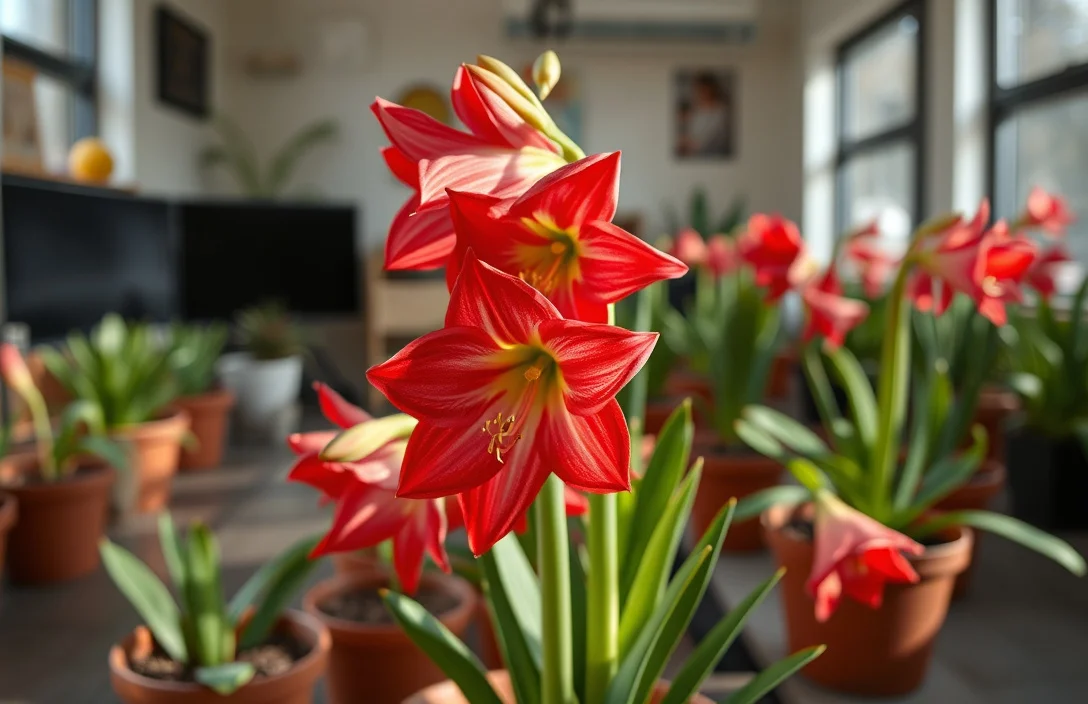
How To Plant Amaryllis Bulbs In Pots Indoors?
Amaryllis in pots is one of the fastest ways to get big indoor blooms, and timing is everything. Put the bulb in a pot with good drainage, use a light, well-draining mix, keep the bulb’s top exposed, and give warmth plus bright light. In many homes, you’ll see flowers within weeks once active growth starts, typically in about 6 to 10 weeks depending on bulb age and temperature.
Planting amaryllis bulbs in pots indoors is simple: use a pot with drainage holes, fill with a light potting mix (leave the bulb’s top exposed), water lightly so roots can begin, then move the pot to warmth and bright light.
Key Takeaways
- Use a drainage pot. Amaryllis hates sitting in water, so choose a pot with drainage holes.
- Plant the bulb correctly. Set the bulb so about the top third stays above the soil line.
- Water lightly at first. Keep soil just barely moist until you see roots and new growth.
- Give consistent warmth. Aim for indoor warmth around the mid-70s F range for reliable growth.
- Switch to brighter light. Move to bright windows once shoots start, then follow flower-support habits.
- Expect a rest cycle. If you want repeat blooms, you’ll need to reduce light and watering later.
How to begin
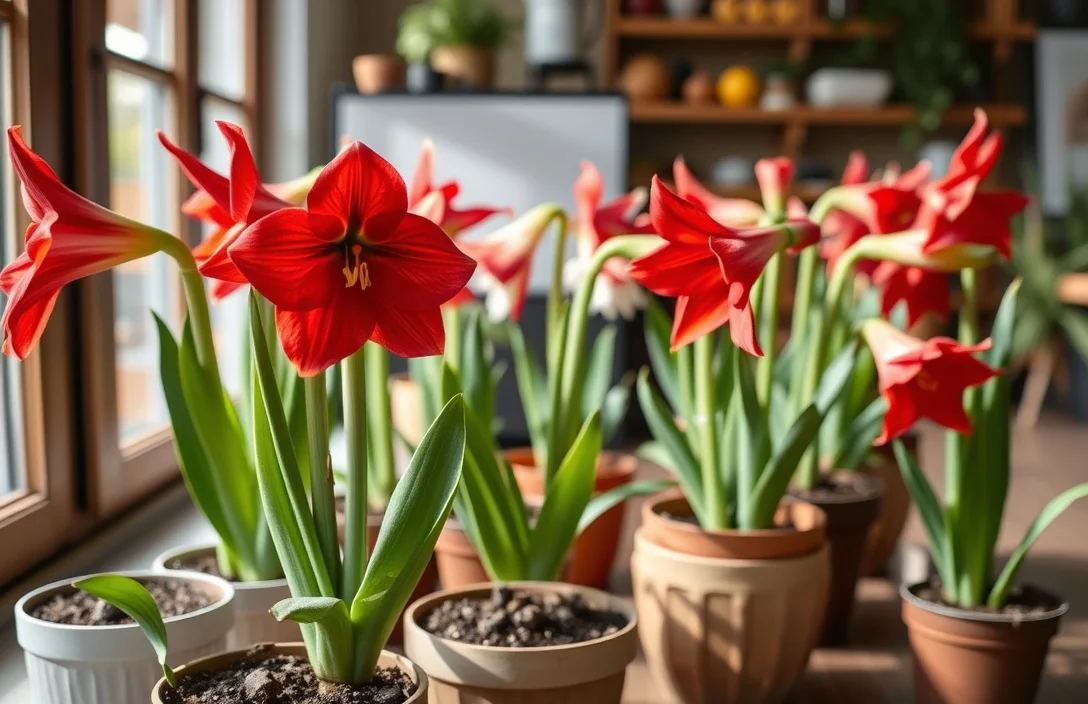
Amaryllis grows best in pots when you treat it like a bulb that needs quick root establishment, not like a thirsty houseplant. The goal is straightforward: set roots into light, airy mix, keep the bulb’s neck and upper portion relatively dry at the surface, and give enough warmth to trigger growth.
Start with a firm, healthy bulb and use a staged watering routine. Early on, water just enough to settle the mix and encourage roots. Later, water more normally once a new shoot is clearly growing.
Gather what actually matters before you start: a drainage pot, a potting mix that doesn’t stay soggy, and a saucer to catch runoff. You don’t need special fertilizer on day one. You do need good light and temperature once growth starts.
Basics of how to plant amaryllis bulbs
Amaryllis is picky about two things: soil moisture and bulb exposure. The roots need moisture, but the bulb’s neck and upper portion should stay relatively dry so it doesn’t rot.
Pot size matters, too. A pot that’s much wider than the bulb holds extra soil that stays wet longer, which raises rot risk. Most people get the best results with a snug fit – the bulb sits centered with only a small gap around it.
Use a light, fast-draining potting mix. Straight garden soil is usually too dense for indoor bulbs. A quality potting mix labeled “indoor” or “potting mix,” plus a bit of perlite if your mix compacts, keeps the medium airy.
Light and warmth drive the process after planting. Expect a root-forming period before you see the green shoot. That’s normal, and it’s why early watering strategy matters.
how to plant amaryllis bulbs
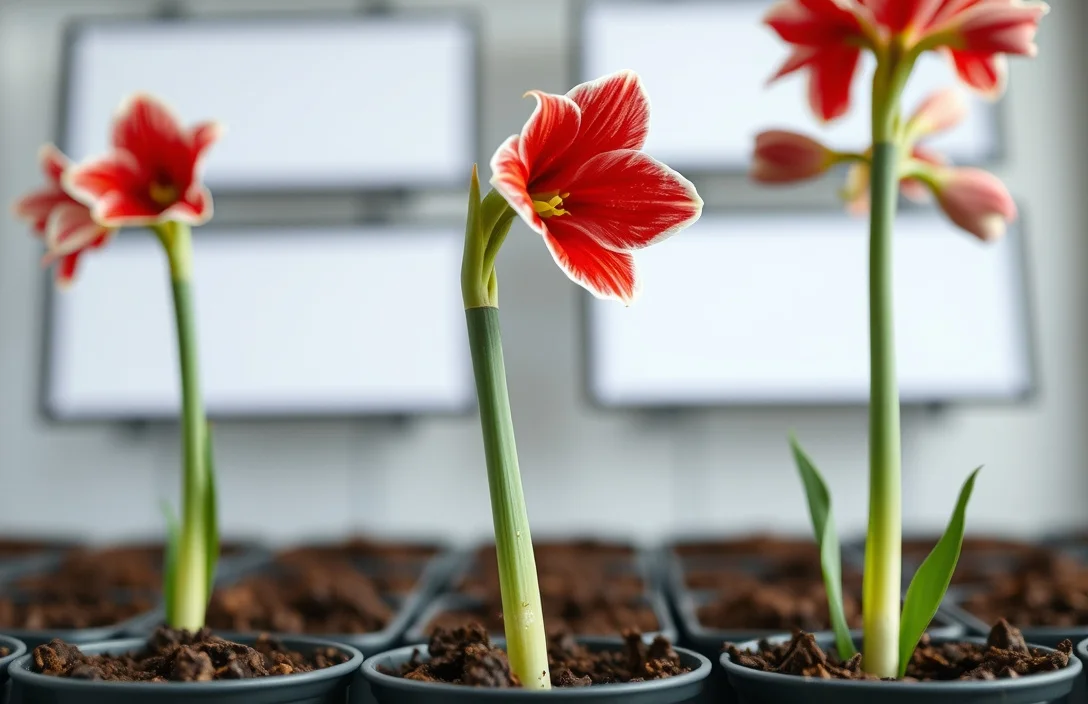
- Choose a pot with drainage. Use a pot with at least one drainage hole and a saucer underneath.
- Test the bulb fit. Place the bulb in the pot and confirm the top third will stay above the soil line.
- Add light potting mix. Fill with a light potting mix, then settle it gently so the bulb doesn’t wobble.
- Plant the bulb correctly. Set the bulb centered, press mix around the sides, and keep the bulb’s top exposed (including the neck area).
- Water lightly to start. Water enough to moisten the mix evenly, then let excess drain completely.
- Place it for warmth and patience. Keep the pot in a warm spot with bright, indirect light until you see a shoot.
- Increase light after growth appears. Once the shoot starts, move toward brighter light (a sunny window if the plant tolerates it).
- Support as it grows taller. When the flower stem rises, use a stake if it starts to tip – indoor air is still, and stems can lean without much movement.
For example, if your bulb is about palm-sized, choose a pot only slightly larger to reduce wet soil volume. If you can press your finger into the mix and it stays wet for a long time, the mix is too dense or the pot is too large.
Think of planting in two phases: “root phase” (light watering, stable warmth) and “growth phase” (more light, regular watering). Heavy watering right after potting increases rot risk before the bulb has time to build roots.
Things that matter most
Control moisture without starving the roots. After potting, water thoroughly once. Then wait until the top of the mix feels slightly dry before watering again. If the mix stays wet day after day, fix the environment – adjust pot size, improve the mix, or improve drainage – instead of adding more “water control habits.”
Rotate the pot for even growth. Amaryllis often leans toward light, especially near a bright window. Turn the pot a quarter-turn every few days to keep the stem more upright and reduce stress as flowers develop.
Keep temperature consistent. Warmth helps the bulb shift from root building to shoot growth. A cooler home can slow things down. Very hot conditions may push faster growth but can also stress the plant, so aim for steady indoor conditions instead of extremes.
When flowers are close, focus on “stem care.” Flower stems are heavy. Watch for tipping and use stakes early if the plant begins to lean.
Use this checklist while planting and watching:
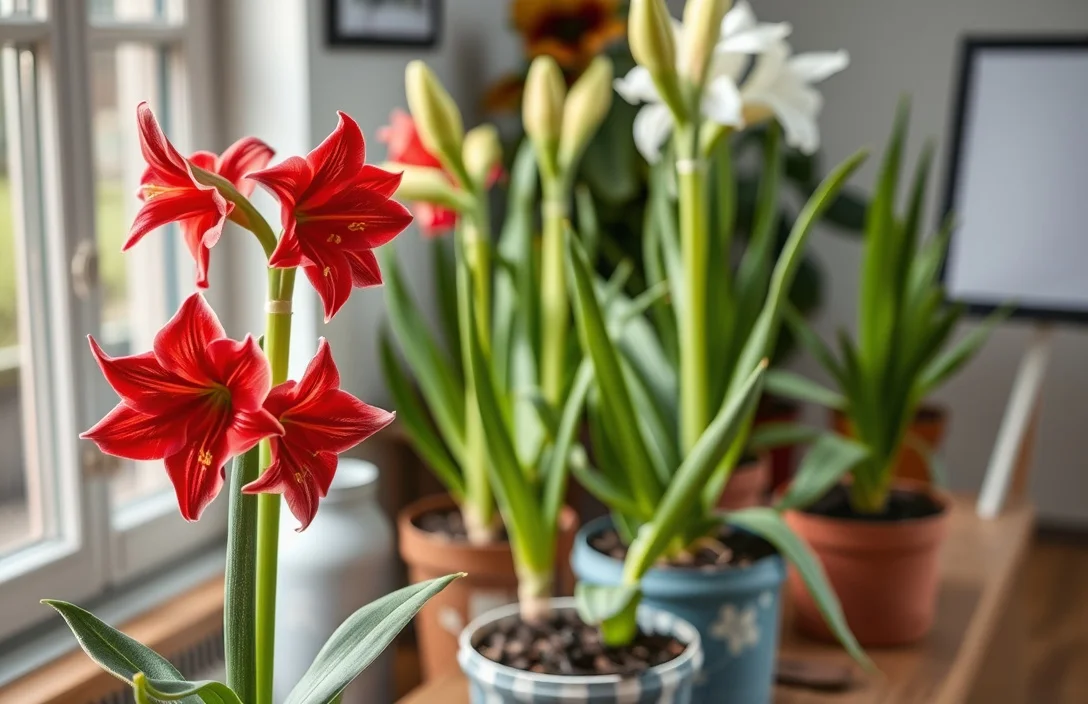
- Keep the bulb’s top third exposed.
- Use a snug pot to reduce wet soil volume.
- Water once, then drain completely.
- Warm location, bright indirect light at first.
- Stronger light once the shoot appears.
- Stake when the stem looks like it might flop.
What works in practice
Drainage comes first. If you’re unsure whether your potting mix drains well, do a quick test: water an empty pot, then check how fast water leaves the bottom. If water lingers, use a lighter mix or add perlite to improve airflow.
Plant once, adjust later. People sometimes bury the bulb deeper when growth seems slow. Don’t. Extra depth increases moisture around the bulb and can delay or rot the neck. Adjust light and warmth instead of changing planting depth. Fine-tune watering, not burial depth.
Keep a predictable light schedule. Bright light works best once shoots begin. After flowering starts, provide bright indoor light but avoid blasting the plant with harsh midday heat from a too-close window.
Plan for rest if you want multiple bloom cycles. Many people treat amaryllis as a one-time gift bulb, but they can rebloom with proper seasonal reduction in light and watering later. Flowers fading isn’t the end – it’s the cue to plan.
Tie actions to visible stages. No shoot yet means careful watering and steady warmth. A visible shoot means brighter light and more consistent moisture. Flowers opening means support and light management. After blooms fade means a rest plan, not constant feeding and watering.
Mistakes to Avoid with how to plant amaryllis bulbs
Overwatering is the most common mistake, usually paired with an oversized pot or a mix that stays wet. Too much moisture can rot the bulb’s neck before you ever see a shoot. If the bulb smells sour or the neck feels soft, stop watering and reassess drainage and planting depth.
Planting too deep is another frequent error. If you bury the bulb’s top third, you trap moisture where you don’t want it and can delay growth. Even if you see early roots, deep planting can still lead to rot later when conditions stay wet.
Waiting too long to increase light weakens the shoot. Bright indirect light is fine during the root phase, but once you see growth, move toward brighter light. Otherwise, the stem may end up floppy when buds and blooms arrive.
Ignoring staking is a quiet but common problem. A tall indoor flower stem can tip under its own weight, especially if the pot leans toward the window. Stake early – it takes seconds and prevents later stem damage.
Watch for these signs:
- No shoot after a long time – often too cool or too dark.
- Mushy bulb neck – usually overwatering, poor drainage, or planting too deep.
- Leaning stem – usually not enough light or no pot rotation.
- Droopy flowers – often stress from heat swings or stem instability.
Pro Tips for how to plant amaryllis bulbs
Control flowering timing by watching the “active growth” phase. Many growers wait until they see clear shoot movement before switching to a more normal growing routine. That approach removes guesswork when watering based on the calendar feels unreliable.
Use a simple rotation routine. Turn the pot every few days so the stem grows more evenly. Rotation helps the flower stem stay upright and reduces the need for heavy staking.
Add a stake early when the shoot height increases. Guiding a flexible stem is easier than trying to correct an angled stem once buds add weight.
Keep your setup stable. Same general spot, similar light level, and consistent warmth prevent slowdowns caused by constant adjustment. Amaryllis responds best to predictability while the shoot is forming.
If you’re planting a second bulb, treat it like a separate “case.” Bulb age and storage conditions vary, so two bulbs planted the same day may not bloom on the same schedule. Plan your indoor display timing by observing growth, not by expecting identical timing.
FAQ
How long does it take for an amaryllis bulb to bloom indoors?
Amaryllis timing varies by bulb size, bulb age, and warmth. In typical indoor conditions, flowers often appear about 6 to 10 weeks after the bulb begins active growth. Some time is spent building roots first, so “no shoot yet” doesn’t automatically mean failure. If the pot stays cool or light is low, flowering often takes longer.
What size pot should I use for an amaryllis bulb?
Use a pot with drainage holes and a snug fit. A pot much wider than the bulb holds extra moisture and increases rot risk. Center the bulb so only the top third is above the soil line. If water drains slowly, size down or improve the mix with perlite.
How often should I water amaryllis after planting?
Water thoroughly once after planting, then let excess drain completely. After that, water when the top of the mix feels slightly dry. Aim for lightly moist, not constantly wet. During the early root phase, water more cautiously. Once the shoot is growing steadily, water a bit more regularly while still ensuring good drainage.
Is amaryllis safe indoors around pets?
Amaryllis is potentially toxic to pets if eaten. Keep the pot out of reach and discourage chewing. If you have curious pets, placing the plant higher and cleaning up fallen leaves or spent blooms reduces risk. If ingestion happens, contact your veterinarian or your local poison hotline immediately.
What’s the most common mistake when planting amaryllis bulbs in pots indoors?
Planting too deep and overwatering are the most common combo problems. Keep the bulb’s neck and top portion above the soil line and use a mix that drains well. Too much water before roots establish can cause rot even if you correct watering later. Use a snug pot, a light mix, and careful early watering.
How to begin
Plant your amaryllis bulb in a pot with drainage, keeping about the top third above the soil line. Water lightly after potting so the mix moistens without staying soggy. Warmth and bright light – especially after a shoot appears – drive the process.
Basics of how to plant amaryllis bulbs
Amaryllis needs an airy, fast-draining mix and a pot that doesn’t hold excess water. Treat it like two phases: root building first, active growth second. Moisture control and bulb exposure are the biggest “do it right” factors.
how to plant amaryllis bulbs
Use a snug pot and light mix, then plant so the top third stays exposed. Water thoroughly once, drain completely, and keep it warm with bright indirect light until a shoot appears. Move to brighter light once growth starts, and support the flower stem if it tips.
Things that matter most
Moisture management prevents rot. Water lightly after the first soaking, then water only when the mix’s top dries slightly. Rotate the pot for upright growth, maintain stable warmth, and stake early if the stem starts to lean.
What works in practice
Drainage-first and a snug pot reduce rot risk more than any fertilizer adjustment. Keep light consistent, increase brightness once growth starts, and plan for rest after flowering if you want repeat blooms. Adjust conditions based on the bulb’s stage, not just the day count.
Mistakes to Avoid with how to plant amaryllis bulbs
Avoid overwatering, planting too deep, and keeping the bulb in dim light after the shoot starts. Don’t ignore stem support – flopping can lead to damage when buds and blooms arrive. A soft neck or a sour smell means stop and reassess.
Pro Tips for how to plant amaryllis bulbs
Track stages visually so you know whether to be cautious (root phase) or more consistent (growth phase). Rotate the pot to keep stems upright, stake before the stem becomes heavy, and expect timing differences between bulbs. Stability in light and temperature helps growth stay on track.
When you plant, aim for a snug pot, keep the top third exposed, and water just enough to start root growth. Then watch for the shoot, move to brighter light, and support the stem as needed. If you tell me your bulb size and the typical indoor temperature near your window, I can suggest a more specific placement and light plan.

- 10 Best Slow Cooker For One Pot Cooking 2026 (Tested And Reviewed) - October 21, 2026
- 10 Best Slow Cooker For Hearty Stews 2026 (Tested And Reviewed) - October 20, 2026
- 10 Best Slow Cooker For Hearty Soups 2026 (Tested And Reviewed) - October 20, 2026