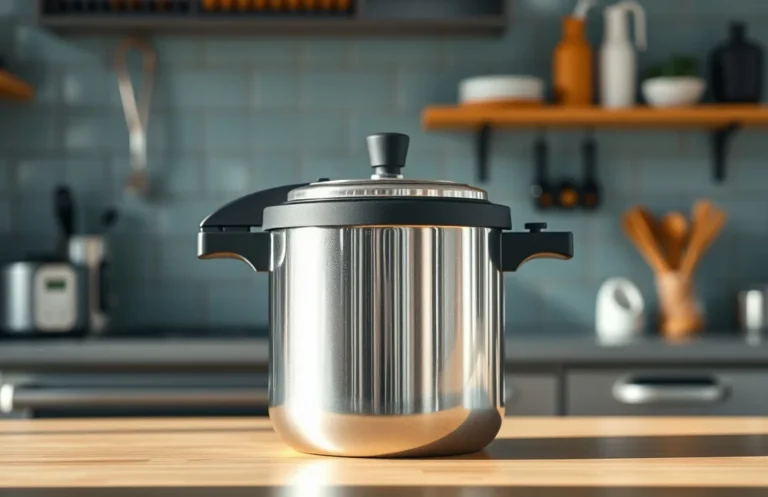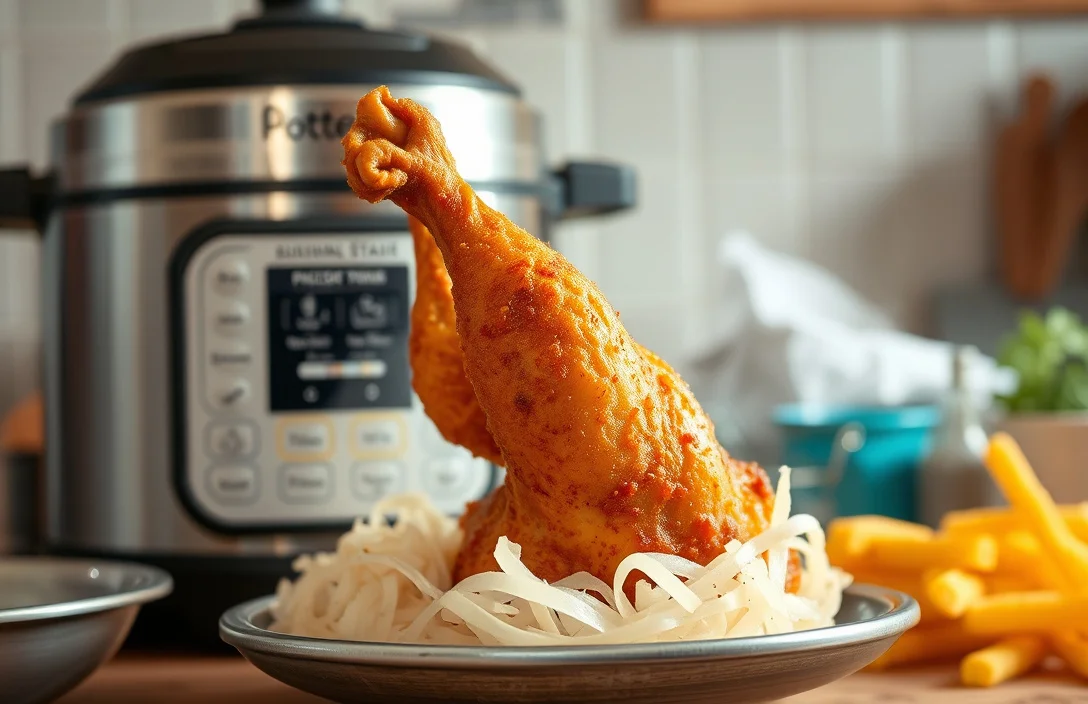
How To Make Fried Chicken In Pressure Cooker?
Pressure cooker fried chicken is the closest thing to weeknight deep-frying that actually fits a schedule, because the meat cooks in about 10-15 minutes under pressure. The trade-off is that pressure cookers are not built for true deep-frying. You brown in oil first, then pressure cook with a small amount of liquid. This guide covers crisping, timing, and safety so you can get crunchy-on-the-outside chicken without the fryer.
Pressure cooker fried chicken works like a two-stage “fried” method: brown breaded chicken in hot oil first, then pressure cook with about 1/2 to 1 cup broth or water (usually 8-12 minutes), followed by a quick release. For extra crunch, broil skin-side up for 2-3 minutes. Expect 10-15 minutes pressure cooking time total, plus browning.
Key Takeaways
- Use oil for browning. Brown chicken skin-side down in hot oil for 3-5 minutes per side for color and flavor.
- Pressure cook 8-12 minutes. Cook time depends on piece size, typically 8-12 minutes on high pressure.
- Add limited liquid. Use about 1/2 to 1 cup broth or water so steam cooks through without turning the coating soggy.
- Avoid overcrowding. Brown in batches to keep oil temperature stable and prevent soggy crust.
- Crisp it under a broiler. Broil skin-side up for 2-3 minutes to re-crisp the exterior.
- Plan for safe release. Quick release right after the timer, following your cooker’s instructions.
How to begin
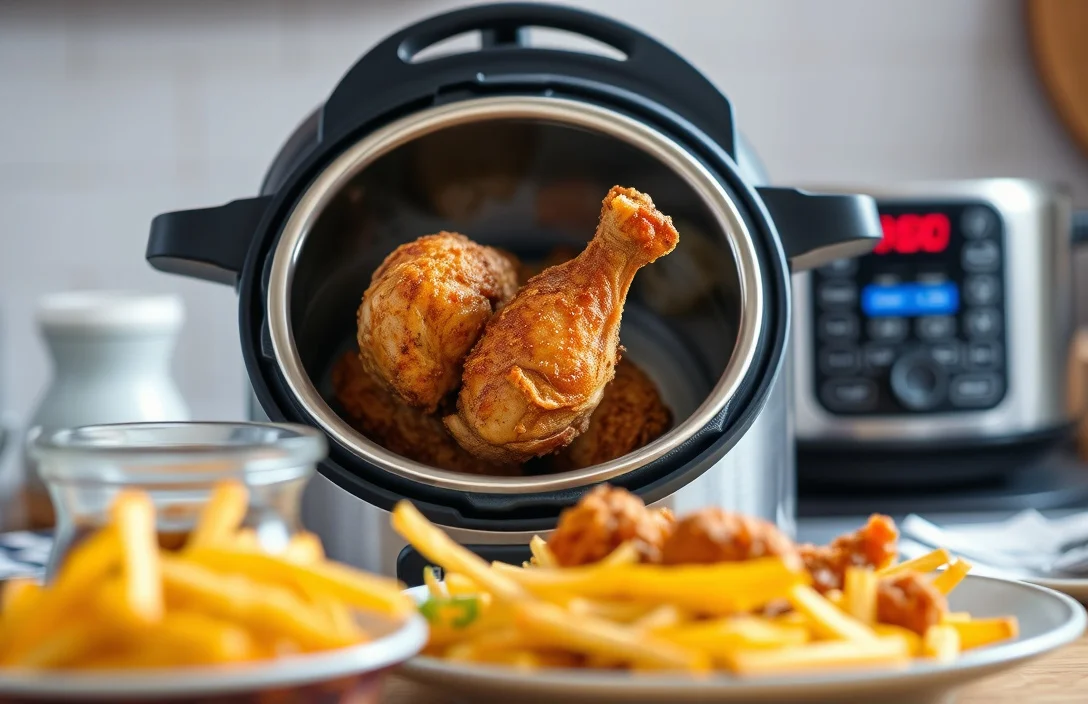
You can make “fried” chicken in a pressure cooker, but it needs a two-stage approach. Hot oil sets the crust, then pressure cooking finishes the meat quickly with steam. In practice, that means browning in oil for crunch, then pressure cooking with broth or water for even cooking. Traditional deep-frying submerges the chicken fully in oil; this method doesn’t.
Match your plan to your equipment before you start. Some pressure cookers handle sauté/browning in the insert, but you should not improvise deep-frying inside a pot not rated for it. If your cooker has a sauté function, brown right in the insert, then switch to pressure cook. If it doesn’t, brown in a skillet, then pressure cook with the lid on.
Gather ingredients with a simple goal: enough coating to crisp, and enough moisture to cook through evenly. Most versions use flour for dredging, seasoning in the flour, and (optionally) a buttermilk-style marinade. For the closest “classic fried” texture, pat chicken dry before coating and keep pieces separate so the flour actually sticks.
Basics of how to make fried chicken in a pressure cooker
Pressure cooker fried chicken relies on two mechanics. First, hot oil browns the coated surface so the crust sets and develops flavor. Second, pressure cooking traps steam so the chicken cooks fast, while a small amount of broth or water prevents the pot from going dry.
Timing is the biggest variable you’ll feel. A commonly used pressure cook window is 8-12 minutes, and piece size drives the difference. Another method frame puts it at 10-15 minutes pressure cooking time, compared with 30-45 minutes for traditional frying.
Oil temperature controls the crust. Many recipes aim for 350°F, and a candy thermometer keeps you from guessing. Cool oil leads to greasy coating because flour absorbs oil instead of setting. Hot oil can brown the outside before the inside finishes.
Pressure cooking can soften the exterior, so crisping matters. The best version includes an optional broil step – 2-3 minutes skin-side up – to bring back browning and sizzle. A short rest and draining on a wire rack also help the crust avoid steaming itself.
how to make fried chicken in a pressure cooker
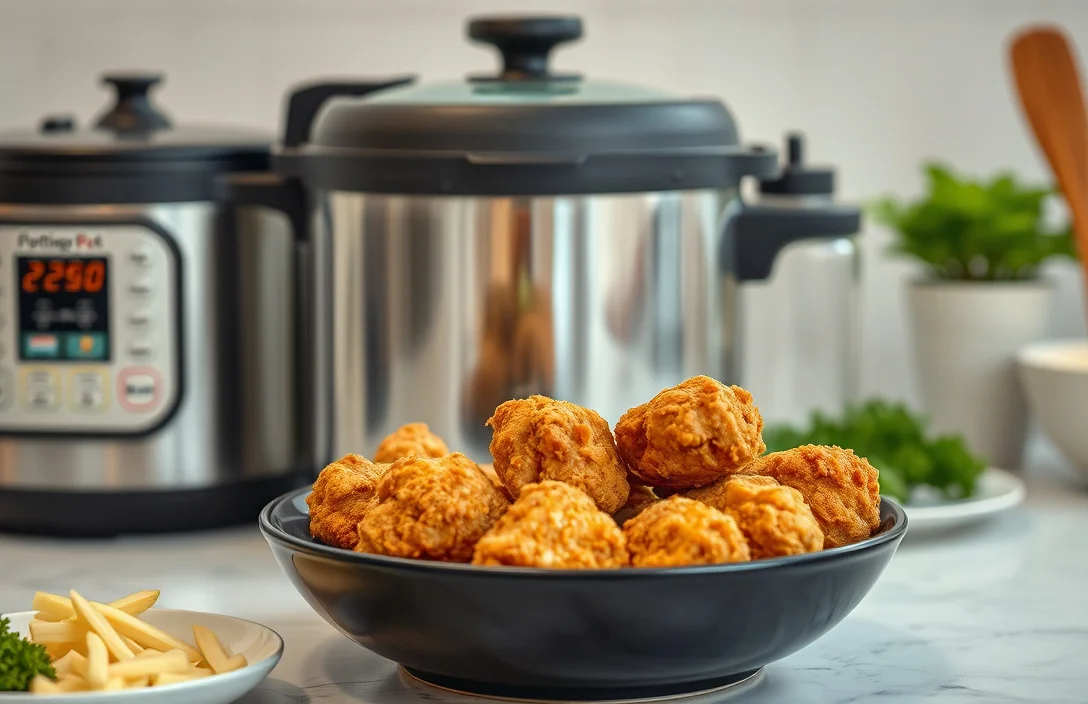
Use this workflow for consistent results without chasing fryer temperature all night.
1) Season the chicken. Pat chicken dry, then season well. If you’re using a wet marinade like buttermilk, it helps tenderness and flavor. Marinate for at least 30 minutes or overnight.
2) Set up a dredging station. Combine flour with seasoning such as salt, black pepper, paprika, garlic powder, and onion powder. Dredge each piece so the coating is even and sticks.
3) Heat the oil for browning. Add enough high-smoke-point oil (canola, vegetable, avocado, or peanut oil are common) to brown the chicken. Heat oil until it reaches around 350°F, using a candy thermometer.
4) Brown in batches, skin-side down. Lower pieces carefully into the hot oil. Brown for 3-5 minutes per side until golden. Work in batches so you don’t overcrowd the pot.
5) Drain excess oil and deglaze. Carefully pour off excess oil, leaving only a small amount behind. Add about 1/2 to 1 cup broth or water, then scrape browned bits from the bottom with a wooden spoon.
6) Load for pressure cooking. Place chicken on a trivet (or similar rack) so it steams instead of sitting in the liquid. Lock the lid and pressure cook for 8-12 minutes, depending on piece size.
7) Quick release pressure. Quick release according to your cooker’s instructions. Remove the chicken and let it drain on a wire rack or paper towels.
8) Crisp under the broiler (optional but recommended). Broil chicken skin-side up for 2-3 minutes until browned and sizzling.
9) Rest briefly and serve. Rest briefly so juices settle and the coating stays crisp.
Example schedule for a typical dinner
Brown thighs skin-side down for 3-5 minutes per side, pressure cook for 10-12 minutes, then broil 2-3 minutes to re-crisp. That lands in the “fast but not rushed” zone where the chicken is cooked through and still has texture.
Things that matter most
Good results depend on five techniques. Nail these and pressure-fried chicken stops feeling like a compromise.
Technique 1: Keep the coating dry before it meets steam. Pat chicken dry before dredging. The flour needs a dry surface to cling as a layer and set during browning. Wet surfaces make the coating slide, absorb oil, and turn crusty-less and greasy.
Technique 2: Browning builds the “fried” part. Pressure cooking cooks the meat, but browning creates the golden color and flavor. Brown 3-5 minutes per side until golden, with skin-side down first.
Technique 3: Use a trivet so chicken doesn’t steam in liquid. A trivet keeps the coating away from direct broth contact. Steam cooks the chicken, but the crust stays closer to “dry heat” conditions you can restore with a broiler.
Technique 4: Use limited liquid, not a broth bath. About 1/2 to 1 cup broth or water is the common guidance for pressure cooking. Too much liquid softens the bottom layer and makes it harder to protect the crust.
Technique 5: Re-crisp with broiling. Broil skin-side up for 2-3 minutes to restore crunch. Even if browning starts strong, steam can soften the coating.
Here’s a practical spec sheet you can follow:
| Step | What to aim for | Why it matters |
|---|---|---|
| Oil temp (browning) | 350°F | Helps coating set and brown instead of turning greasy |
| Brown time | 3-5 minutes per side | Builds color and flavor before pressure cooking |
| Pressure cook time | 8-12 minutes | Fast cook based on piece size |
| Liquid for pressure | 1/2 to 1 cup broth or water | Enough steam to cook, not a full bath |
| Crisp finish | Broil 2-3 minutes | Re-crisps the exterior for crunch |
What works in practice
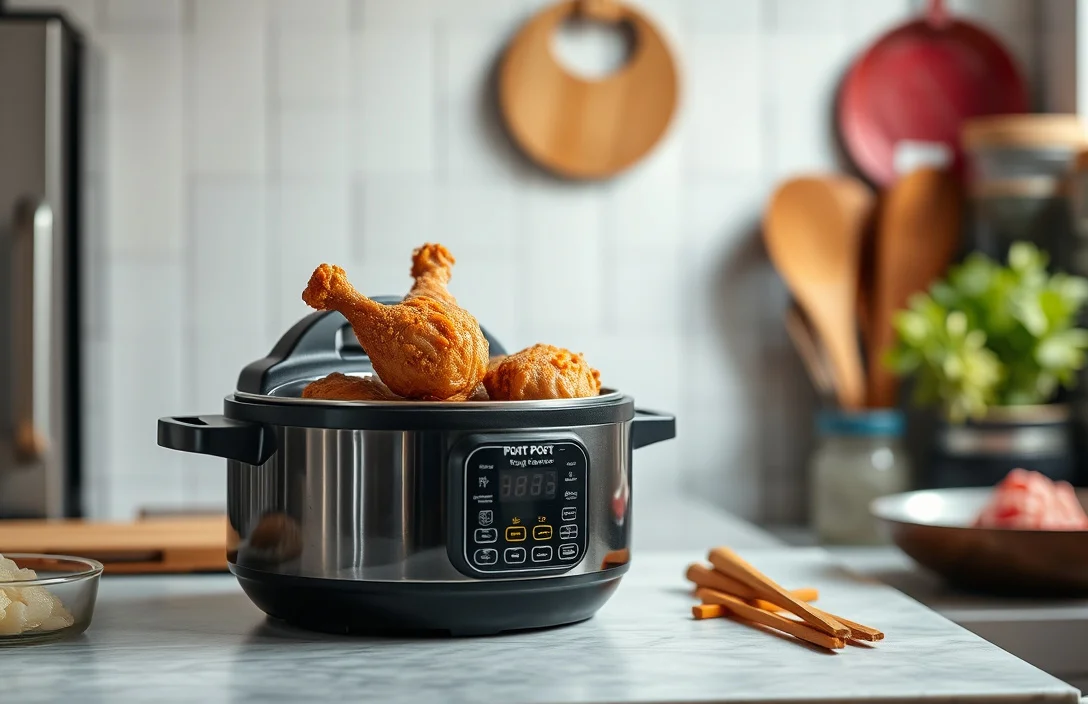
Follow these best practices to protect both texture and safety. The method is forgiving, but the details are what make it taste right.
Brown then pressure cook, every time. Pressure cooking alone makes tender chicken, not fried chicken. Skip browning and you’ll lose the crust. If you’re short on time, brown a little longer rather than pressure cooking longer to “fix” pale color.
Don’t overcrowd. Overcrowding drops oil temperature, which causes uneven browning and soggy coating. Brown in batches and keep the oil close to 350°F. If batches take too long, give the oil time to recover.
Use the right oil. Stick with neutral, high smoke point oils like canola, vegetable, avocado, or peanut oil. Oils that burn at lower temperatures make the crust taste bitter and increase smoke and residue.
Plan for storage and reheating. Cooked pressure-fried chicken keeps 3-4 days in the fridge if tightly covered. Reheat gently in an oven instead of blasting in a microwave to avoid turning the crust rubbery.
Make-ahead is easy up to breading. Prepare seasoned chicken up to the breading stage and refrigerate for up to 24 hours before cooking. Breaded chicken can also be frozen – set it on a baking sheet until firm, then move to a freezer-safe bag or container for up to 3 months.
Mistakes to Avoid with how to make fried chicken in a pressure cooker
Most “pressure fried chicken didn’t work” problems come from a handful of predictable mistakes. Avoid these and you’ll dodge the common texture and safety failures.
Mistake 1: Treating it like deep frying. Pressure cookers are not designed for classic deep frying inside the pot. Don’t attempt it – brown in oil using your cooker’s safe functions, then pressure cook with liquid and a trivet.
Mistake 2: Skipping a thermometer. Without monitoring, oil can run too cool (oily crust) or too hot (burnt coating). Many recipes heat oil to 350°F using a candy thermometer.
Mistake 3: Overcrowding the pot. Too many pieces at once drop oil temperature. The coating won’t brown properly, and the chicken may look done but eat soggy.
Mistake 4: Pressure cooking too long. Overcooking dries out chicken even when pressure cooks faster. Use the typical 8-12 minute window based on size instead of a fixed long duration.
Mistake 5: Forgetting the broiler step. If you want crunch, broil 2-3 minutes skin-side up. Without it, you’ll get tender, juicy chicken with less snap.
Pro Tips for how to make fried chicken in a pressure cooker
These tweaks make pressure cooker fried chicken closer to classic fried. They also help you troubleshoot quickly.
Tip 1: Rest coated chicken briefly before browning. After dredging, let coated chicken sit a few minutes. Even a short rest helps flour adhere so it doesn’t slough off when it hits hot oil.
Tip 2: Scrape browned bits and use them. Deglaze after browning and scrape up browned bits with broth or water. That flavor prevents a “pressure cooker chicken” taste.
Tip 3: Drain and rest on a wire rack. After pressure cooking, drain on a wire rack, then rest briefly before serving. The rack reduces trapped steam under the bottom and helps preserve crunch.
Tip 4: Use the right piece sizes. Thighs and drumsticks usually deliver better fried texture because they tolerate slightly more heat during browning and pressure cooking. Breasts can work, but the margin for dryness is smaller – watch size-related cook time.
Tip 5: Re-crisp when reheating. Reheat leftovers in a hot oven to recover some crispness. Warm through rather than steaming so the coating stays closer to the original bite.
If your first batch isn’t crispy enough, broil skin-side up for the full 2-3 minutes, then serve immediately.
FAQ
Can I make fried chicken in a pressure cooker without deep-frying?
Yes. Brown breaded chicken in hot oil first, then pressure cook on a trivet with about 1/2 to 1 cup broth or water for 8-12 minutes. Finish for extra crunch with 2-3 minutes under a broiler.
How long does pressure cooker fried chicken take?
Pressure cooking itself typically takes 8-12 minutes depending on piece size, and browning adds about 3-5 minutes per side. Many versions describe overall pressure cooker time as 10-15 minutes versus 30-45 minutes for traditional frying. Quick release right after time is up, then broil if you want crispness.
Is pressure cooker fried chicken safe for leftovers?
Yes. Cooked pressure-fried chicken keeps 3-4 days tightly covered in the refrigerator. Reheat gently before serving to protect the crust and heat the meat through evenly. If the coating gets soft, a short re-broil can help it regain some crunch.
What oil should I use, and how much?
Use a high smoke point neutral oil like canola, vegetable, avocado, or peanut oil. Common guidance is 1-2 cups of oil for the pressure-fryer style browning phase (enough to brown without full submersion). Heat oil to 350°F before adding chicken.
What’s the most common mistake with pressure cooker fried chicken?
Overcrowding the pot drops oil temperature and leads to soggy coating. Brown in batches, keep oil near 350°F, and drain on a wire rack after pressure cooking. For weak crispness, broil skin-side up for 2-3 minutes to restore crunch.

- 10 Best Slow Cooker For Hearty Stews 2026 (Tested And Reviewed) - October 20, 2026
- 10 Best Slow Cooker For Hearty Soups 2026 (Tested And Reviewed) - October 20, 2026
- 10 Best Slow Cooker For Comfort Food 2026 (Tested And Reviewed) - October 20, 2026