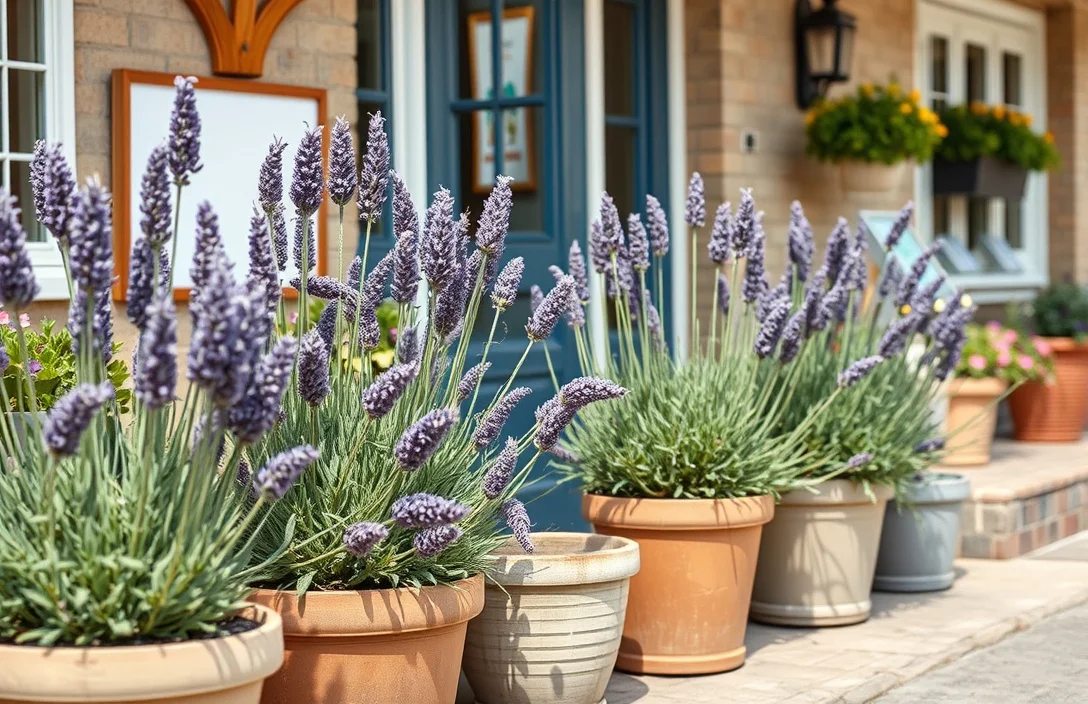
Lavender In Pots By Front Door In 4 Easy Steps
Lavender in pots by the front door is doable in the US, but most failures are predictable: a soggy pot, too little sun, or winter wet-and-cold. The good news is you can set yourself up for success with pot choice, drainage, and the watering rhythm lavender needs. This guide gets you the practical parts that matter – which lavender types to buy, what to do when growth gets leggy, leaves yellow, or roots rot.
Lavender in pots by the front door succeeds when you give it full sun – aim for 6 to 8+ hours – and use a very fast-draining potting mix in a container with drainage holes. Water only when the top 1 to 2 inches of mix dries out, then drain fully. Keep it dry in winter. Choose hardy varieties like English lavender (Lavandula angustifolia) or related types, and protect pots from freezing water around the roots.
Key Takeaways
- Choose hardy lavender. English lavender (Lavandula angustifolia) handles more cold than many French types.
- Prioritize drainage. Use a pot with drainage holes and a fast-draining mix to prevent root rot.
- Match sunlight. Target 6 to 8+ hours of direct sun for flowers and compact growth.
- Water by dryness. Water when the top 1 to 2 inches of mix dry out, then let it drain completely.
- Pot size matters. Larger pots dry slower – helpful in heat, risky in wet winter.
- Protect in winter. Shield pots from freeze-thaw cycles and keep the root zone on the dry side.
What Succeeds
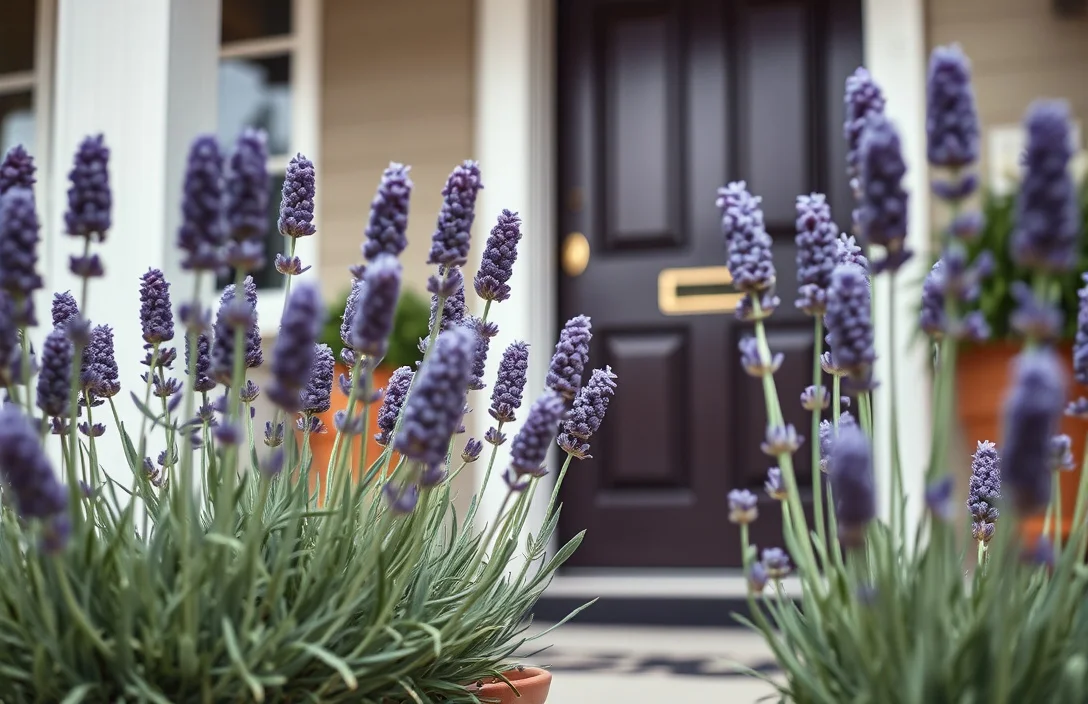
Lavender by the front door succeeds when you treat it like a dry-climate plant in a container, not like a basic patio flowering pot. In-ground lavender can tolerate neglect, but in pots the roots sit in the mix and can stay cold and wet. That’s when lavender declines quickly.
Sun and air movement matter just as much. Front entries can have reflective heat from concrete or porch lights, but they can also be partially shaded by roof overhangs. If your lavender gets less than a solid half day of sun, it may survive – but it often turns tall and weak, with fewer blooms.
Plan around these realities:
- Drainage is non-negotiable. If water can’t escape quickly, lavender roots lose oxygen and rot.
- The pot must dry between waterings. Lavender wants a wet-then-dry cycle, not constant moisture.
- Winter conditions decide the outcome. In the US, most container failures happen between fall and spring, not in summer.
Which Lavender Types Handle Front-Door Pots
Most lavender sold for patios fits into a few “families,” and they behave differently in containers. English lavender (Lavandula angustifolia) is usually the most reliable choice for US climates with cold winters, and it’s the best place to start if you want front-door pots to last.
French lavender (Lavandula dentata) and other showy types tend to be more about looks than durability in cold, wet conditions. In a sheltered setup they can do fine, but near an entryway you still risk freeze-thaw cycles and winter damp that pots trap around the roots.
My buying rule is simple:
- Start with English lavender if you want the best odds.
- If you choose a tender variety, treat winter protection as part of the deal and be ready to move the pot to a safer spot.
Also check how the plant is rooted right now. A lavender that was overwatered or mishandled during shipping can look healthy at purchase and then decline after it comes home. When you can, pick plants with tight growth, gray-green leaves, minimal yellowing, and no soggy stems at the base.
Best Pot Size, Drainage, and Soil Mix
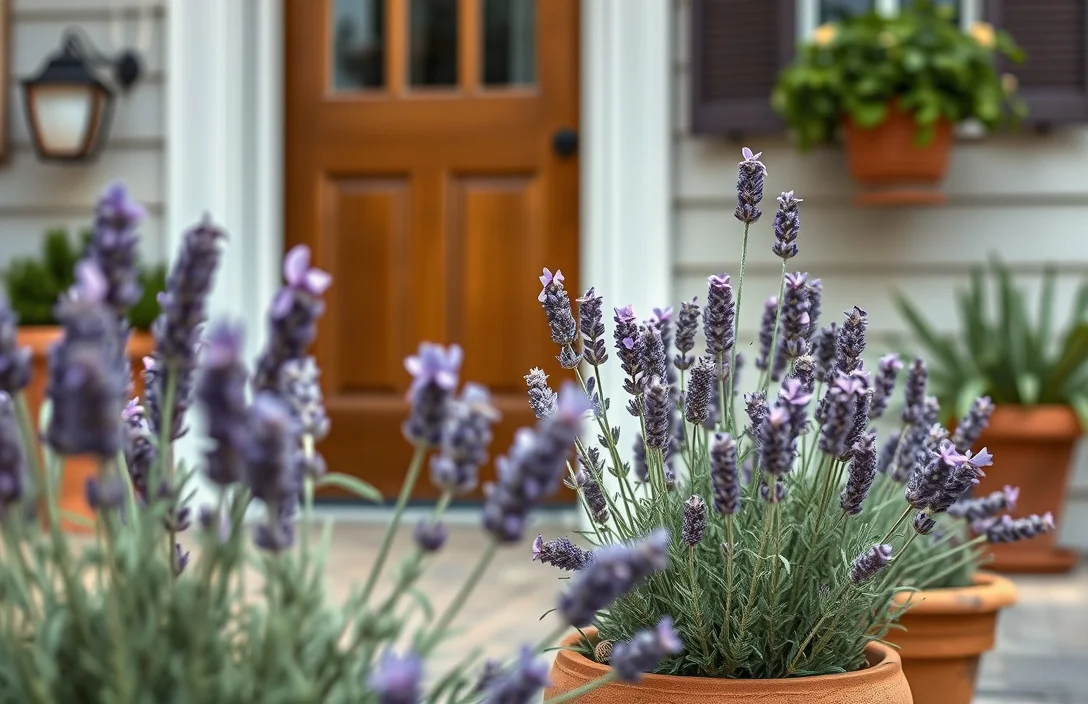
A pot that’s too small stresses lavender fast. A pot that’s too large holds moisture longer in cool weather. For most front-door setups, aim for “big enough to buffer heat and drying, small enough to dry out.” A practical target is a pot about 8 to 12 inches wide for a small starter plant, with room to grow over the next season.
Drainage holes aren’t optional. Use a saucer if you must, but treat it like a temporary catch, not a reservoir. If water sits in the saucer after watering, dump it out.
Use a soil mix that drains quickly and stays airy. Straight potting soil often holds too much water for lavender in pots. A better approach is potting mix plus a gritty amendment, aiming for a blend that feels light and drains fast. If water runs through immediately and the mix doesn’t stay wet for days, you’re on the right track.
A simple mix setup that works in many US yards:
- Pot with drainage holes
- Light potting mix
- Gritty amendment for fast drainage (the product name matters less than the outcome: rapid draining and quick drying)
How Much Sun Do Potted Lavender Need
Lavender needs direct sun, and pots exaggerate the difference between “some sun” and “real sun.” For front-door plants, treat 6 to 8+ hours of direct sunlight as the working target. If that drops because of an awning, trees, or building shadows, expect fewer flowers and a higher chance of leggy growth.
Sun affects watering too. More direct sun dries the pot faster, which makes lavender’s wet-then-dry routine easier to manage. Less sun means the pot stays damp longer, and that’s where root problems start.

Helpful pick
Headwind Glazed Ironstone Boutique Collection Cobblestone Plant Pot – Plum Color 6 Inch Pot for Indoor Plants – Planters for Indoor Plants – Ideal Succulent Planters by Robert Allen
A 6-inch pot offers enough root space for lavender while drainage promotes sun-loving, healthy growth.
Use these on-the-door cues:
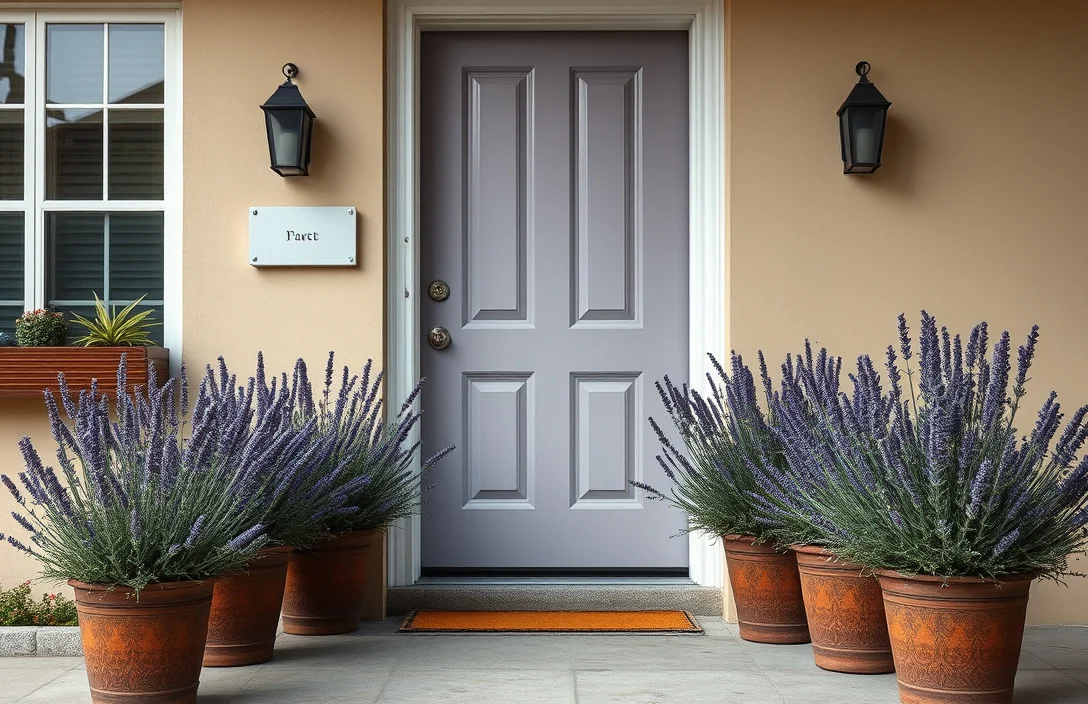
- Compact growth and thicker stems usually mean enough light.
- Stretching toward the light and larger gaps between leaf clusters point to low light.
- Fewer flower spikes often shows up when light drops even if the plant still looks green.
If your pot only gets partial sun, rotate it every couple of weeks so the plant doesn’t lean and you get more even growth. Front doors also bring temperature swings, so factor in protection from cold wind – not just sun hours.

Helpful pick
Back to the Roots Windowsill Planter: Lavender
This lavender planter for your front door supports proper light exposure, encouraging compact growth and sturdy stems.
Watering Schedule for Potted Lavender Outdoors
Watering lavender in a pot runs on timing, not a fixed calendar. Water only when the top 1 to 2 inches of the mix are dry. Then water thoroughly until excess drains from the bottom and stop. Don’t water again just because the surface looks dry after a day or two.
In summer heat, containers dry faster, so you might water more often. In cooler, cloudy stretches, you’ll go longer between waterings. Weather drives the schedule.
A dependable outdoor rhythm:
- Check soil depth with your finger (or a moisture meter if you use one).
- Water deeply when the top 1 to 2 inches are dry.
- Wait until it dries again before watering.
- Empty the saucer if runoff collects.
Two mistakes consistently cause failure: watering too frequently and watering “a little.” Lavender needs a real soak that drains out, followed by time to dry. If the root zone stays damp, yellowing and mushy roots can follow.

Helpful pick
PATIKIL 5.12 Inch Ceramic Plant Pots, Modern Flower Planters Gradient with Drainage Holes for Decorate Home Indoor Plants Succulent Herb, Purple
Its drainage-ready design supports the section’s watering approach for lavender in pots.
Winter Protection for Lavender Near Entryways
Winter is where front-door lavender often fails, even when summer growth looked fine. Cold air isn’t the only issue – freeze-thaw cycles plus persistently wet mix in a container do the damage. Pots hold moisture around roots longer than in-ground soil, and trapped water is what turns cold into root stress.
If you can, put pots where they avoid direct winter rain and harsh wind – near a wall under an overhang works well. Avoid letting the pot sit in standing water during storms.
Keep the root zone stable and drier:
- Move the pot to a sheltered spot if your front entry gets heavy rain or puddling.
- Wrap insulation around the pot (not the foliage) to reduce freeze-thaw swings.
- Use breathable covering so you don’t trap constant moisture against the pot surface.
If you live in harsher winter areas, overwinter by moving the pot to an unheated garage or porch area that stays brighter than a dark basement. Even with protection, container lavender is still more vulnerable than in-ground plants, so check it periodically.
Watch for “false spring” problems too. A thaw followed by refreeze stresses container roots. The more you keep the pot out of the wettest, wind-whipped spots, the better.
Troubleshoot Leggy Growth, Yellowing, and Root Rot
Leggy growth in potted lavender usually starts with light. If the plant stretches, thins out, or leans toward the brightest area, it’s reaching for sun and losing flower potential. Fix it by increasing direct light. If you can’t add sun, prune more often and accept fewer blooms.
Yellowing can come from multiple causes, which is why it confuses people. Low light can yellow leaves, but overwatering and poor drainage can also cause yellowing because roots lose oxygen. If yellowing comes with soft stems or a smell from the soil, treat it as a drainage and watering issue, not a “nutrient problem.”
Root rot in pots is the urgent scenario. Look for persistently wet soil, plant collapse, black or brown mushy roots, and a sour or musty odor. If you suspect rot, don’t keep watering “to perk it up.” Check the roots as soon as you can.
Try these steps:
- Leggy growth: move to more direct sun and rotate the pot for even exposure.
- Yellowing: verify the mix dries before watering again, and confirm drainage holes aren’t blocked.
- Root rot: remove the plant, inspect roots, trim mushy tissue, repot in a faster-draining mix, and water only after it settles.
If you find root damage, prune back leggy stems to encourage new growth. Lavender can recover, but it needs the right conditions quickly – not a “keep it alive” approach.
FAQ
What’s the easiest lavender to grow in pots by a front door?
English lavender (Lavandula angustifolia) is the safest starting point for most US yards because it handles more cold than many showier types. Pair it with a pot that has drainage holes and a fast-draining mix. If your door area stays cool and wet in winter, plan on extra shelter or relocating the pot.
How often should I water potted lavender outdoors?
Water potted lavender only when the top 1 to 2 inches of the mix are dry. Then water thoroughly until excess drains out the bottom. Hot weather may mean more frequent watering, while cool or rainy stretches may require longer gaps – follow soil dryness, not the calendar.
Can potted lavender survive winter near an entryway?
Yes, but container lavender is more vulnerable than in-ground plants because pots trap moisture during freeze-thaw cycles. Protect the pot from winter rain, shelter it from wind, and insulate the pot to stabilize temperatures. Check periodically, and keep the root zone on the dry side.
How do I fix leggy lavender in a front-door pot?
Leggy growth is almost always from insufficient direct sun. Move the pot to the brightest spot you have with 6 to 8+ hours of direct light if possible. Rotate it regularly so it doesn’t lean, then prune back stretched growth once light improves.
Why does my lavender turn yellow in a pot?
Yellow leaves usually point to one of three issues: too little sun, overwatering, or drainage problems. Check how long the mix stays wet after watering, and confirm water drains freely from the bottom. If soil stays damp for days or the base feels soft, treat it as a root health problem and repot into a faster-draining mix.

- 10 Best Slow Cooker For Slow Cooking Legumes 2026 (Tested And Reviewed) - October 17, 2026
- 10 Best Slow Cooker For Slow Cooking Oxtail 2026 (Tested And Reviewed) - October 16, 2026
- 10 Best Slow Cooker For Slow Cooking Venison 2026 (Tested And Reviewed) - October 16, 2026