Gravel For Drainage In Pots Explained Simply
Pots rot plants when water has nowhere to go, and “just add more holes” is often too slow for heavy rain. Gravel helps because it creates drainage space and reduces how much wet mix sits at the bottom. This guide breaks down gravel for drainage in pots so you can pick the right type, size, and layering method without clogging your drainage system.
Gravel for drainage in pots works best when it stays in a coarse, well-graded layer and you avoid mixing it with potting soil. For planters, aim for a bottom layer in the range of about 1 to 2 inches, and use washed, angular gravel (sizes roughly 3/8″ to 1/2″ or similar) that doesn’t pack tight.
Key Takeaways
- Best gravel type. Use washed, angular gravel in the 3/8″ to 1/2″ range for most container drainage.
- Avoid clogging risk. Keep gravel separated from potting mix so fines cannot migrate into it.
- Washed wins. Washed gravel removes fine particles that can reduce flow.
- Crushed edges help. Angular crushed stone creates more void space than smooth round river rock.
- Correct depth matters. Use about 1 to 2 inches, not a deep gravel “bath” at the bottom.
- Size drives performance. Choose grains that are big enough to drain fast, small enough to fit under the soil mix.
Gravel for Drainage in Pots What Works Best
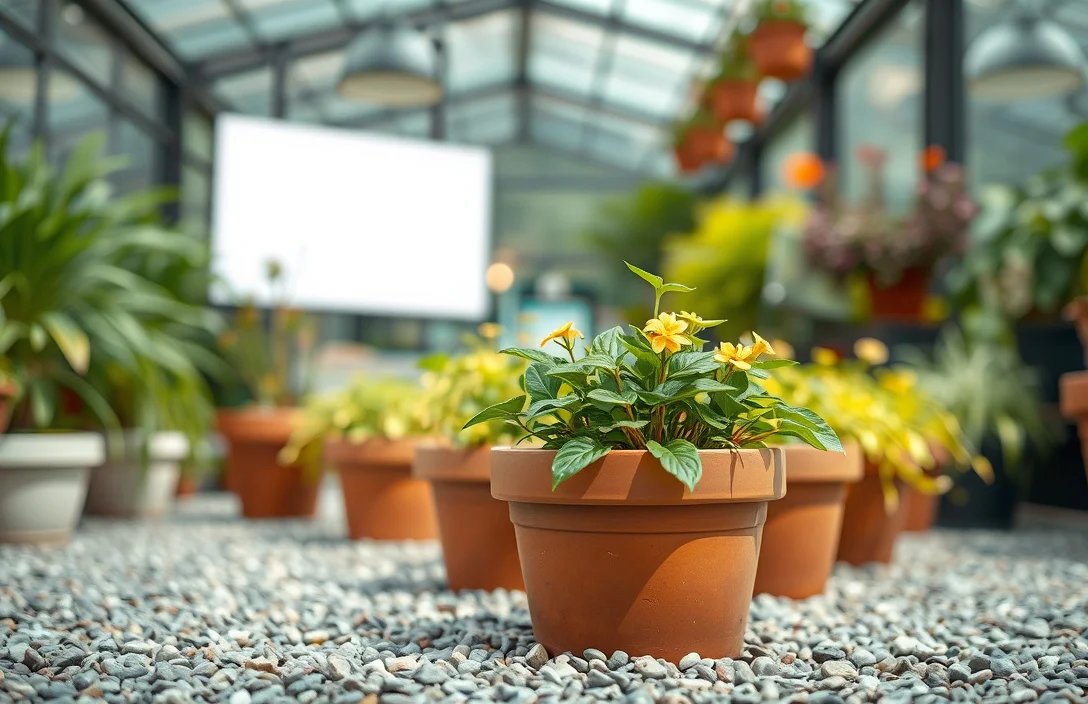
Use washed, angular gravel (or a similar “clean” crushed stone) in the bottom of the pot, then keep it from mixing with your potting mix. That combination gives you drainage space and helps prevent the gravel from becoming a fine-particle sponge.
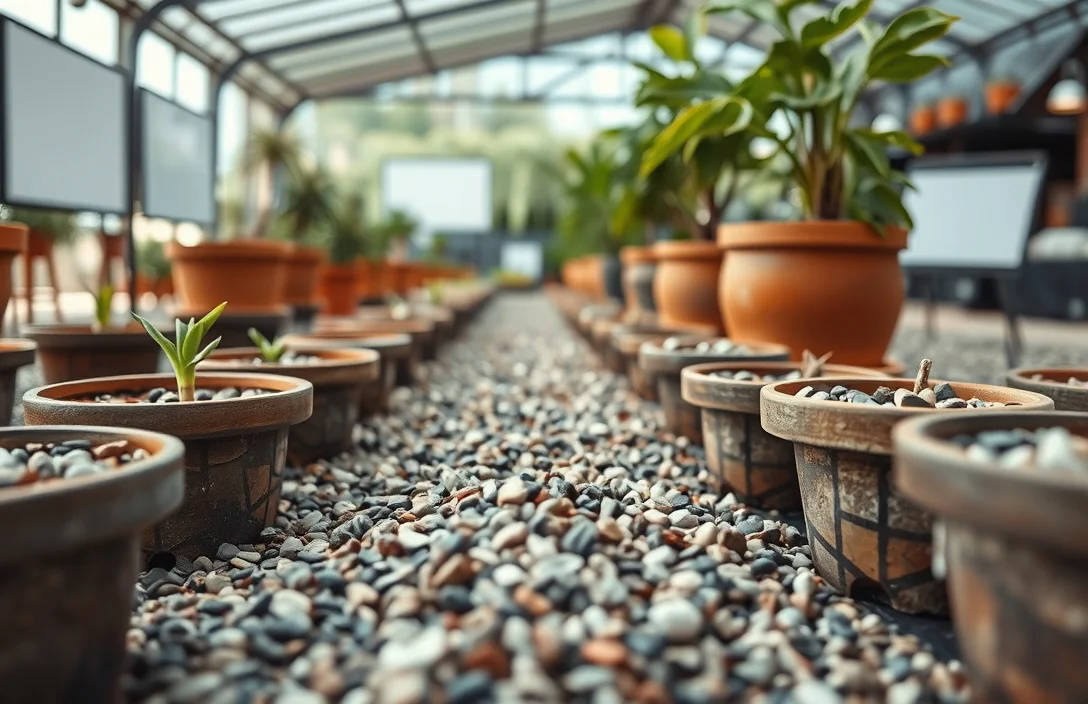
In practice, the main problem with many DIY pot setups is not that gravel “doesn’t work,” it is that fines from potting mix migrate into the gravel layer over time. Once soil fines settle into the voids, water slows down and the bottom stays wet. A washed, angular product drains better because it starts cleaner and packs less tightly than smooth, rounded rock.
If you want a simple shopping target, look for listings that explicitly say washed or “clean” and check for a size band like 3/8″ to 1/2″ or similar. “Clean rock” is commonly used for drainage and general applications, and for containers you are trying to replicate that behavior on a smaller scale.
Types of Gravel for Drainage in Pots Grades Explained
Gravel grades are basically size ranges, and the size range determines how much void space you get and how easily water moves through it. A common standard description is that gravel is roughly 2 mm to 63 mm in particle size, while finer material becomes sand/dust and coarser becomes cobble/boulder.
For pot drainage, you do not need boulders or pea gravel. Pea gravel is typically around 4 mm to 10 mm (about 1/8″ to 3/8″) and it can work for some decorative purposes, but it also has a higher chance of clogging if the potting mix sheds fines. River rock spans about 10 mm to 100 mm (about 3/8″ to 4″), which can drain well, but its smooth, rounded shapes often settle into a tighter arrangement than crushed stone.
Here are gravel “grade” types that show up in real products, and what they usually mean for containers:
- Pea gravel (about 4-10 mm) – small, decorative, can clog sooner in containers if fines migrate.
- River rock (about 10-100 mm) – drains well but is often smooth and may compact more tightly.
- Creek rock (about 25-150 mm) – larger pieces, usually overkill for small pots.
- Bank run gravel (mixed, includes sand-like material) – can be useful for fill, but the mixed fines are the opposite of what you want for a stable drainage layer.
The best “grade” for a pot is usually the kind that is big enough to create water pathways but not so big that it creates gaps where soil can fall in. In US container work, that often lands in the 3/8″ to 1/2″ neighborhood.
Washed vs Unwashed Gravel for Pot Drainage
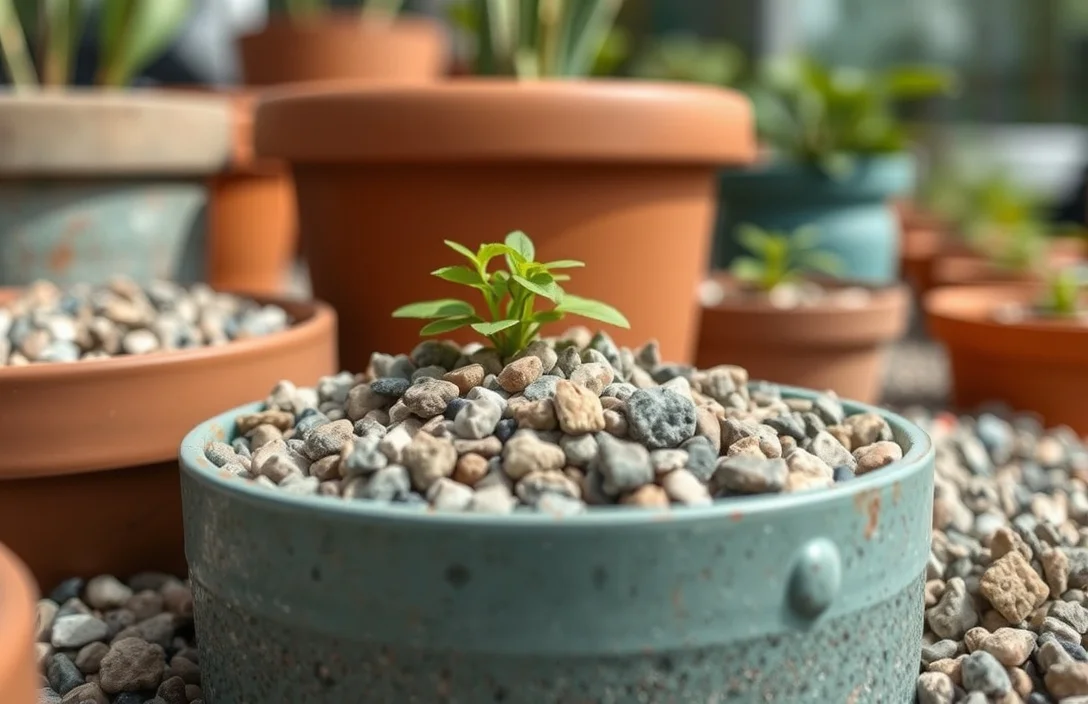
Washed gravel is the safer default for pot drainage because it has been screened and rinsed to remove fine particles that clog voids. Unwashed gravel often contains silt, clay dust, or very small particles that can move upward into the gravel layer and pack it over time.
This difference shows up fast in containers because the drainage layer is small. In a landscape trench, even a partially clogged layer may still drain well enough. In a 10″ or 12″ pot, a thin drainage zone can get “pinched off” if fines settle between stones.
There is also a practical handling angle: washed gravel tends to look cleaner and feel more like “stone” than “stone plus dust.” You are trying to keep your drainage layer closer to a coarse, open structure and your potting mix closer to a controlled soil/air structure above it.
If your gravel is unwashed, you can often rinse it before use, but the real question is time and consistency. Buying washed is usually the easiest way to avoid guessing, especially if you have multiple pots to set up.
Crushed Stone vs Round Gravel in Container Drainage
Crushed stone is usually the better choice for drainage in pots because angular pieces lock in a way that preserves voids. Round river rock can work, but smooth surfaces and rounded shapes tend to pack differently, and you can end up with less usable pore space.
Think of it like this: drainage performance depends on continuous pathways for water to move downward. Angular crushed stone often creates more irregular contact points between particles, which helps water keep flowing instead of forming a tighter “bed.”
There is a trade-off. Round rock is sometimes more pleasant visually for top dressing, while crushed rock can look sharper and more industrial. For the bottom drainage layer, looks don’t matter much, so you should prioritize performance and consistency.
If you want a practical rule: use angular crushed stone in the bottom layer, then use decorative rock on top only if you want a finished look. Mixing decorative rock into the whole pot can be a mistake because larger pieces do not replace a correctly structured potting mix.

Helpful pick
Houseplant Smart Gravel – Improve Drainage, Prevent Overwatering & Root Rot, Support Strong Roots | Eco-Friendly & Reusable Drainage Rocks for Potted Plants | Sustainably Recycled Ocean Plastic | 32oz
Specifically designed for drainage in potted plants, this recycled ocean-plastic gravel helps prevent overwatering and root rot.
How Much Gravel Do You Need in a Pot
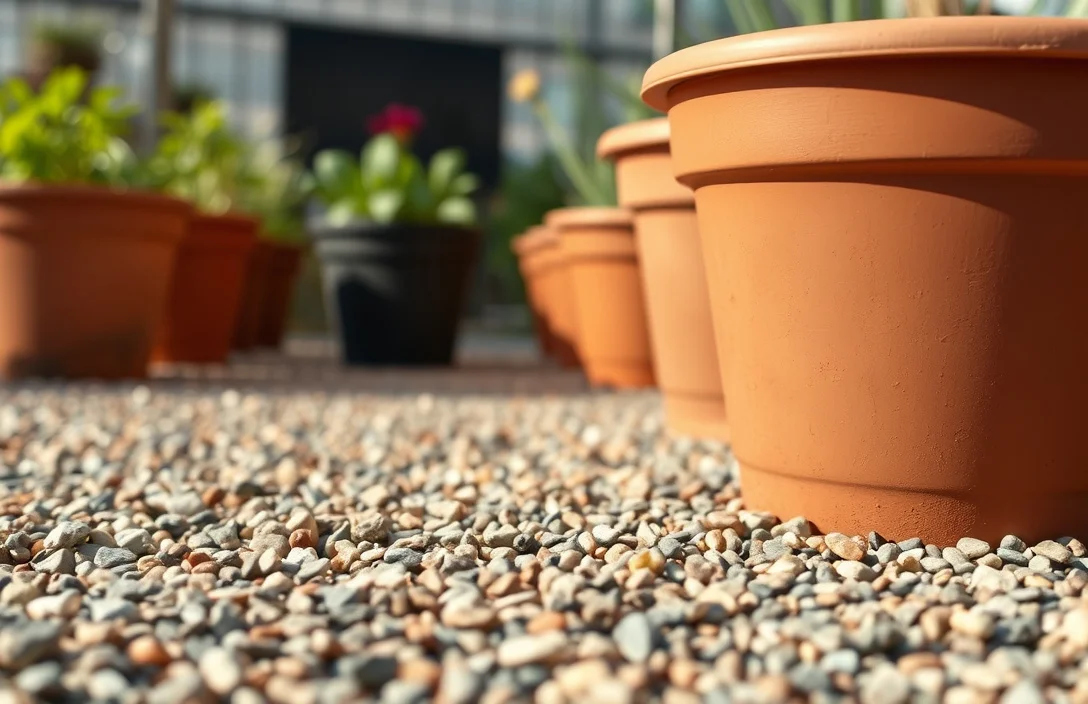
Use about 1 to 2 inches of gravel at the bottom of the pot, then stop. Going deeper often just creates a larger volume where wet mix can linger or where gravel can trap fines when the interface breaks down.
For many container sizes, that depth is enough to give water somewhere to go right after it drains through the mix. If you pack the pot too deep with gravel, you also reduce the volume of soil mix that plants actually use, and plants still need a good rooting and moisture balance above the drainage layer.
Here is a simple way to decide without math: if you can still fit your normal potting mix depth with enough room for roots, you are probably in the right range. If you find yourself losing most of your rooting volume to rock, you went too far.
Also avoid compacting gravel hard. Light settling is fine, but aggressively packing it can reduce void space, which undermines your goal.

Helpful pick
FANTIAN 2 lbs Natural Mixed Color Pea Gravel Pebbles, 3/8 inch Decorative Rocks for Succulents, Pebbles for Indoor Plants, Vases, Aquarium Gravel, Top Dressing, Outdoor Decorative Stones
The 3/8 inch gravel provides a stable drainage layer that prevents wet soil from accumulating at the pot bottom.
How to Layer Gravel for Drainage Without Clogging
Layering is where most pot drainage plans succeed or fail, because clogging happens at the interface between potting mix and gravel. The goal is separation: water should pass from soil to gravel, but soil fines should not migrate down and fill the voids.
A reliable approach is:
- Put a drainage material layer (gravel) at the bottom.
- Use a separation barrier so potting mix cannot fall into the gravel layer.
In practice, that barrier is usually a fabric meant for garden drainage or a breathable layer. You want something that lets water through but reduces how easily fine particles migrate. If you use something non-breathable, you can create a new problem where water has to pool until it finds a path around the barrier.
You can also help by using a potting mix that drains well. If your mix is mostly fine-textured and holds water aggressively, the gravel layer will never be “the solution,” it will just buy time. For plants in containers, potting mix quality matters as much as the gravel.
A working mindset is “water moves through structure, not through sludge.” Keep the gravel clean (washed if possible), keep the interface separated, and don’t make the gravel layer so deep that fines and water linger at the boundary.

Helpful pick
Rahato 5 lbs Pebbles for Indoor Plants, Vase, Succulent, 3/8″ Gravel for Plants, Pots Indoor, Bamboo Rocks for Bamboo Plants, Decorative Small River Rock, Highly Polished
Provides a stable drainage layer, helping water move through while limiting soil fines.
Gravel Size Chart for Drainage in Planters
Choose a size band that matches planter scale and supports flow through voids. For containers, the most common effective ranges tend to cluster around sizes like pea gravel up to #57-style stone ranges, with washed angular material usually preferred.
Below is a practical “planter-minded” size chart you can map to common product listings. The particle ranges are based on standard gravel grade ranges, and the planter recommendations focus on drainage performance and clogging resistance.
| Product-style gravel | Typical particle size range (mm) | Common US name/label you might see | Good for planter drainage? |
|---|---|---|---|
| Coarse soil / fine aggregate boundary | 0.063 < x ≤ 63 | “screenings,” very fine gravel blends | Usually avoid for bottom layer (too many fines) |
| Gravel (general) | 2 < x ≤ 63 | mixed gravel | Sometimes, but only if washed and graded |
| Pea gravel | ~4 – 10 mm | pea gravel | Sometimes, but higher clog risk in containers |
| River rock | ~10 – 100 mm | river rock | Often OK, but smooth shapes can pack |
| Creek rock | ~25 – 150 mm | creek rock | Usually oversized for small pots |
| Bank run gravel | mixed (sand + stones) | bank run | Avoid for drainage layer (mixed fines) |
If you want the simplest target when you shop: aim for a washed, angular grade around the size range associated with 3/8″ to 1/2″ stone (often marketed as “clean” stone for drainage). That falls into the gravel range that tends to create stable void pathways without being so small that it clogs quickly.
FAQ
What gravel should I use for drainage in pots?
Use washed, angular gravel (often described as clean stone) and aim for a size around 3/8″ to 1/2″ for most home planters. Washed gravel removes fine particles that can migrate and clog the voids. Avoid mixed “bank run” gravel for the bottom drainage layer because it can include sand and fines.
Is gravel at the bottom of pots actually necessary?
Gravel helps most when your potting mix drains quickly and your pot has real drainage holes. If your holes are adequate and your mix is high-quality, gravel is optional. When drainage holes are slow or the potting mix stays saturated, a thin gravel layer (about 1 to 2 inches) can improve early water movement downward.
Can unwashed gravel ruin pot drainage?
Unwashed gravel can reduce drainage because fine dust and silt settle into the spaces between stones. Over time, that fines movement can slow water flow and keep the bottom zone wetter than you want. If you only have unwashed material, rinse it well and consider pairing it with a breathable separator to limit migration.
How do I stop gravel from mixing with potting soil?
Place a breathable separation barrier between the potting mix and the gravel, like garden fabric designed to allow water through. Keep the gravel layer clean (washed if possible) and do not pack it tightly. When you fill the pot, pour potting mix gently so it doesn’t collapse down into the gravel.
What’s the most common mistake when using gravel in pots?
The most common mistake is adding too much gravel, then treating it like a waterproof “drainage sink.” Deep gravel layers can shrink rooting volume and make it easier for fines to accumulate at the interface. Stick to 1 to 2 inches and focus on washed material plus separation from potting mix.
Best alternative to gravel for pot drainage?
A good alternative is using a commercial coarse drainage mix or modifying your potting mix with coarse components (like perlite or pine bark fines) so water drains through the mix itself. You still want a real drainage hole, but you may not need a gravel layer if your potting mix and container design already drain well. If you do add gravel, keep it thin and separated.

- 10 Best Slow Cooker For Slow Cooking Legumes 2026 (Tested And Reviewed) - October 17, 2026
- 10 Best Slow Cooker For Slow Cooking Oxtail 2026 (Tested And Reviewed) - October 16, 2026
- 10 Best Slow Cooker For Slow Cooking Venison 2026 (Tested And Reviewed) - October 16, 2026