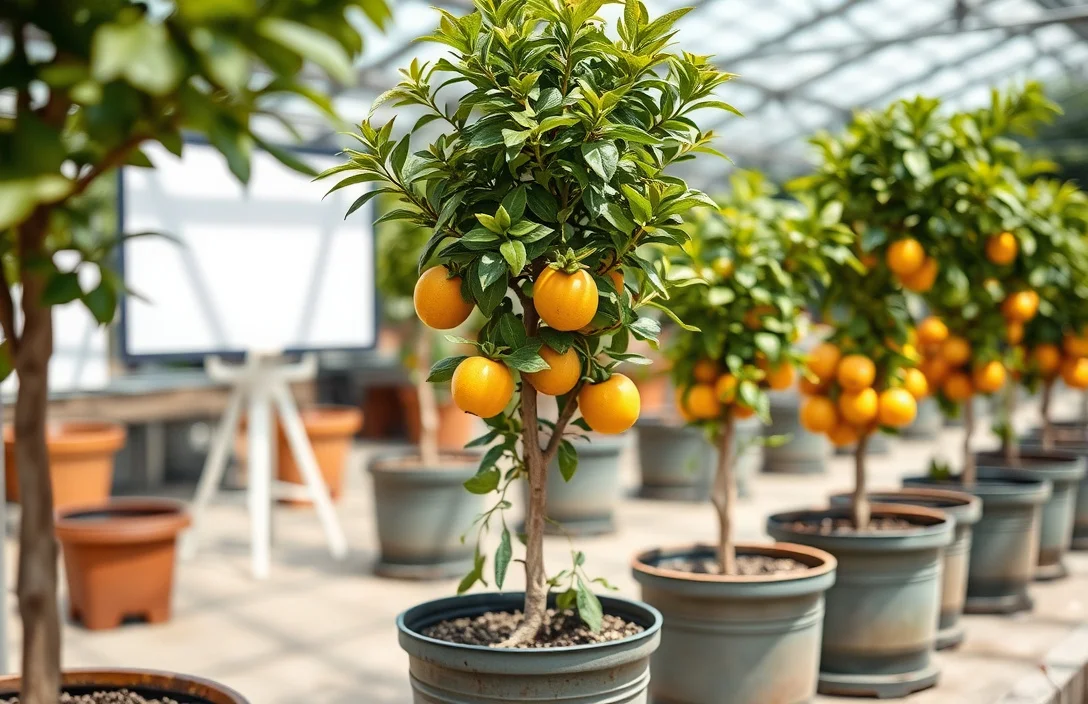
How To Plant Fruit Trees In Pots?
Fruit trees in pots let you grow apples, figs, citrus, and more when you have limited space, but the pot and care routine make or break your results. With the right container size, drainage, and potting mix, many potted fruit trees begin producing in 1-3 years. This guide covers prerequisites, exact steps, troubleshooting, and next actions so your roots stay healthy and your tree actually fruits.
Planting fruit trees in pots works when you use a container with large drainage holes and enough depth, fill it with a lightweight potting mix, and plant at the right height. Many potted fruit trees start producing in 1-3 years, but success hinges on proper watering, feeding, and pruning.
Key Takeaways
- Start with the right pot. Use 15-20 gallons minimum, or at least 18-24 inches depth and diameter for long-term growth.
- Prioritize drainage first. Large drainage holes prevent root rot, because dense or waterlogged soil suffocates feeder roots.
- Mix for air and moisture. Use a potting mix with organic matter and airy components in a 2:1:1 ratio.
- Water immediately after planting. Water thoroughly after planting, then monitor soil moisture regularly.
- Feed on a schedule. Apply fertilizer every 4-6 weeks, or use liquid feed every 2-3 weeks at half strength.
- Plan for the cold season. Stop fertilization 6-8 weeks before frost to help trees harden.
How to begin
Choose what you are optimizing for before you buy: easiest fruiting, easiest winter protection, or biggest patio flexibility. Most container problems come from the wrong container size or potting mixes that stay too dense and wet. Nail pot size and drainage, and the rest becomes routine.
Buy dwarf or semi-dwarf varieties grafted to dwarfing rootstocks so the tree stays manageable in a pot. A practical baseline is 15-20 gallons for some compact container types (like peaches, figs, kiwis, and pomegranates). For long-term growth, plan on at least 18-24 inches of depth and diameter. Forcing a tall-growing cultivar into a small pot usually means constant stress instead of fruit.
Basics of how to plant fruit trees in
A fruit tree in a pot is a controlled root environment. You need enough space for roots, enough oxygen in the mix, and consistent moisture without waterlogging. Garden soil is usually too dense for containers, and that density increases root-rot risk because feeder roots need air.
Match the tree to its pollination needs, too. Some fruit trees are self-fertile, while others require a second compatible variety nearby for reliable fruit set. Choosing varieties (and confirming self-fertility if that’s what you want) removes one of the most common reasons container trees never fruit.
Pots also come with a real trade-off: container trees dry out faster and grow on a tighter nutrient budget than in-ground trees. That is why watering and feeding schedules matter more in containers.
how to plant fruit trees in
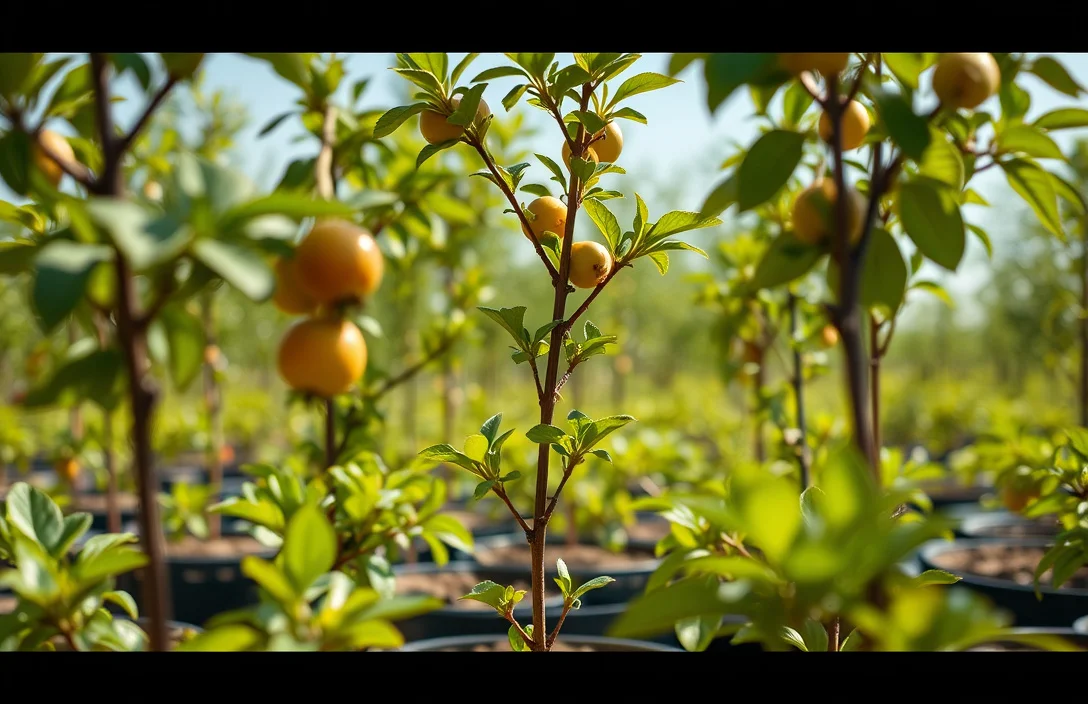
- Pick a dwarf or container-suitable variety. Choose dwarf or semi-dwarf trees that stay compact and tolerate root restriction better than standard-size trees.
- Choose the pot size you will live with. Use 15-20 gallons for many container-friendly fruit types, and plan on 18-24 inches minimum depth and diameter for long-term growth. Bigger pots dry slower, which is easier to manage.
- Use a pot with large drainage holes. Confirm the bottom has plenty of drainage openings. Small or easily blocked holes let roots sit in excess moisture.
- Select (or mix) a container potting mix. Start with a lightweight commercial potting mix. Aim for a 2:1:1 ratio (organic matter, airy ingredients, moisture-retaining components). The goal is aeration with enough water-holding to avoid constant dry swings.
- Prepare the tree for transplanting. Water the tree in its nursery container first so the root ball holds together. If roots are circling tightly, loosen them gently so they start growing outward once planted.
- Set the tree at the right height. Position the root ball so the trunk sits at the correct planting height, not buried deeper than it was in the nursery. Keep the graft union at a suitable level for your variety and rootstock.
- Backfill and firm lightly. Add potting mix around the root ball and press gently to remove large air pockets without compacting the mix. Over-compressing steals oxygen from the root zone.
- Water thoroughly right after planting. Water until excess runs out the bottom. This settles soil around roots and clears trapped air gaps.
- Start with a clear care schedule. Monitor soil moisture regularly, since containers can swing quickly between dry and wet. Fertilize on a schedule such as every 4-6 weeks, or use liquid feed every 2-3 weeks at half strength.
- Plan pruning for size and fruit. Keep the tree sized for the container and train branches to improve structure and light. Pruning decisions shape future fruiting more than almost anything you do after planting.
Treat planting day like a system setup, not a simple pot swap. Pot size, soil aeration, and watering right after planting are the three levers you control perfectly on day one.
Things that matter most
The first technique is root-zone aeration. Use lightweight potting mix instead of garden soil, and do not pack it down. Dense or saturated soil starves roots of oxygen and invites diseases.
Match pot depth and diameter to what you bought. A practical way to think about this is container volume first, then depth. Use targets like these:
| Tree Type (Example) | Self-Fertile Variety (Example) | Container Size Target |
|---|---|---|
| Peach | Delite, Garden Gold | 15-20 gallons |
| Fig | Petite Negra, Dark Emma | 10-15 gallons |
| Kiwi | Issai | 15-20 gallons |
| Pomegranate | Ruby Glow | 15-20 liters |
| Container depth guidance | – | 18-24 inches recommended |
Feed with intent, not random top-dressing. Containers do not hold nutrients the way garden soil does, so fruit trees need consistent feeding. Use fertilizer every 4-6 weeks, or liquid feed every 2-3 weeks at half strength so you can adjust if growth looks too strong.
Treat pollination like part of planting. If your variety is not self-fertile, plan for either a self-fertile option or a compatible second variety nearby. A container tree can be planted perfectly and still produce nothing if pollination is missing.
What works in practice
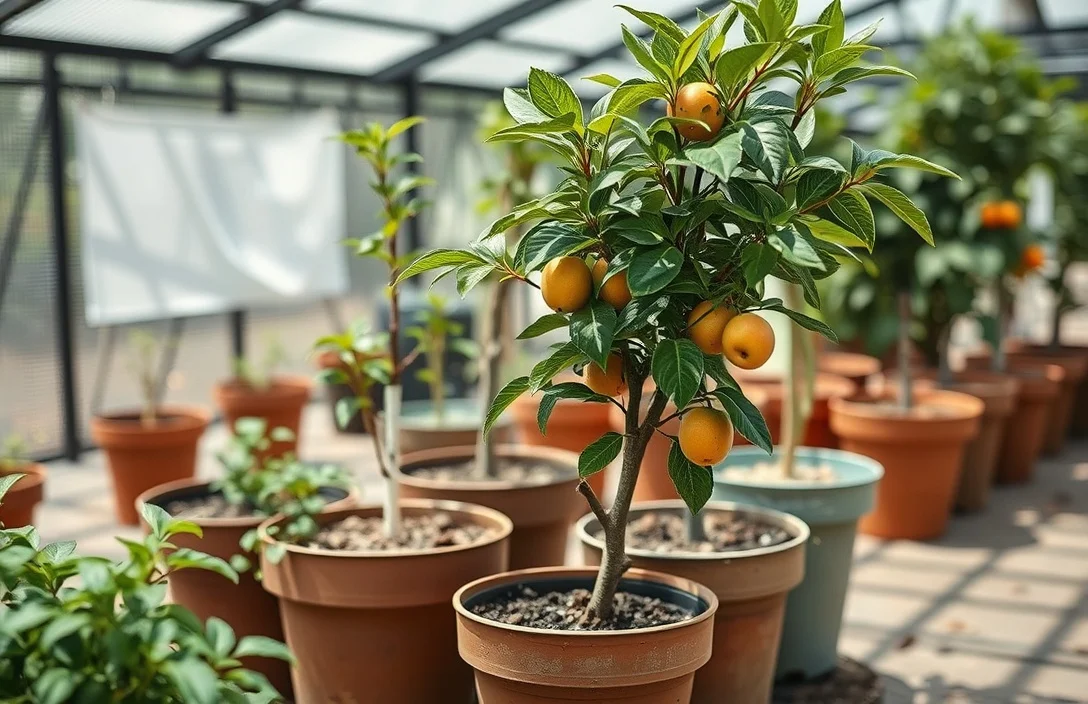
Water at the right time and avoid chronic wetness. Water early in the morning to reduce evaporation and fungal risk, then let the mix drain and breathe. When possible, use a moisture meter so you do not rely on guesswork that can lead to root rot.
Repotting and root management matter because container roots eventually circle the pot’s edge. Inspect roots every two to three years. When you see circling, repot and root prune to encourage outward growth. This is one of the few maintenance actions that directly protects long-term fruiting.
Follow feeding timing closely. Apply balanced slow-release fertilizer when spring growth starts, then stop fertilization 6-8 weeks before frost so trees harden for winter. Late feeding pushes tender growth that struggles once temperatures drop.
For pruning, manage size and light. Keep the canopy open enough for sun to reach inner branches because fruiting wood needs light. A container tree with good light sets fruit more reliably than one that becomes a dense, shaded mass.
Mistakes to Avoid with how to plant fruit trees in
Using the wrong soil is the first mistake. Garden dirt compacts, stays too wet, and suffocates feeder roots, which can lead to root rot and weak growth. Ignoring drainage holes is the second mistake. A pretty pot with poor drainage turns the root ball into a swamp.
Underpotting also backfires. A fruit tree in a pot that is too small dries out faster, nutrients wash through quicker, and root restriction becomes stress instead of manageable size. Shallow containers (below the under 18-24 inches depth range mentioned as a long-term guide) make stability and root growth harder to maintain.
Over-fertilizing ruins the balance. Feeding too frequently or too late in the season creates soft growth that does not harden. Stick to a schedule like every 4-6 weeks, and stop fertilization 6-8 weeks before frost.
Do not assume pollination is automatic. If you plant a non-self-fertile variety and only keep one tree, blossoms can happen without fruit. Fix it with variety choice (self-fertile) or by adding a compatible second variety nearby.
Pro Tips for how to plant fruit trees in
Use a moisture meter if you often guess. Containers swing fast, and guessing usually turns into either drought stress (flower drop, slower growth) or overwatering (root rot). A meter helps you stay in the “even moisture, not soggy” zone more reliably.
Sterilize pruning tools between cuts if you prune often. Wipe shears with 70 percent alcohol between cuts to reduce disease spread, which matters in crowded container settings where airflow can be limited.
Inspect roots at repotting time and act when you see problems. Check roots every two to three years. When roots circle, root prune so the tree keeps growing outward instead of spiraling in place.
The best-looking tree is not always the best fruiting tree. If you see fast leafy growth but weak flowering, adjust light, nutrients, and pruning structure. Change one variable at a time so you can tell what actually improved.
FAQ
1) What size pot do I need for fruit trees in pots?
Use at least 15-20 gallons for many dwarf or miniature container fruit types. For long-term growth, plan on 18-24 inches of depth and diameter. Much smaller pots dry out faster and require more frequent watering and fertilizing, which increases stress and reduces fruiting.
2) How often should I water a fruit tree in a pot?
Water thoroughly after planting, then monitor soil moisture regularly. Containers need more frequent watering than in-ground trees because they dry faster. Water early in the morning to reduce evaporation and fungal risk, and avoid letting the mix stay waterlogged.
3) How often should I fertilize a potted fruit tree?
Use a consistent rhythm. Fertilize every 4-6 weeks as one approach. Liquid feed every 2-3 weeks at half strength as another. Stop fertilization 6-8 weeks before frost so the tree hardens for winter.
4) How long until a potted fruit tree makes fruit?
Many potted fruit trees produce in 1-3 years, depending on variety, rootstock vigor, and how consistently you water and feed. Good container conditions and solid pruning structure help fruiting show up sooner and more reliably.
5) Can I grow fruit trees in pots indoors?
Yes, but only with strong light and protection from temperature swings. Many people keep containers outdoors most of the season, then move them when conditions get harsh. Weak indoor light can still produce leaves but often leads to poor blossoms and little to no fruit.

- 10 Best Slow Cooker For Hearty Stews 2026 (Tested And Reviewed) - October 20, 2026
- 10 Best Slow Cooker For Hearty Soups 2026 (Tested And Reviewed) - October 20, 2026
- 10 Best Slow Cooker For Comfort Food 2026 (Tested And Reviewed) - October 20, 2026