Is Curtis Stone Cookware Toxic?
Curtis Stone cookware gets searched because people want to know if the nonstick coating or materials could put chemicals into food. The short version is that “toxic” depends on what you mean, because cookware safety is about specific regulated substances, not scary headlines. Whether Curtis Stone is a health risk comes down to the exact cookware you own and how you use it, especially whether any coating gets damaged or overheated.
Nonstick cookware is “toxic” only in the sense that it can create health-impact residue or fumes if its coating releases more material than it’s meant to under misuse. For most reputable cookware lines, safety hinges on the coating staying intact and not being pushed into conditions that accelerate breakdown. The practical rule is simple: replace pans that are peeling or deeply scratched, and avoid heating an empty pan or cranking the heat above medium-high for long stretches.
Key Takeaways
- Safe depends on use. Overheating damaged nonstick releases more residue than normal cooking.
- Look for coating condition. Peeling, flaking, or rough grooves are a replace-now signal.
- Follow temperature limits. Heat empty pans or high flames are the fastest way to misuse nonstick.
- Check what yours is. Different Curtis Stone models can use different materials and coatings.
- Prefer simple cooking. Medium heat and low-to-no oil reduce coating wear.
- When in doubt, switch. Stainless steel or cast iron avoids nonstick coating concerns.
What to know about Curtis Stone cookware

“Is Curtis Stone cookware toxic?” usually boils down to, “Will it release dangerous chemicals into my food?” Cookware isn’t a toxin source by default. It becomes a problem when a coating degrades, typically from high heat, thermal shock, or physical damage.
Curtis Stone cookware includes multiple product types, and the answer changes with the category. Some pieces are stainless steel, some are nonstick, and others are enameled or ceramic-style coated depending on the model. Those surfaces don’t tolerate the same levels of heat or wear, so a blanket yes or no doesn’t help unless you know which one you’re using.
A grounded way to judge it: treat the pan like a surface that should stay intact. If it stays intact and you cook normally, health risk stays low. If it gets overheated repeatedly or the surface is damaged, residue risk rises enough that replacement is the smart move.
Key checks that determine whether it’s a real concern
Separate “materials safety” from “coating misuse.” Materials are regulated for food contact when sold, but everyday misuse can still lead to more residue, off odors, and faster coating degradation. The most common real-world hazard is a nonstick layer being stressed beyond what it’s designed for.
Use these checks that actually change outcomes:
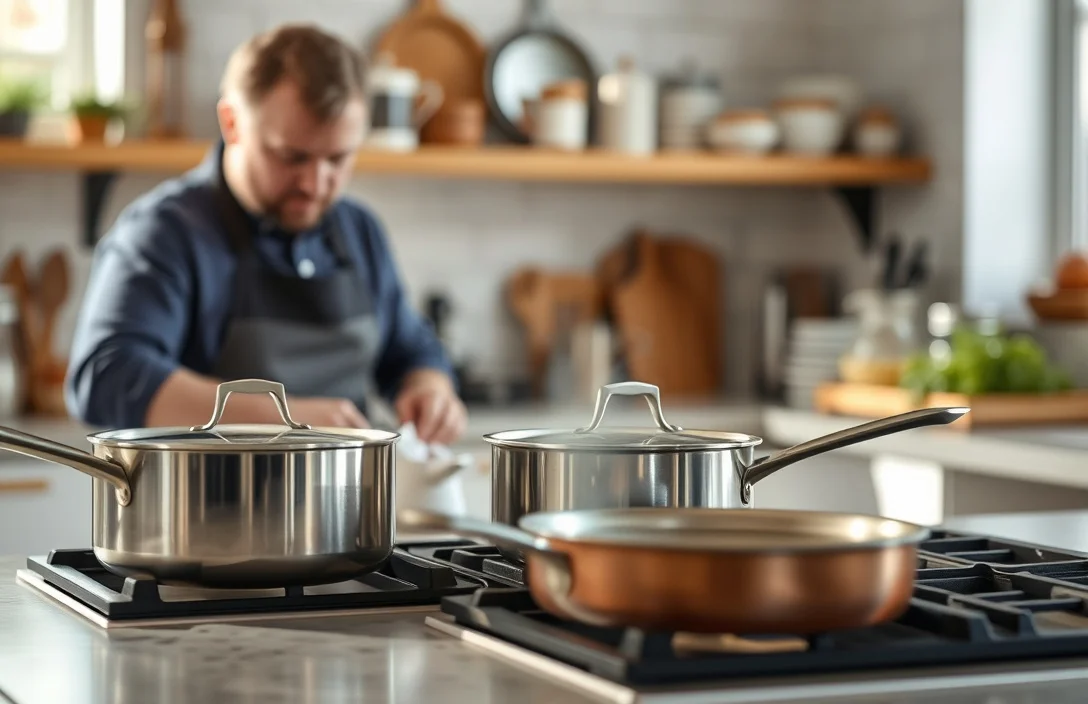
- Identify the coating type on your pan. Nonstick coatings are most sensitive to overheating and scratching.
- Inspect the surface closely. Deep scratches, gray smearing, and peeling coating mean the protective layer is compromised.
- Watch how you heat. High heat for long periods accelerates nonstick wear.
- Use the right utensils. Metal utensils and aggressive scrubbing damage nonstick.
- Avoid empty-pan overheating. Nonstick can degrade quickly without food acting as a heat sink.
- Replace at the right time. A pan stops being “safe enough” once it sheds, flakes, or won’t stay smooth.
Public health cookware warnings usually focus on fumes and residue when coatings break down. That doesn’t mean every user will be harmed. It means the failure mode exists – and basic handling prevents most of it.
Tips that keep Curtis Stone nonstick from becoming a residue problem
Prevent coating stress with habits that reduce wear. Heat control comes first. Use medium heat most of the time. Only go higher when a recipe truly requires it, like searing steaks – and even then, preheat carefully and use oil instead of blasting maximum heat for long periods.
Next, protect the surface from damage. Don’t use metal utensils. Don’t stack pans in a way that rubs the nonstick surfaces against each other. Use silicone or wooden tools and clean with soft sponges.
If your pan is scratched to the point that food sticks aggressively, that often means the coating has worn past normal performance. That’s the point where “is it toxic” stops being the right question. The coating is already failing.
Practical routine:

- Start with medium heat. Preheat with food when possible, especially for nonstick.
- Use oil thoughtfully. A thin coat is enough. Too much oil can burn and worsen residue.
- Avoid empty overheating. If the pan smokes before food hits it, turn it off and let it cool.
- Cook lower-and-slower for eggs and sauces. Controlled heat is coating-friendly.
- Clean gently. No metal scrub pads on nonstick.
- Replace damaged pans. If you see peeling or flakes, don’t keep “testing it.”
Nonstick cookware is for normal cooking temperatures, not broiling-level heat, dry roasting, or aggressive metal-scraping. Treat it like a specialty surface instead of a grill plate, and you avoid most of the real risks.
Why Curtis Stone can still be a good choice
When used correctly, Curtis Stone cookware offers convenience with minimal hassle. Nonstick pans reduce the need for oil and make cleanup easier. For eggs, pancakes, fish, and delicate sauces, a well-maintained nonstick surface improves results while reducing the chance of burning food onto the pan.
A lot of nonstick complaints come from misuse. Reasonable temperatures and avoiding scraping help the surface last longer, which also means less coating degradation. A coating that stays intact stays in its intended performance mode.
If you want to balance cooking styles, stainless steel and other noncoated pieces (depending on the exact Curtis Stone model) avoid nonstick coating concerns entirely. You stop relying on one coating for every task, and your risk profile becomes easier to manage.
Safer cookware options if you want to minimize coating risk
If you want alternatives that reduce risk from nonstick coatings, stick to surface types like stainless steel, cast iron, carbon steel, and enameled cookware. These materials don’t rely on a nonstick chemical layer, so the main concerns shift to seasoning, handling, and care rather than coating breakdown.
Use this quick decision guide:
| Cookware Type | Key Spec/Price Signal | Best For | Main Trade-off |
|---|---|---|---|
| Stainless steel | Typically longer-lasting, higher heat tolerance | Searing, pan sauces, general cooking | Can stick without technique |
| Cast iron | Heavier, great heat retention | Steaks, cornbread, long browning | Requires seasoning, slow preheat |
| Enameled cast iron | Porcelain enamel surface | One-pot meals, browning then simmering | Enamel chips if mishandled |
| Carbon steel | Light cast-iron style, seasoned surface | Eggs (with skill), high-heat cooking | Needs seasoning and care |
| Nonstick (ceramic-style) | Coating-dependent performance | Eggs and easy release | More sensitive to heat/scratches |
| Classic nonstick (PTFE-style) | Coating-dependent performance | Low-oil cooking | Replace when worn or scratched |
If you already own Curtis Stone nonstick and you still want to use it, the safest middle path is to reserve it for gentle cooking. Save high-heat tasks for stainless steel or cast iron so your set doesn’t depend on one coating to do everything.
Practical safety advice that doesn’t rely on brand myths
The most reliable cookware safety advice is behavioral, not brand mythology. Treat nonstick like it has a job limit: keep heat moderate, don’t run it empty, and stop using it after the surface is visibly damaged. That avoids the common failure modes that lead to higher residue or fumes.
Do a quick pan health check every few weeks if you use nonstick often. Look for loss of slickness, dark spotting that won’t come off, and any signs of coating peeling. When those show up, don’t debate whether something is “toxic.” Performance decline usually means coating wear, and the replacement decision is the practical one.
If you want one habit that lowers risk fast, stop using medium-high-to-high heat as your default for nonstick. That single change improves both safety margin and longevity.
what “safe use” looks like versus misuse
Example, you cook eggs on a lightly oiled Curtis Stone nonstick pan using medium heat. The pan stays in a normal operating zone, the surface isn’t scraped, and it cleans with a soft sponge. In this situation, there’s no practical reason to treat the cookware as “toxic,” because you’re using it as nonstick is meant to be used.
Example, you heat a nonstick pan on high until it smokes, then you keep cooking without lowering the heat. The coating is being stressed, and the fumes are stronger. Even if you don’t feel symptoms, this is exactly the misuse that increases the chance of coating breakdown and residue issues. Turn it off and adjust your method right away.
Example, you notice peeling or flaking and keep cooking anyway because “it still works.” That trade-off is wrong. Coating damage is a surface integrity problem, and surface integrity determines whether you can trust normal use. Replace the pan, then switch that task to stainless or cast iron until the damaged nonstick is gone.
FAQ
Is Curtis Stone cookware toxic if I only use it for everyday cooking?
Everyday cooking is usually fine because cookware safety depends on how it’s used and whether the surface stays intact. Nonstick problems usually start with overheating or a damaged coating. If your pan is scratched deeply, peeling, or smearing, replace it instead of continuing.
Does Curtis Stone nonstick cookware release chemicals when heated?
Nonstick coatings can release more residue and fumes when overheated, especially when the pan is empty or left on high heat too long. Reduce risk by using medium heat, avoiding empty-pan heating, and stopping use if the coating is worn or flaking.
How long does Curtis Stone cookware stay “safe” to use?
“Safe” depends on condition, not just age. A nonstick pan can last a long time with moderate heat and careful utensil use. If slickness drops quickly, food sticks aggressively, or you see peeling, treat that as your replacement point.
What should I do if my Curtis Stone pan is scratched or peeling?
Stop using it for food contact. Scratched nonstick can shed more residue than an intact coating, and peeling means the protective layer is already failing. Switch to stainless steel or cast iron for higher-heat cooking, and replace the damaged nonstick before continuing.
Are there safer alternatives to Curtis Stone nonstick?
Yes. Stainless steel and cast iron avoid nonstick coating breakdown as a main failure mode. If you want easy release, choose a reputable nonstick and follow strict heat and utensil rules, but for the lowest coating-related concern, go with seasoned cookware or stainless.

- 10 Best Slow Cooker For Mess Free Cooking 2026 (Tested And Reviewed) - October 24, 2026
- 10 Best Slow Cooker With Leak Resistant Lid 2026 (Tested And Reviewed) - October 24, 2026
- 10 Best Slow Cooker With Spill Proof Design 2026 (Tested And Reviewed) - October 24, 2026