Cooking Sticky Rice In A Rice Cooker For Perfect Cling
Sticky rice in a rice cooker is absolutely doable, but the details decide whether you get clingy, chewy grains or a pot of mush and mushy clumps. This guide focuses on what to set, how much water to use, and the rinse and soak timing that actually changes texture for sticky rice (glutinous rice). You’ll also get fixes for undercooked or gummy results, plus a couple texture upgrades you can try at home.
Sticky rice in a rice cooker works when you use the right rice type, rinse briefly, then soak 30 minutes (or up to 2 hours). Use about 1.25 to 1.5 cups water per 1 cup dry sticky rice, then rest. If your rice cooker has a “white rice” mode, use it, then let the rice sit on “keep warm” for 10 to 15 minutes.
Key Takeaways
- Rice type matters most. Use glutinous (sticky) rice, not jasmine or long-grain rice.
- Soak improves cling. Soak 30 minutes (up to 2 hours) before cooking for better texture.
- Water ratio is the lever. Aim around 1.25 to 1.5 cups water per 1 cup dry sticky rice.
- Rinse helps prevent gummy clumps. Rinse until water is less cloudy, then drain well.
- Rest time is non-negotiable. Keep warm 10 to 15 minutes to finish steaming and set texture.
- Troubleshoot by symptom. Undercooked needs more time, gummy needs less water next round.
What Works
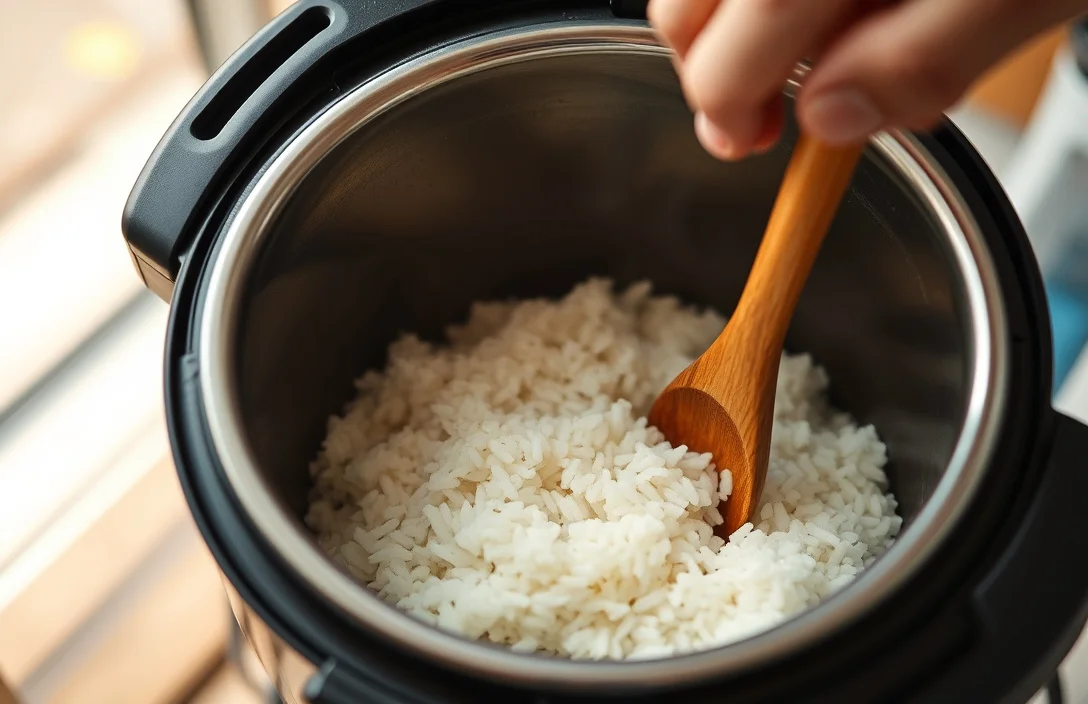
Sticky rice turns out right because glutinous (sticky) rice releases starch as it hydrates. That starch is what creates the chewy, clingy texture people want. Use the wrong rice type or skip soaking and you often get uneven cooking – hard centers, or sticky-but-gummy clumps.
The reliable workflow is rinse, soak, cook on the right cycle, then rest. Rinsing removes extra surface starch that can make rice look pastey. Soaking hydrates the grains so they cook through at the same time. The rest is when the last moisture redistributes and the texture firms up.
Most rice cookers work like a steam-then-absorb machine for sticky rice. The goal is to get the cooker to reach boil, keep absorption even, and finish with steam rather than letting the rice keep getting wetter on keep warm.
Use this method for strong results in a typical home rice cooker:
- Rinse sticky rice 3 to 5 times, drain.
- Soak 30 minutes (or longer, see later section).
- Add measured water (start in the 1.25 to 1.5 range).
- Cook on the closest “white rice” or “sweet rice” equivalent.
- Rest on keep warm 10 to 15 minutes, then fluff gently.
What Rice Cooker Settings Actually Matter
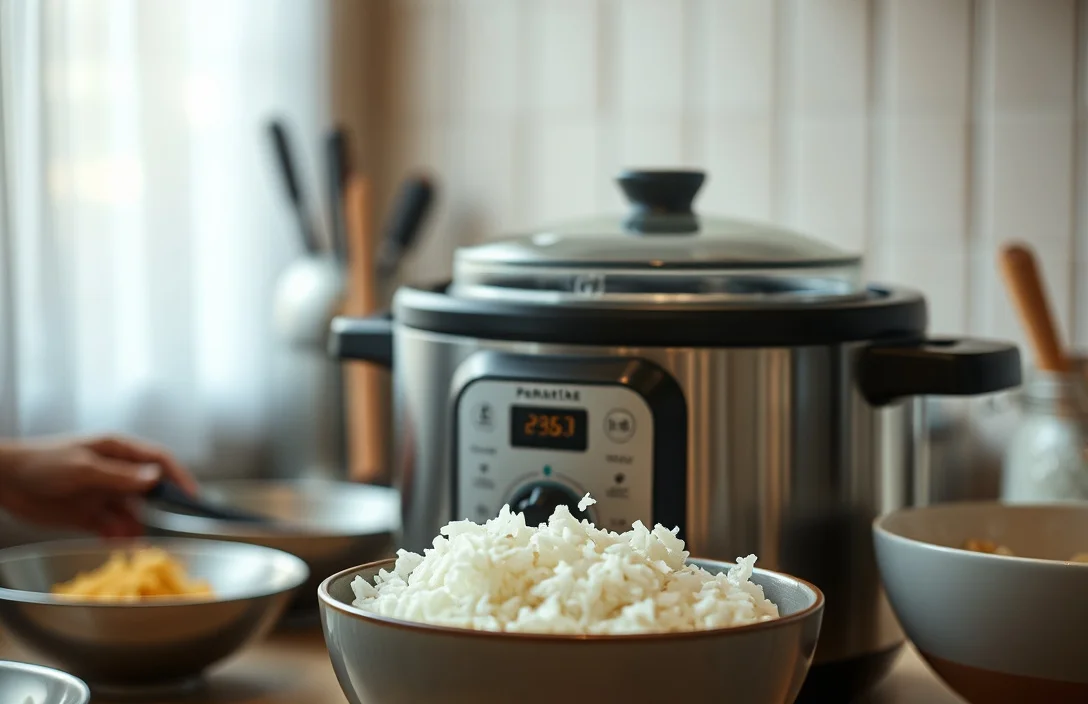
Rice cooker modes matter, but in specific ways. Many cookers use a temperature sensor to control heat, which is why “white rice” tends to work better than faster settings for sticky rice. Quick modes can under-steam because they run hotter or shorter, which can leave a slightly chalky core in some grains.
Don’t assume “mixed rice” or “brown rice” helps automatically. Brown rice programs often extend cooking time and change how moisture gets absorbed, which can leave sticky rice over-soft or gummy. Sticky rice is already tender when hydrated correctly, so you usually want a steady, not aggressive, cycle.
Keep warm is the other setting that matters. Sticky rice keeps steaming after the cook cycle ends. Too long without fluffing can make it wet and heavy. Eat immediately and the center may still feel slightly under-set.
Treat the settings like this:
- Use “white rice” (or any sticky/sweet rice mode) for best odds.
- Skip “quick/express” unless you’re okay with more variability.
- Use keep warm only for finishing, then fluff and serve.
No “sticky rice” mode? That’s fine. Measure water the same way each time, keep the rest consistent, and adjust only water and soak time based on what you see.
How Much Water To Use For Sticky Rice
Water amount drives most texture problems. Too little water leaves undercooked grains, especially near the center. Too much water makes rice gummy or clumpy, because excess starch and moisture don’t fully redistribute before the cooker shifts into warming.
Start with 1.25 to 1.5 cups water per 1 cup dry sticky rice. If your kitchen runs dry or your cooker runs hot, use the lower end. If your cooker tends to undercook or you want softer chew, use the higher end.
Soaking changes your water needs. A longer soak means the rice has already absorbed some water, so you typically add slightly less. Skip soaking and you often need more added water – but hydration may still be less even, which shows up as uneven texture.
Here’s a practical calibration for typical home batches (dry rice measured before soaking):
| Dry sticky rice | Start water (cups) | Soak choice that pairs well |
|---|---|---|
| 1 cup | 1.25 cups | Soak 30 minutes |
| 1 cup | 1.5 cups | Soak up to 2 hours |
| 2 cups | 2.5 to 3 cups | Keep ratio, then adjust after one test |
| 3 cups | 3.75 to 4.5 cups | Use the same ratio, don’t guess volume |
If you only change one thing between batches, change water first. Then fine-tune soak time if the pattern repeats.

Helpful pick
5 Pack Plastic Rice Measuring Cups, 160 ml Measuring Cup for Rice Cooker, Rice Cup Replacement, Heat Resistant Non Stick, with 2 Pack Rice Paddle Rice, Kitchen Supplies, Dog Cat Food Measuring
Helpful measuring cups help you portion rice and water to tune stickiness.
Rinsing and Soaking Times for Best Cling
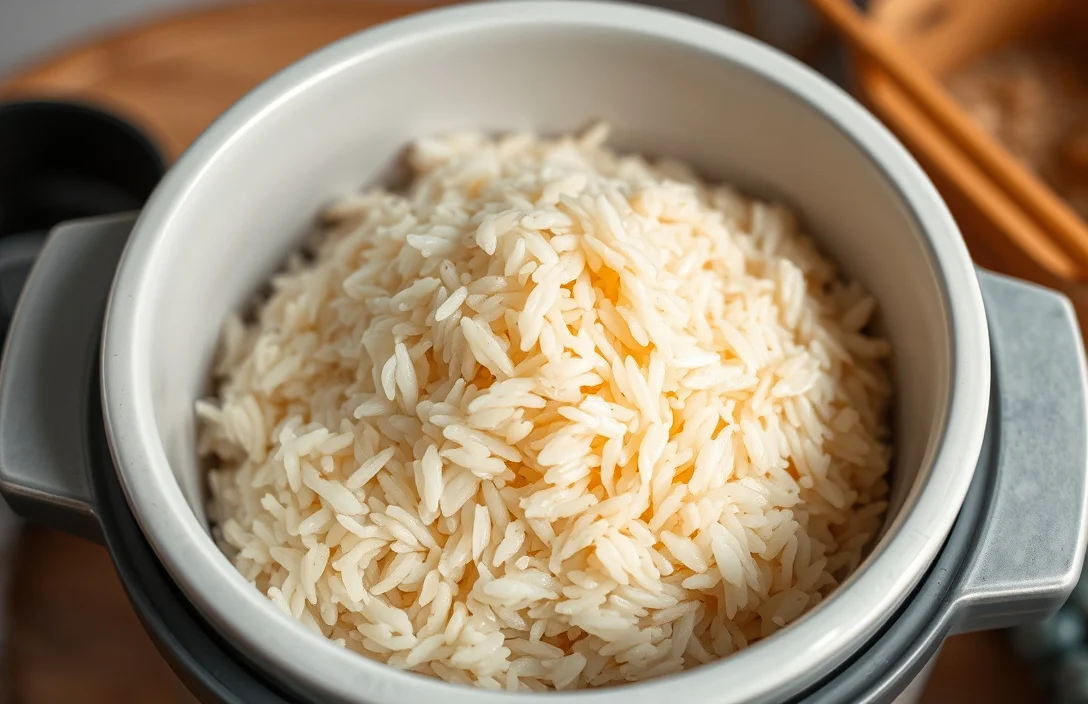
Rinsing and soaking change how starch behaves during cooking. Rinse briefly to remove loose surface starch that makes rice look wet and pasty. You don’t need to rinse for ages, but cloudy soak water clinging to the grains can hurt consistency.
Soaking is where clinginess improves. Hydrated grains cook more evenly, which helps the cooker steam-dense the surface starch without leaving hard bits inside. A 30-minute soak is a strong default. For more consistent chew, soak longer, up to about 2 hours.
Longer soaking helps, but it can also push you into gummy rice if you keep the added water the same. Soak time is part of your “effective water” budget. If you soak longer than usual, reduce added water slightly so the rice doesn’t end up too wet.
Follow this rinse and soak flow:
- Rinse: 3 to 5 times, drain thoroughly.
- Soak: 30 minutes (or up to 2 hours).
- Cook: measure water, then cook and rest.
Drain after soaking well. Water sitting in the bowl can throw off your measurement enough to notice in texture, especially in smaller batches.
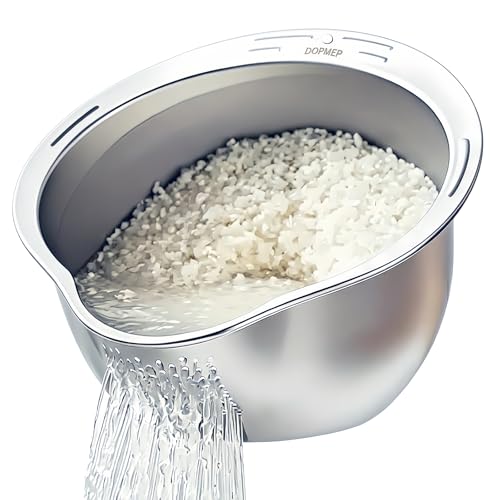
Helpful pick
DOPMEP Rice Washer Strainer Bowl Stainless Steel Colander with Side Drainer
The colander makes rinsing and draining rice quick, reducing surface starch before soaking and cooking.
Foil Line or Basket Method for Extra Sticky Texture
If you want “extra sticky” texture, you can change how the rice steams. A rice cooker already does a steam phase, but some models soften the bottom layer more than the top. A separation method can help you get more uniform cling.
Two practical approaches:
- Foil-lined cook method: Line the inner pot with a sheet of foil (tucked neatly) to reduce direct sticking and manage bottom moisture. The rice still cooks in the pot’s steam and absorbed water, but the surface texture can come out more uniform.
- Basket/steaming method: Steam the rice using a basket over water (or a two-tier setup if your cooker allows) so the rice steams instead of fully simmering in the soaking liquid. This can produce a more “translucent, chewy” sticky rice texture, closer to traditional steaming.
If you foil-line, keep it simple. Don’t block steam vents or interfere with the sensor. You want normal cooker operation with only a tweak at the bottom.
If you use a basket method, expect more time and a narrower margin for error. Steaming can turn out under-steamed if you guess, and it often takes longer. The payoff is texture control, especially when you want sticky rice to shape or serve alongside saucy dishes.
Change one upgrade at a time. If you jump from plain cooking to steaming plus a new water amount, you won’t know what actually worked.

Helpful pick
FireKylin 2 Pcs Plastic Rice Paddle,Non Stick Standing Rice Spoon Scooper Spatula,Heat Resistant Rice Cooker Spoon (White)
Use a rice paddle to gently separate and lift sticky grains without mashing them during serving.
Troubleshoot Undercooked or Gummy Sticky Rice
Undercooked sticky rice shows up as hard centers or grains that never fully soften. Gummy sticky rice looks dense, wet, or clumped with a paste-like underside. Match the symptom to a likely cause, then adjust one variable next time.
Undercooked fixes:
- Increase water slightly (try moving from 1.25 to 1.5 cups per 1 cup dry).
- Increase soak time (30 minutes up to 1 to 2 hours).
- Extend the rest on keep warm by 5 to 10 minutes.
Gummy fixes:
- Reduce water slightly next batch.
- Rinse a bit more thoroughly (3 to 5 rinses until less cloudy).
- Shorten soak time if you soaked long and kept the same water ratio.
Quick troubleshooting map:
- Hard center, chewy outside – likely too little water or not enough hydration time.
- Wet, heavy clumps – likely too much water, too long soak, or insufficient draining after soaking.
- Sticky but dry, grains separate too much – often under-steamed or rest was too short.
Don’t keep re-cooking the same batch to “fix it.” Rice cookers aren’t great at incremental stir-and-re-time cycles, and repeated reheating can move sticky rice from chewy to gummy. Get the first batch close, then adjust the next run.
If your first attempt is way off, write down your starting point (soak time, water ratio, and mode). Sticky rice rewards consistency, and those notes prevent guesswork.
Troubleshoot Rice Cooker Problems That Affect Texture
Sometimes the rice is fine – the cooker is the problem. Two common issues are inconsistent heating and steam leakage. If the inner pot doesn’t sit right, or the lid seal is off, the cooker may lose the steam phase sticky rice needs to finish properly.
Another texture problem happens when the cooker switches to keep warm too early. Some models detect temperature based on how quickly the inner pot heats, and sticky rice can shift that timing depending on water amount and soak. If your cooker repeatedly leaves rice undercooked across multiple grains, try a different mode or a slightly higher water ratio.
Also stop opening the lid. Every time you peek, you vent steam and slow the final finishing phase. Sticky rice depends on steady steam redistribution late in the cook, so lid checks make results unpredictable.
Do these checks before you change the recipe:
- Inner pot is clean and seated correctly.
- Lid stays closed during cooking (no peeking).
- Keep warm timing is reasonable (10 to 15 minutes is usually enough).
- Vent/steam release works normally (no obvious gasket issues).
If you want a quick “sanity check,” run a small test batch using your known good soak and water ratio. If it still fails, the cooker’s cycle timing or sensor behavior is more likely than your technique.
FAQ
Can I cook sticky rice in a rice cooker without soaking it?
Yes, but expect more variability. Soaking 30 minutes helps the grains hydrate evenly and reduces hard centers. If you skip soaking, use the higher end of the water range (closer to 1.5 cups per 1 cup dry) and extend the keep warm rest by 10 to 15 minutes. Texture won’t match soaked rice every time, but it can still work.
What’s the best rice cooker mode for sticky rice?
Use the closest equivalent to “white rice” or any “sweet rice/sticky rice” mode if your model has one. Avoid “quick/express” if you want consistent chew because it may not steam long enough. “Brown rice” mode can overcook or make it gummy since sticky rice cooks faster than most brown rice varieties.
How long does sticky rice need to sit on keep warm?
Rest sticky rice on keep warm for 10 to 15 minutes after the cook cycle ends. That time lets moisture redistribute and finishes the steam phase. Leave it much longer and the rice can turn wet and heavy, especially if the pot stays covered and you don’t fluff it.
Why is my sticky rice gummy or paste-like?
Gummy texture usually comes from too much water, insufficient rinsing, or a longer soak with the same water ratio. Rinse 3 to 5 times, drain well, and start with about 1.25 to 1.5 cups water per 1 cup dry rice. Next batch, reduce water slightly or shorten soaking if you soak long.
Is steaming sticky rice better than cooking it in the rice cooker?
Steaming can produce a more controlled chew, especially for “extra sticky” texture. The downside is it takes more attention and often more time. If your rice cooker gives you consistent results with the soak, water ratio, and a 10 to 15 minute keep warm rest, stick with it. If not, a basket/steaming method is the most useful alternative upgrade.

- 10 Best Slow Cooker With Cool Touch Handles 2026 (Tested And Reviewed) - October 22, 2026
- 10 Best Slow Cooker With Quality Construction 2026 (Tested And Reviewed) - October 22, 2026
- 10 Best Slow Cooker With Premium Construction 2026 (Tested And Reviewed) - October 22, 2026