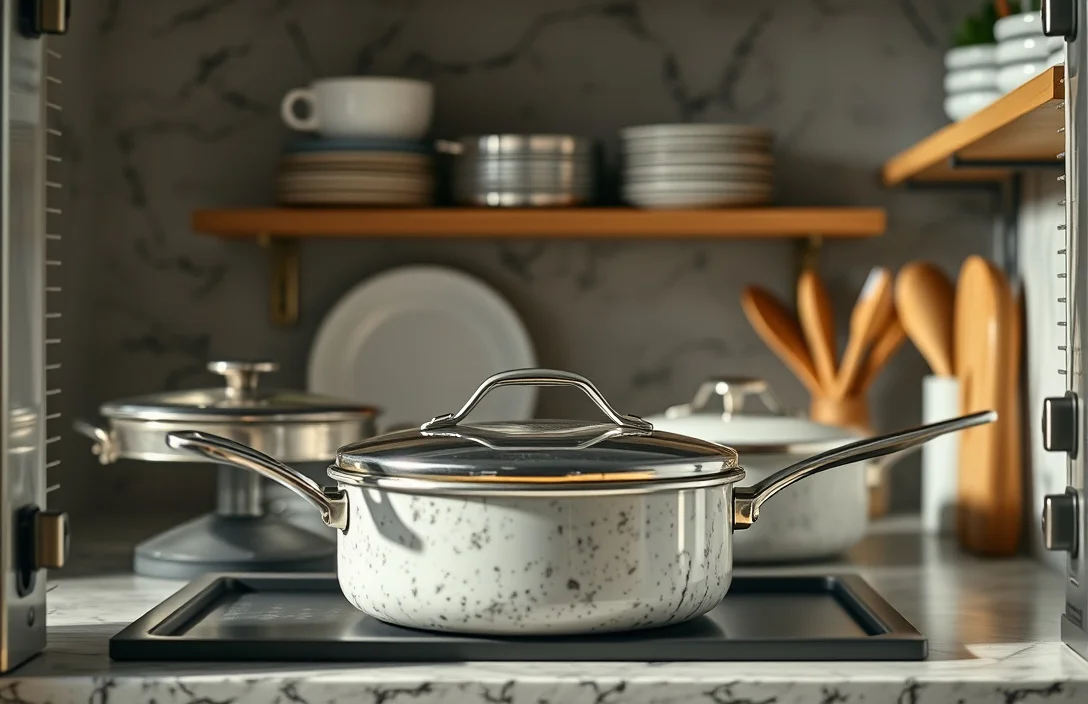
Is White Granite Cookware Safe?
White granite cookware is generally safe when it is well-made and undamaged, but “granite” is usually just marketing for a stone-like nonstick coating (often ceramic-based or another resin system). Safety depends on whether that coating stays intact, whether the manufacturer allows oven and dishwasher use, and how you avoid abrasion and overheating. Use the checks below to make the call for your kitchen.
Nonstick “granite” cookware is safe only if the coating stays intact and you don’t overheat it beyond the manufacturer’s limits. If you see peeling, chips, or a scratched surface, replace the pan. Use wood, silicone, or nylon utensils, and skip metal tools, abrasive scrubbers, and dry-heating empty pans.
Key Takeaways
- Coating integrity matters most – scratches, chips, and peeling reduce performance and increase residue risk.
- Avoid overheating – running a nonstick pan empty or very hot can damage the coating.
- Use the right utensils – silicone, wood, and nylon are safer than metal scrapers.
- Follow temperature limits – base heat on the manufacturer’s max oven and stovetop guidance.
- Dishwasher can be harsh – hand-washing usually preserves coatings longer than aggressive cycles.
- Replace when worn – if the surface looks uneven or exposed, stop using it for food.
What to Know About Whether White Granite Cookware Is Safe
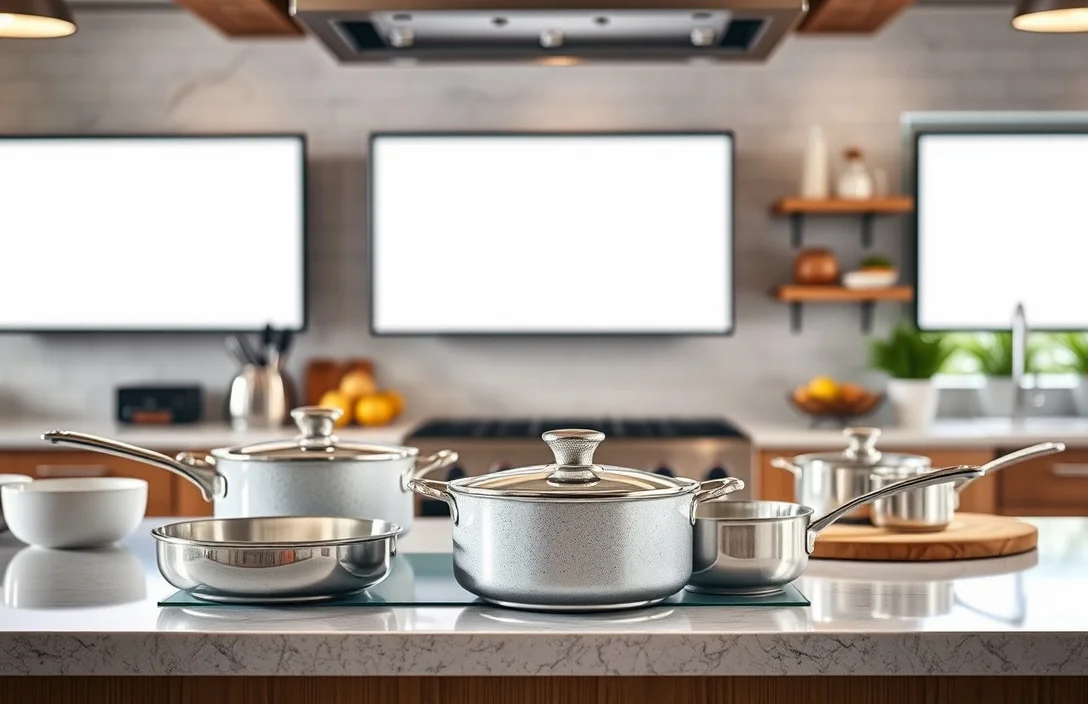
White granite cookware is usually nonstick cookware with a speckled, stone-like appearance, not cookware made from actual granite. That means the safety question is really about the nonstick coating system, not the color or the “granite” texture.
Most of the time, the coating is ceramic-based or ceramic-like on top of a base metal. It releases food by creating a smooth barrier. When that barrier gets scratched, chipped, or heat-abused, it can stop performing and can break down further from abrasion or aggressive cleaning.
Quick rule: treat white granite pans like other nonstick pans. Keep the surface intact, avoid extreme heat, and replace the pan when the coating is compromised. The white surface also has a practical downside – it shows staining more easily, which can push people into scrubbing harder and damaging the coating sooner.
Things that matter most
Start with manufacturer labeling. Look for clear information about the coating type and heat limits. If a product listing or manual doesn’t state safe stovetop and oven temperatures, treat it as a red flag and choose a pan with published limits.
Wear is the second big factor. Nonstick coatings aren’t built for metal utensils, scouring pads, or long-term exposure to residue from cooking sprays and buildup. Even if a pan still “works,” once the surface looks noticeably scratched or rough, the coating is already degrading.
Heat management is the third factor. Many nonstick coatings degrade when they’re overheated or repeatedly used at high temperatures – especially when the pan starts empty and dry. For everyday cooking like eggs, pancakes, fish, and sauces, medium heat and brief preheating keep you in the safer zone.
Here’s the safety checklist I’d use before deciding to keep a “granite” nonstick pan:
- Check the surface under bright light – chips or flaking mean replacement.
- Feel for rough patches – a gritty surface points to coating wear.
- Follow the stated temperature max – don’t guess.
- Clean gently – avoid abrasive scrubbers and harsh powders.
- Avoid heat-empty cycles – preheat with food ready, not minutes later.
Safe Use Tips for White Granite Cookware
Use medium heat and short preheats. Nonstick pans heat differently than stainless steel, and overheating is the fastest route to coating damage, off odors, or scorched residue.
Pick utensils that won’t grind the coating. Silicone spatulas, wooden spoons, and nylon tools are the default. Metal utensils and wire pads are how coatings peel faster than they should.
Clean without abrasives. A soft sponge, warm water, and mild dish soap usually handle most mess. If food sticks, soak first and then clean gently – don’t jump straight to steel wool or abrasive cleaners.
Be deliberate with cooking spray. Some sprays leave a film that builds up over time, especially on light-colored coatings. That film can increase sticking and make you scrub more later. For more consistent release, a light coating of oil or butter (when the recipe calls for it) is often easier on the surface than repeated spray.
Practical “keep it safe” routine:
- Inspect the pan before cooking – chips and peeling are immediate stop signals.
- Set heat to medium – save high heat for cookware that can handle it.
- Stir and flip gently – don’t scrape aggressively to “clean as you go.”
- Wash soon after use – baked-on residue makes you scrub harder.
- Store carefully – stack with a protector to prevent scratching.
Why People Use White Granite Cookware (And When It Helps)
The main benefit of white granite cookware (as nonstick) is convenience. It reduces sticking for low-fat foods like eggs and pancakes, which often means less oil and less time removing residue.
It also helps with delicate foods. When eggs or fish release cleanly, you’re less likely to tear them and more likely to get consistent results without rough scraping.
When the coating is intact, cleanup is usually faster and gentler. That matters for safety too, because gentle cleaning protects the coating, and coating longevity depends on what you do after the pan is used.
White surfaces have one more advantage: they show staining and wear patterns clearly. If you pay attention to that, you catch damage earlier and replace the pan before the coating fails completely.
Your Real Options If You Want the Safest Setup
You have three realistic paths, depending on how you cook and how strict you want to be about coating longevity.
Option A: Stick with “granite” nonstick, but treat it like nonstick. Choose a model with clear temperature limits, use medium heat, avoid metal utensils, and replace the pan when it’s scratched or peeling.
Option B: Switch to ceramic nonstick in a careful practice pattern. Ceramic coatings are still nonstick coatings, so the rules stay the same – don’t overheat and don’t abrade. Differences mostly come down to composition and how each brand handles heat and wear.
Option C: Use stainless steel or cast iron for high heat and durability. These materials don’t have a coating to degrade. You’ll cook differently – preheating, oil technique, and learning how to deglaze – but you eliminate coating-shed concerns.
Here’s a practical comparison for “safety through material stability”:
| Cookware type | Best for | What to watch | Safety verdict (practical) |
|---|---|---|---|
| White granite-style nonstick | Eggs, fish, quick meals | Replace if scratched/peeling, avoid overheating | Generally safe if coating stays intact |
| Ceramic nonstick | Similar nonstick jobs | Same rules, coating life varies | Generally safe with careful heat and tools |
| Stainless steel | Searing, sauces, versatility | Food sticking if technique is off | Safer long-term, no coating shedding |
| Cast iron | High heat, long cooking | Needs seasoning, rust prevention | Very durable, needs maintenance |
| Enameled cast iron | Browning and simmering | Chips can expose metal | Durable if enamel stays unchipped |
If you cook at high heat often – hard sautéing, fast browning, skillet browning – stainless steel or cast iron is the safer day-to-day bet. If you mainly cook foods that benefit from nonstick release, granite-style nonstick can be a solid choice as long as you protect the coating.
The “Stop Using It” Rules That Matter Most
A simple expert-style rule works here: nonstick cookware is safe until it isn’t, and it isn’t when the surface is damaged or overheated outside the manufacturer’s limits. That’s when performance changes and you should stop using the pan for food.
These rules prevent most real-world problems:
- Never use metal tools – even if the pan still works, you’re wearing down the coating faster.
- Don’t run it dry – empty preheating is a common cause of nonstick coating failure.
- Respect stated temperature limits – if the package lists a max oven temp, treat it as a hard limit.
- Replace, don’t patch – chipped or peeling coating doesn’t have a safe fix.
Cleaning habits matter too. If you routinely use abrasive scrubbers, harsh degreasers, or steel wool, you’re shortening the useful, safe life of any nonstick pan, including white granite style.
If you already own one and want a straightforward decision: check for scratches deep enough to catch a fingernail, flaking, or coating that looks uneven or bare. Any of those points to replacement.
Real-Life Examples of Safe (And Unsafe) Use
If you’re frying eggs on medium heat with a silicone spatula and washing with a soft sponge, a white granite nonstick pan is typically safe. The coating stays intact because you’re not abrading it and you’re not forcing it to handle extreme heat.
Coating damage usually starts with everyday shortcuts. Empty preheating for several minutes, then adding oil and food, stresses the coating. Using a metal spatula or scrubbing stuck spots aggressively speeds up breakdown, even if the surface doesn’t look dramatic yet.
A visible peeling moment is an automatic stop. If the coating flakes or exposes something underneath, it’s no longer stable. Even if it still releases food sometimes, don’t keep cooking on a damaged nonstick surface.
Staining can tempt you to scrub harder. White granite pans can discolor from sauces and repeated use. If the stain comes off with gentle cleaning and you don’t need scouring pads repeatedly, you’re probably fine. If you have to use abrasives over and over, the coating is taking wear and your safe lifespan is shrinking.
Most safety problems come from heat abuse and abrasion, not from the “granite” appearance itself.
FAQ
Is white granite cookware safe for daily cooking?
White granite cookware is usually safe for daily cooking when you use it like nonstick cookware: medium heat, non-metal utensils, and gentle cleaning. Stop using it when the coating is chipped, peeling, or deeply scratched. If you can feel roughness or coating edges with a fingernail, replace the pan.
Can I put white granite cookware in the dishwasher?
Dishwasher cleaning is riskier for most nonstick coatings because hot water and harsh detergent can speed up coating wear. If the manufacturer allows dishwasher use, follow their exact instructions. If there’s no clear approval, hand-wash with a soft sponge as the safer routine.
What’s the biggest danger with granite-style nonstick pans?
The biggest practical danger is coating damage from overheating or abrasion. Empty preheating, metal utensils, and abrasive scrubbers degrade the surface. Once the coating is damaged, stop using the pan rather than trying to “make it work.”
How do I safely clean white granite cookware after cooking?
Let the pan cool, then wash with warm water and mild dish soap using a soft sponge. For stuck-on food, soak with warm soapy water first, then clean gently. Avoid scouring powders, steel wool, and scraping tools that contact the coating.
Is there a safer alternative if I’m worried about coatings?
Stainless steel and cast iron are safer alternatives if you want to avoid coating-shed concerns. They tolerate higher heat and metal tools better, but they can stick if you don’t use the right preheating and oil technique. If you want long-term durability and frequent high-heat cooking, these materials are the conservative choice.
White granite cookware is generally safe when the nonstick coating stays intact and you avoid overheating and abrasion. Replace the pan if it’s scratched, peeling, or you regularly cook on very high heat. After that, stick to medium heat and gentle utensils.

- 10 Best Slow Cooker For Mess Free Cooking 2026 (Tested And Reviewed) - October 24, 2026
- 10 Best Slow Cooker With Leak Resistant Lid 2026 (Tested And Reviewed) - October 24, 2026
- 10 Best Slow Cooker With Spill Proof Design 2026 (Tested And Reviewed) - October 24, 2026