How To Stake Tomatoes In Pots?
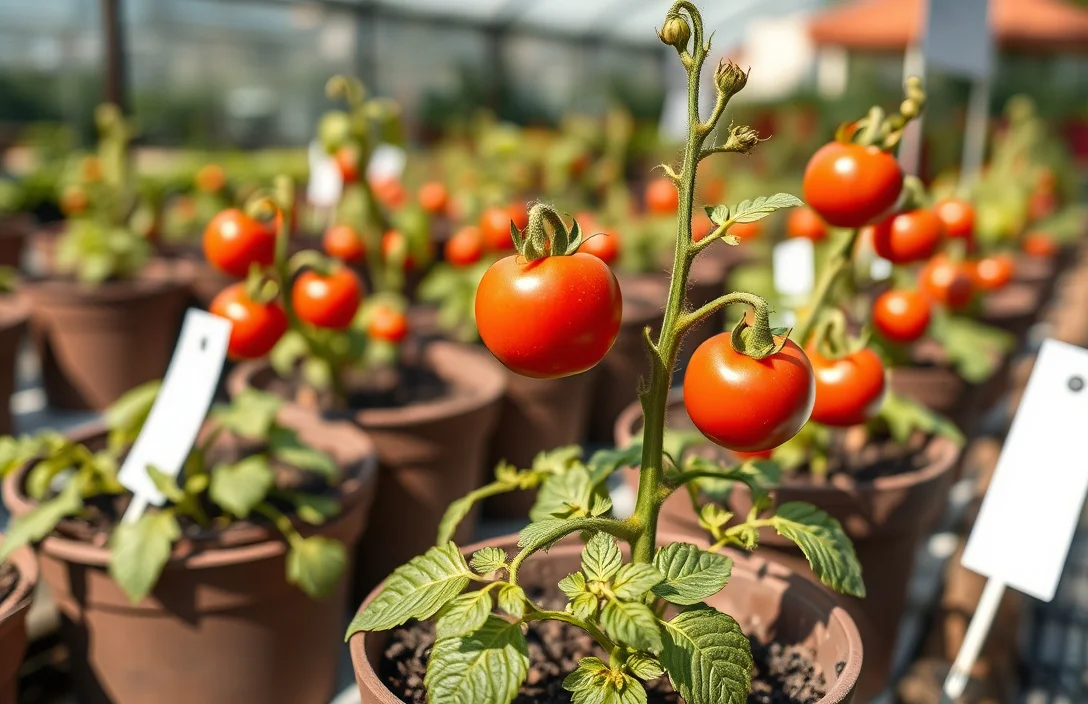
Tomatoes in pots grow fast, and a fruiting plant can tip a lightweight container in a hurry. The easiest way to prevent that is to stake early – before the branches get heavy – and tie the stems gently as the plant climbs. This guide walks through setup, support options for containers, and what to do when something starts going wrong.
Staking tomatoes in pots is simple: choose a support (cage, trellis, or stake), start it at planting, and tie stems with soft ties. Set the support deep enough for stability (about 1-2 feet of stake above the soil, with the stake going to the pot bottom), then re-tie as new growth appears.
Key Takeaways
- Stake early. Set the support at planting time to avoid damaging roots later.
- Use stable hardware. Choose a stake tall enough for the variety, up to about 6 ft tall if needed.
- Weigh down light pots. Add 2-3 inches of gravel or rocks to the bottom for stability and drainage.
- Tie with soft material. Use twine or other flexible ties so you do not girdle stems.
- Match support to growth. Cages are often ideal for bush types, while indeterminate tomatoes prefer stakes or trellises.
- Keep adjusting. Re-tie new branches through the season as the plant grows upward.
How to begin
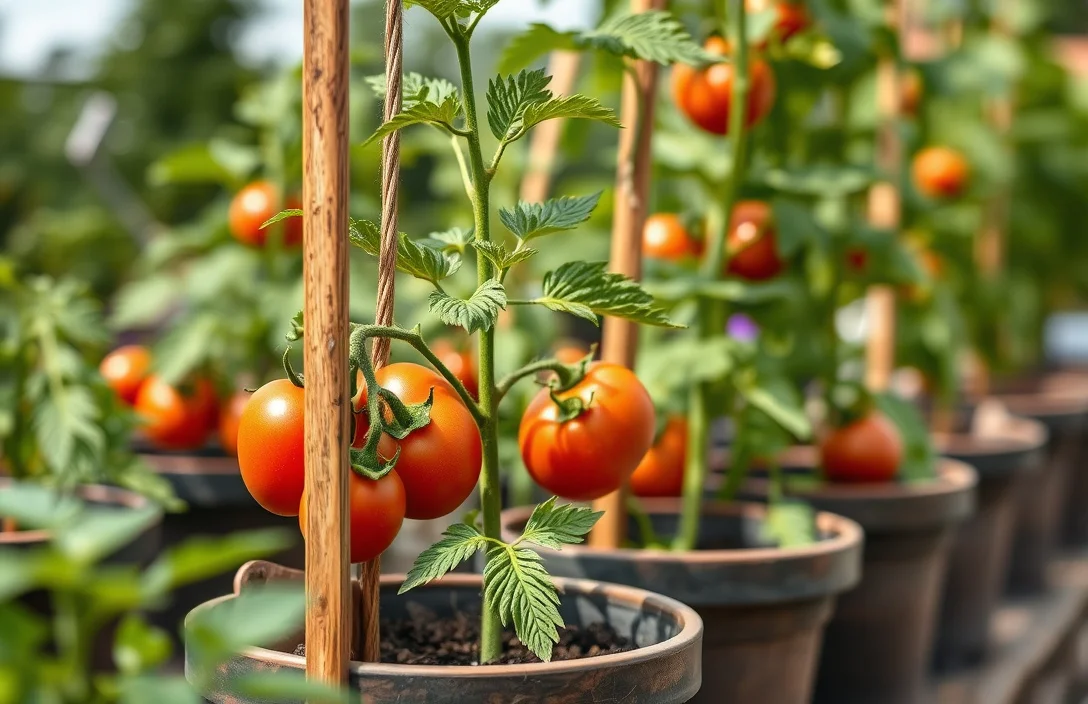
Staking tomatoes in pots keeps fruit off the soil and reduces splashing water onto leaves when you water. It also gives the plant structure so it grows upward instead of sprawling – which matters more in containers because space is tight and wind loads add up.
You do not need complicated gear to do this well. You need a support system (stake, cage, or trellis), soft ties, and a pot that stays stable as the plant gets heavy. If your pot is under about 5 gallons, determinate varieties are often the easier match because they stay smaller and finish earlier.
Decide one thing before you buy anything: what kind of tomato are you growing. Indeterminate tomatoes keep growing and require ongoing tying, while determinate tomatoes stay more compact and may need less support.
A tall plant that keeps putting out flowers late in the season should be treated like indeterminate – plan for a tall stake or a cage/trellis that can keep up. A bush-type that stays compact usually does best with a cage.
Basics of how to stake tomatoes in pot
Tomato cages, trellises, and stakes are the go-tos for container tomatoes. The right choice depends on stability, how you want the plant to grow, and how much tying you want to do.
Cages are popular because the plant can “grow into” the structure, which is convenient when you do not want multiple tie points. Triangular or square cages also tend to be more stable than round ones, which helps in windy patios or near doorways where containers get bumped.
Indeterminate tomatoes typically need a structure that can guide taller stems. Stakes and trellises work well because you can attach the main stem and selected branches, then re-tie as they rise.
Staking works best when the pot itself resists tipping. A lightweight pot can fall over even if your ties are perfect, so many container setups add weight at the base. Adding 2-3 inches (5.1-7.6 cm) of gravel or rocks under the soil improves stability and drainage.
Use this checklist before you start:
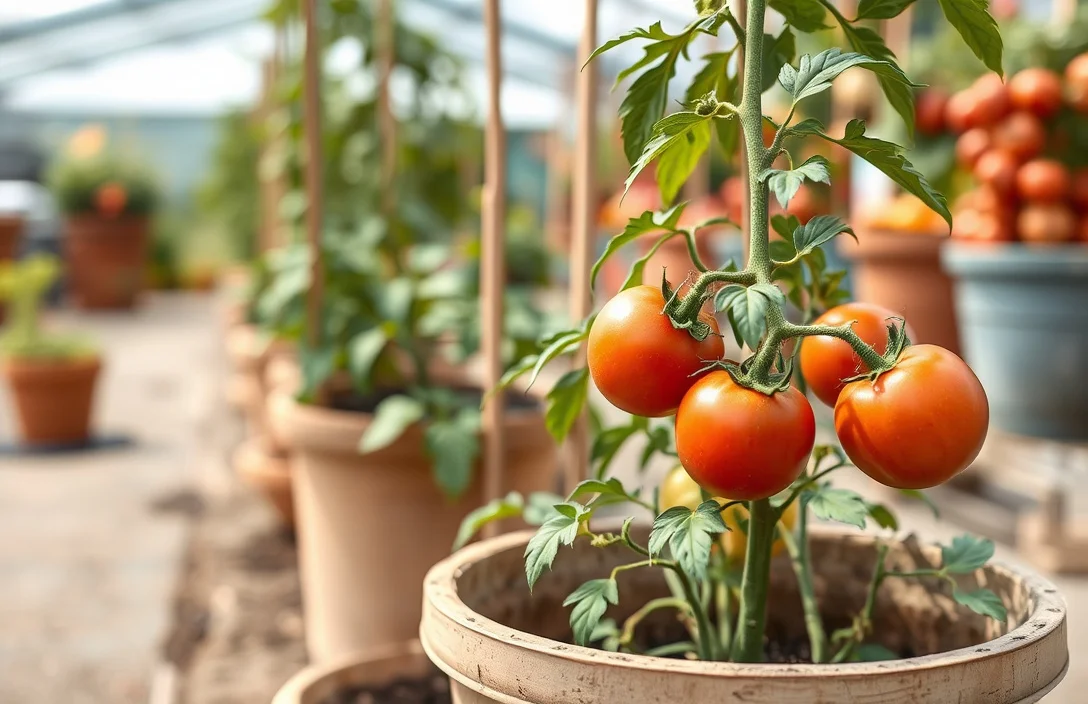
- A support option sized for your expected plant height
- Soft ties (twine, fabric strips, or clips that do not cut stems)
- A stable pot base (especially important for plastic pots)
how to stake tomatoes in pot
1) Choose the support type.
Pick a cage, trellis, or stake based on your tomato’s growth habit and how hands-on you want to be.
Cages are often easiest when you want a mostly self-contained structure. Stakes and trellises fit better when you want to guide the main stem upward and keep tie points consistent. If you are growing a patio-friendly bush type, a cage is usually the least maintenance option.
2) Check your pot size and stability plan.
Make sure your container can handle a fruiting plant, then plan for added weight at the bottom if needed.
If your pot is lightweight, add 2-3 inches of gravel or rocks before you fill with soil. That improves drainage and keeps the pot from rocking or tipping when the plant gains weight.
3) Install the support at planting time.
Set stakes or cage legs in position as soon as the seedling goes in, so you do not damage roots later.
Containers have limited soil volume, so roots spread less forgivingly. Installing now prevents puncturing the root ball, which is the kind of disturbance you want to avoid.
For stakes specifically, use a stake long enough to reach near the bottom of the pot and leave enough height above the soil to keep tying. A practical guideline is to use stakes that stick up about 1-2 feet (0.30-0.61 m) out of the soil, depending on the plant height you expect.
4) Tie stems gently and re-tie often.
Use soft twine and tie loosely so the stem can thicken without being strangled.
Start by tying the main stem to the support. As new growth develops, tie additional stems or branches to keep the plant centered and supported, then repeat throughout the season.
You will likely do several tie-ups. That is normal – it is part of what keeps staking effective as the plant gets heavier.
5) Test stability after the first fruit set.
When the plant starts loading up with tomatoes, confirm your pot and support still feel solid.
Give the plant a gentle nudge (carefully) and watch for wobble. If it moves, fix pot stability first – extra weight at the base, a larger pot, or bracing against a wall or sturdy surface – before you add more ties.
Here’s a concrete scenario:
- A 5-7 gallon pot on a breezy patio with indeterminate tomatoes often needs a taller stake or a stable cage, plus re-ties every couple of weeks early on.
- If the same setup tips after the first cluster of fruit, pot stability is usually the culprit (heavier base or bigger container), not the tie technique.
Things that matter most
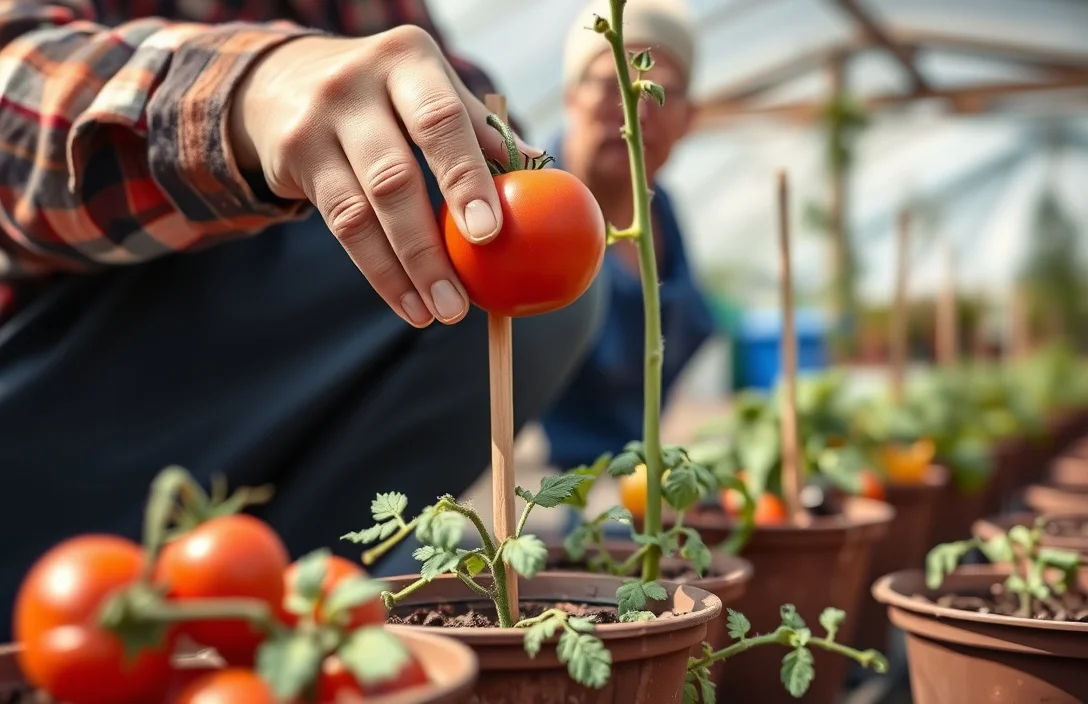
The best staking technique for containers controls two things: stem position and pot stability. When either one fails, the plant droops, the canopy crowds, or the container tips.
Match the structure to growth. Cages often fit bush types, while indeterminate varieties usually benefit from stakes or trellises you can guide over time. Triangular or square cages resist twisting as the plant leans, which can matter in wind.
Choose materials that are gentle on stems. Bamboo, wood, metal, and plastic stakes all work. The deciding factor is convenience and how easy it is to tie without damaging the plant. For ties, use flexible options like hemp string or coconut fiber. They stay softer and bend more than stiff ties that can rub or cut.
Tie in a way that prevents rubbing. Keep ties loose and allow room for thickening. If you see a tie line sinking into the stem, loosen it and re-tie higher or switch to a different tie method.
Treat container tomatoes like a system. If the pot is too light, it will tip when the canopy expands. A simple upgrade is anchoring the pot against a sturdy surface like a wall, fence, or trellis so wind and plant weight have another point to push against.
If you have a plastic pot and frequent gusts, place it near a wall for side support and add the recommended gravel/rock layer at the bottom. You still tie the plant, but you are not relying on ties alone to prevent tipping.
What works in practice
Do the setup work at planting time. Installing supports early protects roots in a container and prevents stalling after you disturb the soil.
Pick a support height that matches your variety. Use stakes tall enough to support your plants, with a reference point up to about 6 ft when the variety demands it. A stake that is too short forces you into awkward, last-minute adjustments.
Add weight when stability is questionable. A common container best practice is adding 2-3 inches of gravel or rocks at the bottom. It stabilizes the container and supports drainage, which matters for healthy tomato growth.
Re-tie regularly instead of waiting for trouble. Tying earlier keeps the plant upright while it is still light and prevents “too-late” rescue moves that can break stems or lock in bent angles.
Guide the plant to the center. Containers encourage sprawling, and a centered plant is easier to manage, easier to prune, and less likely to create a wet, crowded canopy.
Here is a practical comparison table you can use to choose quickly:
| Support option | Key spec/fit for pots | Best for |
|---|---|---|
| Tomato cage | Stable cage around the plant, legs go into pot soil | Bush-type tomatoes and low-fuss container growth |
| Trellis | Vertical structure tied to a wall or pot neighbor | People who want a guided upward growth path |
| Single stake | Stake goes to near pot bottom, stake height above soil matters | Indeterminate tomatoes when you plan to tie main stem |
| Stake plus wall bracing | Pot placed against a sturdy surface | Windy patios where tipping is a frequent problem |
Mistakes to Avoid with how to stake tomatoes in pot
Installing the stake or cage after the plant is established is the biggest mistake. Pushing supports later can wound and damage roots, and pots have less soil volume to recover from that shock.
Using ties that are too tight or too stiff is another common problem. If twine or ties cut into the stem, you can restrict flow and slow growth. Tie loosely and adjust as the stem thickens.
Many people also underestimate the pot itself. A lightweight pot can tip even with a perfect support system, so skipping the gravel/rock layer at the bottom when you need stability is a fast way to lose control of the plant.
If your tomato starts upright but leans hard once fruit sets, check pot stability first. The fix is often to make the base heavier and brace the pot against a wall or fence if you can.
Other mistakes that come up often:
- Using a stake that’s too short for the variety, then trying to “reach” with extra tie points.
- Waiting to re-tie until stems droop, which creates tight bends that are hard to correct.
- Letting fruit rest in the canopy against wet soil, which increases rot risk and leaf disease pressure.
Catch problems early and corrective action is usually simple. Catch them late and you may need re-positioning, re-tie work, and sometimes pruning to remove damaged or bent stems.
Pro Tips for how to stake tomatoes in pot
Start with the least complicated method that matches your tomato type. Compact or bush-like plants do well with a cage. Indeterminate tomatoes that will get tall should get a staking or trellis plan from day one.
Use soft ties and keep them flexible. A good tie supports the stem without choking it as thickness increases. If you see rubbing or a tie line sinking in, loosen and re-tie right away.
Place the pot where support is easiest. Setting the pot against a sturdy surface is a quick win. It reduces side-to-side movement that causes stems to rub and makes tie work more consistent.
Schedule tie checks. Check ties every 1-2 weeks early on, then more frequently once flowering and climbing begin. Weight increases faster once fruit sets, and you want the support to keep up.
Make the pot a teammate. A heavier base (gravel/rocks layer) and a stable location make staking easier and prevent failures that look like “tie problems” but are really base problems.
FAQ
How tall should the stake be for tomatoes in a pot?
Choose a stake tall enough for your tomato’s expected size, with a common guideline of up to about 6 ft for larger indeterminate plants. The stake should go down toward the bottom of the pot for stability and leave enough height above the soil for tying as the plant grows.
Do I need to add gravel or rocks in the bottom of the pot?
If your pot is lightweight or you’ve had tipping issues, adding 2-3 inches (5.1-7.6 cm) of gravel or rocks before filling with soil is a smart best practice. It stabilizes the container and supports drainage, which matters for container tomato health.
What’s the safest way to tie tomato stems to a stake?
Use a soft, flexible tie (like twine) and tie loosely so the stem can thicken. Re-check ties as the plant grows. If a tie line tightens into the stem, loosen it and re-tie.
When should I install the stake or cage in a container tomato?
Install the support at planting time. Starting early avoids wounding roots that can happen when you add supports later in a confined pot. It also gives you a straight path for guiding the plant.
Is there a staking alternative that uses less tying?
A tomato cage is the main low-tying alternative in pots because the plant grows into the structure. Cages work well for bush-type tomatoes, while taller indeterminate types may still need occasional tie-ups. If you hate frequent tying, choose a cage that fits your plant size.

- 10 Best Slow Cooker With Cool Touch Handles 2026 (Tested And Reviewed) - October 22, 2026
- 10 Best Slow Cooker With Quality Construction 2026 (Tested And Reviewed) - October 22, 2026
- 10 Best Slow Cooker With Premium Construction 2026 (Tested And Reviewed) - October 22, 2026