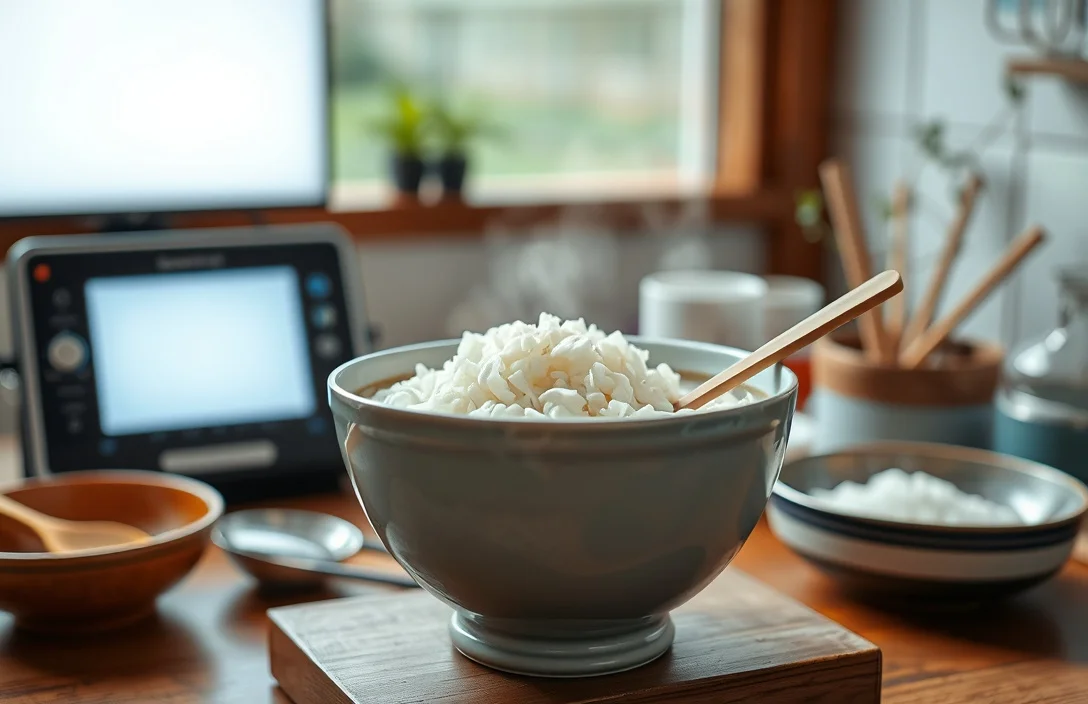
How To Make Rice Porridge In A Rice Cooker?
Rice porridge (congee) is simple comfort food, but stovetop cooking can turn into constant stirring. A rice cooker uses steady heat, so you can set it and still get creamy porridge with less babysitting. Use the ratios, mode guidance, and timing below to hit the texture you want.
Rice porridge in a rice cooker forms when rice releases starch into extra water. Start with 1/4 to 1/3 cup rice per 4 cups water (about 1:16 to 1:20 by volume), then cook until the grains break down. Plan on 30 to 60 minutes total, depending on your rice cooker settings and rice type.
Key Takeaways
- Start with extra water. Use 1/4 to 1/3 cup rice per 4 cups water for a creamy base.
- Pick the right mode. Use Porridge/Congee if you have it; otherwise use White rice plus a finish step.
- Expect it to thicken. Stir halfway, then add 10 to 20 minutes more if you want it thicker.
- Rinse or don’t. Rinsing reduces surface starch for a lighter texture; skipping it makes it creamier.
- Adjust for add-ins. Frozen add-ins can thin the porridge; loosen up and then cook to your thickness.
- Don’t rely on “keep warm.” Serve once it’s done, and avoid holding for long periods for texture and safety.
Getting the setup right for rice cooker porridge
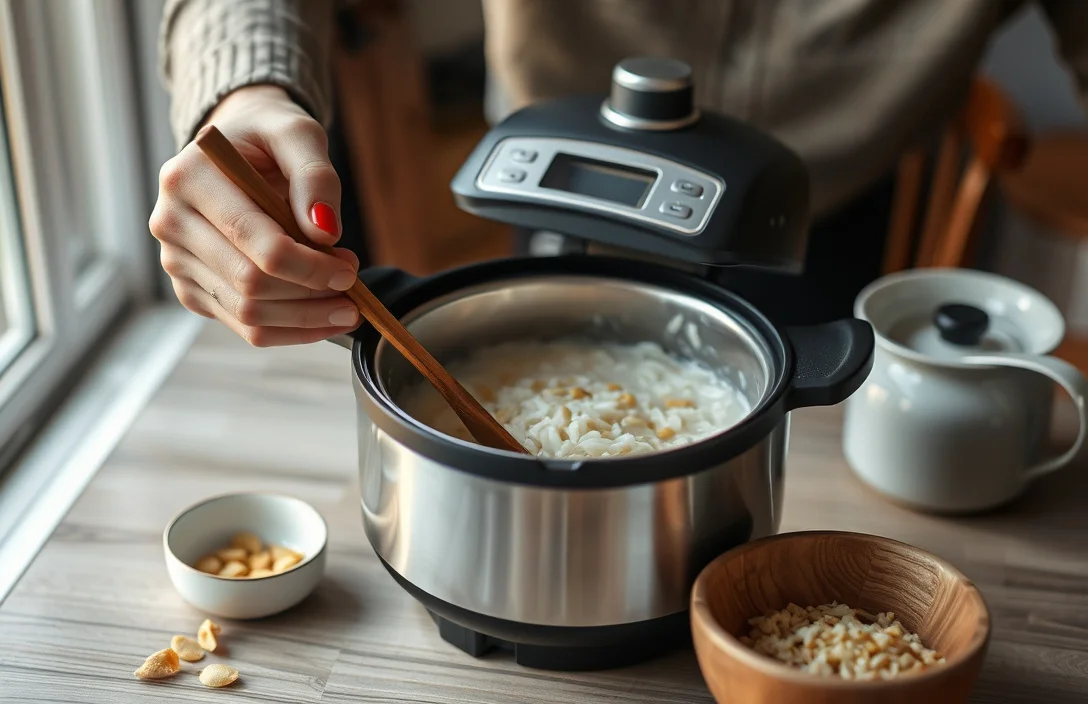
Rice porridge texture comes down to one choice: how creamy you want it. More water gives looser congee; less water makes it thicker. If your rice cooker has a Porridge, Congee, or Soup mode, use it. Those settings build gentle heat instead of aggressive boiling.
Decide how you’re building flavor. Convenience usually means cooking the rice with salt and aromatics, then adding toppings at the end – scallions, soy sauce, chili oil, shredded chicken, or a soft-boiled egg. If you want meat in the porridge, cook it first or use broth so the flavor doesn’t taste “separate” from the rice.
Gather what you need
- Rice (medium or short grain; jasmine works)
- Water (or broth)
- Salt
- Optional aromatics (ginger, garlic) or cooked proteins
- Toppings (scallions, sesame oil, soy sauce, egg, chili crisp)
Core method for rice cooker rice porridge
Rice porridge thickens because starch dissolves into the cooking liquid. That’s why your water ratio controls texture more than anything else. If your congee ends up gluey or clumpy, it’s usually too little water or not enough time (or resting) for the starch to fully distribute.
Rice type affects mouthfeel too. Short- and medium-grain rice break down more and give a creamier texture. Long-grain rice can stay more distinct, so you’ll usually want more water within the recommended range and a longer cook.
Leftover rice works as well, but it softens quickly. You’ll typically need less time and a little stirring so the texture evens out.
Two practical rules keep things consistent:
- Stir once during cooking to prevent uneven thickening near the bottom.
- Adjust after cooking because the porridge continues to thicken as it rests.
Quick texture guide (use during cooking)
- Loose, drinkable porridge: aim closer to 1:20
- Classic spoonable congee: target 1:16 to 1:18
- Thick, almost-grainy porridge: use 1:14 to 1:16 and plan extra finishing time
Step-by-step: make rice porridge in your rice cooker
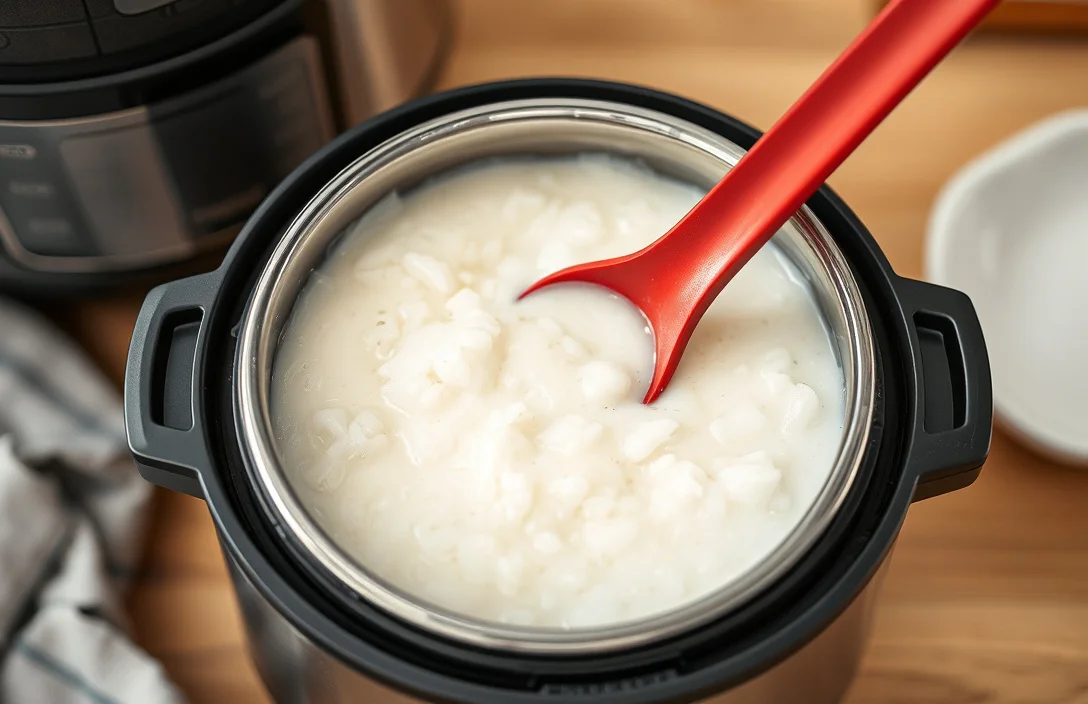
Start with the ratio, then let your cooker handle the cooking. Use this as your repeatable baseline.
- Rinse the rice (optional).
Rinse 1 to 2 times if you want less “starchy haze.” Skip rinsing if you want maximum creaminess.
- Measure the ratio.
Use 1/4 to 1/3 cup rice with 4 cups water as your starting point, then adjust.
- Add aromatics and salt.
Stir in a pinch to 1 teaspoon salt depending on taste. Add ginger slices if you want a lightly fragrant base.
- Add everything to the rice cooker.
Scrape in all rice and water, then close the lid.
- Choose a mode.
Use Porridge/Congee if available. If not, use White rice (or the closest option).
- Stir at the halfway mark.
Open carefully, stir well, then close again. This prevents dry-thick patches.
- Cook until the rice breaks down.
You’re aiming for rice that feels very soft when pressed with a spoon.
- Finish for thickness.
If it’s too thin, cook 10 to 20 minutes more (or run a cautious reheat/keep-warm cycle). If it’s too thick, add a splash of hot water or broth, then stir.
Example: for a single-serve, creamy bowl, use 1/4 cup rice + 4 cups water. After cooking, taste and adjust salt, then top with scallions and a drizzle of soy sauce or sesame oil.
If your cooker only has basic modes, treat porridge as two stages: Stage one cooks the rice through, and Stage two gets you from “cooked” to “your exact thickness” by either extending time or adding a little liquid.
Simple baseline recipe (1 pot)
- Rice: 1/4 to 1/3 cup
- Water or broth: 4 cups
- Salt: 1/2 to 1 teaspoon (to taste)
- Optional: ginger slices (2 to 4), white pepper (a pinch)
Cook until very soft, stir halfway, then adjust thickness at the end.
Things that matter most
The difference between “tastes good” and “textures right” comes from how you handle thickness and finishing.
Stirring matters in two places:
- Stir during cooking to stop uneven thickening near the bottom.
- Stir after cooking to make the porridge look uniform. It often looks thinner right after cooking and thickens as it rests.
Use a two-texture mindset. The porridge thickens as it cools. Stop cooking when it’s slightly looser than your final goal, then let it settle. If you wait until it’s already thick in the pot, it can turn stiff in the bowl.
Treat toppings like flavor, not structure. Heavy additions at the end (like lots of chicken or eggs) can make thickness feel different. Add hearty toppings gradually, taste, and adjust water if needed.
Technique swaps that help a lot
- Want extra creaminess? Use short- or medium-grain rice and consider skipping rinsing.
- Want a cleaner, less starchy taste? Rinse the rice and use a higher water ratio within the range.
- Want smoother texture? Mash a few spoonfuls against the side after cooking, then stir.
- Want faster breakdown? Do Stage one on a rice mode, then Stage two on a longer finish.
What works in practice
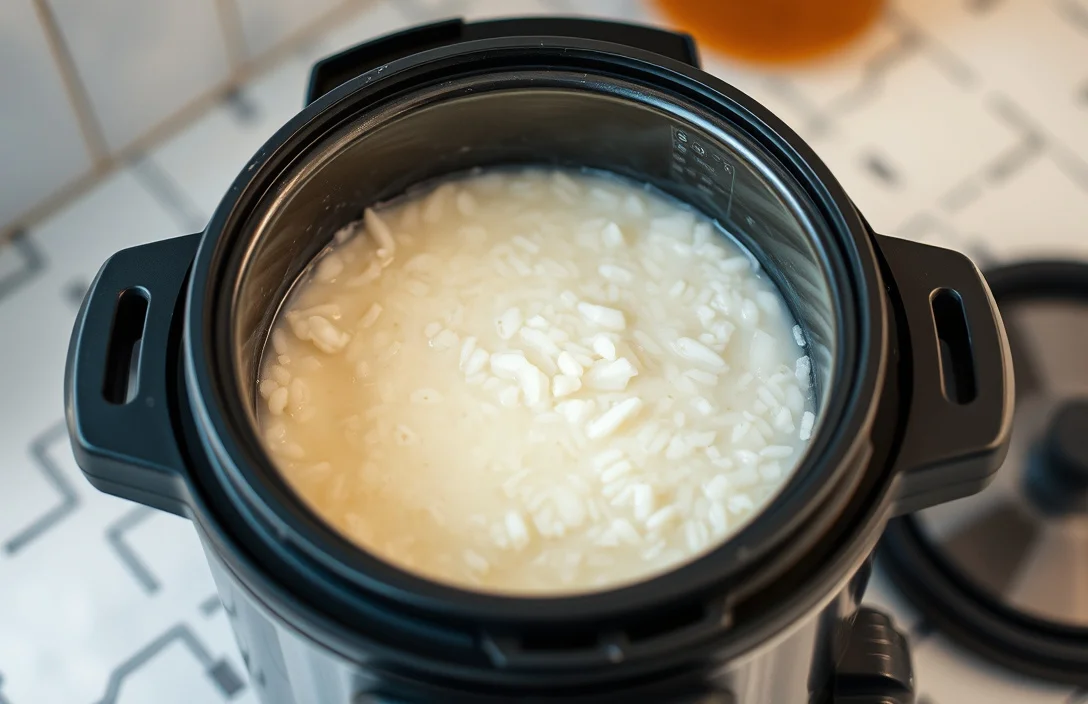
These habits prevent the common texture problems and make results repeatable.
- Measure by volume consistently.
Use the same measuring cup for rice and water so your texture doesn’t swing.
- Don’t overfill the cooker.
Rice porridge expands. Stay under your cooker’s liquid max line.
- Use hot liquid for additions.
Add broth or hot water when adjusting so you don’t need extra cook time.
- Finish with taste control.
Salt and pepper are easiest to nail once the rice is fully soft.
- Serve promptly.
Keep warm thickens porridge quickly. If it’s meant to be served now, plate it soon after cooking.
Keep warm can turn a perfect bowl into something thicker and less appealing. If you must hold it, stir and add a little hot water before serving. For safety and quality, avoid holding for many hours.
Water-to-rice starting points (quick reference)
| Target texture | Rice (per 4 cups water) | Water ratio (approx.) | What to expect |
|---|---|---|---|
| Loose porridge | 1/4 cup | 1:20 | Spoon runs easily |
| Classic spoonable | 1/3 cup | 1:16 to 1:18 | Creamy and satisfying |
| Thick congee | 3/8 cup | 1:14 to 1:16 | Holds on the spoon |
If you’re unsure, start with the classic spoonable ratio, then adjust next time.
Mistakes that commonly ruin rice cooker porridge
Rice cooker porridge usually fails in predictable ways. Fix these and your congee stays creamy.
Mistake 1: Using the same water as cooked rice.
Congee needs extra water. Start with rice-cooker rice levels and you’ll often get thick clumps instead of porridge.
Mistake 2: Skipping the stir.
Even with a rice cooker, thickening can be uneven – thick at the bottom, looser on top. Stir halfway to level it out.
Mistake 3: Overcooking without adding liquid.
Extra time keeps thickening if the water level stays the same. If it turns too thick, add hot water or broth immediately, stir, then reassess.
Mistake 4: Adding raw meat at the wrong stage.
Raw chicken or pork needs enough safe cooking time. If porridge mode doesn’t run long enough, the meat may be undercooked or uneven. Cook proteins separately or use fully cooked meat and heat through at the end.
If you add frozen vegetables near the end, they can dilute the porridge. That’s not wrong, but plan a short additional cook to reach your thickness.
Pro tips for better flavor and easier texture control
A few small moves make porridge feel more “finished” without turning it into a project.
Add aromatics early, but keep the flavors controlled. Ginger slices and a pinch of white pepper cover a lot of styles. Save stronger sauces for finishing, because long cooking can make soy sauce, chili oil, and sesame oil taste sharper than you want.
Finish with a quick texture adjustment instead of guessing early. If it’s too thick, add hot water by tablespoons, stir, then let it settle for a minute. If it’s too thin, cook with the lid closed a bit longer, stirring occasionally.
Match toppings to the base. Classic savory bowls pair well with scallions and soy sauce. A soothing bowl works with a soft-boiled egg and a drizzle of sesame oil. For spicy bowls, add chili crisp or chili oil after cooking so the heat stays vivid.
Easy add-ins that work well
- Egg: stir beaten egg in at the end for silky ribbons, or top with a soft-boiled egg
- Cooked chicken: add at the end and heat through for a few minutes
- Mushrooms: sauté first for deeper flavor, or add near the end for convenience
- Seafood: cook first or use pre-cooked seafood for best results
Taste right before serving. Salt and pepper change how they read once the starch softens, and a small adjustment at the end can save the whole bowl.
FAQ
How much rice do I need for rice porridge in a rice cooker?
A dependable starting point is 1/4 to 1/3 cup rice per 4 cups water. That range gives loose to classic spoonable congee. For thicker porridge, add a little more rice or reduce water slightly, then adjust after cooking.
How long does rice porridge take in a rice cooker?
Most rice cookers take 30 to 60 minutes total for creamy porridge, depending on mode and rice type. If you use a basic rice cycle, plan a short finishing time after the initial cook. Stir halfway, then check softness and thickness before serving.
Can I make rice porridge with leftover rice in a rice cooker?
Yes. Leftover rice softens faster than raw rice, so you’ll need less cooking time. Start within the same water ratio range, stir halfway, and cook until the grains break down to your preferred texture.
Is rice porridge safe to keep on “keep warm”?
Keep warm thickens porridge quickly and can change texture if held too long. For best quality, serve soon after cooking. If you must hold it, stir and add a splash of hot water before serving.
What common mistake makes rice porridge come out watery?
Too much water or too little stirring keeps porridge thin. Start near the classic ratio (around 1/3 cup rice per 4 cups water), stir halfway, then finish with 10 to 20 minutes more if it still isn’t thick enough.

- 10 Best Slow Cooker For Hearty Stews 2026 (Tested And Reviewed) - October 20, 2026
- 10 Best Slow Cooker For Hearty Soups 2026 (Tested And Reviewed) - October 20, 2026
- 10 Best Slow Cooker For Comfort Food 2026 (Tested And Reviewed) - October 20, 2026