How To Make Porridge In Rice Cooker?
Rice cooker porridge is fast, hands-off comfort food, and you can nail it with a few ratios and one key setting. If your batches turn gluey or watery, this guide fixes that. It shows how to make porridge in a rice cooker with pantry staples, then gives troubleshooting for thickness, texture, and timing.
Porridge in a rice cooker works best with about 1 part dry rice to 6 to 8 parts liquid for creamy, spoonable porridge. Use the porridge/congee mode if your cooker has it. If not, choose white rice and start checking at 25 to 35 minutes. Stir once early if your model tends to run hot on the bottom.
Key Takeaways
- Use the right ratio. Start with 1:6 to 1:8 rice-to-liquid for creamy porridge.
- Pick the right mode. Use porridge/congee if available; otherwise use white rice.
- Rinse for texture. A quick rinse reduces excess starch to prevent gummy results.
- Add flavor after cooking. Salt, sugar, and toppings blend better once the porridge is done.
- Thicken by simmering. If it is thin, cook 5 to 10 minutes more with the lid on.
- Prevent boil-overs. Don’t overfill, and keep an eye on the first 10 minutes.
How to begin
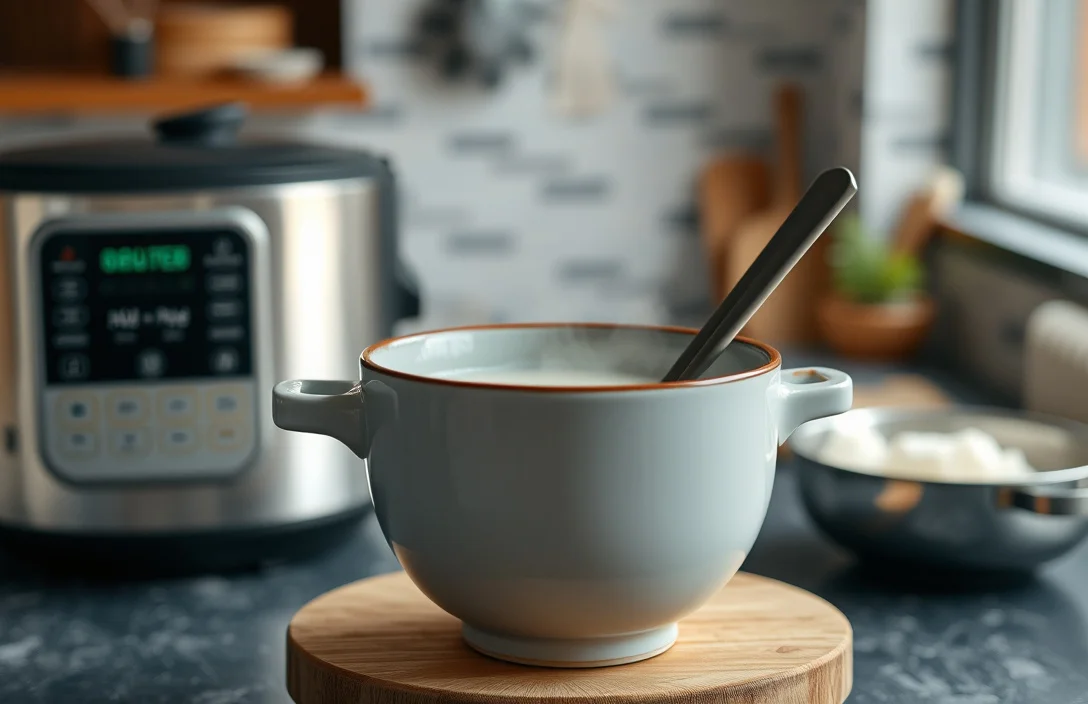
Porridge in a rice cooker is rice cooked low and slow in extra water until it breaks down into a creamy texture. Rice cookers heat evenly, so you get gradual thickening without constant stirring.
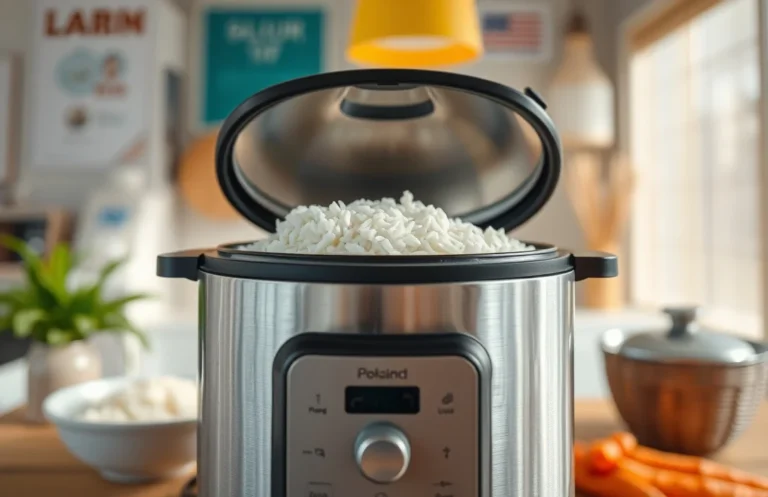
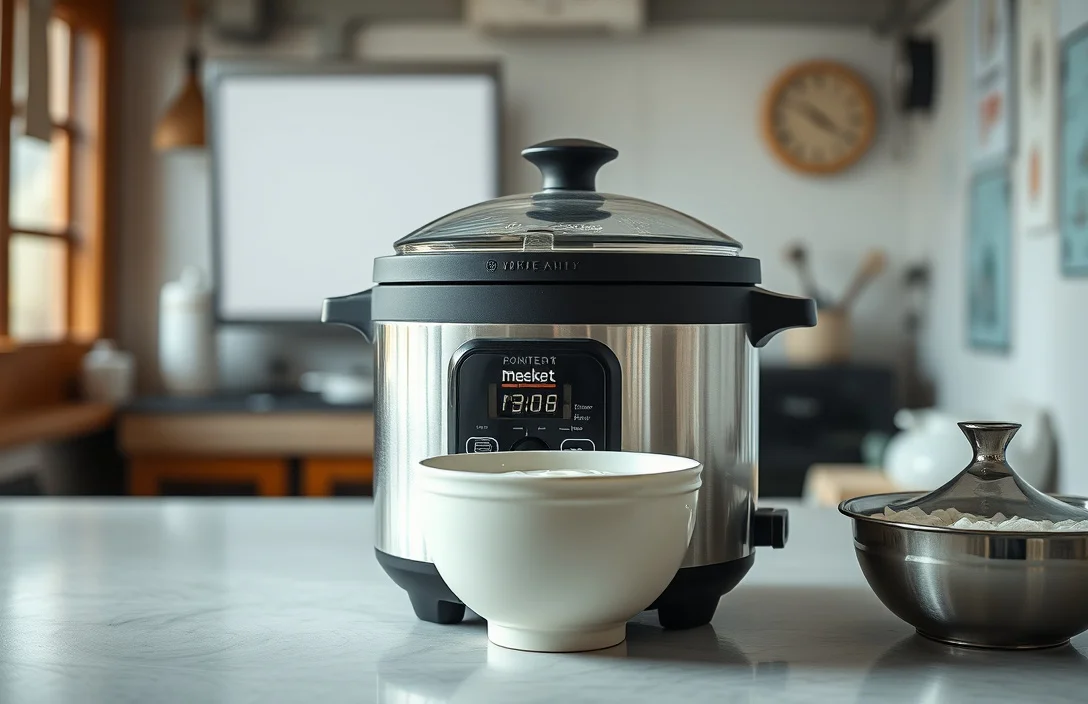
Before you start, check your rice cooker settings. Look for a dedicated porridge/congee program. No porridge mode? You can still make porridge – you’ll just rely more on timing and small adjustments.
What you need (prerequisites)
- Rice: long-grain white rice is common, but short-grain works if you want it thicker.
- Liquid: water works, and broth makes it richer.
- Flavor basics: a pinch of salt, optional ginger, cinnamon stick, or a splash of soy sauce.
- Toppings: green onion, sesame oil, honey, fruit, or shredded coconut.
Basics of how to make porridge in rice
The rice-to-liquid ratio decides everything. Too little liquid makes dense, clumpy porridge. Too much keeps it thin and prevents that creamy breakdown.
The other big lever is cooking time and mode. Many rice cooker programs are designed for rice that absorbs water, not rice that dissolves into porridge. With porridge/congee, the cook is gentler and longer. Without it, you start a standard cycle, then finish with a short additional cook or a lid-on simmer.
Choose your texture target
Pick your texture first, then choose your ratio.
- Creamy spoonable: aim for about 1:7 rice-to-liquid
- Thinner savory porridge: lean toward 1:8
- Thick almost-pudding porridge: lean toward 1:6 and plan a little extra time
Rinse or skip rinsing
Rinsing is optional, but it changes stickiness. Rinse the rice to remove surface starch that can make porridge gummy. Skip rinsing and you’ll usually get a thicker, slightly stickier result, especially with short-grain rice.
how to make porridge in rice
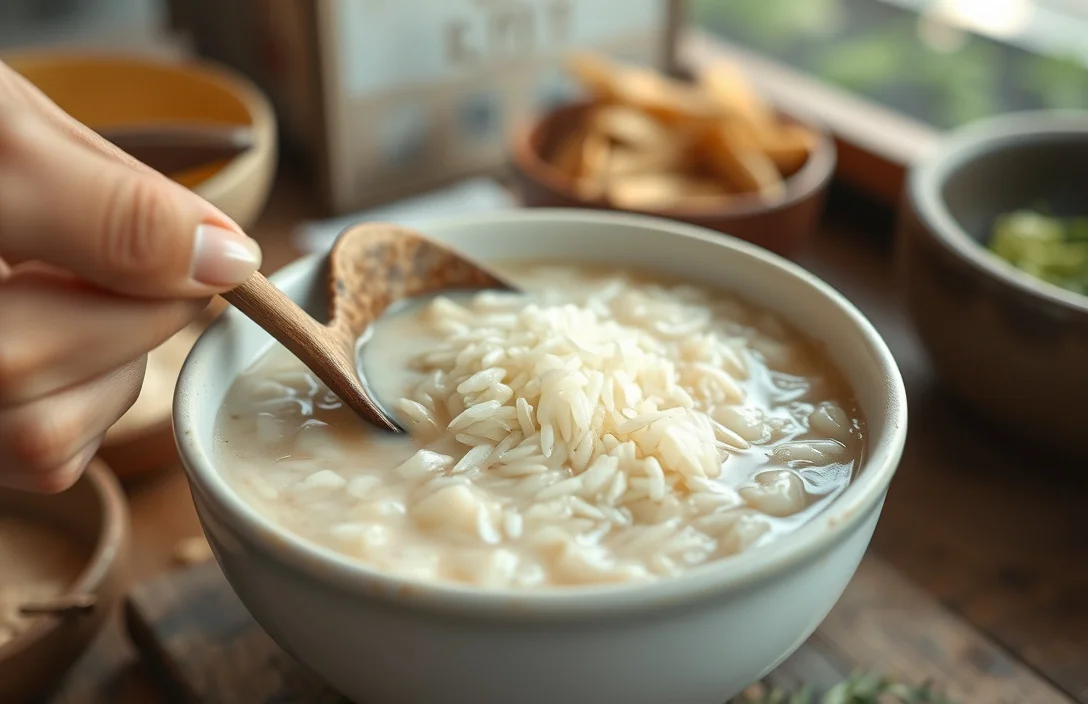
Use this method on most home rice cookers.
- Measure your rice. Use 1/2 cup dry rice for a practical starting test batch.
- Rinse (recommended). Rinse under cool water for 30 to 60 seconds, then drain.
- Add rice and liquid. Add rice to the inner pot and pour in 3 to 4 cups liquid to match the 1:6 to 1:8 ratio.
- Season lightly. Add a small pinch of salt for savory porridge. For sweet porridge, hold off on sugar until the end.
- Set the cooker. Choose porridge/congee if you have it. Otherwise, use white rice or the closest setting your cooker offers.
- Stir once early. If your cooker allows it safely, stir at the beginning to reduce bottom scorching.
- Check texture. Start checking around 25 to 35 minutes. The porridge should look creamy and the grains noticeably softened.
- Adjust thickness. If it is too thick, add a splash of hot water. If it is too thin, cook 5 to 10 minutes more with the lid on.
- Finish and serve. Taste, then add sweetener or more salt after cooking. Add toppings right away.
A quick savory example (weeknight style)
Use broth instead of water and keep flavors simple. Add ginger (a few slices) in the pot, then finish with green onion and a drizzle of sesame oil.
Start with the same 1:7 ratio and cook on porridge/congee if available. If your cooker thickens fast, add a bit more liquid at the end.
A quick sweet example (breakfast style)
Sweet porridge follows the same process, but sweeten after cooking for a smoother finish.
Add vanilla, cinnamon, or a thin pat of butter after the porridge is cooked. For fruit, wait until the porridge is done so the fruit does not over-soften.
Things that matter most
Great porridge comes from controlling dilution and avoiding overcooking into mush. Rice cookers vary, so aim for repeatable texture, not a single “perfect” minute.
Use a measuring system you can repeat. Swapping cups and tablespoons randomly will shift texture every time.
Stir early, but do not over-stir
A single early stir helps prevent bottom sticking. After that, let the cooker do the work. Over-stirring can break grains further and make porridge seem “gluey,” especially if you skipped rinsing.
Use hot liquid for faster consistency
Broth or water straight from the fridge takes longer for the cooker to warm through. Using hot liquid brings the pot up to temperature faster, so thickening is more predictable.
Finish with a short adjustment cook
If you want thicker porridge, don’t keep the main cycle running forever. Use a short additional cook (often 5 to 10 minutes, depending on your cooker) and check often. That prevents “perfect” from slipping into mush.
What works in practice
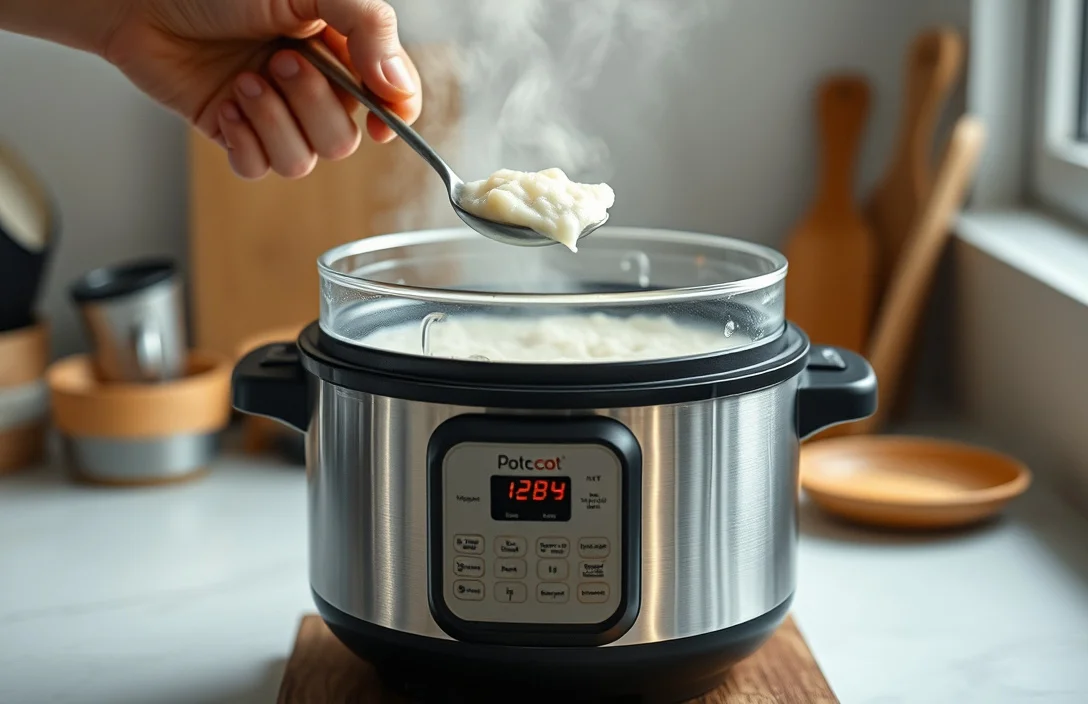
Repeatable habits beat elaborate steps.
Keep the pot from filling too high. Porridge expands and can bubble up more than regular rice, especially early.
Keep the lid-on rule
Most rice cookers need the lid closed for consistent heat. Frequent opening drops temperature and changes cook time. Check at set intervals, then close the lid immediately.
Match your program to your goal
Use porridge/congee when you have it. It supports long, gentle breakdown.
If you only have “white rice,” treat it as a starting cook. Many people get better porridge by starting the cycle, checking thickness, then doing a controlled follow-up cook.
Season in the right order
Salt affects how rice hydrates. Add a small amount at the start for savory porridge. Keep it light. For sweet porridge, add sugar or honey at the end so you can control sweetness without over-reducing.
Mistakes to Avoid with how to make porridge in rice
Most porridge problems trace back to a few predictable causes.
Too thick or clumpy usually means the ratio is too low or you cooked longer than you realized. Flat flavor often means you held back seasoning until it was too late.
Common failure modes (and why they happen)
- Gummy, sticky texture. Usually un-rinsed rice with high starch, or too little liquid.
- Watery porridge that never “sets.” Usually too much liquid or not enough cook time.
- Burnt bottom. Usually too thick for your model, or cooking on a high setting without enough water.
- Boil-over mess. Usually overfilled pot or too much liquid added early without tracking expansion.
- Grains stay too firm. Usually not enough time, or a rice type that needs more breakdown.
Fix fast instead of starting over
Adjust instead of scrapping the batch. Add hot water a little at a time if it’s thick. If it’s thin, cook longer. If it turns out too salty, stir in more plain liquid and re-taste.
Pro Tips for how to make porridge in rice
Once you nail the base method, you can fine-tune without overcomplicating.
Use a small “test batch” until you understand your cooker’s behavior. Different brands heat differently, so the same ratio can thicken faster in one unit than another.
Make it thicker without adding extra rice
Simmer longer for creamier porridge when you don’t want more rice. A short additional cook concentrates the texture without changing the rice-to-liquid balance too much.
Boost flavor without overpowering
For savory porridge, ginger and garlic are reliable. For sweet porridge, cinnamon and vanilla fit well. Add strong aromatics gradually and taste at the end.
Store and reheat properly
Porridge thickens as it cools. When reheating, loosen with a splash of water or milk, then warm gently until spoonable again.
If you meal prep, stop slightly earlier so it lands in the right texture after cooling.
FAQ
1) How much time does it take to make porridge in a rice cooker?
Most rice cookers take 25 to 35 minutes for porridge to reach a creamy, softened texture, and you may need 5 to 10 more minutes for a thicker result. Start checking around 25 minutes. Exact time depends on rice type, liquid ratio, and whether your cooker has a porridge/congee mode.
2) What rice and rice cooker settings work best for porridge?
Long-grain white rice is a reliable default, while short-grain tends to be thicker and creamier. If your cooker has porridge/congee, use it. Without that option, start with white rice (or the closest cycle) and adjust with a short follow-up cook after checking texture.
3) Can you make sweet porridge in a rice cooker?
Yes. Use the same base method and ratio, then add sweetener at the end. That keeps sweetness under control and helps avoid overly reduced edges. Top with fruit, nuts, or cinnamon after cooking.
4) Why did my porridge turn out gummy or sticky?
Gummy porridge usually comes from excess surface starch and too little liquid. Rinse the rice before cooking and start with 1:6 to 1:8 rice-to-liquid. Don’t keep cooking far past the needed range either, since extra time can push rice toward a paste-like texture.
5) Is there an alternative method if my rice cooker does not have a porridge mode?
Use the white rice cycle as your starting cook, then finish with checking and a short additional cook. For example, run the cycle, check at 25 to 35 minutes, then continue 5 to 10 minutes with the lid on if needed. If it is too thick, adjust with hot water.
After one try, you’ll have your ratio and timing dialed in for your cooker. Make the next batch slightly closer to your preferred thickness, then write down the rice amount, liquid amount, and check time so it stays effortless.

- 10 Best Slow Cooker For Large Kitchens 2026 (Tested And Reviewed) - October 19, 2026
- 10 Best Slow Cooker For Small Kitchens 2026 (Tested And Reviewed) - October 18, 2026
- 10 Best Slow Cooker For Kitchen Countertop 2026 (Tested And Reviewed) - October 18, 2026