Clematis In Pots With Trellis: Best Varieties And Pot Size
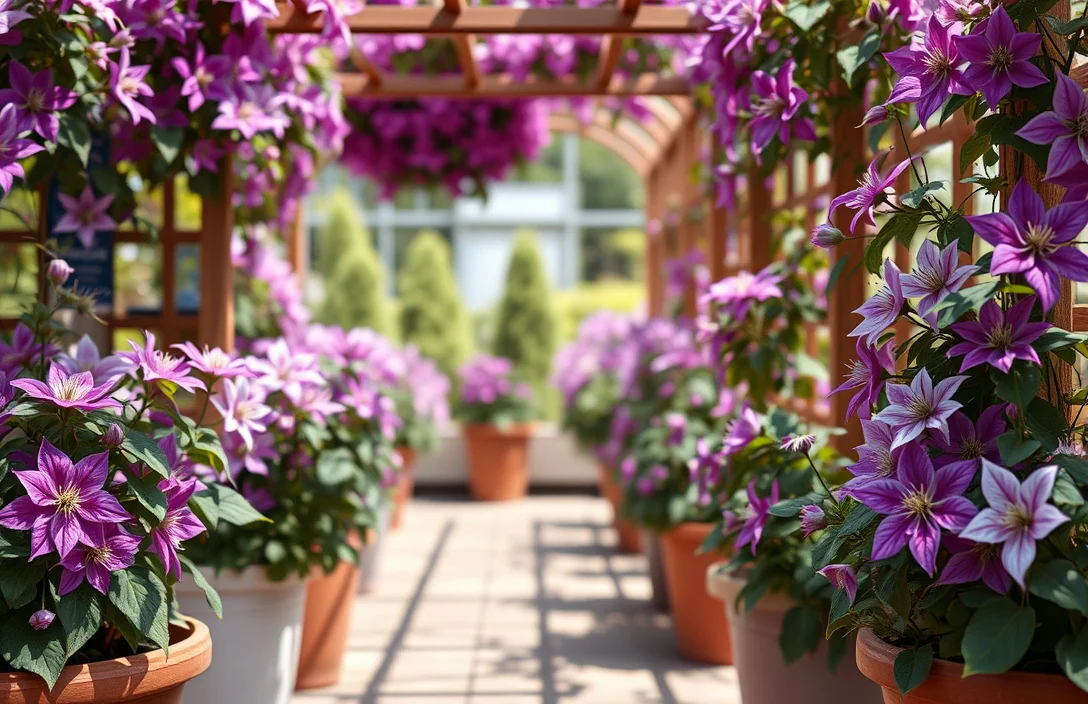
Clematis in pots with a trellis is a workable way to grow big blooms on patios and small yards, as long as you manage two things: root comfort and steady moisture. Containers force you to get pot size and drainage right, and they punish inconsistent feeding during the growing season. This guide lays out the best starting varieties and the setup choices that make bloom season more reliable.
Clematis in containers with a trellis blooms best with a pot that drains strongly, correct planting depth, and a root zone that stays cool and lightly shaded. Choose a container-tolerant group like Viticella or Integrifolia, water when the top inch dries, and fertilize every 2-3 weeks during active growth.
Key Takeaways
- Best container types. Choose Viticella, Integrifolia, or compact selections because they handle pots and trellises well.
- Pot size matters. Use at least 12 inches wide (and ideally deeper) to prevent drying and root stress.
- Drainage is non-negotiable. Pick pots with multiple drainage holes and use airy potting mix, not garden soil.
- Planting depth helps. Set the crown deeper than you would in-ground, then mulch lightly to protect roots.
- Trellis needs early training. Install the trellis at planting and tie new growth gently so you don’t snap stems.
- Feed during growth. Fertilize every 2-3 weeks in active growth, then ease off in fall and stop once dormancy starts.
Clematis in Pots With Trellis: Best Varieties
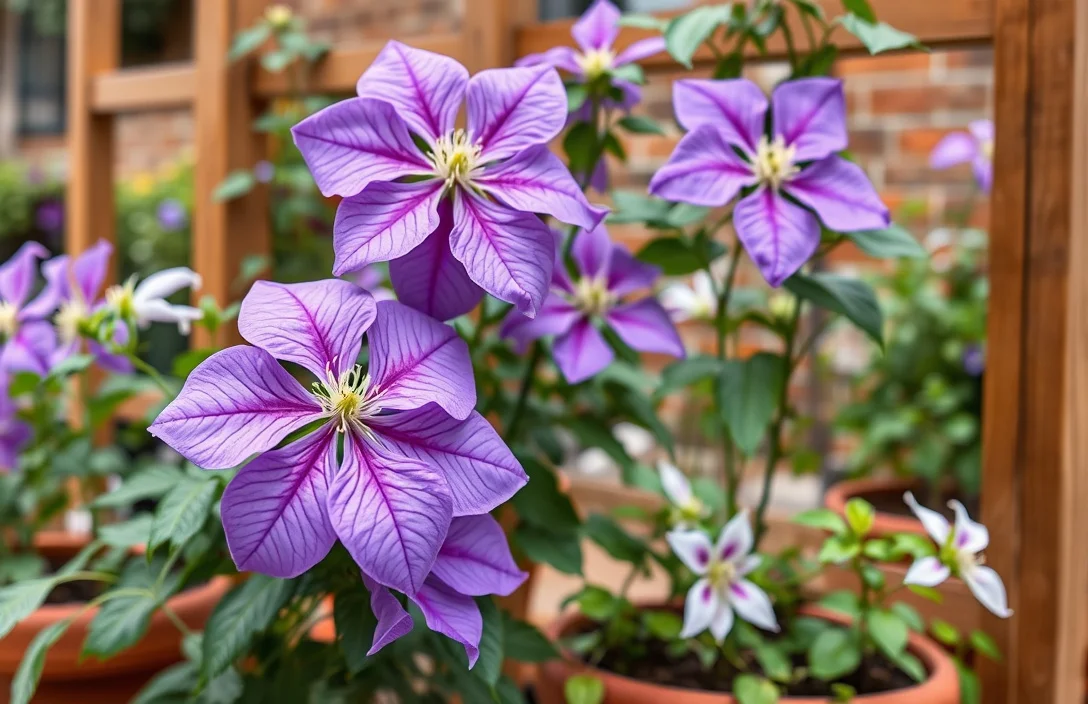
The easiest potted clematis are the ones that don’t require a perfect, long-stable root environment. In practice, that means choosing groups that are vigorous and more tolerant of normal moisture changes than many large-flowered types.
For containers with a trellis, start with these dependable categories (and specific cultivars when you can find them). Viticella clematis (often sold as “Clematis viticella” and related cultivars) perform well in pots because they bloom heavily, stay more manageable, and handle pruning more aggressively. Integrifolia types (often sold as “Clematis integrifolia”) grow in a bushier, less vine-like way, so they’re a good choice when you want flowers without constantly dealing with snapped or tangled stems.
Good options for a patio pot and trellis setup:
- Viticella cultivars. ‘Etoile Violette’ and ‘Purpurea Plena Elegans’ are solid choices and are widely available in the US market.
- Integrifolia cultivars. ‘Arabella’ and ‘Alba’ are popular because the plants naturally drape and climb with less chaos.
- Compact large-flower options. If you want big, showy blooms, search for “compact” or “patio” clematis instead of the largest sprawling classics.
The biggest mistake is buying a clematis intended for a long run along a fence and expecting it to thrive in a small pot. For an easier win, prioritize Viticella or Integrifolia, then size the trellis to match the plant’s growth habit.
Which Clematis Pot Size and Drainage Works
Pot size is the first control you have, and it affects watering frequency, heat stress, and how steady the crown stays. In containers, clematis roots dry out faster than most people expect, especially on sunny patios. A pot that’s too small usually means either smaller blooms or wilting during hot days.
Use this baseline: choose a pot at least 12 inches wide, and go larger if you can. Depth helps too because clematis dislikes hot, drying roots, and deeper soil holds moisture longer. If you want fewer watering emergencies and a longer season, pick the largest pot you can manage.
Drainage is the second lever, and it’s just as important. Use containers with multiple drainage holes, and skip cachepots or anything that traps water at the bottom. Pair that with a well-aerated potting mix so water moves through rather than sitting around the roots.
A dependable container setup:
- Pot. At least 12 inches wide, with drainage holes you can clearly see when you slightly tip the pot.
- Soil. High-quality potting mix (not garden soil) that drains well without turning powdery.
- Amendments. Mix in a little compost for nutrition, but keep the base airy.
If your summers are hot or windy, plan for a larger pot or extra root-zone protection, such as a thicker mulch layer on top. If your containers stay soggy, switch to a lighter mix and confirm water actually runs freely out the holes.
How Deep to Plant Clematis in Containers
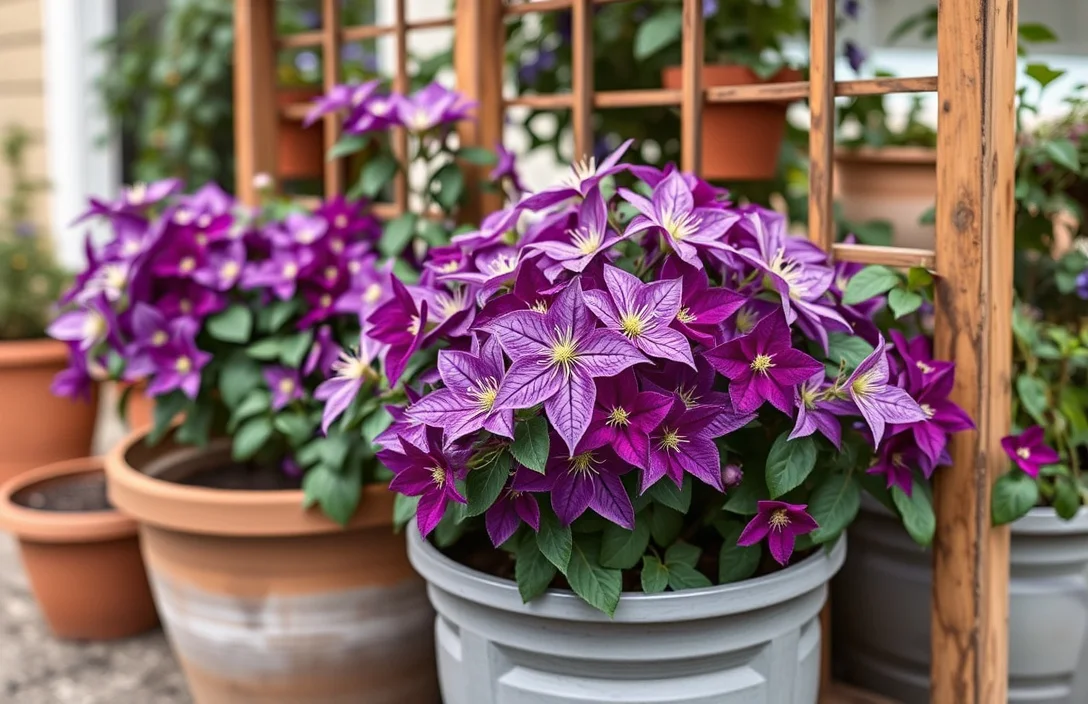
Planting depth determines whether clematis stabilizes in the pot or struggles for weeks. The goal is protecting the crown and encouraging strong roots. In containers, you can’t “fix it later” easily because the pot is the entire root system.
Plant clematis deeper than you would in-ground. Bury the crown and the lower stem area so new growth emerges from a protected zone. In containers, set the crown about 2 to 4 inches below the soil surface, then adjust a bit based on stem thickness and whether you plan to mulch.
Younger plants with flexible stems benefit from a slightly deeper set because they form a sturdier base. With older plants or thick, woody crowns, going too deep can increase rot risk in an overwatered container, so watch drainage and avoid keeping the mix constantly wet.
After planting, keep the top of the pot from overheating:
- Apply mulch lightly on top (don’t pack it down).
- Add a small amount of shade to the root zone if your patio bakes in afternoon sun.
For trellised container clematis, position the plant so new shoots can climb without tugging at the crown. Anchor the trellis close to the pot before you start training stems.
Trellis Types for Container Clematis Training
A trellis supports clematis stems so they don’t twist, snap, or tear at the base. In containers, choose something tall enough for vertical growth and stable enough that wind won’t wobble it.
Most patio setups fit into three practical trellis styles:
- Freestanding pot-friendly trellis frames. Often attached to the pot rim or placed just behind it with anchors. These deliver a clean look with minimal fuss.
- Wall-mounted trellis (only if the pot placement gives airflow). This works when you can position the pot near a wall and train shoots outward, but you need enough air around the plant.
- Obelisk-style trellises. These look tidy in containers and give shoots a clear vertical route, but the base must be heavy enough to resist tipping.
Soft ties matter. Clematis doesn’t “grip” like some vines, so you guide new growth gently. Use plant ties that won’t cut into stems, and tie loosely so the stem can thicken.
A simple training workflow:
- Install the trellis at planting (or immediately after).
- As shoots grow, guide them up and away from the crown.
- Remove ties that start to pinch as stems expand.
If you see a clematis turn into a tangled ball, it usually comes from training too late and using a trellis that’s too short. When in doubt, go a bit taller than you think you need, because clematis can catch up fast in spring.

Helpful pick
2 Pack 30” Large Metal Plant Trellis for Climbing Plants, Tall Plant Support for Indoor & Outdoor Use, Modern Decorative Trellis for Potted Plants (2 Pack)
Tall, sturdy metal trellises provide secure vertical support for clematis in pots, resisting wind.
Watering and Fertilizing Schedule for Potted Clematis
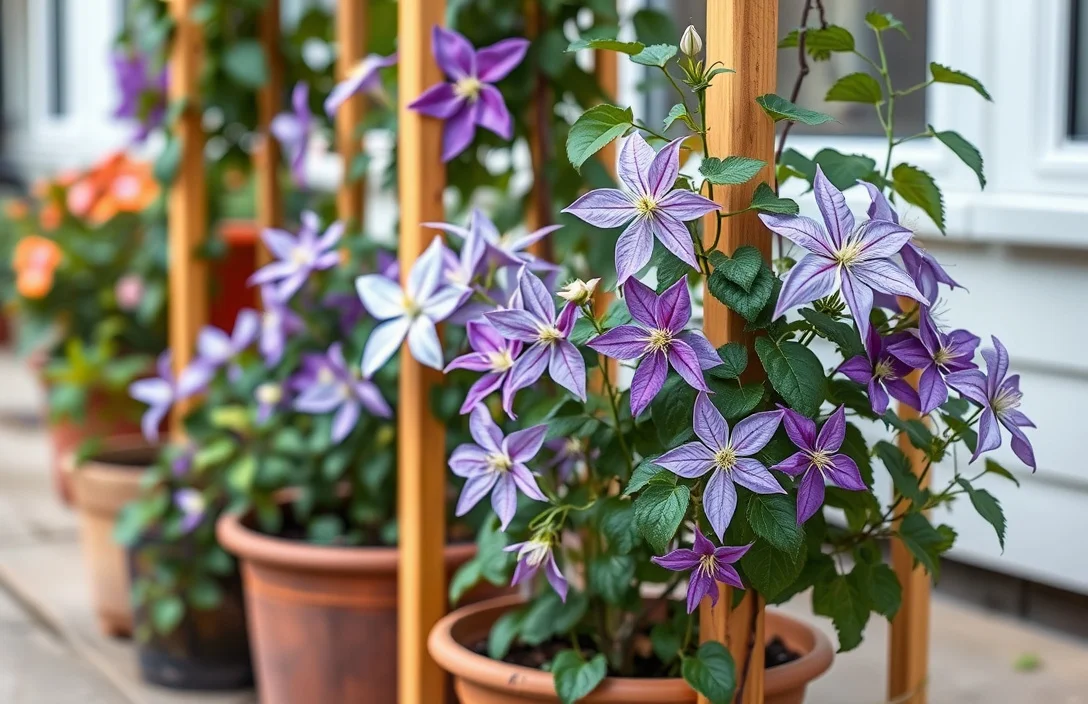
Clematis in pots wants steady moisture, not constant wet feet. Containers dry faster than in-ground plantings, so the goal is to prevent long dry spells while still keeping drainage excellent.
A watering approach that works for much of the US:
- Check daily in hot weather. Stick a finger into the top inch. If it’s dry, water deeply until excess drains out.
- Water less often in cool weather. When growth slows, check every few days and water only when the top inch dries.
- Keep moisture consistent. Avoid swings between bone-dry and waterlogged.
Deep watering matters more than frequent light watering. Soak thoroughly so moisture reaches deeper roots. If you only wet the surface, the top can feel damp while deeper roots stay dry.
Feeding turns a trellis climber into a heavy bloomer. Use a fertilizer suitable for flowering plants, and feed during active growth.
A reliable feeding cadence:
- Start when growth begins (spring).
- Fertilize every 2-3 weeks while actively growing and during the main bloom push.
- Ease off in late season as growth slows.
Slow-release fertilizers can stretch intervals, but you still need enough nutrition for blooming. With liquid fertilizer, use the label rate and keep the schedule consistent.
Newly planted clematis doesn’t need aggressive feeding right away. Let it root into the pot, then begin regular feeding once you see healthy new growth.

Helpful pick
FAFTFTDY Trellis for Climbing Plants Indoor, 4 Pack 31” Metal Plant Trellis Indoor for Potted Plants, Sturdy Plant Support Outdoor for Ivy Pothos Monstera Hoya Flower Vine, Wave Shape
Supports vertical growth in pots, keeping foliage off the soil so watering remains even and efficient.
Winterizing Clematis Pots on a Trellis
Winterizing container clematis prevents root freeze-thaw damage and keeps the pot from soaking and drying out repeatedly. Ground-planted clematis get insulation from surrounding soil, but a pot is exposed, so roots face bigger temperature swings.
Your winter goals:
- Protect the pot so the soil doesn’t repeatedly freeze solid and thaw.
- Avoid waterlogging during thaws (a soggy pot is more dangerous than a slightly cold one).
- Cover the crown enough to reduce temperature swings.

Helpful pick
COLOtime 3Pack Bamboo Trellis 16 Inch Fan Shaped Small Plant Trellis for Indoor Potted Plants Climbing Monstera Orchid Vine Hoya Houseplant
Provides a compact trellis to support clematis in a pot, aiding winter stability and reduced movement.
Practical winter steps for most US climates:
- Stop heavy feeding in fall so new growth doesn’t stay tender.
- Reduce watering once temperatures consistently drop, but don’t leave the pot bone-dry for long periods during dry winter spells.
- Wrap or insulate the container. Burlap plus an insulating layer (or a winter pot cover) moderates temperature swings.
- Mulch the top of the pot to protect crown area.
- Secure the trellis. Wind can whip stems around, and broken shoots reduce next season’s bloom.
Coverage depends on how severe your winter is. In regions with hard freezes, add more insulation. In mild areas, heavy wrapping can trap moisture, so keep coverage moderate and check for soggy soil after warm rains.
Clematis pruning also depends on type, and winterizing goes hand in hand with pruning. Early-bloomers and late-bloomers need different timing. If you don’t know your clematis group, use the label, then prune cautiously by the cultivar’s guidance.
How to Get Clematis Blooming in Pots
Most potted clematis problems come from one of three causes: the wrong variety for container life, crown stress from heat or dryness, or nutrient imbalance. When flowers are sparse, check those factors first instead of changing everything at once.
To improve bloom reliability in pots, focus on the “big three”:
- Root zone stays cool. Use mulch and keep the crown area protected from harsh heat.
- Consistent moisture. Allowing the pot to dry out fully during bloom season can shut flowers down quickly.
- Adequate feeding. Containers lose nutrients fast because watering flushes them through the soil.
Blooming also ties to training and pruning timing. Pruning at the wrong time can remove next season’s flower buds. Match pruning to the clematis type. If you’re unsure of the group, identify it now and commit to the correct pruning method for next season.
Another practical lever: don’t force the clematis into an overly punishing position. If the pot sits in full scorching sun all day, move it toward morning sun and afternoon shade, or protect root heat with a taller pot and more mulch. Stems tolerate sun better than roots do.
For a predictable bloom season:
- Train shoots early so the plant grows upward instead of tangling.
- Keep the pot evenly moist.
- Fertilize on schedule during active growth.
- Prune at the correct time for your specific clematis type.
Quick diagnostic: do the leaves look healthy and green, are new shoots growing normally, and are you getting flowers later than expected? Pale leaves or weak growth points to nutrition or root stress. Vigorous growth with few blooms usually points to pruning timing or the clematis group.
FAQ
What size pot is best for clematis with a trellis?
Use at least 12 inches wide with drainage holes that let water run freely. Wider pots dry more slowly, which matters because clematis roots don’t handle heat stress well. If your trellis makes the plant top-heavy or your patio is windy, a larger pot improves stability too.
What’s the fastest way to get clematis established in a container?
Water deeply when the top inch of soil dries, and keep the potting mix evenly moist during the first season. Add mulch over the root zone to reduce heat, then start regular feeding once you see solid new growth. Train shoots gently early so the plant isn’t still recovering from snapped or tangled stems.
Do potted clematis need full sun?
Most clematis tolerate plenty of sun, but the root zone needs to stay cool. In hot summers, afternoon partial shade helps prevent stress that reduces blooming. Morning sun plus afternoon shade is a common setup that keeps stems and roots more comfortable.
How do I train clematis on a trellis without damaging it?
Set the trellis close to the plant, then tie new shoots loosely as they grow. Use soft ties and check them every couple of weeks so they don’t pinch as stems thicken. If stems get tangled, untangle carefully because rough handling can break young growth.
What’s the most common mistake people make with clematis in pots?
A pot that’s too small or with poor drainage. Small pots dry out fast, and soggy mix causes crown stress. If you fix only one thing, move to a larger container with reliable drainage and stick with consistent deep watering.

- 10 Best Slow Cooker With Cool Touch Handles 2026 (Tested And Reviewed) - October 22, 2026
- 10 Best Slow Cooker With Quality Construction 2026 (Tested And Reviewed) - October 22, 2026
- 10 Best Slow Cooker With Premium Construction 2026 (Tested And Reviewed) - October 22, 2026