How To Grow Trees In Pots?
Growing trees in pots is doable in the United States, but you will only get good results if you match the tree to container life, then manage water and roots like a pro. A healthy potted tree depends on drainage – never soggy soil – enough soil volume for the roots, and a routine for pruning and repotting. This guide shows you how to grow trees in pots with practical steps, troubleshooting, and what to do next.
Trees in pots grow best when you pick a container-friendly species, use a pot with drainage holes, and keep soil evenly moist without letting it stay wet. Choose a pot sized for the current root ball, use a high-quality potting mix, water deeply when the top inch dries, and fertilize during active growth. Expect pruning and eventual repotting, because containers cap root space.
Key Takeaways
- Choose the right tree. Start with dwarf, columnar, or naturally small species that tolerate container roots.
- Use real drainage. Pick pots with holes, then set them on a tray that drains, not one that holds water.
- Water by soil, not by schedule. Water deeply when the top inch is dry to the touch.
- Plan for root limits. Prune roots and repot every 1-3 years, depending on growth rate and container size.
- Feed during growth. Fertilize in spring and summer, then ease off in fall and winter.
- Control sun and wind. Many container trees need full sun, but young pots need protection from harsh midday burn.
How to begin
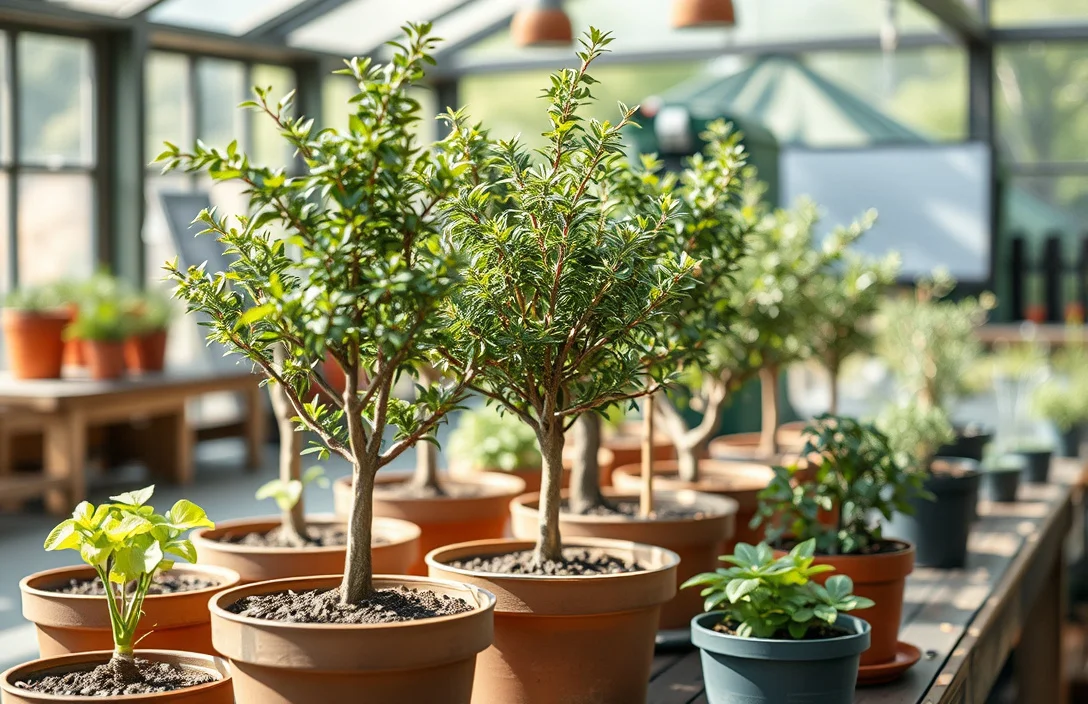
Start with a potted tree that grows steadily instead of stalling or dropping leaves. Pots don’t forgive mistakes the way ground soil does because they dry out faster, overheat sooner, and offer fewer “buffer” resources around roots.
Before you buy anything, decide where the pot will live. Match the tree’s light needs – often 6+ hours of sun for fruiting and many ornamentals – and confirm you can move the pot inside or protect it when temperatures drop below the tree’s tolerance.
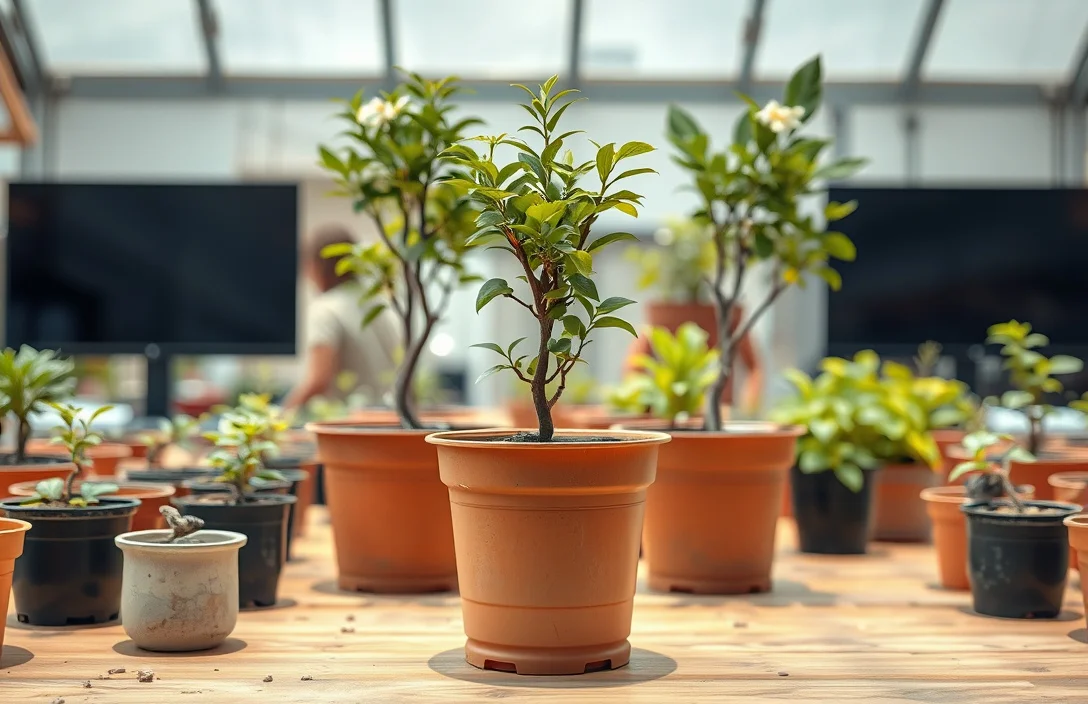
Match the tree to container life. A fast-growing full-size tree in a small pot leads to root crowding, frequent watering, and stunted growth. Start with dwarf varieties, bonsai-suitable species, or nursery-labeled container trees.
Set yourself up to avoid the two biggest container killers: waterlogged roots and weak light. The basics are simple: use a pot with drainage holes, use a breathable potting mix, and place the pot where it gets the light the tree actually needs.
Basics of How to Grow Trees in Pots
A container tree is a root-management project first, and a foliage-care project second. Roots in pots face temperature swings and limited space, so your watering and potting mix matter more than people expect.
Containers change how water behaves. In-ground soil acts like a sponge and a heat buffer; pots do not. Ceramic, plastic, and fabric grow bags dry at different rates, and black pots absorb more heat, which can stress roots during summer.
Soil choice controls root oxygen. Use a potting mix designed for containers – typically lighter and chunkier than garden soil. Garden soil compacts in pots and reduces oxygen around roots. Less oxygen means slower growth and higher risk of root rot.
Light and temperature finish the job. Poor light slows growth and can trigger leaf drop. In winter, pots offer less insulation than the ground, so you may need to wrap the pot or move it to a sheltered spot to prevent root freezing and thaw cycles.
How to Grow Trees in Pots
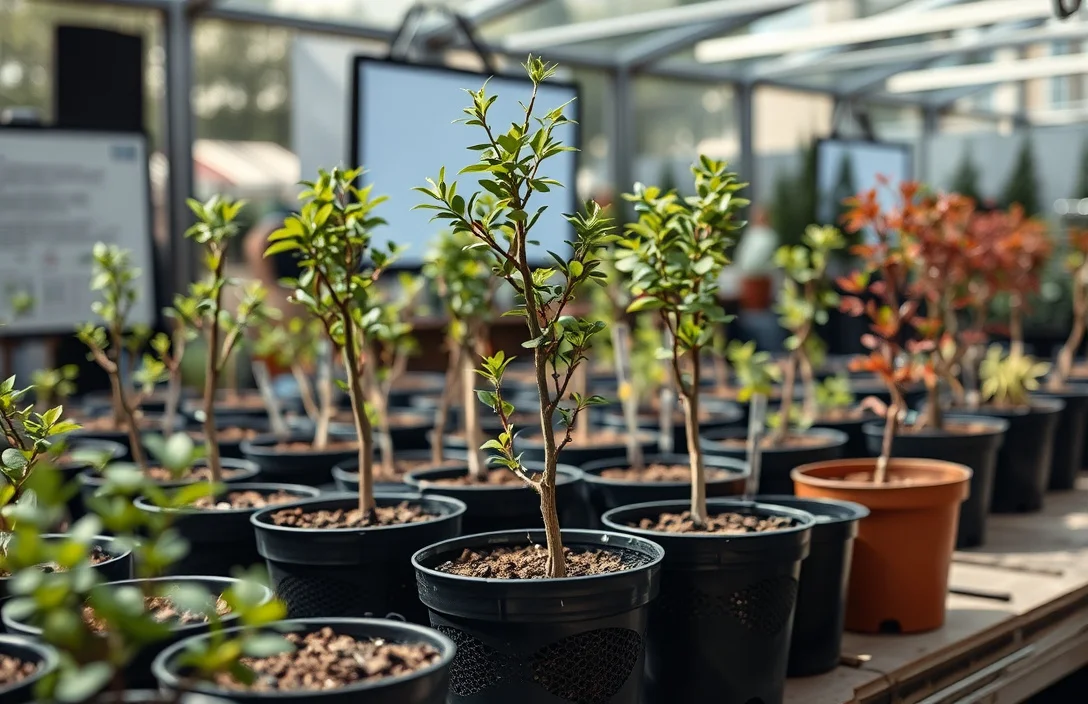
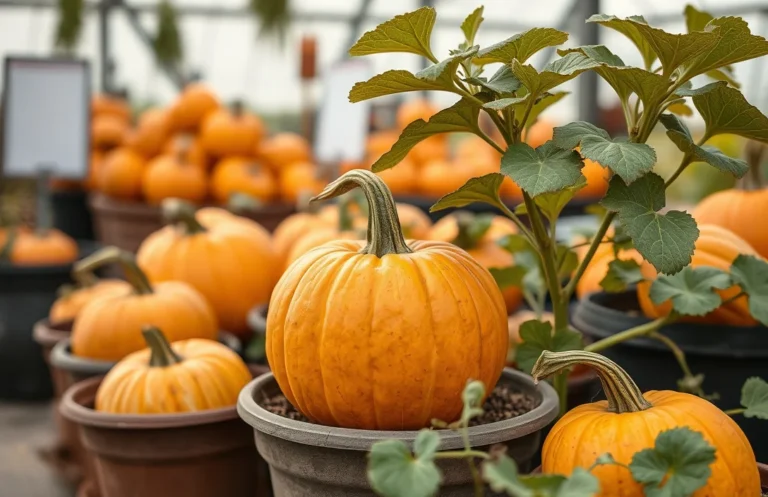
1) Pick a container-appropriate tree. Choose a dwarf, compact, or naturally small variety (fruit trees often come on dwarf rootstocks). Check the mature size so you do not trap the tree in a forever-small pot.
2) Choose the right pot. Use a container with drainage holes, ideally 2-4 inches wider than the root ball to start (not a massive “forever” pot). If it has no holes, do not start there.
3) Use the right soil mix. Fill with a quality container potting mix. Avoid straight garden soil, because it compacts and reduces drainage in pots.
4) Plant carefully and anchor it. Loosen circling roots gently if needed, set the tree at the same depth it was growing, then backfill firmly enough to stabilize (but do not pack it like concrete). Water thoroughly right after planting to settle the mix.
5) Water with a consistent rule. Water deeply until excess drains out the bottom, then wait until the top inch of soil is dry before watering again. Hot weather may mean every few days; cooler weather may mean weekly.
6) Feed during active growth. Apply a balanced fertilizer during spring and summer, following the label directions. When growth slows in fall, ease off so new growth does not get damaged by cold.
7) Prune for shape and root control. Remove dead or crossing branches, and consider light structural pruning after the tree establishes. When roots fill the pot, you may also need root pruning during repotting (small cuts with clean tools).
In practice, start with one uncomplicated example: a dwarf citrus or dwarf fig for sunny patios (with a plan to protect it in colder weeks). Put it in a pot with drainage holes, use container potting mix, water when the top inch dries, and keep it in bright light through the growing season. You will learn faster with a tree that tolerates container roots and clearly shows when something is off.
Another common example is an ornamental like a dwarf Japanese maple (often grown in larger containers). It typically prefers reliable moisture and morning sun, with protection from harsh afternoon heat in summer. If leaf edges burn, it is often a sun/heat and watering rhythm issue, not a “fertilizer problem.”
Things that matter most
The most important technique is getting the root zone oxygen right. That means drainage holes, a container potting mix, and watering that does not keep roots constantly wet. If the soil smells sour or stays wet for days, you have a drainage or mix problem.
Sizing and repot timing prevent long-term decline. Most people either up-pot too early (leading to soggy soil) or wait too long (leading to root circling and stalling). Move up gradually and repot when roots start circling or when growth slows despite good light and care.
Pruning works above and below the soil. Above-ground pruning directs energy into structure and fruiting wood where appropriate. During repotting, root pruning can refresh the root system and improve the balance between roots and canopy.
Temperature management matters in the US because containers freeze and thaw faster than ground soil. Wrap the pot, group it near a wall, and use a sheltered spot so you do not trigger spring leaf-out failure from winter stress.
Treat pests and disease like container problems. Patio and indoor trees often deal with scale, aphids, spider mites, and fungal issues when airflow is low and leaves stay wet. Increase airflow, avoid wet foliage for long periods, inspect weekly, and act early when you spot spots, sticky residue, or stippling.
What works in practice
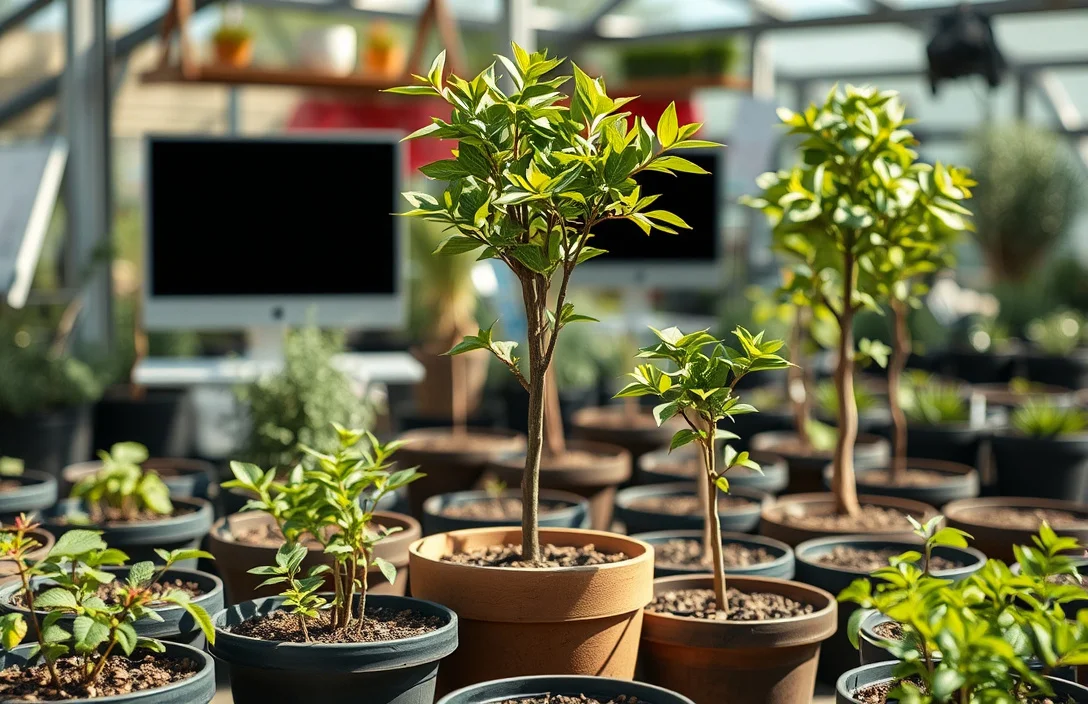
Best practice number one is a repeatable routine. Check moisture by feel, not by calendar, and inspect the tree at the same time each week. Container trees punish inconsistent watering because roots cannot “ride out” swings like in-ground trees can.
Best practice number two protects roots from heat and cold extremes. Use light-colored pots in hot sun, elevate the pot so air can flow underneath, and insulate in winter. A black pot outdoors in summer heats the root zone faster than the surrounding air.
Best practice number three uses fertilizer with timing. Container trees often need more frequent feeding than in-ground trees, but overfertilizing causes salt buildup and can burn roots. Follow label directions, and periodically flush the soil by running water through the pot until excess drains out, especially if you see crusting on the top.
Best practice number four keeps the canopy matched to the root system. A huge top on a small root system forces the tree to use more water than it can supply, so wilting happens even when the surface looks moist. When repotting or root pruning, reduce canopy lightly if you reduced roots.
What works in practice
- Spring: increase light if safe, start feeding as growth begins, check drainage after winter rains.
- Summer: watch watering frequency, inspect for pests, prune only what you need.
- Fall: slow feeding, monitor leaf drop causes, prepare for temperature shifts.
- Winter: protect the pot, reduce watering based on soil dryness, limit stress.
Mistakes to Avoid with How to Grow Trees in Pots
The fastest way to fail is to put a container tree in garden soil. Garden soil compacts, blocks oxygen, and traps water, which increases root rot risk.
Oversizing the pot is another common mistake. When the pot is too large for the current root mass, excess soil stays wet longer and the tree cannot pull moisture evenly. You create fungus-friendly conditions and the tree stalls.
People also water too lightly. Mist the surface or add only a small amount and the top inch gets wet, then dries fast while deeper roots stay under-watered. Water deeply enough to drain out the bottom, then wait.
Skipping light causes weak growth, leaf drop, and pest vulnerability. “It’s green” is not the same as thriving in containers, and poor light shows up quickly.
Finally, many growers ignore root circling and repotting until things go wrong. Roots that coil around the pot wall form a tangled mat that blocks uptake. If roots emerge at the bottom or the tree keeps drying out too fast, inspect and plan to repot.
Pro Tips for How to Grow Trees in Pots
Track watering with observation. After you water, note how long it takes for the top inch to dry, then adjust by season. If your tree dries in 24-48 hours during summer, you likely need a larger pot, better shade management, or a mix that holds moisture longer without staying wet.
Use mulch or top dressing carefully. A thin layer can reduce surface evaporation, but keep it away from the trunk. If it traps moisture too tightly or encourages fungus, back off.
For fruiting trees, check pollination and flowering needs early. Many potted fruit trees require strong enough light to set fruit. If your tree is flowering but not fruiting, start with light hours and temperature swings.
Shape with timing and clean tools. Make pruning cuts with sharp, sanitized tools, and prune lightly rather than removing a huge portion at once. Drastic pruning stresses container trees because their root reserves are limited.
Repot proactively. Instead of waiting until the tree struggles, repot when roots start circling or when growth slows. This prevents the “rescue pot” phase where the tree is already stressed.
To make this concrete, use this “container tree starter setup” comparison to decide what matters most:
| Choice you’ll make | Key spec to look for | Best for | Why it helps |
|---|---|---|---|
| Pot type | Drainage holes + tray that drains | Most beginners | Lets you water deeply without drowning roots |
| Pot material | Light color for sun, good airflow | Hot patio setups | Reduces root-zone overheating |
| Pot size at start | Slightly larger than root ball | Early growth | Avoids soggy excess soil |
| Soil mix | Container potting mix (not garden soil) | Healthy root oxygen | Prevents compaction in containers |
| Watering method | Deep watering until drainage | Consistent growth | Encourages even root hydration |
| Fertilizer | Balanced feed during growth | Active season | Supports leaf and wood development |
If you want a simple next step, do a one-time “setup audit” this weekend: check that your pot drains, verify your soil is a real container mix, then move the tree to the sun level it needs. After that, follow the water-by-feel rule and change only one variable at a time.
How to begin
Start strong with a tree that naturally fits pot life, then build a setup that prevents root problems from day one. Pick a container-friendly variety, use a pot with drainage holes, and plant it in a quality potting mix, not garden soil.
Lock in a simple routine: place the pot where it gets the light it needs, water deeply when the top inch of soil dries, and feed during spring and summer. Once those fundamentals are consistent, refine pruning, repot timing, and temperature protection based on how the tree actually responds.
Troubleshoot logically when something goes wrong. Yellow leaves usually point to light or watering rhythm, and lingering wet soil usually points to drainage problems. When a tree becomes rootbound, growth stalls and watering frequency spikes – repot or root prune is the cue.
Treat it like a long-term relationship. Container trees need periodic repotting and occasional pruning, so the next action is to plan your first repot window and commit to regular checks, not just occasional watering.
FAQ
What size pot do I need to grow a tree in a container?
Start with a pot that is just a bit larger than the tree’s root ball, so the roots can use the soil moisture without leaving a big wet reservoir. If you see roots circling the pot or frequent drying in a day or two, move up one step and repot into fresh potting mix. Always ensure the pot has drainage holes.
How often should I water potted trees?
Water deeply when the top inch of soil dries out. In summer heat, that can mean every few days, while in cooler weather it may be weekly. The rule is “top inch dries first,” not “same number of days each week,” because container size and sun exposure change the schedule.
Can I keep a potted tree outside year-round in the United States?
Sometimes, but it depends on the tree’s cold tolerance and how exposed the pot is. Pots freeze faster than ground soil, so wrap the container, move it to a sheltered spot, and protect it during hard freezes. For marginal species, you may need to bring the pot indoors during winter.
How do I repot a tree in a pot without killing it?
Repot when roots circle or the tree stalls, using fresh container potting mix. Gently loosen circling roots, keep the tree at the same planting depth, and water thoroughly right after. If you root prune, do it gradually and pair it with modest canopy pruning to balance stress.
What’s the most common mistake people make when growing trees in pots?
Using garden soil or a pot without reliable drainage is the big one. Garden soil compacts in containers and can suffocate roots, which leads to decline even with “good intentions” watering. Choose a container potting mix and confirm the pot drains freely every time you water.

- 10 Best Slow Cooker For Small Kitchens 2026 (Tested And Reviewed) - October 18, 2026
- 10 Best Slow Cooker For Kitchen Countertop 2026 (Tested And Reviewed) - October 18, 2026
- 10 Best Slow Cooker For Countertop Use 2026 (Tested And Reviewed) - October 18, 2026