How To Clean Aluminum Pots?
Aluminum pots stain fast, and once the gunk bakes on, “gentle soap and water” usually fails. This guide shows you how to clean aluminum pots safely, remove discoloration, and handle burnt-on food without pitting the metal. You also get a clear do-this-next troubleshooting path when stains won’t lift.
Aluminum pot cleaning works when you use the right mild cleaner for the stain and skip abrasive tools that scratch the surface. For burnt-on food, simmer water with dish soap for 10-15 minutes, then scrape with a soft sponge. For white chalky residue, use a vinegar rinse, then wash again.
Key Takeaways
- Start with safe tools. Use soft sponges or nylon scrubbers, not steel wool or abrasive pads.
- Soften before scrubbing. Simmer soapy water for 10-15 minutes to loosen stuck food.
- Choose the stain fixer. White spots get vinegar, greasy film gets dish soap, dark marks get baking soda.
- Watch heat and timing. Avoid long, aggressive boiling of acidic cleaners directly in the pot.
- Dry to prevent repeats. Dry fully after washing to reduce new spotting.
- Stop if pitting starts. If you see pitting or permanent scratches, switch to gentler cleaning only.
How to begin
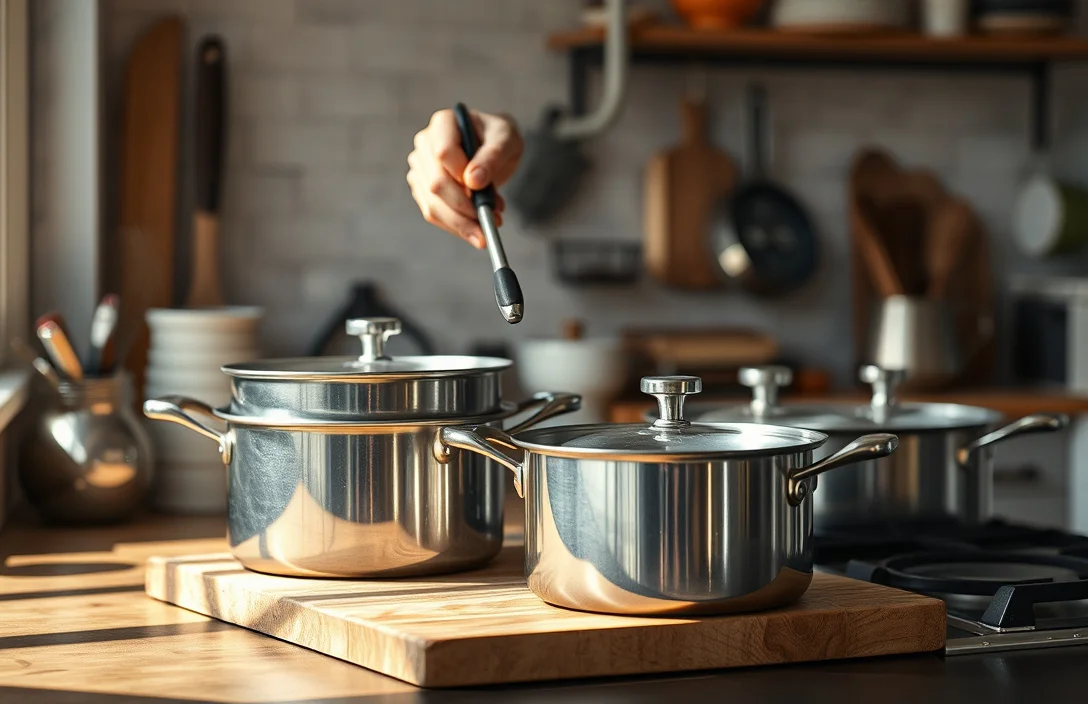
You can clean aluminum pots without damaging them, but you need the right expectations. Aluminum is reactive and it scratches easily, so “scrub harder” often backfires. The goal is to lift the film first, then remove the specific stain you actually see – grease, burnt-on food, or chalky mineral spots.
Before you start, gather a few basics so you do not improvise with harsh materials. You need dish soap, soft sponges (or a non-scratch nylon scrubber), a wooden or silicone spatula (for scraping), and pantry options like baking soda and white vinegar. Also grab baking sheet salt (optional) and a kettle or pot of water for soaking or simmering.
Do this quick prerequisite check:
- Identify what you are fighting: greasy film, burned-on food, blackened spots, or white residue.
- Check the pot condition: if it is scratched or already pitted, use gentler steps and avoid abrasives.
- Know what not to use: harsh scouring powders, steel wool, and chlorinated bleach – they leave aluminum marked.
If the pot is heavily burned, plan for simmering time. With aluminum, softening the residue beats brute-force scrubbing almost every time.
Basics of how to clean aluminum pots?
Aluminum gets dull or stained for two main reasons: oxidation (natural dulling) and surface reaction (what food, minerals, and cleaning agents leave behind). Your cleaning method should match those causes. Grease needs degreasing first, burned food needs heat and time, and white spotting is often mineral-related and responds to acid.
The biggest rule is to avoid grinding abrasive pads into the metal. Even if a scratch does not look terrible right away, it creates a surface that traps grime and makes future cleaning harder. Non-scratch sponges and gentle pastes beat abrasive cleaners.
Clean while the pot is still warm, not scorching hot. Warm metal loosens grease and helps cleaners work faster, while scorching hot pots can warp thin bottoms and can make some reactions more aggressive.
Two more practical basics:
- Rinse before treating. Loose food bits and sauce splatter spread stains if you smear them around.
- Increase intensity step by step. Start with dish soap and soaking, then move to baking soda paste or vinegar only if needed.
Think of the process as a sequence: soften, wash, treat the stain, wash again, then dry thoroughly.
how to clean aluminum pots?
Follow these steps in order. Most aluminum pot messes come off by step 3 without anything fancy.
1) Clear debris and rinse
Rinse the pot with hot water to remove loose food and sauce. Add a few squirts of dish soap and swish the water around with your hand or a sponge. If the pot is extremely dirty, let it sit briefly (5-10 minutes) so softened residue does not turn into paste when you scrub.
2) Loosen burnt-on food with a short simmer
For burnt-on food, add enough water to cover the stuck areas by about 1/2 inch. Add 1-2 tablespoons of dish soap (more if you are fighting heavy grease). Simmer gently for 10-15 minutes, then turn off the heat and let it cool enough to handle safely. Pour out the soapy water, then scrub with a soft sponge.
For tough spots, repeat the simmer once before switching to baking soda. This prevents you from jumping to abrasives too early.
3) Wash normally and remove the greasy film
Wash the entire pot with dish soap and warm water after the simmer. Scrub gently on the inside walls and bottom, focusing on where you see the film. Rinse thoroughly, because soap residue can leave streaks that look like staining.
If the pot looks cleaner but still has dark patches or dull spots, use the stain-specific steps next.
4) Treat discoloration with a gentle paste
For dark marks, soot-like streaks, or stubborn discoloration, mix baking soda with a small amount of water into a paste. Apply it to the stained area, wait 10-20 minutes, then scrub gently with a soft sponge. Rinse well and check under bright light.
If you only have white chalky spots, skip baking soda and go to vinegar instead.
5) Use a vinegar rinse for white spots
For white residue (often mineral buildup), wipe or soak the affected area with white vinegar. Let it sit for 5-10 minutes, then rinse thoroughly with hot water. Wash again with dish soap to remove loosened residue and get rid of the vinegar smell.
6) Dry fully to prevent new spotting
Dry the pot completely with a towel, then air-dry upside down if possible. Aluminum can re-spot when water dries on the surface, especially with hard water.
That sequence covers most aluminum pot cleaning needs without aggressive scrubbing.
Things that matter most
The right technique depends on the mess. Grease behaves differently than chalky mineral residue or dark discoloration.
Use these like a decision tool:
- Simmering (for burned-on food). Heat plus time loosens residue before friction starts.
- Baking soda paste (for dark stains/discoloration). Baking soda is mildly abrasive, but paste + a soft sponge is safer than powders.
- Vinegar (for white mineral deposits). Vinegar cuts mineral scale, but do not leave it sitting for long periods or use it as your default cleaner.
- Gentle scraping (for thick bits). Use a wooden spoon or silicone spatula to lift softened food without scratching.
Back off when:
- You feel you are scraping hard enough to leave metal scuffs. Go back to simmering or soak longer.
- The pot already has existing scratches. Avoid baking soda paste every time; use it only when you see discoloration.
Example: spaghetti sauce baked onto the bottom. Simmer soapy water for 10-15 minutes, then wash. If you still see a dark ring, apply baking soda paste for 10-20 minutes and scrub gently. If you see a chalky ring from hard-water boiling, use vinegar for 5-10 minutes, rinse, and wash again.
| Problem you see | Best technique | What to avoid |
|---|---|---|
| Burnt-on food on bottom | Simmer soapy water 10-15 minutes, then scrub | Steel wool, harsh scouring powders |
| Greasy film after cooking | Wash with dish soap, warm water, soft sponge | Scrubbing dry with abrasive pads |
| Dark discoloration or soot marks | Baking soda paste 10-20 minutes, gentle scrub | Hard-bristle brushes that scratch |
| White chalky spots | Vinegar wipe/soak 5-10 minutes, rinse, then wash | Long vinegar soak, leaving it to dry |
| Light dullness (normal aging) | Mild wash, occasional baking soda only if needed | Polishing with abrasives every time |
What works in practice
Prevention plus low-friction cleaning keeps aluminum looking better. Wash soon after cooking, even if it takes 2-5 minutes. Waiting turns stains into baked-on gunk.
Start with immediate action:
- Soak soon. If you cannot wash right away, fill with warm water and a little dish soap. A 30-60 minute soak helps.
- Do not let acidic foods sit. Tomatoes and other acidic ingredients can contribute to pitting over time when left in aluminum.
- Use the right utensils. Silicone, wood, and plastic scrape safer than metal.
After each use, do this routine:
- Rinse while warm.
- Wash with dish soap and a soft sponge.
- Dry fully.
For periodic deep cleaning:
- Use baking soda paste only when discoloration is visible.
- Use vinegar for white mineral spots, not as an all-purpose cleaner.
If you cook with hard water, expect more white residue. Dry thoroughly and use vinegar only when spots appear instead of trying to “erase everything” aggressively.
Also keep a simple separation habit: do not let steel wool from other cookware touch aluminum. Embedded steel particles can cause future corrosion marks. Rinse and replace scrubbers if they have been used on steel.
Mistakes to Avoid with how to clean aluminum pots?
The biggest mistake is using abrasives that leave aluminum permanently rough. Steel wool, SOS pads, and scouring powders remove grime, but they also leave microscopic scratches where grease and minerals cling. A previously brushed or shiny finish can also change when abrasives do their work.
Another common mistake is skipping the soak or simmer and scrubbing right away. Burnt food needs softening first, or you grind carbon and sauce residue deeper into the surface. That makes future cleanings harder.
Stop these habits now:
- Leaving vinegar or lemon juice in contact too long. Short contact for mineral spots is fine; long soaks can be too aggressive.
- Using bleach. Chlorine-based cleaners can damage aluminum surfaces and leave stains.
- Boiling vinegar in the pot repeatedly. It may remove spots temporarily, but it increases the risk of dulling or reacting with the metal.
- Drying incompletely. Water drying on aluminum often leaves spots, especially with hard water.
Troubleshooting while you clean helps. If dullness increases, small pits show up, or the texture turns “frosty,” you are scrubbing too hard or using chemistry that is too aggressive. Back off, switch to simmering and soft sponges, and reserve baking soda for visible discoloration.
Pro Tips for how to clean aluminum pots?
Treat aluminum like a two-stage job: remove bulk residue first, then handle staining. The simmer step keeps baked-on food from turning into a smear-like layer that is harder to clean later.
When the pot has nooks and hard-to-reach areas (like rivets or handles), clean those spots with targeted methods:
- Dip a cotton swab in diluted baking soda paste for small areas.
- Use a soft toothbrush only if it is nylon and you keep pressure light.
- Rinse crevices thoroughly so paste does not dry there and attract dirt.
If stains are stubborn, use the “one-two” method:
- Simmer soapy water to loosen everything.
- Apply baking soda paste only to the remaining dark patches.
That prevents you from coating the whole pot in paste when you only need spot treatment.
For odor or greasy residue you cannot scrub away, soak with dish soap and hot water for 30-60 minutes, then wash again. Sometimes the “stain” you see is actually a thin grease film that needs time.
If your pot has a decorative finish (like anodized or coated aluminum), go extra carefully. Abrasive methods can strip the finish. When in doubt, start with dish soap, a gentle nylon scrubber, and simmering only.
Finally, keep a maintenance habit: clean aluminum pots right after they cool slightly. It reduces staining and cuts down how often you need vinegar or baking soda.
FAQ
How often should I clean aluminum pots?
Clean aluminum pots after every use, even if it is a quick wash. If you cook messy or acidic foods and cannot wash right away, do a warm-water soak with a little dish soap for 30-60 minutes. That prevents burnt residue from bonding to the metal and reduces the need for baking soda or vinegar later.
What is the safest cleaner for aluminum pots?
Dish soap and warm water are the safest default cleaner. For burnt-on food, simmering soapy water for 10-15 minutes is also safe when followed by a gentle sponge scrub. For specific stains, baking soda paste (10-20 minutes) helps discoloration, and vinegar (5-10 minutes) helps white mineral spots.
Can I use steel wool on aluminum?
Avoid steel wool on aluminum pots. It can scratch the metal surface and leave tiny grooves where dirt and minerals collect, plus it can permanently change the pot’s finish. Use a soft sponge, nylon scrubber, or silicone/wood scraping instead.
How do I remove white chalky spots from aluminum pots?
Use white vinegar directly on the spots, let it sit for 5-10 minutes, then rinse thoroughly with hot water. Wash again with dish soap to remove vinegar residue. Dry the pot fully to prevent water marks from reappearing, especially with hard water.
What’s a common mistake when cleaning aluminum pots?
Scrubbing dry and aggressively at baked-on food is the most common mistake. Without softening, you grind residue deeper into the surface and often create more discoloration. Use a gentle simmer with soapy water first, then scrub lightly with a soft sponge.
After you clean your pot, do a final rinse and dry step before storing it. If discoloration remains after the first pass, repeat the simmer once, then use baking soda paste only on the remaining dark areas.

- 10 Best Slow Cooker For Slow Cooking Legumes 2026 (Tested And Reviewed) - October 17, 2026
- 10 Best Slow Cooker For Slow Cooking Oxtail 2026 (Tested And Reviewed) - October 16, 2026
- 10 Best Slow Cooker For Slow Cooking Venison 2026 (Tested And Reviewed) - October 16, 2026