How To Boil Potatoes In Cooker?
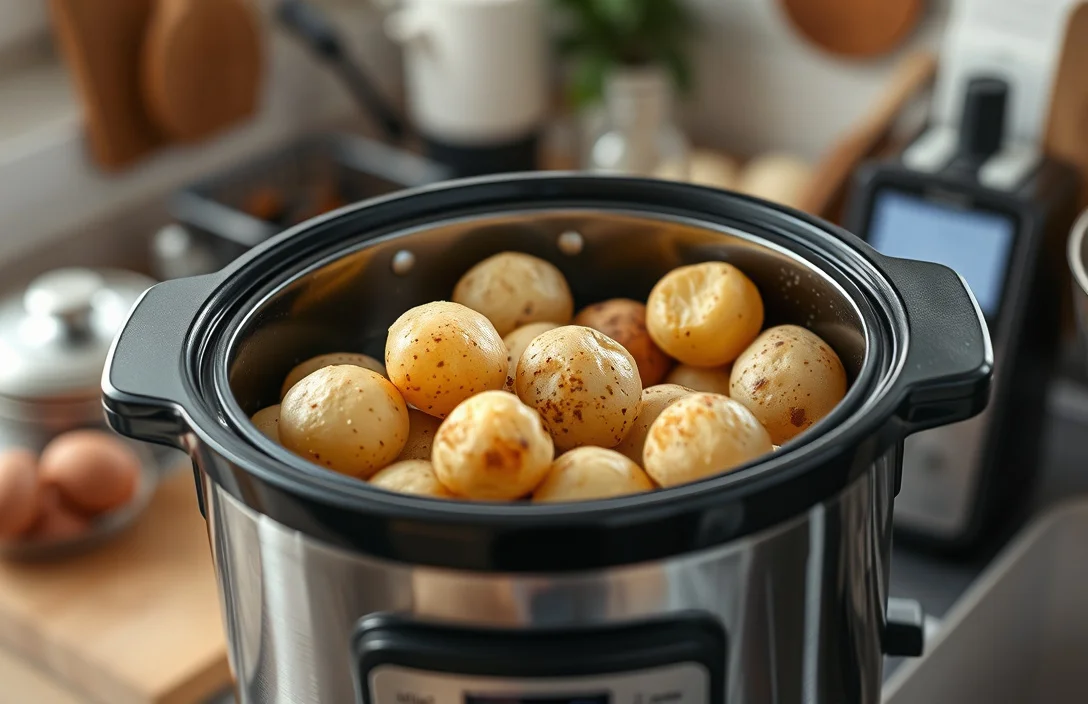
Boiled potatoes are the fastest path to tender, mashable bites, and you can do it in most “cookers” – electric multi-cookers, rice cookers, and stovetop pressure cookers – with the right timing and water level. This guide shows how to boil potatoes in a cooker step by step, what to do when they’re undercooked, plus the small texture fixes that make the difference.
Boiling potatoes in a cooker comes down to heat and enough water to keep them cooking evenly. For most potatoes, stop when a fork slides in with little resistance, then drain and steam dry 2 to 3 minutes. Timing depends on size and whether you’re using a stovetop pot, an electric cooker, or pressure mode.
How to begin
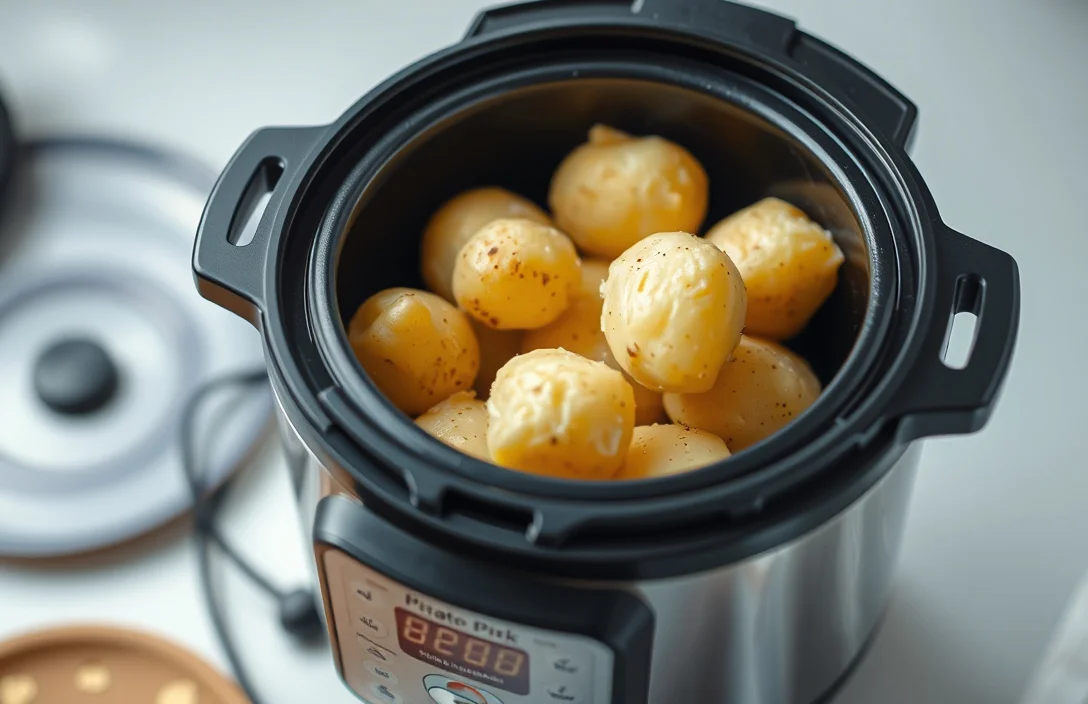
Pick your “cooker” first – the method and timing change. Electric multi-cookers (Instant Pot-style), rice cookers, and stovetop pressure cookers can all boil potatoes, but they deliver heat differently.
Decide how you want to cut the potatoes before you turn anything on. Whole baby potatoes hold their shape best. Halved or quartered potatoes cook more predictably than random chunks. Cubes boil faster and work well for potato salad. If you want mash, cut smaller chunks so you don’t wait forever.
Gather what you need:
- Potatoes (Yukon Gold, red, or Russet all work)
- Salt (optional, but recommended)
- Water
- A steamer basket or trivet (only if your cooker requires it)
Basics of how to boil potatoes in cook
Potatoes boil when heat transfers to the water around them, raising the internal temperature until the starches soften. Water coverage is the main control. If the potatoes aren’t fully submerged, the tops can turn soft while the centers stay firm.
Heat behavior matters too. In a regular pot, “boil” means rolling bubbles. In a cooker, it might mean a simmer, a steam mode, or pressure cooking. The goal is steady cooking – active enough to keep water working, not so violent that you smash delicate pieces.
Two rules prevent most failures:
- Cut for consistency. If pieces vary by more than about an inch, check earlier.
- Use fork-tender as the finish line. Timers help, but potato size and starting temperature change everything.
Water and salt guidance
Salt is optional, but it makes boiled potatoes taste better – especially for salads, side dishes, and mash. Salting the water is easier than trying to fix flavor after draining, because the seasoning reaches more of the potato during cooking.
Pressure cookers add one more variable: liquid quantity. Too little water can stop proper pressure buildup. Too much can dilute flavor.
how to boil potatoes in cook
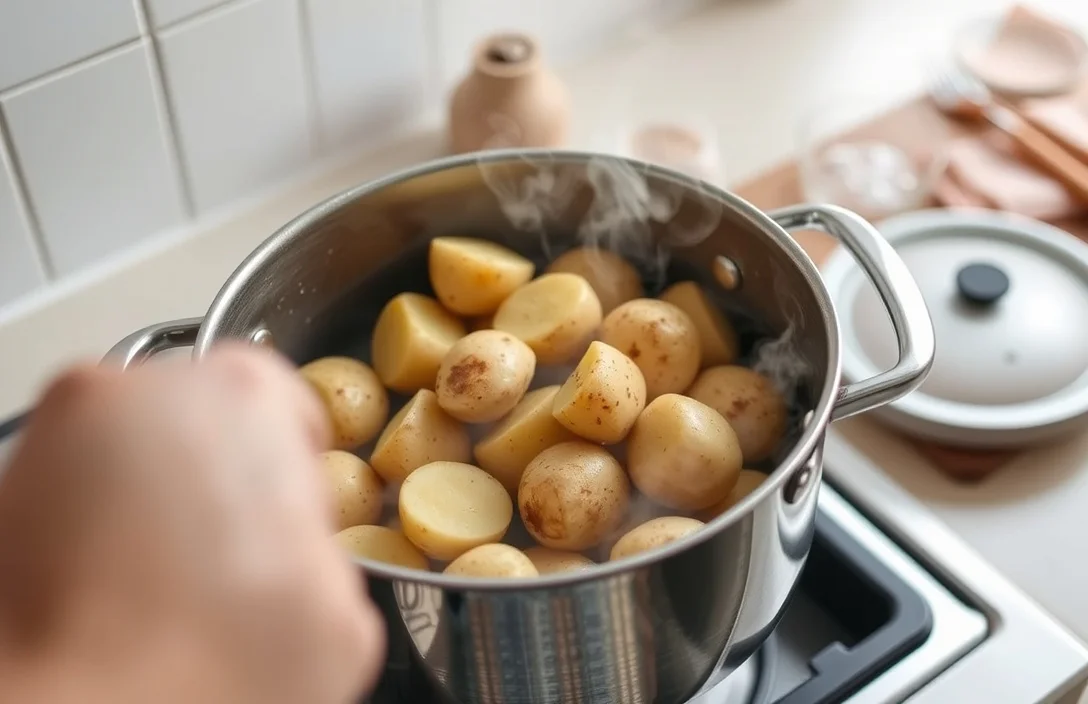
This workflow delivers evenly cooked, tender potatoes in most cookers. Match the option to your device, but keep the principles the same – even size, enough liquid, and fork-tender doneness.
Prerequisites (do this first)
- Wash potatoes well. Scrub off dirt, especially for skin-on potatoes.
- Cut to even sizes. Halve baby potatoes, quarter larger ones, or cut uniform cubes.
- Add water correctly. Submerge when your cooker allows it, or use the amount required for your cooker to heat reliably.
Option A: Electric multi-cooker (non-pressure, “simmer/steam” style)
- Add water to the cooker based on how full you want to cook – enough to cook through, ideally with potatoes submerged.
- Add potatoes in a single layer if possible (or arrange them evenly if your cooker circulates heat well).
- Salt the water if you want flavored potatoes.
- Cook until fork-tender. Check earlier for cubed potatoes.
- Drain carefully into a bowl.
- Steam dry 2 to 3 minutes before serving or mashing.
Option B: Rice cooker (works like a gentle simmer)
- Add potatoes and enough water to cover them (or come close enough that steam can heat through).
- Salt the water if seasoning from the start.
- Cook on the cooker’s standard cycle.
- Check with a fork at the end. Run additional short cycles if needed.
- Drain and steam dry for better texture.
Option C: Stovetop pressure cooker (fastest for chunks)
- Add water to the pressure cooker to the minimum required for pressure (follow your unit’s line).
- Add potatoes to the pot, using a trivet only if your model needs one.
- Pressure cook briefly. Check early – overcooked pressure potatoes can turn to mash even when you wanted chunks.
- Release pressure according to your cooker’s guidance.
- Drain if needed, then steam dry 2 to 3 minutes.
For all options, doneness is the same: a fork should slide in with little resistance. If you hit firmness in the center, cook longer.
Things that matter most
Even cooking separates “great boiled potatoes” from “inconsistent mess.” These techniques work across most cooker types.
Keep pieces consistent
Potatoes cook from the outside in. A smaller piece softens first and can break apart while larger chunks still finish. Aim for consistent chunk size – especially for potato salad.
For whole baby potatoes, keep them similar in size and avoid an obvious outlier. If you’re stuck with mixed sizes, cook in two batches.
Start checking early, then adjust in short bursts
Cookers can overshoot once potatoes get close to done. Instead of committing to one long run, check after the first cooking window, then add short increments.
This is especially helpful for pressure cookers and rice cookers, which can move quickly from “just right” to “too soft.”
Control texture after draining
Boiled potatoes can look watery right after draining because steam and surface moisture are still draining away. Steam dry 2 to 3 minutes to improve mash and reduce wateriness for salads.
Mash? Steam dry, then mash while warm. Serve as a side? Toss or drizzle with butter while warm so it clings evenly.
Use a quick-dunk for skin-on potatoes (optional)
For skin-on potatoes you plan to slice (like salads), you can chill them briefly after draining to slice cleanly and reduce sticking. Don’t freeze them or chill too long if you still need them tender – avoid ice baths if you want creamy mash.
What works in practice
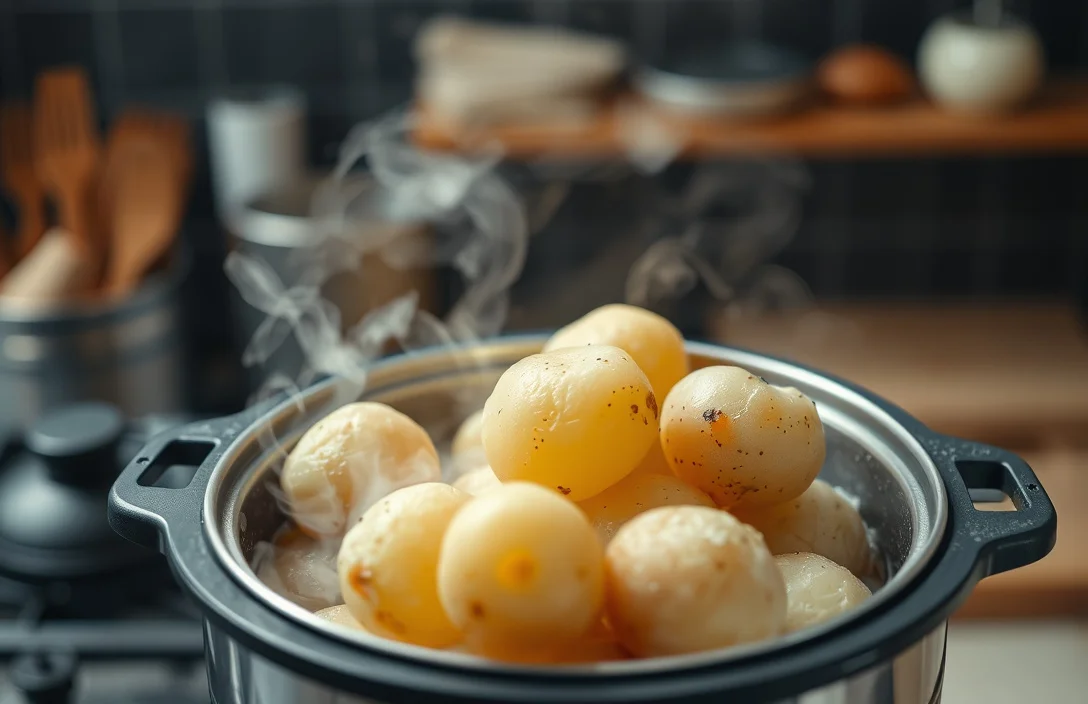
Reliable results come from matching how your cooker handles heat and evaporation.
First, don’t overfill. Enough water is critical, but too much can dilute flavor by spreading out salt. For salads and sides, use the minimum water needed to cook thoroughly while keeping flavor concentrated.
Second, don’t treat the water like soup and rely on heavy seasoning. Potatoes absorb salt from the cooking water, so salt it if you want flavor to reach the center. Then taste and adjust after draining with light finishing seasoning.
Quick sizing guide (pick a shape, then cook)
- Whole/baby potatoes – best for sides, skins on or off
- Halves/quarters – best for chunked sides and roast-then-boil textures
- Cubes – best for potato salad and faster cooking
Water level
Before starting, confirm:
- Potatoes are covered (or nearly covered) for even heating.
- Your pot won’t run dry (important for rice cooker-style heating).
- Pressure cookers have enough minimum liquid to reach pressure.
Mistakes to Avoid with how to boil potatoes in cook
Most “why won’t these boil right?” problems come from a few predictable spots. Fixing them saves time and prevents wasted batches.
Mistake 1: Cooking mixed sizes together
Smaller pieces go creamy and fall apart while larger chunks stay firm. If your potatoes are uneven, cut them to consistent sizes or cook separately.
Mistake 2: Not enough water (or relying on steam alone)
If potatoes aren’t surrounded by hot liquid (or enough steam heat), the centers can stay undercooked. Submerge when you can, and when you can’t, make sure your cooker’s method delivers heat to the interior.
Mistake 3: Overcooking after they’re fork-tender
Once potatoes are fork-tender, they keep softening fast. Miss the window and you’ll get waterlogged potatoes, bland flavor, and mash that turns gluey instead of fluffy.
Mistake 4: Draining and serving immediately without steaming dry
Surface moisture makes potatoes taste less rich and can make salads watery. Steam-dry 2 to 3 minutes after draining for a more “potato-y” texture.
Mistake 5: Skipping a taste test before finishing
Potato variety, cut size, and cooker behavior all change the result. Taste one piece before you declare victory, especially for salads that need balanced flavor.
Common troubleshooting
| Symptom | Likely cause | Fix right now |
|---|---|---|
| Center is firm, edges are soft | Pieces uneven or cooked too short | Cook 3-5 minutes more, check again |
| Potatoes are mushy | Overcooked or cut too small | Drain promptly, drain thoroughly, use immediately for mash |
| Potatoes taste bland | Little/no salt in cooking water | Season after draining (salt + butter), next time salt the water |
| Potatoes are watery | Oversteamed or not steamed dry after draining | Steam dry 2-3 minutes, then toss with butter or dressing |
| Potatoes stick together | High surface starch + no drying/tossing | Steam-dry, then toss while warm to coat with fat |
Pro Tips for how to boil potatoes in cook
Once you nail the basics, these tweaks make results repeatable.
1) Use waxy potatoes for holds, starchy potatoes for fluff
Waxy varieties (like red potatoes) hold shape better for salads. Starchy varieties (like Russet) make lighter, fluffier mash. Yukon Gold sits in the middle and is an easy all-purpose choice.
2) Add aromatics for extra flavor (optional)
Bay leaf, garlic cloves, or a pinch of pepper in the water adds subtle background flavor. Go light – potatoes absorb, and you still want your final seasoning to taste balanced.
3) Keep potatoes warm after cooking
Boiled potatoes firm up as they cool. If you need them later, keep them warm and covered so they don’t dry out.
4) For mash, drain thoroughly and mash hot
Extra water makes mash dense. Steam dry briefly after draining, then mash while hot. If mash is too thick, loosen with hot milk or warm butter instead of cold liquid.
5) For salad, cool quickly but don’t freeze
Cooling helps slicing and texture. Stop cooking with a quick cool-down (like leaving them in a colander), then toss with dressing when they’re just warm or fully cool – depending on how you like your salad.
FAQ
How long does it take to boil potatoes in a cooker?
Cooking time depends on potato size and your cooker type, so use fork-tender as the benchmark. Start checking early for cubed potatoes and when using pressure cooking. When a fork slides into the center with little resistance, stop cooking, drain, then steam dry 2 to 3 minutes for best texture.
Do I need to add salt when boiling potatoes in a cooker?
You don’t have to, but salt improves flavor because potatoes absorb some of the salted cooking water. If you plan to mash or serve as a side, salting the water helps the center taste seasoned. If you skip salt, season after draining, but you’ll need to taste more carefully.
Is it safe to boil potatoes in a pressure cooker?
Yes, as long as you follow your pressure cooker’s minimum liquid requirement and avoid overfilling. Since potatoes soften quickly, use shorter pressure time and check early. Release pressure according to your cooker’s guidance, then drain and steam dry before serving.
What’s the best way to keep boiled potatoes from turning watery?
Drain thoroughly and steam dry 2 to 3 minutes after cooking. Watery potatoes usually come from lingering surface moisture or overcooking. For salads, cool properly and toss with dressing in a controlled way so the potatoes don’t sit soaking.
What’s the most common mistake when boiling potatoes in a cooker?
Cooking mixed sizes together without adjusting time. Smaller pieces finish early and go mushy while larger pieces stay firm. Cut to even sizes, or cook separate batches, then rely on fork-tender checks instead of a single fixed time.
For a reliable next step, choose your cooker type (electric multi-cooker, rice cooker, or pressure cooker), cut potatoes to consistent sizes, start checking with a fork as soon as they’re likely close, and finish by steaming dry 2 to 3 minutes before serving or mashing.

- 10 Best Slow Cooker For Slow Cooking Oxtail 2026 (Tested And Reviewed) - October 16, 2026
- 10 Best Slow Cooker For Slow Cooking Venison 2026 (Tested And Reviewed) - October 16, 2026
- 10 Best Slow Cooker For Slow Cooking Turkey 2026 (Tested And Reviewed) - October 16, 2026