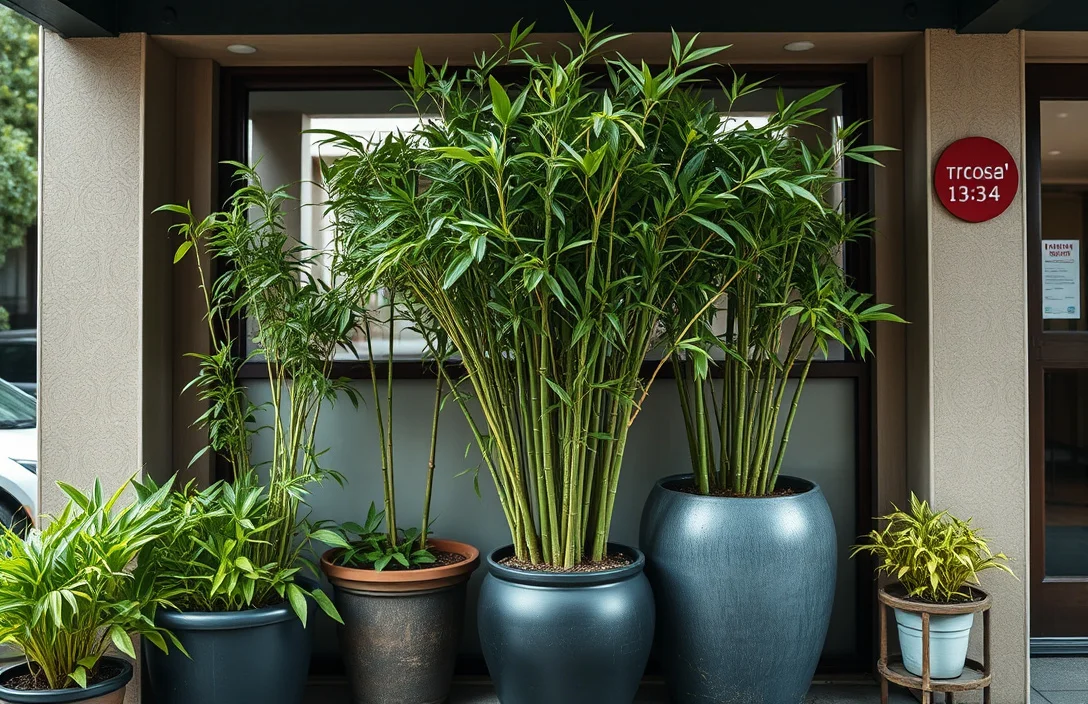
Container Bamboo In Pots For Privacy: Dense Screens In Pots
Privacy hedges take forever, and they often don’t fit tight yards. Clumping bamboo in pots gives you a controllable privacy screen without committing to a full-ground planting. The key is choosing bamboo that stays clump-forming in containers, growing it dense enough for privacy, and potting it so it stays manageable while you build coverage.
Clumping bamboo in containers can work as a privacy screen, but your results depend on pot size and spacing. Most people get meaningful screening in about 1 growing season, while true “no-gaps” privacy usually takes 2 – 3 seasons of warm weather growth. Start with clumping bamboo, use large pots, and keep watering consistent.
Key Takeaways
- Choose clumping bamboo. Running types spread; clump-formers stay tight in pots.
- Use big containers. Larger pots slow rootbound stress and reduce how often you need to water.
- Plan for density. Space clumps correctly, but use staggered placement to keep the look continuous.
- Feed lightly, consistently. Bamboo uses nitrogen well, but over-fertilizing can produce weak, fast growth.
- Water on a schedule. Container bamboo dries quickly, and drought slows growth more than most “small mistakes.”
- Control the roots. Repot or divide when the plant is rootbound, even if you’re only screening one side.
What Works
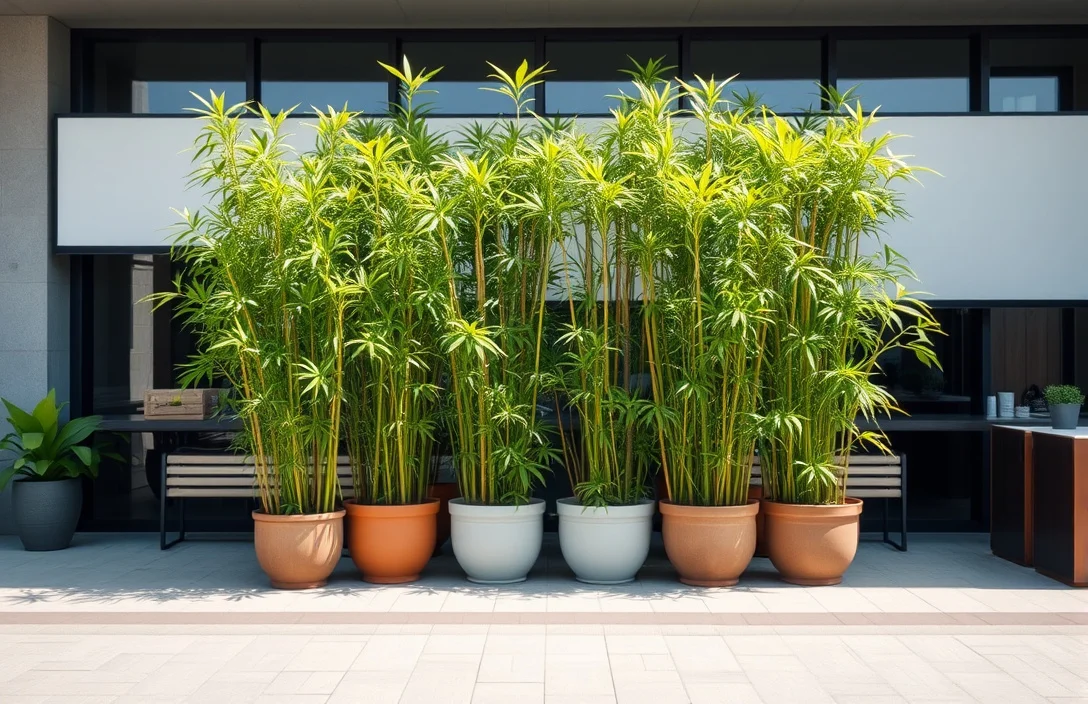
Container bamboo works for privacy when you treat it like a managed hedge. The screen comes from height and leaf density, not from marketing claims. Your main advantage is clumping bamboo, which holds a tighter growth habit and does not rely on a spreading rhizome system like running types.
Spacing matters just as much as pot size. If you pack pots too close, you get smaller culms and more frequent root stress. If you space too far apart, you’ll see gaps for too long. The sweet spot is a near-continuous line of foliage by using smart spacing and a pot setup that keeps roots healthy.
For real-yard container privacy, these setups tend to work best:
- A straight row of clumping bamboo in matching pots for clean screening along a fence.
- A staggered double line when you need faster coverage or the yard is shallow.
- Tall single pots at corners where wind dries containers and where you want quick “visual anchors.”
How Dense Can Container Bamboo Grow for Screening
Screen density comes down to root volume and airflow. In containers, bamboo doesn’t develop its best culm thickness when roots are cramped. It also produces thinner growth when leaves stay wet and ventilation is poor. You can aim for visual density, but don’t pack plants so tightly that they’re constantly competing for space.
For clumping bamboo screening, plan for about 18 to 24 inches (45 to 60 cm) between pot centers in a single row. If you want faster closure, use a staggered pattern where pots in the second position sit between pots in the first row. This fills gaps better than squeezing everything into one straight line.
When people complain their “bamboo privacy hedge looks thin,” it’s usually one of these:
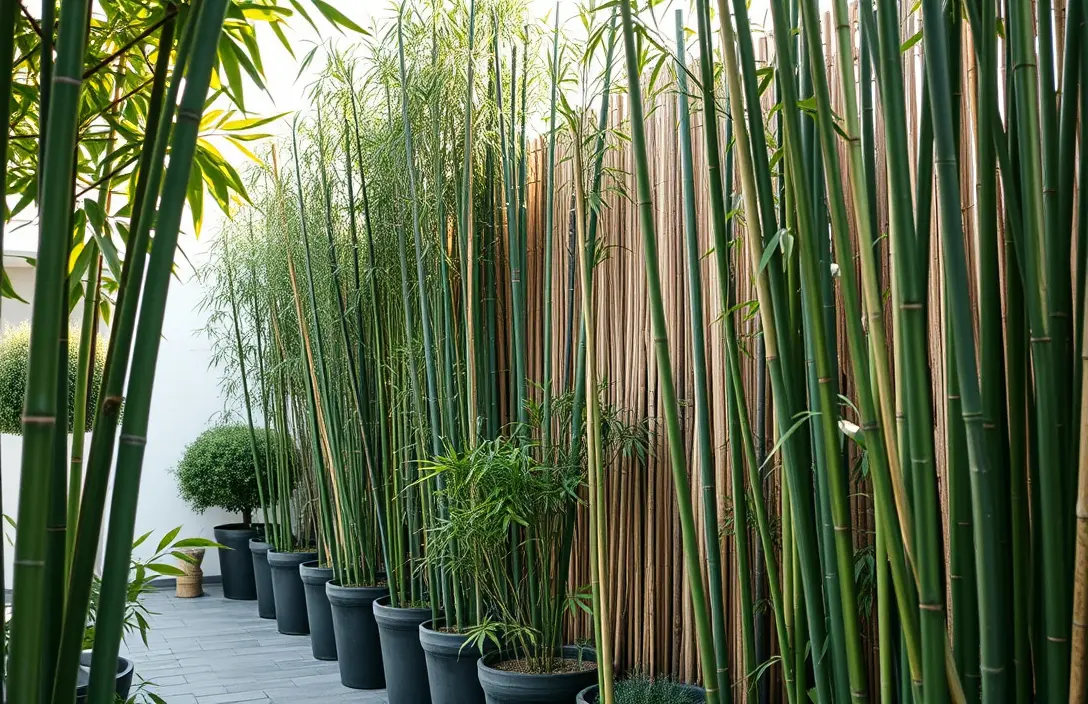
1) Pots are too far apart, so the fence shows through.
2) Pots are too small, so culms stay slimmer and sparser.
3) Plants are rootbound, so new growth slows even if the plants look alive.
The fastest fix usually isn’t more fertilizer. It’s spacing + pot size. When root growth stays healthy, leaf density improves and the screen looks fuller without you constantly feeding or chasing pests.
Best Pot Sizes and Soil Mix for Bamboo in Containers
Pot size is the line between “healthy screening” and “stressed plant.” Container bamboo roots aren’t as deep as they would be in the ground, so they hit the pot wall sooner. Once that happens, bamboo makes slower culm growth and fewer leaves, and privacy performance drops.
For clumping container bamboo meant for privacy, start with:
- 20 to 24 inch diameter pots if you want it to establish quickly.
- At least 15 to 18 inch diameter if budget is tight, but plan to upsize sooner.
- Bigger is better for fewer repots and steadier moisture.
If your space is narrow, go wider rather than deeper. Root spread still matters. Drainage is non-negotiable. Bamboo hates sitting wet at the roots, even though it likes moisture overall.
Soil mix that actually behaves

Helpful pick
Natural Reed Fencing,4FT X 16.4FT Reed Screen Balcony Reed Fence Bamboo Screen Fencing for Outdoor Backyard Patio(Brown)
Provides a discreet privacy screen around container plantings without crowding limited balcony or patio space.
Use a mix that holds moisture without turning into swamp conditions:
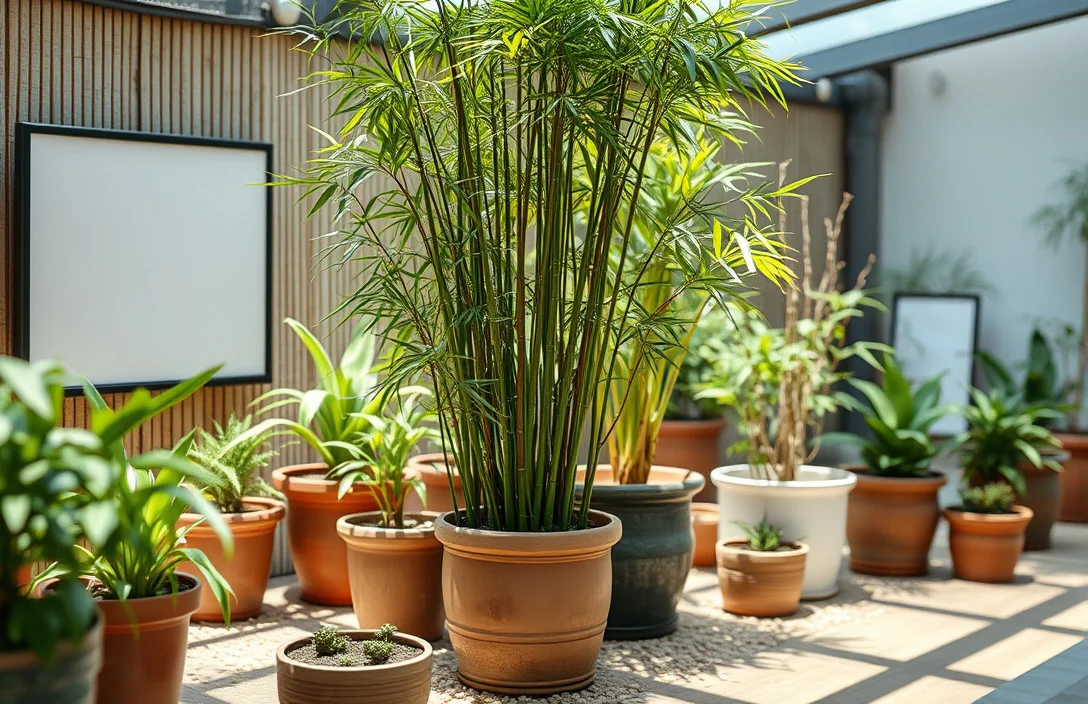
- 50% quality potting mix (not plain garden soil)
- 30% pine bark fines or coco coir (for moisture retention and structure)
- 20% perlite or coarse pumice (for drainage and oxygen)
If you want fewer problems later, mix in a slow-release fertilizer at planting, then switch to a schedule once growth starts.
Pot and watering basics that prevent failure
- Use pots with large drainage holes. If water can’t move out fast, roots suffer.
- Avoid saucers full of water. A small amount of runoff is fine; water sitting for days is not.
- Use mulch on top. It reduces drying swings, especially in full sun.
Which Bamboo Varieties Stay Clump-Forming in Pots
Clumping bamboo is the practical choice for container privacy unless you’re building serious rhizome barriers and staying on top of control. Most container “running bamboo” problems happen because the plant was misidentified, or because someone treated a running type like a clumper.
For a privacy screen in pots, shop for clumping bamboos such as:
- Bambusa species (often clumping with upright canes)
- Bambusa multiplex (often used for dense foliage)
- Bambusa textilis (clumping habit; can work as a screen)
- Fargesia (umbrella bamboo) (clumping; usually smaller culms than large tropical types, but very manageable)
Availability depends on local nurseries and online sellers. Your best move is buying from a seller that clearly labels the plant as clumping (not running) and lists mature size. Mature height matters because you’re building privacy, not planting “bamboo vibes.”
If you can, buy one plant as a test. Put it in the exact spot you’ll use for the hedge line, grow it for one season, and confirm it reaches the height and thickness you need. Then copy the setup across the rest of the line.

Helpful pick
Bamboo Fence,Reed Fencing 4Feet High Bamboo Privacy Screen Outdoor for Patio, Reed Screen for Privacy Garden Backyard Balcony Natural Reed Fencing,4x16FT
Provides an easy, decorative privacy screen alternative for portable containers without invasive rhizomes.
How to Prevent Rhizome Spread and Rootbound Risk
Rhizome spread is the big worry, and you reduce risk in two ways: pick the right species and contain the roots.
Start with clumping bamboo. Clump-formers expand by thick rhizomes close to the parent plant, which drastically lowers invasive spread risk compared with running types.
Even clumping bamboo still needs predictable root management in containers. Rootbound stress builds over time, and it shows up fast.
Rootbound bamboo looks like:
- slower height growth even in summer,
- circling roots or roots pushing up through the soil,
- thinner culms and fewer leaves.
In many climates, container bamboo can become rootbound within 1 to 3 years, depending on pot size and how aggressively you feed and water. Bigger pots stretch the timeline. Small pots compress it.
Practical containment and re-pot method
- Keep it in a real nursery pot at first if you’re testing, then move it to the final container once you confirm the look.
- Use container walls you can clean. Smooth pots are easier to inspect and manage than odd-shaped planters.
- Divide clumps during repotting. Division refreshes soil and can give you extra plants if you want a thicker privacy line.
Repotting isn’t optional “extra care.” It’s part of building consistent privacy, because healthier, roomier roots produce fuller culms and more leaf mass above ground.
Watering and Fertilizing Schedule for Consistent Privacy
Container bamboo needs steady moisture, not a cycle of drying out and bouncing back. When containers dry hard, growth stalls. When roots stay wet too long, they struggle. Your schedule should keep moisture consistent, especially during the hottest part of the year.
A practical watering approach for many US climates and typical containers:
- Water deeply when the top 2 inches of soil are dry.
- In full sun, that often means every 2 to 4 days during peak summer.
- In milder weather, it can stretch to once per week.
This works because it responds to your weather, sun exposure, and pot size. Fixed dates fail during heat waves.
Fertilizing should support privacy growth without forcing weak, overly fast growth. Bamboo responds well to nitrogen, and slow-release feeds help keep everything stable.
A simple, reliable feeding schedule:
- Use a slow-release fertilizer at planting or at the start of the growing season.
- Feed with a balanced fertilizer every 4 to 6 weeks during active growth.
- Stop or reduce feeding as temperatures cool down.
If your bamboo is growing and staying leafy, don’t overcomplicate it. Yellowing leaves or slow growth usually points to inconsistent watering or rootbound plants, not “I need more fertilizer” alone.

Helpful pick
VEVOR Reed Fencing Roll,5.5×16.4 Ft Natural Reed Screen Curtain, Bamboo Privacy Panel, Sun Blocking, Decorative Garden Fencing Divider for Outdoor Backyard Patio Balcony, Brown
Provides windbreak and shade, reducing evaporation around pots to help maintain steady moisture for bamboo.
Placement, Sun, and Wind Protection for Faster Growth
Placement affects growth speed. Bamboo needs enough light to power culms and leaves, and it needs wind protection because containers dry out faster than in-ground plantings. Wind can strip moisture from your pots and leave you with patchy leaf coverage.
For most container bamboo used as privacy screening:
- Full sun to part sun (at least 4 to 6 hours of direct sun).
- Shelter from strong afternoon wind when possible.
- Even sun exposure along the row to prevent leaning and uneven gaps.
When the fence line is hit by strong wind, screening often turns patchy because leaf loss and drought stress happen unevenly. A practical “wind fix” is placing bamboo slightly forward of the fence line or using a temporary windbreak screen during the first season until culms thicken.
Quick placement
- Skip cold, stagnant corners. Drainage and airflow still matter in containers.
- Keep mulch around the pot base. It stabilizes moisture during heat swings.
- Rotate pots if needed. Rotation is rare for straight rows, but useful if one side gets more sun.
Steady growth creates a denser look. Every time wind dries your containers, you lose leaf mass, and privacy slips.
FAQ
What bamboo can I grow in pots for privacy in the US?
Clumping bamboo is the safest choice for privacy in containers. Look for listings that explicitly say “clumping” and include mature height. Manageable groups include Bambusa (often clumping) and Fargesia (also clumping). Avoid “running” types unless you’re building a containment plan designed for rhizome control.
How fast will container bamboo give me privacy?
With good conditions and large enough pots, you can expect visible improvement in one growing season. Dense, tall screening typically takes about 2 to 3 seasons because you’re building culm thickness and leaf mass. If pots are small or plants get rootbound quickly, timelines stretch and gaps last longer.
How much does it cost to set up container bamboo privacy?
Costs depend on container size and how many plants you need per foot of screening. Large pots and quality soil cost more upfront, but they also reduce repot frequency. Many homeowners use a staged plan: buy a few plants first, confirm height and density, then expand the line after one season. (Prices vary a lot by region.)
How do I stop bamboo from spreading when it’s in containers?
Clumping bamboo in containers is already contained, so rhizome spread into your yard is unlikely. Still, keep the plant in a real pot with drainage holes and avoid letting it dry out or become rootbound. If you accidentally buy a running bamboo, containment gets much harder even in pots, so verify type before planting.
Is it okay to use bamboo for privacy if I only have a small yard?
Yes, but use larger pots and smart spacing. If depth is limited, consider a staggered double row. Small yards fail most often when people choose tiny planters, then the bamboo stalls and never thickens. Pick a mature size you can actually accommodate, and plan on repotting if growth outpaces your containers.

- 10 Best Slow Cooker With Cool Touch Handles 2026 (Tested And Reviewed) - October 22, 2026
- 10 Best Slow Cooker With Quality Construction 2026 (Tested And Reviewed) - October 22, 2026
- 10 Best Slow Cooker With Premium Construction 2026 (Tested And Reviewed) - October 22, 2026