Palm Trees In Pots Outdoors: Winter-proofing And Drainage
Palm trees in pots outdoors can look effortless, but the container limits the roots, and cold snaps or soggy soil can set them back fast. This guide is for US homeowners who want a realistic way to grow palms outside, without guessing. You’ll learn how to pick the right pot and palm type, what to do in winter, and which setups actually work.
Palm trees in pots outdoors succeed when you match the palm to your local cold tolerance, use a pot with fast drainage, and protect the root ball when temperatures drop. Choose a palm with the right leaf shape and growth habit, then feed lightly in the growing season and water only when the top soil dries. Many people do best with sun, airflow, and a winter shelter plan.
Key Takeaways
- Pick the right species. Cold tolerance varies a lot between palms, and the container makes frost risk worse.
- Use drainage-first pots. Every outdoor palm container needs drainage holes and fast-draining potting mix.
- Match sun to the palm. Most palms want full sun outdoors, but new plants still need gradual acclimation.
- Water by drying cycles. Overwatering is the most common container failure, especially in cooler months.
- Plan for winter shelter. Move the pot or insulate the root ball when temps threaten cold damage.
- Re-pot before roots crowd. A palm in a too-small pot slows down and struggles to recover after stress.
What to Know About Palm Trees in Pots Outdoors
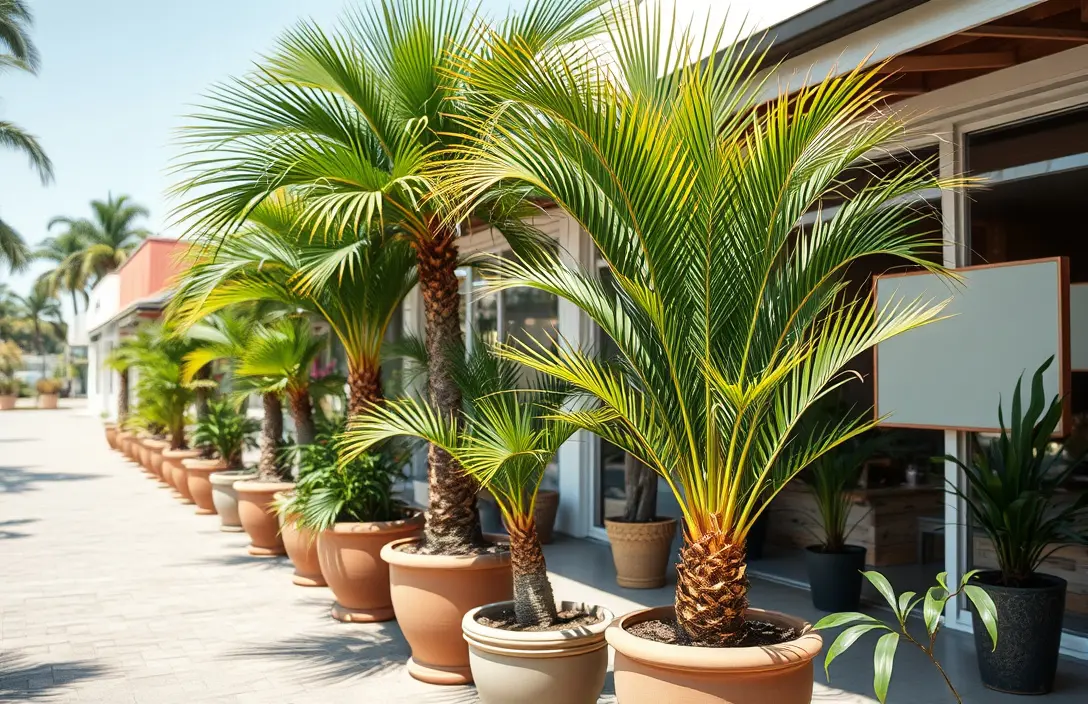
Palm trees are warm-climate plants in the Arecaceae family, and most grow best when roots stay warm and evenly moist, without standing water. In a pot, that balance is harder because soil heats and cools quickly, and roots have less buffer than they would in the ground.
You also have to accept one reality: a small pot doesn’t stay “temporary” forever. Palms keep building roots and pushing new fronds as long as conditions allow, so the container will eventually become the limiting factor. If you want an outdoor display that lasts, plan around pot size, repotting timing, and winter root protection from day one.
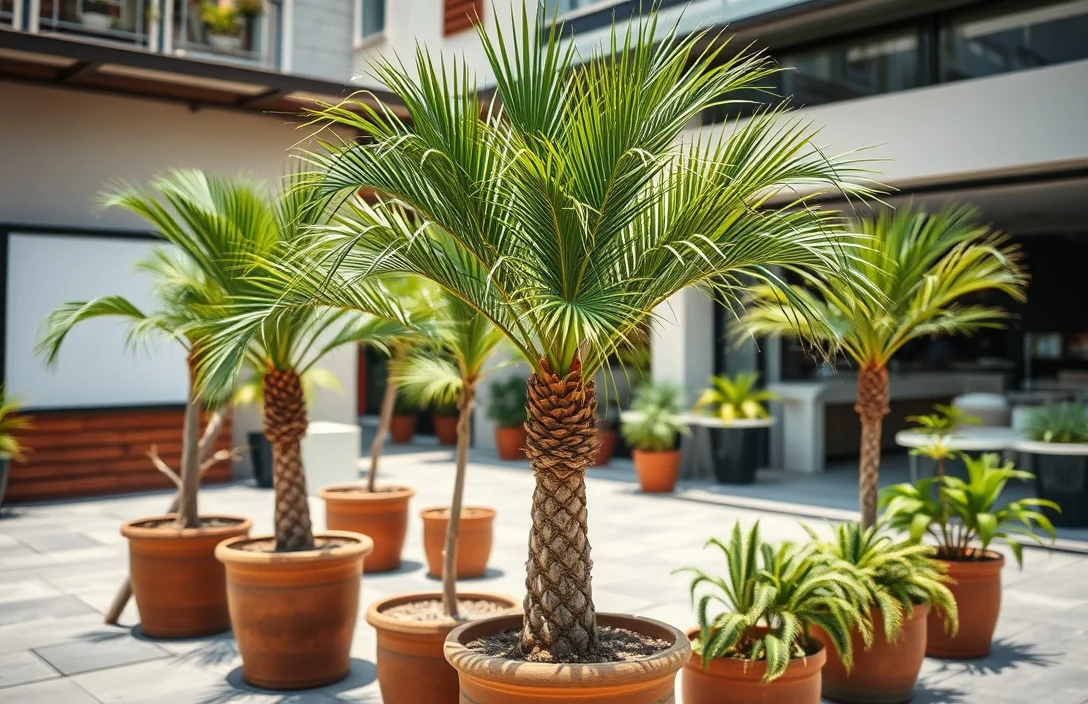
Leaf shape and growth style help with care and with what the palm will look like at maturity. Fan-shaped fronds, feather-shaped fronds, and fishtail-like leaf tips are common ways people distinguish palms. Growth in clumps versus a single trunk also changes how the plant fits in a container.
Set expectations up front, too. Some palms read as “seasonal patio plants” in many parts of the US. Others can become “moveable perennials” with the right cultivar and a consistent winter plan.
Things that matter most
Outdoor container palms come down to three variables: drainage, temperature, and light. Get those right, and the rest of the care becomes routine.
Drainage and aeration are non-negotiable. Palm roots don’t like staying wet, and in pots that problem escalates fast because water can only leave through the drainage holes. Use potting mix made for containers (not garden soil). Also, manage the saucer situation so you’re not wicking runoff water back into the roots.
Temperature swings shape results. Palms handle heat well, but cold exposure damages tissues, and pot soil temperature drops faster than an in-ground root system. That’s why winter decisions usually matter more than summer decisions for most outdoor potted palms in the US.
Light is where “pretty” turns into healthy growth. Most palms want strong sun outdoors. With too little light, you’ll often see slower growth or leaf stress. If the palm is coming from indoor light or nursery shade, acclimate it gradually over 1-2 weeks to reduce sun scorch.
Tips for Palm Trees in Pots Outdoors
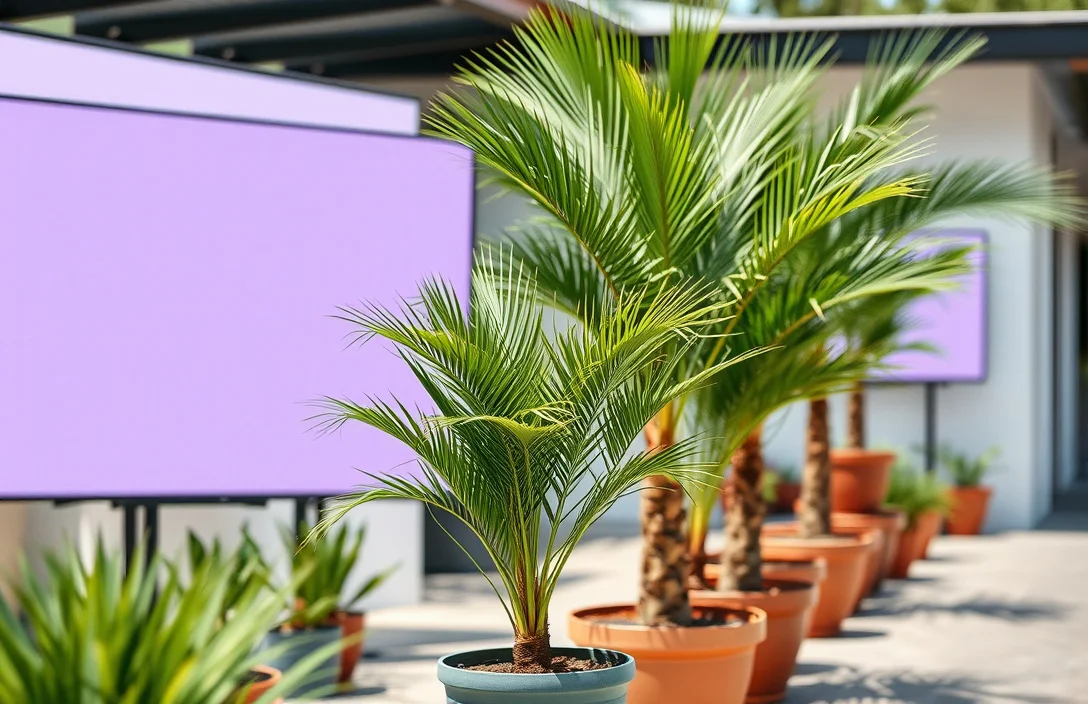
The fastest route to good results is a simple routine: right container, right watering, right seasonal movement. Then you fine-tune based on what you actually see – not guesses.
Start with pot choice. Use a container with drainage holes, and pick a size wide enough that the root ball isn’t pressed against the sides. If you’re using an oversized decorative cachepot, keep the nursery pot inside it, and make sure any outer cover doesn’t trap runoff water.
Water using a dry-down check. Press two fingers into the top few inches of mix before watering. If it’s still moist, wait. If it’s dry, water thoroughly until you see runoff, then empty any standing water from the saucer.
For sun and airflow, treat the first few weeks as training time. Place the palm in the sunniest spot you can while still watching it closely, then increase exposure gradually if it was protected before. Outdoors also provides airflow, which reduces the risk of leaf problems tied to stagnant, damp conditions.
In container palms, your most important survival tool is winter handling. If your area gets freezing temperatures, decide now whether you’ll move the pot indoors, into an unheated garage, or wrap and protect it outdoors. Root protection matters more than covering fronds.
Keep feeding simple. During the growing season, use a balanced fertilizer formulated for palms or container plants, following label rates. In cooler months, slow down because growth and nutrient uptake drop, and fertilizer won’t fix low light or cold.
A Quick Setup
- Pot has drainage holes and fast escape routes for water.
- Potting mix is loose, not compact, and drains well.
- Palm location gets strong sun and afternoon airflow.
- You check soil moisture before every watering.
- You have a winter plan ready before temperatures drop.
- You inspect leaves for new fronds and early stress signals.
Benefits of Palm Trees in Pots Outdoors
Palm trees in pots outdoors give you placement flexibility that in-ground landscaping can’t match. You can set a focal point now, then shift it later if sun patterns change, if you remodel, or if the palm grows taller than you expected.
Mobility during weather is the second big win. Container palms are easier to protect during frost warnings, hail storms, or extreme heat waves than a planted specimen. In many parts of the US, that ability to relocate is what separates “looks great” from “every winter is a gamble.”
Pots also deliver design payoff. Palms naturally create vertical structure with a crown of fronds, which makes small yards and patio corners feel larger. When you choose fan-shaped or feather-shaped fronds that fit your style, the plant becomes part of the space, not just another thing you have to manage.
Potted care can even be simpler. You can control soil freshness, drainage, and repotting on your schedule. That matters because container mix breaks down over time and can compact – even when the palm looked fine at the start of the season.

Helpful pick
Keeplush 7ft Artificial Phoenix Palm Tree, Faux Coconut Silk Tropical Fake Palm Plant for Indoor Outdoor Home Office Patio Bathroom Pool Coastal Decor(Set of 2)
Provides a tall, eye-catching outdoor focal point that can be repositioned as needs change.
Options for Palm Trees in Pots Outdoors
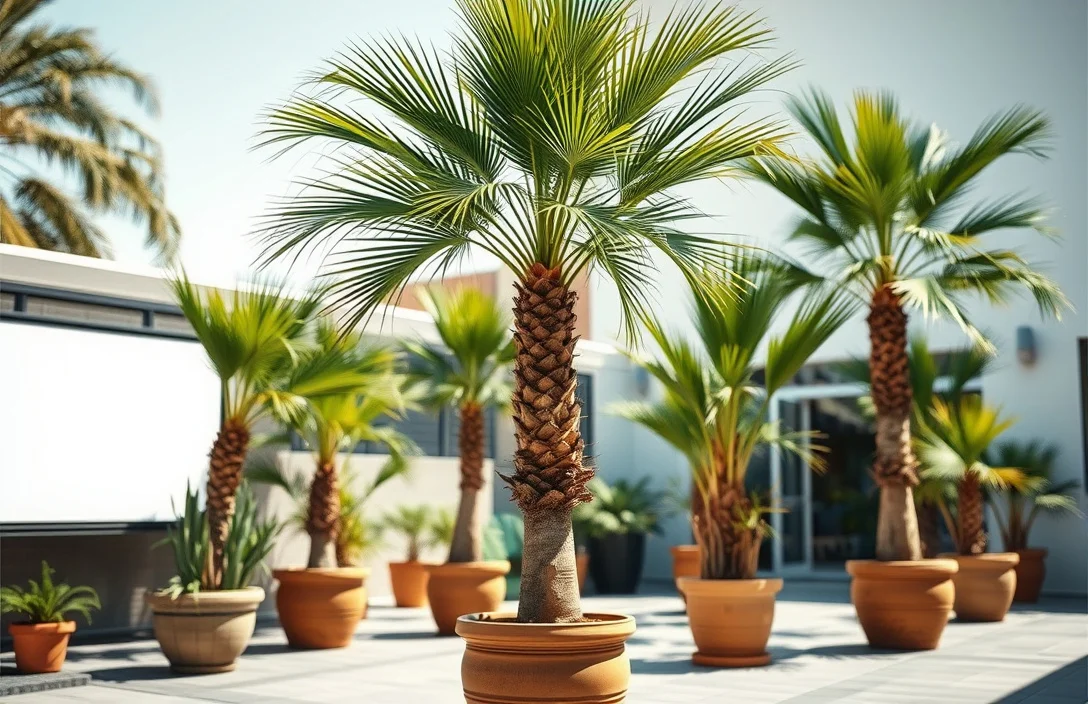
Your main choices are palm species (based on cold tolerance and mature size) and container strategy (moveable versus winter-protected outdoors). Choosing a smaller palm is usually the most forgiving route for patios because it’s easier to keep the root zone warmer and manage pot size.
Group palms by growth habit. Some develop as a single trunk. Others grow in clumps. Clumping types can look fuller in containers because multiple stems create symmetry, but they usually need wider pots to avoid crowding.
Leaf shape helps you visualize what you’re buying and how it will look later. Fan-shaped fronds spread outward. Feather-shaped fronds hang in a layered look. Fishtail-like tips add a jagged texture. These differences matter because the crown needs enough support and stability so the pot doesn’t tip in wind.
For “outdoors year-round,” the safest approach in many US climates is to treat most palms as either seasonal patio plants or moveable perennials. If your area rarely dips below freezing, you have more straightforward options for keeping pots outside.
A Practical Decision
| Palm type (common approach) | Key spec to match | Best for | Outdoor strategy |
|---|---|---|---|
| Dwarf/small palms | Compact height and slower root fill | Patios and small courtyards | Keep outside in warm months, move or wrap for cold |
| Feathery frond palms | Long fronds that spread outward | Statement planters | Use larger diameter pot for stability |
| Fan frond palms | Wider frond spread | Corner “tropical” looks | Choose strong sun location and protect from strong cold snaps |
| Clumping palms | Multiple stems, fuller look | Thicker visual presence in pots | Use wider containers, repot when crowded |
| Single-trunk palms | Central crown, clear structure | Clean modern landscaping | Repot on schedule, watch root-bound stress |

Helpful pick
Arborvigro Artificial Palm Tree 6FT Tall, Faux Palm Tree Indoor Outdoor, 72in Fake Tropical Areca Plant with Planter, Lifelike Leaves Large Potted Floor Plant for Home Office Living Room Decor
Outdoor-ready 6ft artificial palm offers a low-maintenance, moveable option for patios in pots.
Winter-Proofing Palm Pots (Expert Advice That Actually Helps)
Most palm care advice fails because it skips the real limits in containers: root temperature and watering discipline. If you build your plan around those, everything else falls into place.
Protect the root zone first. Covering fronds helps the plant look better, but cold damage often starts where roots and the trunk base meet the soil. When freezes are likely, moving the pot to a protected spot often works better than insulating the top growth alone.
Don’t use “tropical look” as a watering guide. Pots dry faster in sun and wind and slower in shade and cool weather. Water based on soil dryness, not the calendar.
Think in terms of stress recovery. Cold stress or soggy roots can cause a palm to drop older fronds while trying to protect new growth. Fix the environment early and you’ll often keep the palm alive and pushing fresh fronds. Waiting turns minor damage into a bigger decline.
Choose pot size and repotting schedules you can maintain. Overstuffed pots slow growth and reduce drainage quality as the mix breaks down. When a palm stays in the same container mix too long, it can follow a “fine until it isn’t” pattern – gradual decline, then a fast drop-off.
Treat leaf color changes like signals. Pale new growth can mean low light. Yellowing that comes with persistently wet soil points to overwatering. Heavy spotting or blackening can indicate cold injury or fungal stress from damp conditions. Adjust the environment that caused it.
The Smartest “Rules” That Prevent 80% of Problems
- Water only after the top mix dries.
- Never let the pot sit in runoff water.
- Increase light gradually when moving outdoors.
- Protect the root ball during freezes.
- Repot before the plant becomes severely root-bound.
- Use loose container mix, not compact garden soil.

Helpful pick
ASTIDY Artificial Palm Tree 5FT – Fake Tree with White Tall Planter – Faux Tropical Areca Floor Plant in Pot – Artificial Silk Plant for Home Office Living Room Decor Indoor
This artificial palm reduces watering needs and guards root temperature, offering a year-round, winter-proof option for outdoor pots.
Examples: Palm Trees in Pots Outdoors
A common US backyard setup is a warm-summer patio area with occasional frost. Start with a small or dwarf palm in a pot with drainage holes. Put it in full sun after acclimation, and plan to move it indoors or to a sheltered spot when nights approach freezing. During the growing months, check soil moisture, water deeply when it’s dry, and let runoff drain completely.
A reliable success pattern in freezing regions is using a movable pot plus winter protection instead of forcing year-round outdoors. Many people keep the palm on the patio from spring through fall, then move it to an unheated garage or another cool, bright location where temperatures aren’t extreme. This cuts freeze stress without changing landscaping.
In areas where freezes happen often, you can still get the look by treating the palm as seasonal. Survival depends on preventing hard freezing in the root zone. Covering fronds but leaving the pot exposed is a gamble.
In warmer coastal areas with mild winters, “mostly outdoors” can work if drainage and wind are handled carefully. Even then, use a winter plan for rare cold snaps because containers swing in temperature quickly, and palms don’t always tolerate unexpected cold waves.
Choose based on leaf texture and growth habit so the display looks intentional. A fan-frond palm in a wide container fits a relaxed look near a walkway. A feather-frond palm in a taller pot gives a sharper vertical silhouette.
FAQ
What are the easiest palm trees in pots outdoors?
Dwarf or small palms are often the easiest because they stay manageable in container size and rebound more predictably after stress. Choose a palm that can handle your local winter minimums, then use drainage-first pots and a winter shelter plan. If you’re unsure, start with the smallest plant you can repot easily, then step up pot size as it grows.
How often should I water palm trees in outdoor pots?
Water when the top few inches of potting mix have dried out. Hot sun usually means more frequent watering. Cooler or shaded conditions slow it down. Always water thoroughly until you see runoff, then empty any standing water from saucers or cachepots so roots don’t sit wet.
Will palm trees in pots outdoors survive winter in the United States?
Survival depends on the specific palm and your winter temperatures because the pot root zone freezes faster than in-ground planting. Many outdoor pot palms need protection or relocation when temperatures approach freezing. If freezes are common where you live, plan to move the pot indoors or insulate the root ball during cold spells.
What is the biggest mistake people make with palm trees in pots?
Overwatering in cool or low-light conditions, usually paired with poor drainage. Soggy mix can suffocate roots and trigger leaf decline. Use loose container mix, keep drainage holes clear, and rely on soil dryness checks instead of a fixed schedule.
Can I keep a palm tree in a decorative pot without drainage holes?
Avoid planting directly into a decorative pot with no drainage holes. If you want the cachepot look, keep the palm in a nursery pot with drainage and place that inside the decorative container, then remove runoff after watering. Letting roots sit in water is the fastest way to cause problems in outdoor containers.

- 10 Best Slow Cooker For Quick Preparation 2026 (Tested And Reviewed) - October 18, 2026
- 10 Best Slow Cooker For Family Meal Preparation 2026 (Tested And Reviewed) - October 18, 2026
- 10 Best Slow Cooker For Freezer Meal Preparation 2026 (Tested And Reviewed) - October 18, 2026