Growing Ivy Outdoors In Pots Explained Simply
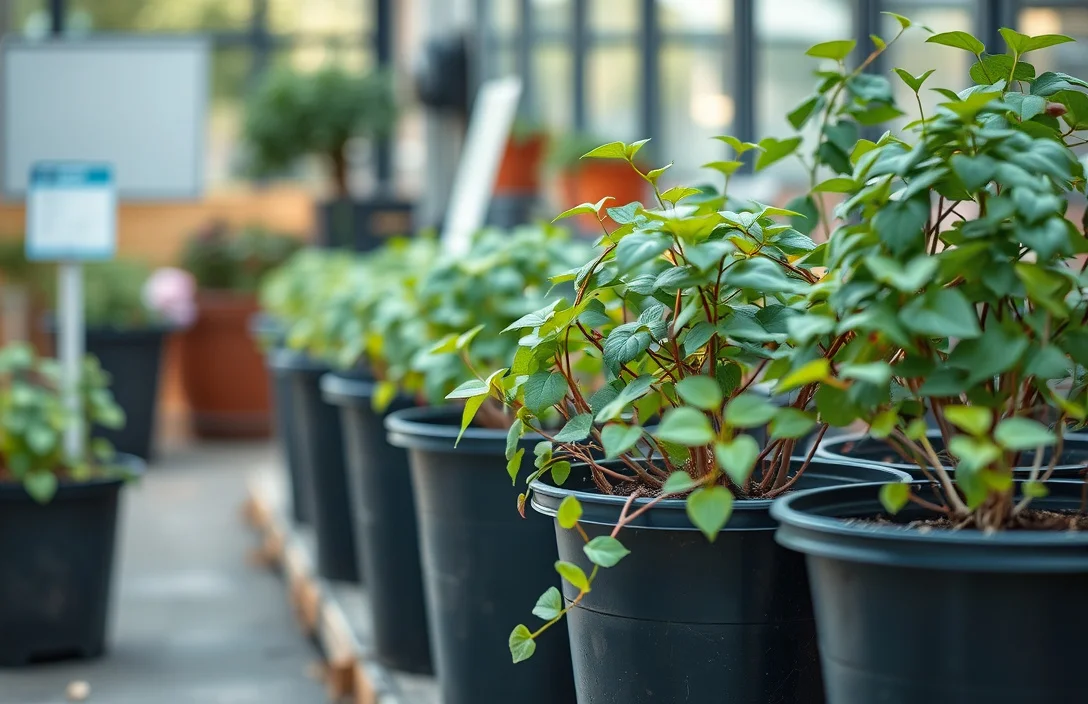
Outdoor ivy in pots works, but container success comes down to one thing: drainage. If water sits in the pot, ivy roots rot and you lose the plant faster than expected. Flooded lead? Not relevant here – the real issue is soggy soil and low airflow around the root ball. Use a pot with drainage holes plus a fast-draining mix, then water consistently without letting the pot stay wet.
This guide covers which ivy varieties fit container life outdoors, how big the pot should be, where to place it for light, how to water, what soil mix to use, how to train ivy so it stays contained, and how to overwinter potted ivy in the United States.
Key Takeaways
- Pick the right ivy. English ivy and Algerian ivy are reliable choices for container growth outdoors in many U.S. regions.
- Use a drainage hole. Without drainage, root rot can start quickly even if the soil “looks fine.”
- Go big on pot size. More soil volume buffers heat swings and slows down drying.
- Water by soil feel. Water when the top inch is dry, then let excess run out freely. Never let the pot sit in runoff.
- Train early. Prune and redirect new growth while it is still flexible so it stays where you want it.
- Plan for winter. Insulate pots and protect foliage during freezes to reduce root damage and dieback.
Growing Ivy Outdoors in Pots: Best Varieties
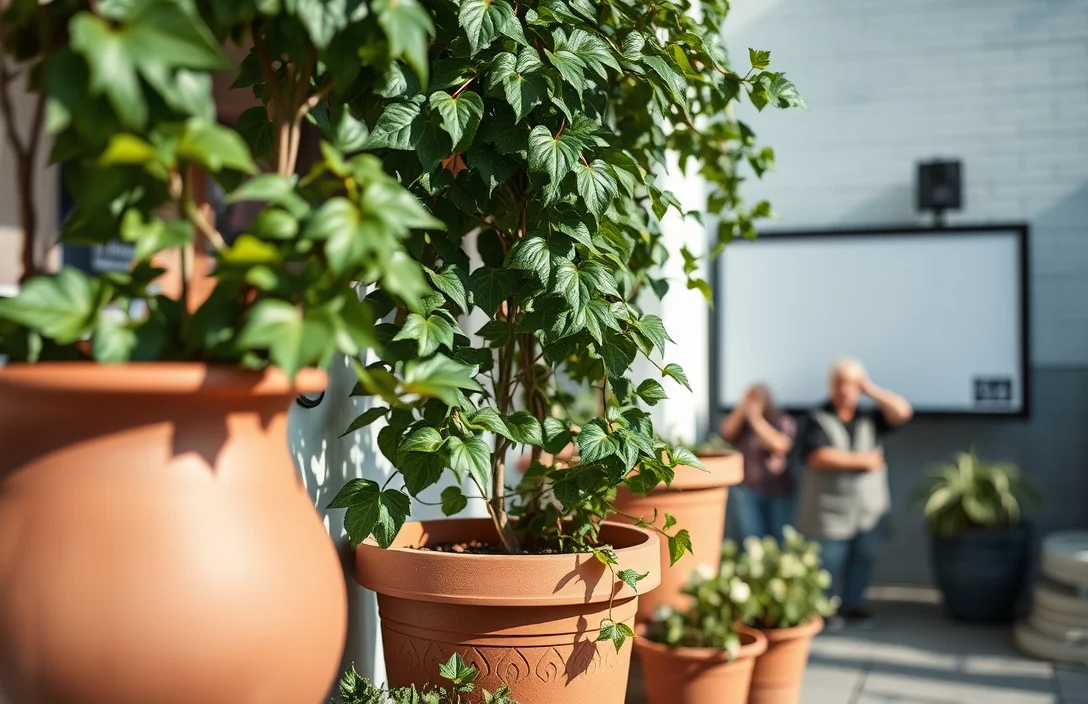
Outdoor ivy in pots does best when you start with a variety that can handle your climate and the container limits. English ivy (Hedera helix) is the classic choice for dense, fast-growing trailing vines. It also hangs onto foliage well, which is why it’s common in planters and spill-over containers.
If you live in a hotter or drier summer area, Algerian ivy (Hedera canariensis) is a strong alternative. The leaves are often larger and the plant can read more “tropical” than many English ivy cultivars. Either way, ivy grows fast when conditions line up, so you will be pruning whether you like it or not.
Practical shortlist for potted ivy outdoors:
- English ivy (Hedera helix): Dense greenery and a traditional look, with better shade tolerance than many ornamentals.
- Algerian ivy (Hedera canariensis): Larger leaves and a tougher feel in many climates.
- Boston ivy (Parthenocissus tricuspidata): Often trained like ivy on structures, but it is not the same evergreen behavior you expect from true ivy in pots.
- Climbing fig (Ficus pumila): Sometimes sold “as ivy,” but it needs warmer conditions and can struggle in cold U.S. winters.
Most homeowners are happiest with English ivy or Algerian ivy, then dialing in pot size and watering to match the weather you actually get.
Choose based on your winter minimum
Winter low temperatures matter because potted roots face the cold air directly. In ground planting, soil buffers temperatures; in containers, the root ball is exposed. If your area dips well below freezing for long stretches, prioritize varieties that thrive locally or be ready for heavier overwintering protection.
Treat “ivy sold at the store” as a clue
Plant tags often show the Latin name or cultivar. If you see only “ivy,” look for names like Hedera helix or Hedera canariensis. Those labels help you avoid ending up with a plant that behaves differently in winter.
Which Pot Size Prevents Root Stress?
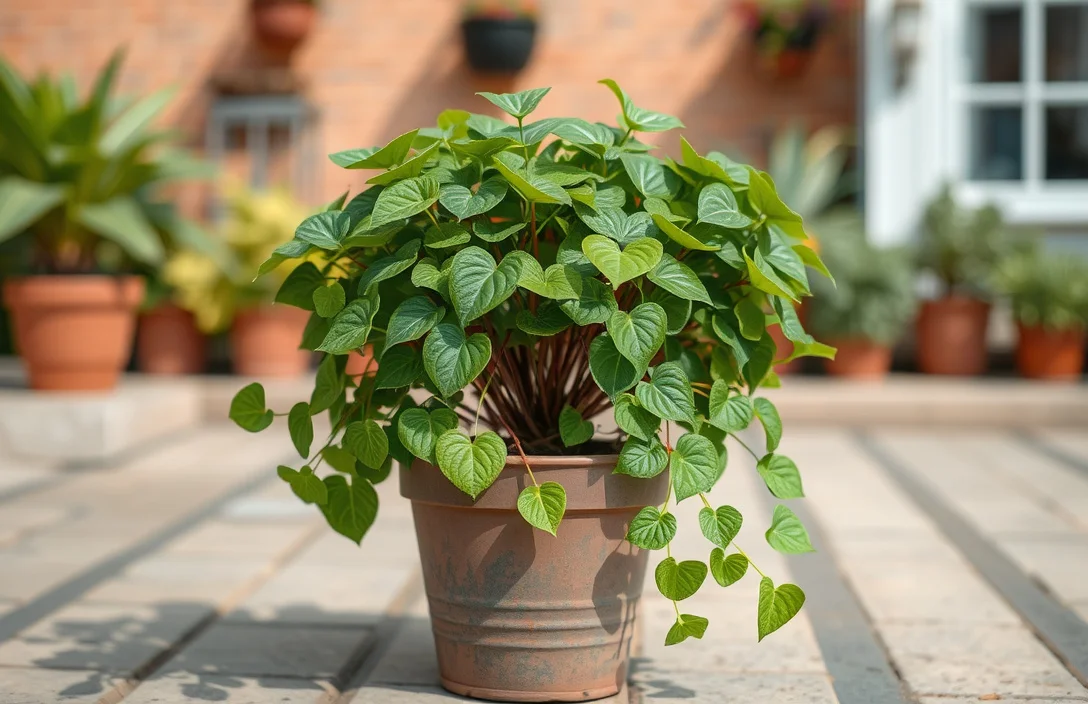
Container root stress happens fast because the root ball hits the pot wall and dries unevenly. For ivy, bigger usually performs better, especially if you want a full, trailing plant instead of sparse growth. Start with a pot at least 10-12 inches wide for one plant, then size up if you’re planting a larger nursery specimen.
Think of the pot as a “root buffer.” Ivy needs enough volume for steady moisture and slower temperature swings. A small pot turns watering into a daily task in summer. In winter, small pots freeze and thaw faster, which increases dieback risk even if the plant “survived” last year.
Quick sizing guide for common setups:
| Ivy Pot Setup | Starting Point | Pot Size to Use | Why It Helps |
|---|---|---|---|
| One standard nursery plant | 1 plant | 10-12 inches diameter | Slower drying and fewer root-wall issues |
| Bigger “spill” planter | 2-3 cuttings or one larger plant | 14-16 inches diameter | More stable moisture and temperature |
| Hanging basket | Short trailing sections | Avoid small baskets | Quick drying increases stress and leaf drop risk |
If you already have the pot, check the root space. If the plant is root-bound (roots circling tightly), repot into the next size up. “Maintaining” a root-bound ivy in place usually backfires.
Use depth, not just width
Ivy doesn’t have a taproot, but it still benefits from soil volume. A deeper pot reduces temperature swings and helps prevent one part of the root ball from staying wet while another part dries out too far.
Don’t ignore the pot’s “real” footprint
Some pots look wide at the rim but narrow at the base. If you can, measure the internal width and choose the shape that gives you actual soil volume, not just an attractive outer silhouette.
Light Requirements for Outdoor Ivy in Containers
Outdoor ivy in containers grows best with bright, indirect light or partial sun. English ivy often tolerates shade better than many plants, but shade should still be bright shade – like morning sun with afternoon protection. Deep, dark shade slows growth and thins foliage over time.
In warm climates, too much direct afternoon sun can stress container plants because the pot heats up and the soil dries faster. In cooler climates, more sun is usually fine as long as you keep moisture steady. Since the container is the weak link, your sun exposure should guide your watering plan.

Helpful pick
Arcadia Garden Products PL10CP Classic Traditional Plastic Urn Planter Indoor/Outdoor, 15″ x 13″, Brushed Copper
This outdoor-friendly planter supports outdoor ivy in containers under bright indirect light or partial sun.
Practical light guide:
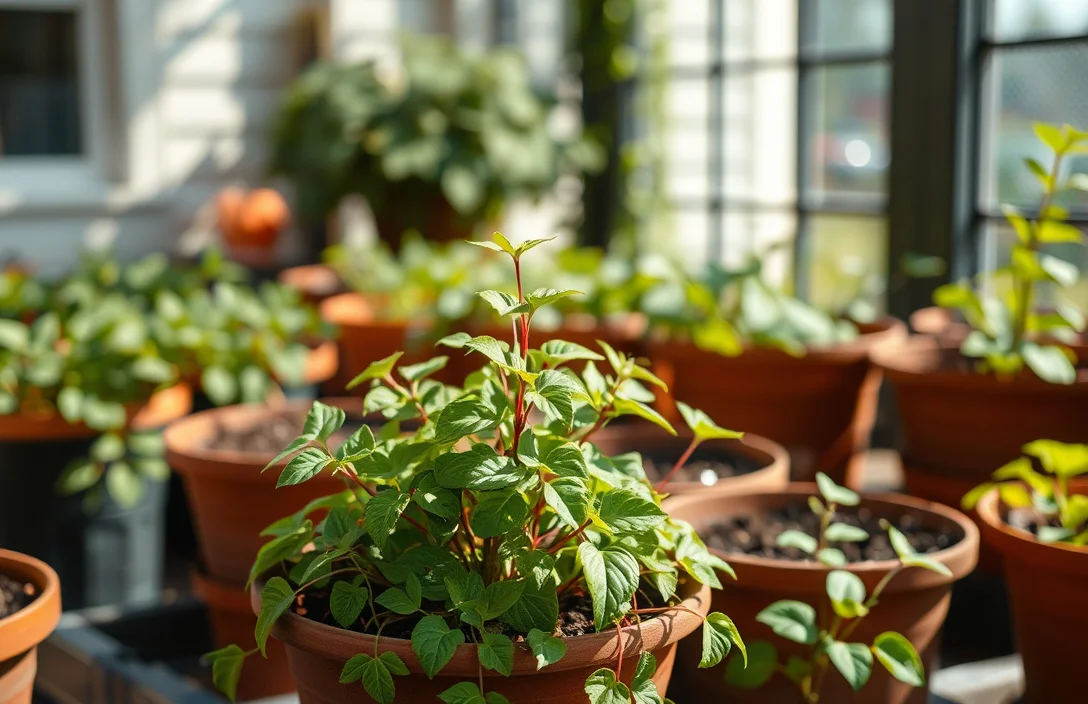
- Partial shade (morning sun, afternoon shade): dependable for most potted ivy.
- Full sun in cool regions: workable if you water consistently and watch for scorch.
- Deep shade: expect slower growth and more bare stems over time.
A simple rule I follow for container ivy: light is good, but drought is not. If you can’t reliably water during peak heat, choose a spot with less afternoon sun.
Rotate the pot for even growth
Vines lean toward light. Rotate the container every 1-2 weeks to keep growth even and prevent one-sided stretching.
Watch for leaf cues
Light drought and light deficiency can look similar at first glance, so pay attention to the pattern.
- Small yellowing leaves can mean the plant is too dry or not getting enough light.
- Crispy leaf edges often point to heat and drying soil.
- Long, pale stems often point to insufficient light.

Helpful pick
Nooulap 4 Pack 10 Inch Flower Pots for Outdoor Indoor, Plastic Plant Pots with Drainage Hole & Saucer, Lightweight Small Resin Flower Pot, Outdoor Planters Imitation Magnolia for Garden House(Gray)
Well-suited for outdoor ivy pots, these 10-inch planters provide drainage and a saucer.
Watering Schedule for Potted Ivy Plants
Most ivy container problems start with watering. The right schedule isn’t about chasing calendar days – it’s about soil moisture. Use a simple trigger: water when the top inch of soil feels dry.
Water thoroughly until water drains from the bottom holes, then stop. Don’t let the pot sit in a saucer. Trapped runoff keeps the root zone soggy and ivy doesn’t tolerate that.
Baseline schedule (then adjust):
- Spring and fall: usually every 3-7 days, depending on sun and pot size.
- Summer: often every 1-3 days for common 10-12 inch containers.
- Winter (for overwintered pots): water rarely, only when the soil is dry and drainage is likely to work.
Heat waves break “normal” schedules. If temperatures spike, check moisture daily for a few days. Soil that dries quickly can trigger leaf drop even if you watered last week.
Water less in winter, but don’t ignore the basics
Cold slows growth, so ivy uses less water. Overwatering is still possible in winter, especially when a wet pot freezes and thaws. Let excess drain, and aim for lightly moist soil – not wet soil.
Mulch helps, but keep it away from stems
A thin top layer of mulch or coarse compost can slow evaporation. Leave a couple inches of space from the main stems so the base doesn’t stay damp for long stretches.

Helpful pick
Utopia Home Plant Pots Indoor with Drainage Holes – Set of 5 White Plastic Flower Pots (7/6.6/6/5.3/4.8 Inch) – Modern Planters for Indoor Plants, Room & Office Décor, Great Stocking Stuffers
Helps maintain proper watering by providing drainage and multiple pot sizes for ivy containers.
Soil Mix and Drainage to Stop Root Rot
Soil mix determines whether you get “ivy that thrives” or “ivy that slowly rots.” Ivy in containers needs a mix that drains quickly while still holding enough moisture to keep roots from drying out. Dense, peaty mixes or anything that stays wet for days will stress roots.
Use a lightweight potting mix as your base, then add perlite (or pumice) for structure and airflow. The goal is a mix that doesn’t turn into mud after watering.
A solid container mix concept:
- Base: quality potting mix (not garden soil)
- Amendment: perlite or pumice to improve drainage
- Optional: a small amount of compost for nutrients, without turning the mix water-retentive
Verify drainage too. Make sure drainage holes aren’t blocked, and if you use a saucer, empty it after watering.
Don’t rely on “less water” if the soil stays soggy
Poor drainage can’t be fixed by watering less. Root rot risk stays high when the mix holds water too long. Fix the mix and drainage first, then adjust watering.
Spot root-health issues early
Waterlogged conditions show up as:
- persistent yellowing and leaf drop paired with a mushy feel near the base
- a sour smell when you check the soil
If you suspect root trouble, repot into fresh airy mix as soon as you can and remove dark, soft roots.
How to Train Ivy So It Stays Contained
Ivy grows vigorously. If you plant it outside in a pot and expect neat behavior, you will be disappointed unless you train it from the start. Containment comes from pruning frequency and how you redirect new growth.
For a trailing look, keep up with trimming. Clip long runners before they get stiff, and cut above a leaf node to encourage branching. For a round, compact pot form, use a support ring or short trellis so the vine grows inward instead of escaping outward.
A simple training workflow:
- Pinch new tips while growth is soft so it branches instead of launching long vines.
- Redirect runners back into the pot using plant ties or soft clips.
- Prune every few weeks during active growth to maintain shape.
- Clear strays immediately if vines head toward a wall crack or neighboring plants.
- Re-train after repotting, since new growth starts quickly.
Set containment boundaries before you plant. Decide how far you want the vines to go, then prune to that limit.
Prevent it from rooting into places you do not want
Ivy can root along stems when conditions are right. In a pot, that usually fills the container faster, which can be fine – but it can also creep into nearby ground or gaps if your pot sits near a planter edge or wall.
Know what “contained” means in your yard
If your container sits near soil, you may need a physical barrier to stop stem contact. Containment is about preventing stem contact with outside surfaces, not just trimming vine length.
Overwintering Ivy Pots Through Cold Weather
Cold is the biggest container-specific threat. In-ground ivy benefits from soil insulation. Potted ivy does not. Even if top growth dies back, your goal is to keep the root ball from repeatedly freezing and thawing enough to break roots down over time.
Your plan depends on where you live, but the principle stays the same: protect the pot and reduce exposure to wind and freezing rain. Move pots to a sheltered spot when possible, such as a garage-adjacent wall where temperatures swing less. For many gardeners, wrapping the pot with insulation and using a plant cover during hard freezes is enough.
A practical overwintering checklist:
- Group pots together to reduce wind exposure.
- Wrap the pot with insulated outdoor wrap or bubble insulation, leaving the top open enough for ventilation.
- Elevate the pot slightly so water does not pool against cold surfaces.
- Cover foliage during extreme cold snaps using breathable fabric (not plastic).
- Water sparingly only when the soil is dry, and always allow free drainage.
The biggest winter mistake is keeping pots too wet. If the mix stays soggy and then freezes, the root zone becomes a problem. Target slightly moist, not wet.
Decide whether you want a “survive” or “look good” outcome
In harsh winter regions, spring may not bring perfect evergreen foliage. If you want survival, protect the roots and accept that you may prune dead tips later. If you want maximum foliage, plan for stronger protection and more shelter from wind.
FAQ
What’s the best ivy variety for outdoor pots in the United States?
English ivy (Hedera helix) is the most common reliable pick for outdoor containers because it handles a wide range of light conditions and forms dense foliage. Algerian ivy (Hedera canariensis) works well if you want larger leaves and a slightly different look. Choose based on your winter lows and how often you’re willing to prune fast growth.
How big should the pot be for potted ivy?
Use at least a 10-12 inch diameter pot for one ivy plant if you want stable moisture and fewer root-stress issues. Smaller pots dry too fast and heat up quickly, which can lead to leaf drop. If your plant is already root-bound, move up to the next pot size instead of trying to manage it in place.
How often should I water outdoor ivy in a container?
Water when the top inch of potting mix feels dry, then water thoroughly until it drains from the bottom holes. In many summers, that lands around every 1-3 days for common container sizes, but adjust for heat and sun. In winter, water much less, only when the soil is dry and drainage is likely to work.
How do I keep ivy from escaping the pot?
Prune and redirect new growth before vines get long and stiff, and use simple ties or a ring support to keep stems within your chosen area. Check weekly during active growth because ivy can extend quickly. Also reduce stem contact with ground or cracks near the pot rim, since vines can root where they touch.
Will potted ivy survive winter outdoors?
It can, but survival depends on root protection and drainage. The root ball freezes and thaws more severely in a pot than in ground soil, so wrap the pot, shelter it from wind, and prevent the mix from staying soggy. During hard freezes, cover foliage with breathable fabric. Expect some dieback in colder regions, then prune dead tips in spring.

- 10 Best Slow Cooker For Slow Cooking Legumes 2026 (Tested And Reviewed) - October 17, 2026
- 10 Best Slow Cooker For Slow Cooking Oxtail 2026 (Tested And Reviewed) - October 16, 2026
- 10 Best Slow Cooker For Slow Cooking Venison 2026 (Tested And Reviewed) - October 16, 2026