How To Make Rice Porridge In Rice Cooker?
Rice porridge is one of those comfort foods that’s also practical – it’s hard to mess up when you use a rice cooker. Success comes down to two things: the water-to-rice ratio and the texture you want (thick, medium, or thin). Here’s how to make rice porridge in a rice cooker with pantry-ready ingredients, clear settings, and troubleshooting for the most common problems.
Rice porridge in a rice cooker cooks rice in extra water, usually with a thicker ratio than regular rice – commonly around 1:5 to 1:8 rice-to-water by volume. Start with rinsed rice, measure the water, cook on a porridge or “white rice”/“cook” setting, then rest 5 to 10 minutes so it thickens evenly.
Key Takeaways
- Use the right ratio. Start around 1:6 rice-to-water for medium porridge, then adjust.
- Rinse for better texture. Rinsing removes excess starch for smoother porridge.
- Pick the right setting. Use “porridge” if you have it; otherwise use “white rice”/“cook.”
- Rest to thicken. Let it sit 5 to 10 minutes after cooking for the best consistency.
- Add flavor at the right time. Salt and aromatics go in with the water; toppings go on after.
- Fix thick or thin fast. Stir in hot water to thin. Simmer with the lid on for 3 to 5 minutes to thicken.
How to begin
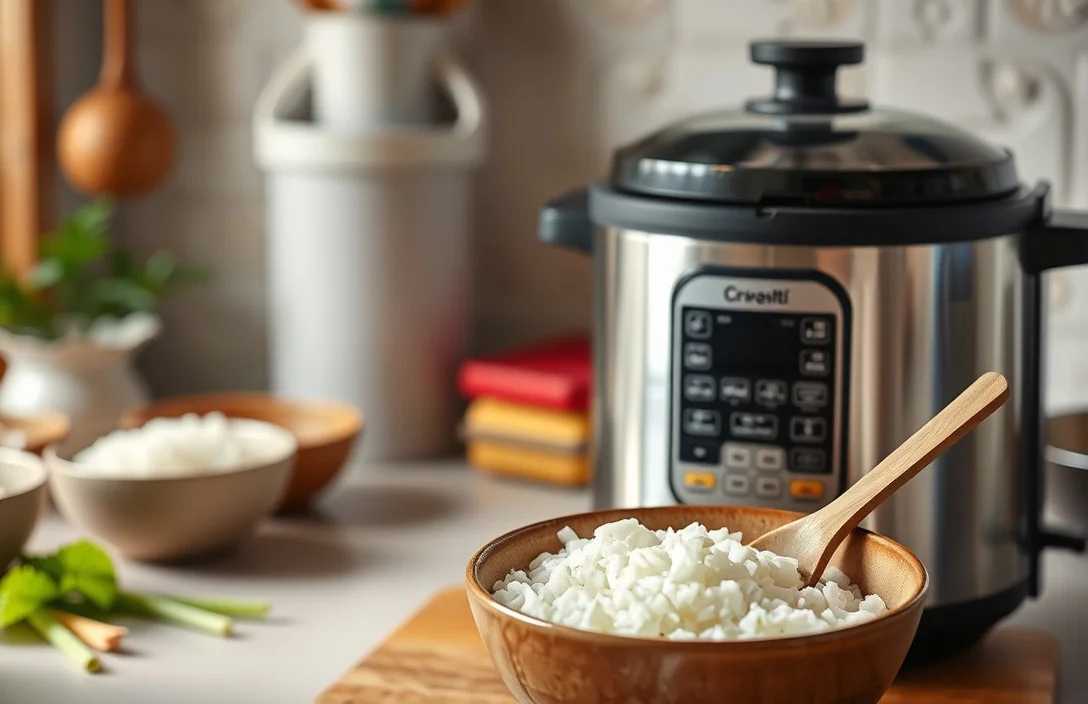
Rice porridge works because rice releases starch as it cooks, turning extra water into a creamy texture. In a rice cooker, you need two things to land it right: enough liquid for softness and a setting that keeps cooking long enough for the grains to break down.
Before you start, check your cooker for useful modes. “Congee,” “Porridge,” or “Soup” usually gives the best results because it runs longer and softer. If you only have “White Rice,” “Quick,” and “Keep Warm,” you can still make porridge, but you’ll rely more heavily on the water ratio and the rest time.
Have your ingredients ready:
- Rice: Short-grain white rice for creamier porridge; jasmine for fragrant, slightly less creamy texture; leftover rice for a faster, thicker result.
- Liquid: Water for a clean base, or swap part of the water with chicken stock for savory porridge.
- Salt: Optional, but it helps – especially if you’ll eat the porridge plain or with mild toppings like egg.
Quick ingredient targets (so you don’t guess)
For a starting batch:
- Small-bowl, thicker: 1/2 cup rice plus 3 to 4 cups water
- Thinner: about 3 1/2 to 5 cups water
Make one batch first. Once you see how your cooker behaves, you’ll be able to adjust quickly.
Basics for making rice porridge in a rice cooker
Rice porridge is essentially rice cooking with more water and more time for the rice to soften and release starch. Texture depends on both rice type and how much starch each grain releases.
Short-grain rice breaks down more easily, so it thickens sooner and feels creamier. Long-grain rice keeps more distinct grains, which makes porridge taste lighter even at the same ratio.
Rinsing makes a real difference. Skip it and you often get a thicker, gluey texture because extra surface starch gels more aggressively. Rinse well and you still get creamy porridge – it just tends to be smoother and less gummy.
Your rice cooker also matters. Many models stop based on temperature thresholds, so too little water can scorch on the bottom or turn the porridge pasty before the rice softens. “Keep Warm” can further thicken, so rest timing isn’t optional – it’s part of the method.
What to expect texture-wise
Use these expectations as your guide:
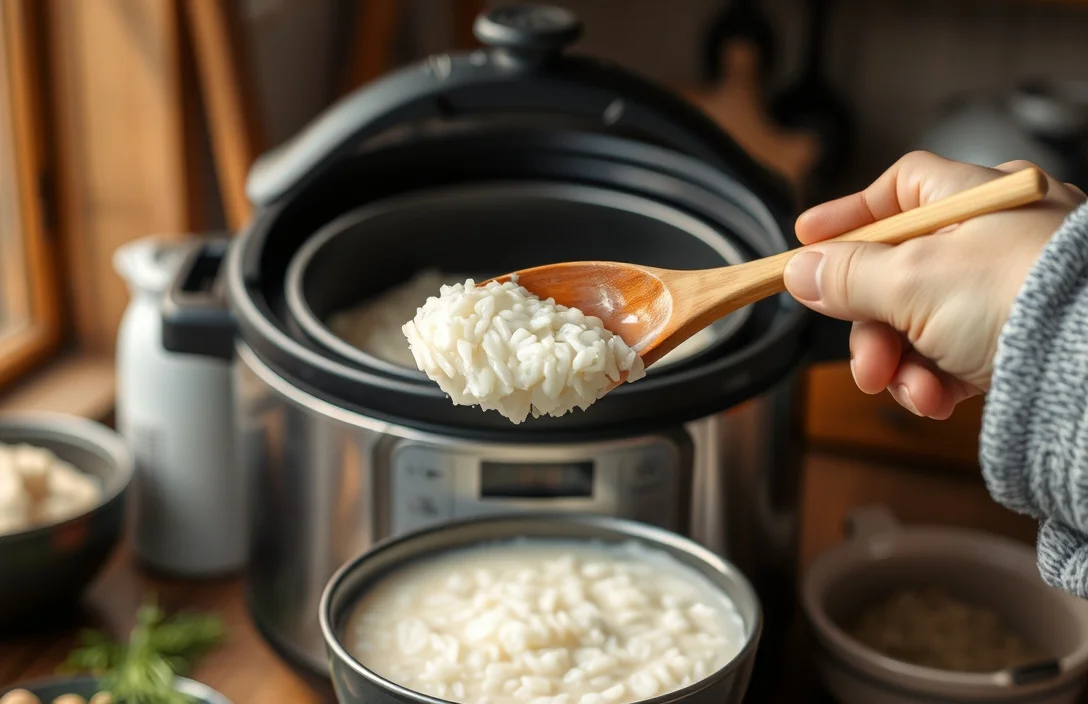
- More water: thinner, more soup-like porridge
- Less water: thicker, spoon-sticking porridge
- Short-grain rice: thicker and creamier at the same ratio
- Jasmine/long-grain: tender grains, sometimes less creamy
how to make rice porridge in a rice cooker
Make the first batch with a goal: creamy porridge you can spoon slowly, not gritty. Use the method below, taste at the end, then adjust.
Step 1: Measure your rice and choose your thickness
Pick texture first, then measure.
- Medium porridge (starting point): 1/2 cup rice + 3 1/2 cups water
- Thinner: 4 1/2 to 5 cups water
- Thicker: 3 cups water
Scaling up works best with proportions. For example, 1 cup rice usually needs about 7 cups water for medium porridge, but your cooker may run hotter or cooler – treat the first batch as calibration.
Step 2: Rinse the rice (unless you want extra thickness)
Rinse in cool water:
- Put rice in a bowl, rinse, stir, and drain.
- Repeat 2 to 3 times until the water is less cloudy.
Rinsing reduces excess starch and helps prevent “sticky paste” porridge.
If you’re using leftover rice, rinsing is unnecessary. Those grains have already cooked, so porridge thickens faster.
Step 3: Add ingredients to the inner pot
Add rinsed rice to the inner pot, then pour in measured water (or water plus stock). Stir once to distribute rice evenly.
Add salt now if you want savory porridge. Start at about 1/4 teaspoon per 1/2 cup rice. For ginger or garlic flavor, add a few slices now – skip large chunks you’ll have to fish out later.
Step 4: Choose the cooker setting
- If you have porridge/congee/soup mode: use it.
- If not: use white rice or cook.
- Avoid “quick” for raw-rice porridge because it can stop before the rice softens enough, especially with thicker ratios.
If the cooker only has “cook” and “keep warm,” you can still succeed by using adequate water and planning a longer rest. The target is full softness and good starch release.
Step 5: Cook, then rest
Start the cook cycle. When it finishes, don’t eat immediately.
Rest the porridge with the lid on for 5 to 10 minutes so the liquid settles and thickens evenly. Stir gently once during the rest.
- Too thick? Stir in hot water a few tablespoons at a time.
- Too thin? Keep it on keep warm for a few minutes, then stir occasionally.
Step 6: Taste and finish with toppings
Taste first, then adjust salt or seasoning. Add toppings after cooking so they don’t overcook inside the pot.
Classic options:
- sliced scallions
- soft-boiled egg
- soy sauce, sesame oil, or chili oil
- shredded cooked chicken
- sautéed mushrooms
A quick first-batch example (medium texture)
- Rice: 1/2 cup short-grain white rice
- Liquid: 3 1/2 cups water
- Salt: 1/4 teaspoon (optional)
- Setting: “Porridge” if available, otherwise “White Rice”/“Cook”
- Rest: 5 to 10 minutes
This is the batch I’d use to calibrate your cooker’s tendencies.
Things that matter most
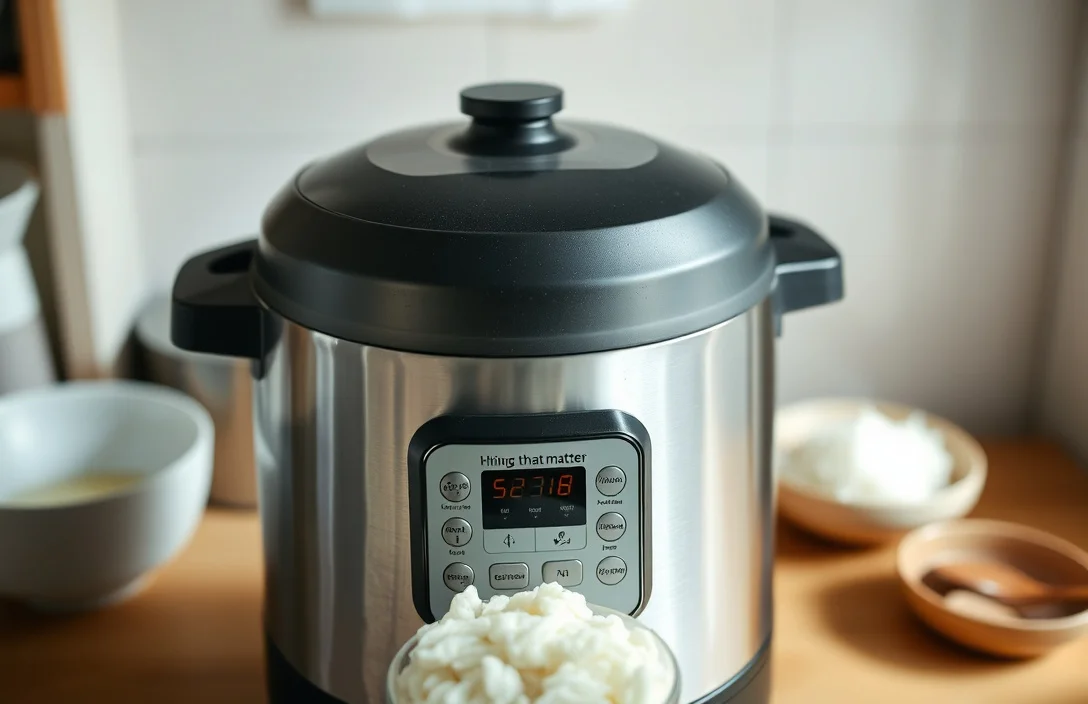
Great porridge comes from technique – ratio, timing, and what you do after cooking. Rice cookers are convenient, but they can over-thicken during warm mode, so plan around it.
Technique 1: Control thickness with ratio, not vibes
You can’t reliably fix texture if you start with too little water. Use ratio as the main lever, then adjust with small changes at the end. For a small batch, change water by 1/2 cup at a time.
Technique 2: Stir at the beginning and once after cooking
Stir once right after adding rice and water so grains don’t clump. Stir once after the cooker finishes during the rest window so thickness becomes consistent across the pot, not just on the bottom.
Technique 3: Add flavor in layers
Salt and aromatics in the cooking liquid build a base flavor that holds up even after you add toppings. Toppings can be bold, but they shouldn’t carry the whole taste.
Technique 4: Use stock strategically
Stock adds savoriness – and it also affects perceived saltiness. If your stock is salty, use less added salt. If it’s bland, add more. Always taste after the rest.
Technique 5: Choose the right rice for the texture you want
A practical guide:
| Rice type | Expected texture | Best for |
|---|---|---|
| Short-grain white rice | Creamy, thick, spoonable | Classic congee-style porridge |
| Jasmine rice | Tender grains, slightly less creamy | Fragrant breakfast porridge |
| Long-grain rice | More distinct grains | Lighter porridge, less gummy |
| Leftover cooked rice | Very thick, fast | Quick porridge when time is short |
What works in practice
Best practices prevent the two biggest failures: burnt bottom and pasty thickness. Even with a rice cooker, measurement and timing still matter.
- Use the inner pot correctly. Fill within markings. Don’t exceed capacity, especially when using a lot of water for a thinner porridge. Overfilling can foam and rise, leading to uneven cooking.
- Plan for carryover thickening. Most cookers keep thickening on “keep warm.” For medium texture, stop a bit before perfect thickness – the rest and warm phase will finish it.
- Respect the mode. “Porridge” mode is built for longer, gentler heating. “Quick” can under-soften grains, especially with thicker ratios.
Settings cheat sheet
- Porridge/Congee/Soup mode – best overall, especially for thicker congee
- White Rice/Cook – works well when the ratio is generous
- Quick mode – use only for leftover rice or a thin ratio
Portioning and storage best practice
Porridge keeps thickening in the fridge. Reheat by adding water first, then warming until creamy. A common approach is 1 to 3 tablespoons water per serving, stir, heat, then adjust after the first reheat.
Mistakes to Avoid when making rice porridge in
The most common expensive mistake is skipping ratio and using the same water you’d use for regular rice. Too little water can scorch the bottom and leave you with gritty or gluey texture before the rice fully softens.
Skipping rinsing is another frequent issue, especially if you want a smooth bowl. Unrinsed rice can create a thicker, starchy porridge that feels heavy. If you want very thick congee, you can leave it unrinsed sometimes – but for a first attempt, rinsing gives more consistently pleasant results.
People also over-rely on “Keep Warm.” Long warm holding turns porridge into a thick paste. If you’re not eating right away, turn off the cooker or transfer to a bowl once cooking is done, then reheat with added water later.
Specific mistakes that cause predictable problems
- Too little water – leads to scorching or pasty texture
- Wrong rice type – long-grain can feel too distinct, short-grain can feel too creamy
- No rest – porridge tastes thinner and doesn’t reach final body
- No stirring – bottom thickens faster than top
- Over-salting stock – finished porridge tastes salty even with good toppings
Pro Tips for better rice porridge in a rice cooker
Small moves make porridge taste intentional instead of “rice and water.”
Pro tip 1: Calibrate once, then reuse your ratios
After your first batch, write down what worked: rice type, your water cups, and whether you used porridge mode. Your cooker will behave similarly each time, so you can stop guessing. It’s the simplest long-term improvement.
Pro tip 2: Use ginger and aromatics without clogging your spoon
For savory porridge, add ginger slices early, then remove them after cooking. Garlic works similarly – keep it sliced so it doesn’t turn bitter.
Pro tip 3: Add toppings with temperature contrast
Hot porridge plus cool toppings is satisfying. Try freshly chopped scallions, add sesame oil at the end, or spoon chili crisp right before serving. If you add cold yogurt or fruit-based toppings, stir right after serving so the temperature doesn’t drop too much.
Pro tip 4: Keep breakfast porridge consistent
If you’re making breakfast porridge, keep it simple: salted base, then optional egg. A soft egg on top makes the bowl feel complete without a complicated recipe.
Pro tip 5: Rescue a too-thick batch
If it’s thicker than you want, add hot water a little at a time and stir. Hot water helps keep the texture smooth instead of clumping from temperature shock.
Pro tip 6: Rescue a too-thin batch
If it’s thin, simmer longer by keeping it on “keep warm” with the lid on, stirring occasionally. If that’s not enough, switch to “cook” for a short additional cycle, then rest again. Make small changes so you don’t overshoot into paste.
FAQ
How much water do I use to make rice porridge in a rice cooker?
Use a thicker ratio than regular rice. A solid starting point is around 1:5 to 1:8 rice-to-water by volume, with 1:6 as a common middle choice for medium porridge. If your cooker thickens a lot during keep warm, start closer to 1:7 to avoid ending up too thick.
How long does it take to make rice porridge in a rice cooker?
Most rice cooker cycles fall into the typical “cook cycle” range, then porridge needs a short rest. Plan on the full cook cycle plus about 5 to 10 minutes of rest with the lid on. If you have a porridge mode, it often takes a bit longer but produces more consistent soft breakdown.
Is rice porridge safe to eat and reheat?
Yes. Cool leftovers promptly, store them in the fridge, and reheat until steaming hot throughout. Stir during reheating because porridge thickens in storage and you may need a splash of water.
Can I make rice porridge with leftover rice in a rice cooker?
Yes. Leftover cooked rice makes porridge much faster. Use less liquid than you would for raw rice and watch consistency during the cook cycle. Start with a thinner ratio than your raw-rice batch, then adjust after the rest.
Why did my rice porridge turn out thick and gummy?
Gummy porridge usually comes from too much starch, too little water, or too much time on keep warm. Rinse the rice (2 to 3 rinses), increase water by about 1/2 cup for a small batch next time, and avoid leaving it on warm for long stretches. Stir once during the rest so thickening happens evenly.

- 10 Best Slow Cooker For Hearty Stews 2026 (Tested And Reviewed) - October 20, 2026
- 10 Best Slow Cooker For Hearty Soups 2026 (Tested And Reviewed) - October 20, 2026
- 10 Best Slow Cooker For Comfort Food 2026 (Tested And Reviewed) - October 20, 2026