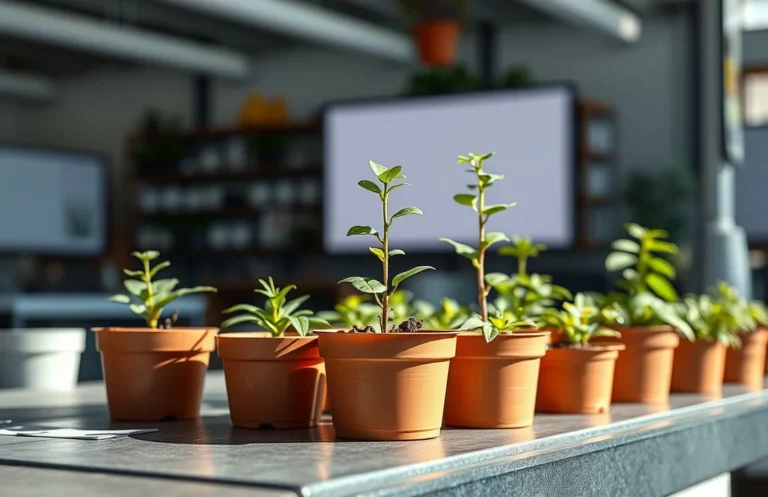
How To Keep Squirrels Out Of Pots?
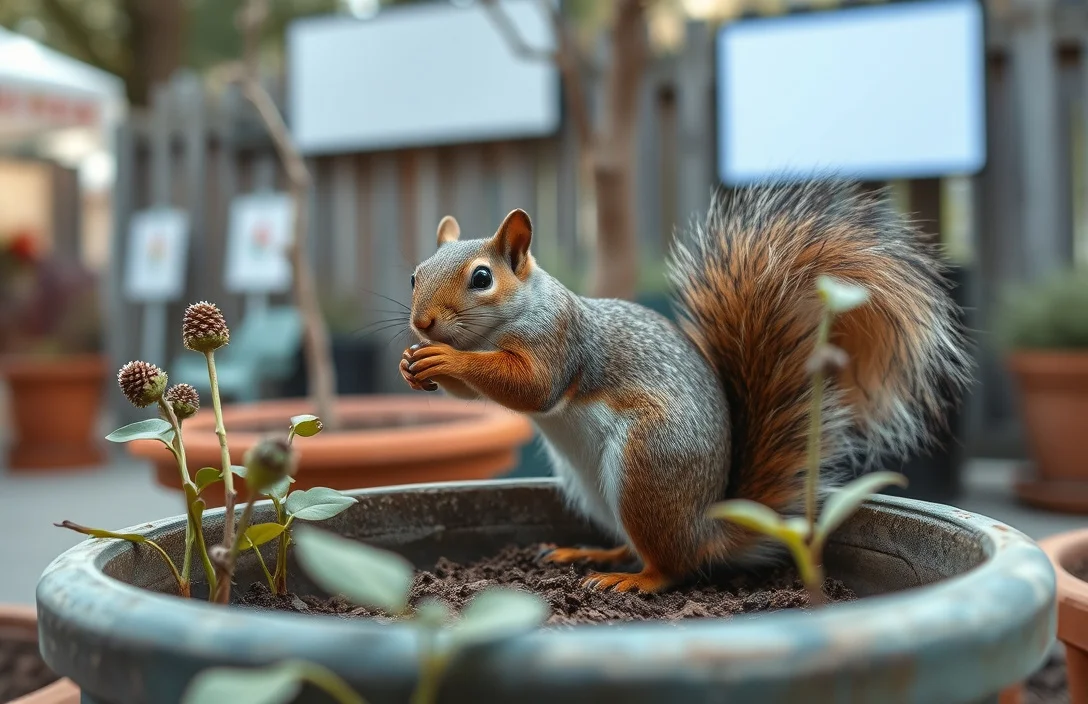
Squirrels raid garden pots because they’re easy to dig into, warm, and full of smells. If they’re knocking over planters or chewing through soil, you can usually stop it without chemicals. This guide shows how to keep squirrels out of pots using practical barriers, smart placement, and a few behavior-bending tricks that work in most US yards.
Squirrels get blocked from pots by denying access to the soil and plants: use a physical barrier (hardware cloth over the soil or a pot liner), remove attractants (food, loose soil, fallen nuts), and make the area less inviting (more light, less cover). Start with the pot you care about most, then add deterrents after the barrier is in place.
Key Takeaways
- Use a barrier first. Hardware cloth (1/4-inch) over soil blocks digging without harming drainage.
- Cover every entry point. Add a pot liner and secure it to the rim to prevent side access.
- Remove food cues. Clean up fallen nuts and avoid leaving birdseed where squirrels can reach.
- Change the vibe. Increase light and reduce hiding cover near planters to lower visits.
- Use deterrents wisely. Try scent or taste deterrents as short-term support, not your only fix.
- Expect a two-week window. Most deterrence results show within 10 to 14 days after you make the area less tempting.
How to begin
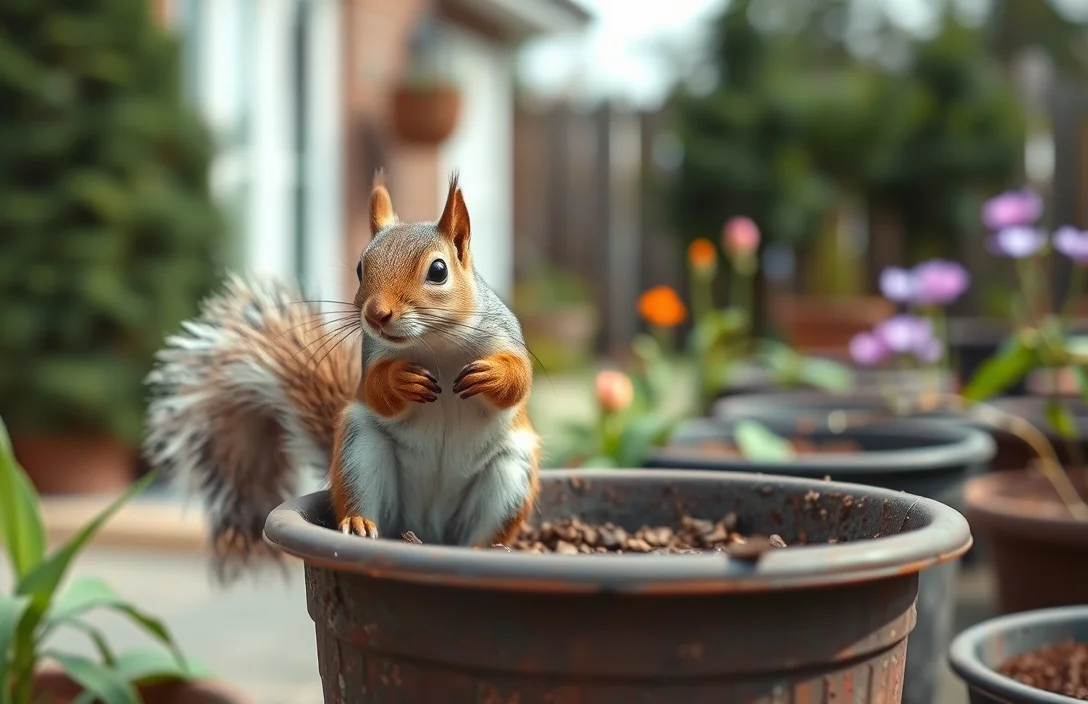
Start with the pot’s weak spot – the soil surface and any gap between the pot rim and the liner. Squirrels don’t need to break the whole planter. They only need a place to dig. When the soil is unreachable, the behavior usually stops quickly.
Identify what’s happening in your yard: digging and nests, chewing on plants, or knocking over lightweight containers. Each problem has a different fix. For digging, a barrier that stays put is the main tool. For chewing, you may need plant choices, caging, or a taste deterrent for edible leaves.
Before you buy anything, do a quick yard sweep. Clear fallen nuts, compost spills, and spilled birdseed, because those keep squirrels coming back even after you protect the pots. Then pick one “test pot,” secure it today, and judge results over the next 10 to 14 days.
Basics of How to Keep Squirrels Out of Pots
Squirrels are excellent diggers, and pots offer a convenient digging site. A soft, loose top layer of soil plus easy footholds around the rim makes the whole planter an invitation. Every digging session scatters soil, disturbs roots, and refreshes the “dig here” impression.
Deterrents work best only after squirrels are forced to work harder. Exclude first. Then add deterrents as backup. If you rely only on smell or motion, squirrels often learn the pattern, especially when there’s a reliable food source in the same yard.
Think in access control. “Keep squirrels out of pots” means “keep squirrels from reaching the soil and plants.” That usually comes down to rim-secured liners, sealed gaps in barriers, and placing planters so they aren’t sitting next to a launching spot.
How to Keep Squirrels Out of Pots
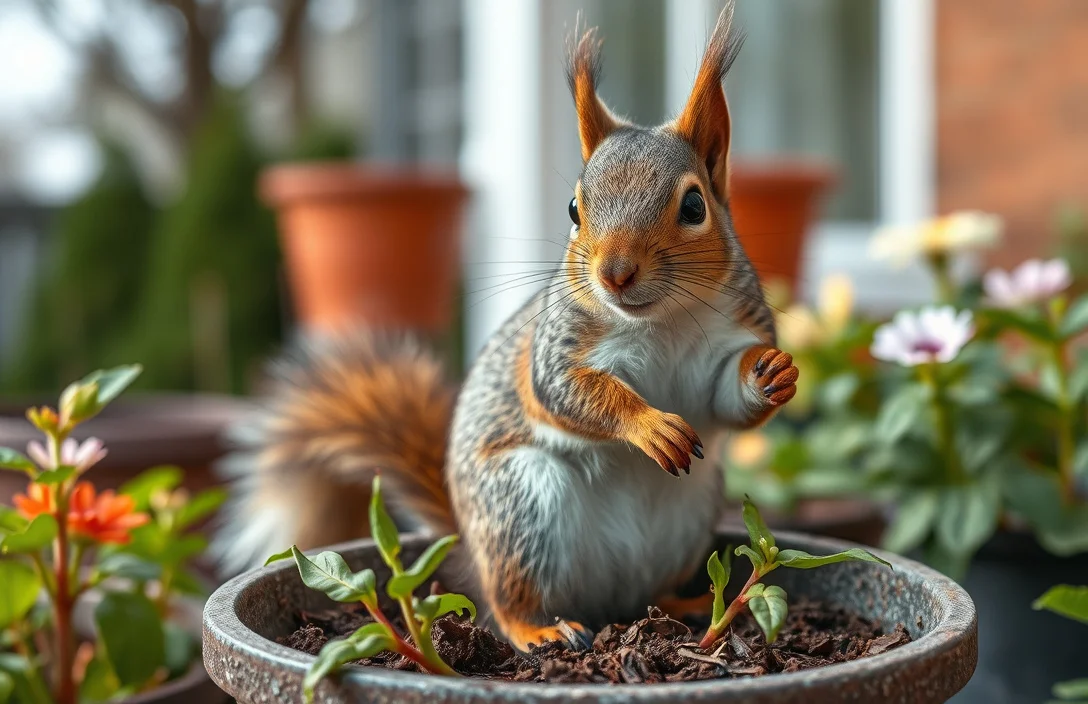
- Pick one pot to protect first. Use the same method on all pots later, but start where damage is worst.
- Stop the food trail. Remove fallen nuts, wipe up spilled seed, and don’t leave accessible pet food outdoors.
- Test for digging depth. Watch for the first attempts and see where claws hit. That shows you where the barrier must be tightest.
- Install a pot liner barrier. Cut hardware cloth or welded wire mesh to fit under the top layer. Lay it so soil can drain, but squirrels cannot reach through.
- Secure the barrier to the rim. Use zip ties or screws through the pot rim area (for hard plastic or terracotta) so the mesh cannot shift when squirrels paw at it.
- Fill and cover the surface. Add a thin layer of potting mix over the barrier, then top with mulch or decorative stone you’re willing to protect.
- Add quick plant protection if chewing starts. For tender greens or new seedlings, use a small cage or temporary wire cover until plants establish.
- Make the area less inviting. Trim nearby branches that act like bridges and increase light if possible.
- Use a deterrent only as support. If you use a scent or taste product, apply it after the barrier is installed and follow the label for reapplication.
- Monitor and adjust after 10 to 14 days. If you still see digging, inspect for a gap along the rim or a weak spot at the drainage holes.
In practice, the easiest win is barrier plus rim security. Loose mesh gives squirrels room to shove it aside. Secure the edges and prevent side access, and you remove the entire problem.
For example, if you have several terracotta pots on a patio, position them so squirrels can’t use a railing or planter shelf as a runway. Then line each pot with hardware cloth under the soil surface area, secure the edges, and cover the top with mulch. Most households notice fewer visits within two weeks once the digging options disappear.
Things that matter most
The best techniques deny access, not chase squirrels away one by one. Make the pot boring, difficult, and unrewarding.
Physical exclusion (the most reliable)
- Hardware cloth or welded wire mesh is the core tool. Choose small openings and anchor the mesh so it cannot be pushed aside.
- Keep drainage in mind. If you block drainage, you’ll create root problems worse than squirrel damage.
Access control (stop the side door)
Squirrels often get in from the side by prying soil at the rim. Secure the barrier where the rim meets the soil so there’s no gap line they can exploit. If your pot has wide openings near drainage holes, add an extra mesh layer that extends slightly beyond those areas.
Habitat tweaks (reduce the approach)
- Trim branches that let squirrels jump directly into planters.
- Keep nearby ground cover and stacked wood away from the pot area so they can’t hide and launch quickly.
- Add brighter lighting at night if you can, since many squirrels prefer cover.
Targeted plant protection (when chewing is the issue)
If squirrels chew new growth, use temporary plant cages around seedlings. For edible plantings, switch to varieties they tend to bother less, but keep barrier protection in place if they’re digging.
Deterrents as backup, not your only plan
Scent-based or taste-based deterrents buy time, especially right after you install protection while squirrels are still testing. Follow the label for reapplication, and don’t expect deterrents to replace exclusion for long-term control.
What works in practice
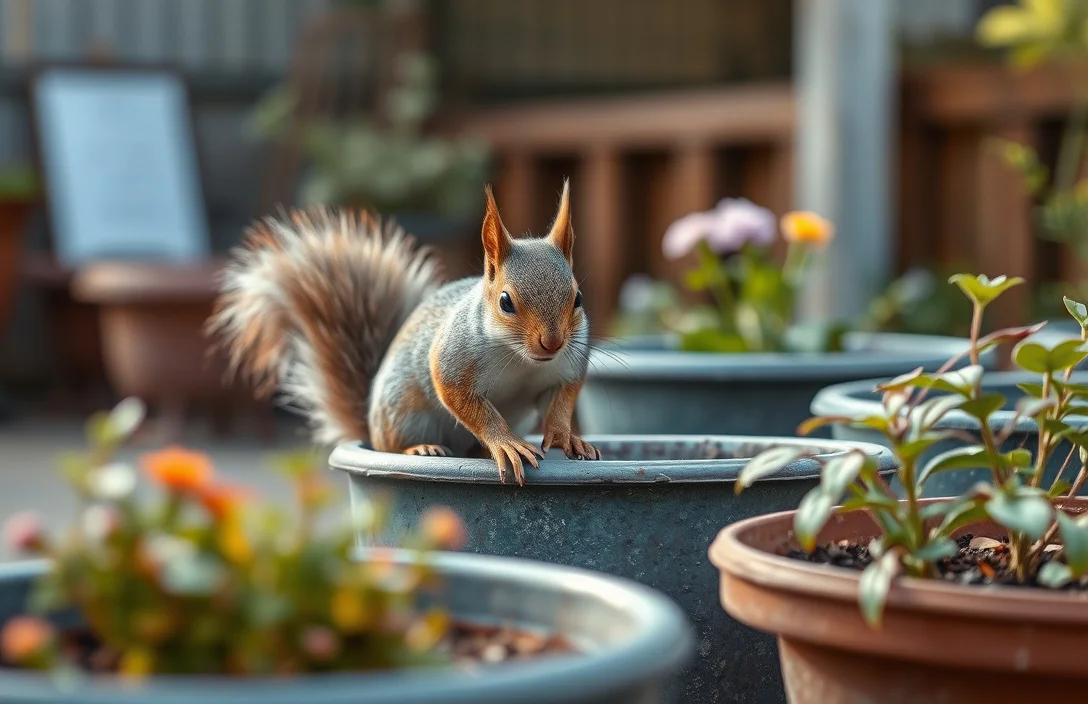
Treat this like pest-proofing, not scaring. A barrier that stays put beats repeated chasing because squirrels return to what works.
Use these practices when setting up protection across multiple pots:
- Build a repeatable pot “kit.” Pre-cut mesh pieces so each pot gets the same coverage and edge securing.
- Check drainage holes and rim seams. Barrier failure usually happens at gaps, not over the center of the pot.
- Keep the soil surface covered. Mulch, fine gravel, or decorative top dressing can slow digging attempts and reduce loose, easy-to-scratch soil.
- Avoid training by leaving rewards. Don’t seed nearby areas during the adjustment period, because the reward teaches them to keep visiting.
- Rotate or elevate pots strategically. Raising pots helps only if it doesn’t create a new launch path (like a bench or railing nearby).
If you want a clear “best” path for most homes, the order is barrier first, surface cover second, deterrents last. That order prevents damage while you figure out how much yard change you need.
| Approach | Key Spec/Setup Detail | Best For | Trade-off |
|---|---|---|---|
| Hardware cloth barrier | Small openings over soil, rim-secured | Digging and nesting | Requires careful cutting and securing |
| Welded wire/mesh liner | Welded mesh under top layer, extends near edges | Digging in multiple pots | Slightly heavier and harder to shape |
| Pot top cover (gravel/mulch) | Covers soil surface where claws land | Light digging attempts | Not enough alone if squirrels commit |
| Temporary plant cage | Wire cage around seedlings | Chewing and nibbling | Can look awkward until plants grow |
| Scent/taste deterrent | Follow label reapplication schedule | Short-term support | Often needs repeating and doesn’t stop digging by itself |
| Yard habitat changes | Remove branches/cover near pots | Long-term pressure reduction | Takes a little time and pruning effort |
Mistakes to Avoid When Keeping Squirrels Out of Pots
The biggest mistake is using deterrents alone. Sprays and motion devices can reduce visits temporarily, but if the soil is still accessible, squirrels eventually test it again. The result is endless reapplication and continued digging.
Another common mistake is installing mesh that can shift. If the barrier moves even slightly, squirrels push it aside and reach the soil underneath. Secure edges to the pot rim or to a frame that cannot wiggle.
Blocking drainage is also a problem. If you cover or stack materials in a way that holds water, you can trigger root rot, algae, or fungus issues. Barriers should allow water to drain normally.
People also forget the attractant layer around the pots. Bird feeders, scattered seed, fallen nuts, and compost pull squirrels into the yard. If those cues stay available, you protect one spot while feeding the problem elsewhere.
Don’t change too many variables at once. If you add barrier, new mulch, deterrents, and move pots all at the same time, you won’t know what actually worked. Install the main barrier first, then adjust based on what you see over 10 to 14 days.
Pro Tips That Actually Improve Results
Build “squirrel-proof depth,” not just a shallow cover. Many squirrels start pawing at the top layer, but they’re usually reaching for deeper soil. If the barrier reaches the digging zone and stays secured, the digging becomes not worth the effort.
If squirrels keep coming back, try these upgrades:
- Extend the barrier slightly beyond the soil area. Cover edges and transition zones where squirrels like to wedge in claws.
- Create a firmer top layer. Fine gravel or a heavier mulch slows claw penetration and makes digging less satisfying.
- Protect new plantings longer. Newly planted seedlings draw attention because they’re tender and easy to nibble.
- Enclose vulnerable pot clusters. For porch or entry planters, a simple wire enclosure around the cluster can work better than securing every single pot individually.
- Keep the ground area tidy. Remove tall weeds and clutter near pots so squirrels lose nearby hiding places.
If you see digging on one corner pot repeatedly, check that pot’s rim gap on the side facing the fence or walkway. That seam is often their approach point, where they can reach the barrier faster from cover.
For multiple pots, make a routine: inspect rims weekly, re-secure any shifting ties, and refresh top cover when it thins out. Small maintenance prevents a full rebuild later.
FAQ
What’s the fastest way to keep squirrels out of pots?
Use a secured barrier over the soil (hardware cloth or welded mesh) and cover the top layer so claws can’t reach down. Remove nearby food cues first. Expect noticeable improvement within 10 to 14 days after you block access and stop rewards.
Do I need special mesh size to keep squirrels out of pots?
Use mesh openings small enough that squirrels can’t push claws through to the soil surface. Many DIY setups use 1/4-inch hardware cloth or welded wire with similarly small openings. Measure your pot’s rim and openings, then cut mesh that fully covers the digging zone.
Are squirrel deterrents like sprays or pellets worth it?
Deterrents can help as short-term support, especially right after you install barriers. They rarely work by themselves because squirrels can still dig and access soil. If you use a deterrent, follow the label for reapplication and pair it with physical exclusion.
How do I keep squirrels from knocking over my pots?
Stabilize pots with a heavier base, use pot stands that don’t create easy launch ramps, and anchor lightweight containers when possible. If squirrels knock pots during digging, rim-secured soil barriers usually fix the cause, not just the symptom.
What’s the most common mistake people make when trying to protect pots?
Most people skip rim security or use loose mesh that shifts when squirrels paw at it. The second most common error is relying on deterrents alone while leaving accessible soil. If digging continues, inspect edge gaps and drainage areas first.
If you do only one next step today, install a rim-secured hardware cloth barrier over the soil in your worst pot, then remove any nearby food cues. Watch that pot closely for two weeks, and adjust based on where you still see pawing or digging.

- 10 Best Slow Cooker For Large Kitchens 2026 (Tested And Reviewed) - October 19, 2026
- 10 Best Slow Cooker For Small Kitchens 2026 (Tested And Reviewed) - October 18, 2026
- 10 Best Slow Cooker For Kitchen Countertop 2026 (Tested And Reviewed) - October 18, 2026