How To Grow Bamboo In Pots?
Bamboo in pots is a practical way to get privacy and fast growth without planting it in the ground, but it lives and dies by one thing – container control. In the US, your biggest wins come from choosing the right bamboo type, using a container that limits roots, and keeping soil consistently moist (not swampy). This guide walks you through how to grow bamboo in pots, from supplies to troubleshooting.
Growing bamboo in pots works best when you pick the right kind of bamboo (clumping varieties are safest in containers), use a large container with drainage, and water consistently. Expect more frequent watering than ground bamboo, especially in summer, and plan to repot or root-prune every 2-3 years.
Key Takeaways
- Choose clumping bamboo. Clumping types stay well-behaved in containers, while running types can escape barriers.
- Use a big, draining pot. A wide container with drainage holes prevents root rot and reduces daily water swings.
- Match watering to heat. Water when the top 1-2 inches feel dry, and avoid letting the pot dry out for long.
- Feed lightly, regularly. Use a balanced fertilizer during active growth, then reduce feeding in cooler months.
- Control roots on schedule. Root-prune or repot every 2-3 years to stop the plant from becoming root-bound.
- Protect from winter extremes. Move the pot into sheltered light or insulate to prevent freeze-thaw damage.
How to begin
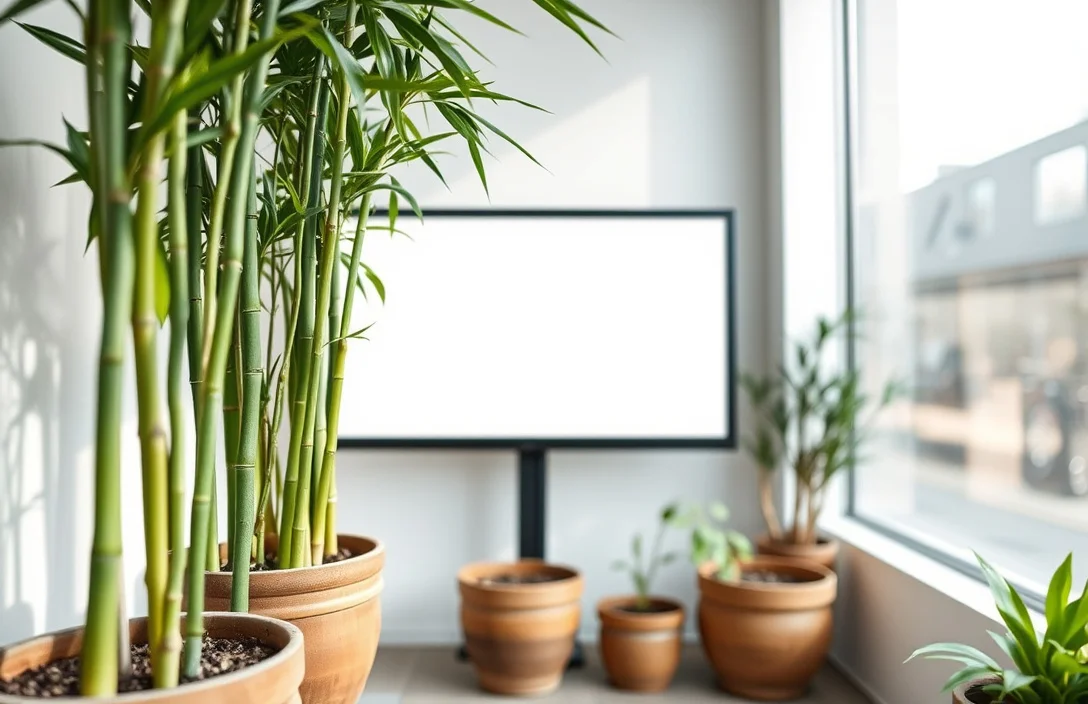
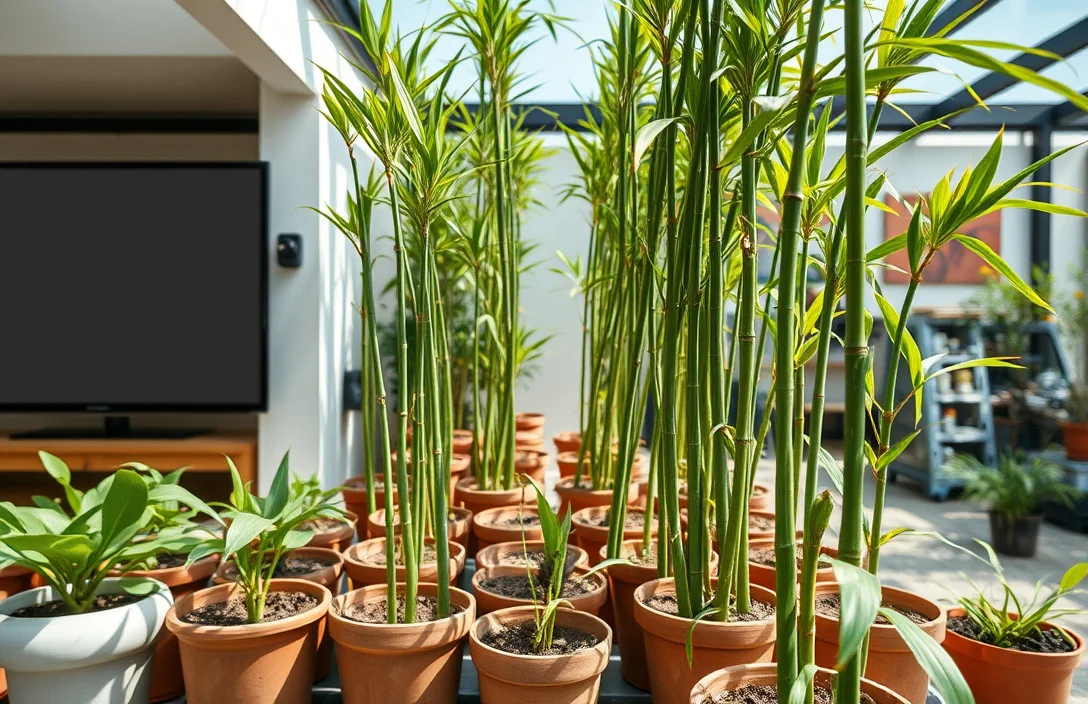
Growing bamboo in pots starts with choosing bamboo that behaves well in confined spaces, then setting up drainage so roots never sit in standing water. For most home gardeners, clumping bamboo (often sold as “clumping bamboo”) is the easiest route, because it spreads slowly in tight clusters instead of sending out long underground runners.
Before you buy, pick where the pot will live. Patio pots and balconies work, but the plant still needs light and airflow, and you will likely water more often than you expect on hot days.
You also need to plan for ongoing maintenance. Pot-grown bamboo eventually becomes root-bound, so you will repot or root-prune to keep growth healthy.
Basics of how to grow bamboo in pots?
Bamboo in pots is a root management problem and a water management problem. The plant can grow dramatically, but the container turns small errors into quick stress – drought, soggy soil, or freezing temperatures.
Soil and pot choice are the foundation. Use a pot with multiple drainage holes and a potting mix that drains well while still holding moisture. Straight garden soil compacts in containers, which reduces oxygen around the roots.
Light drives growth speed and leaf color. Most container bamboo does best in bright light that avoids harsh afternoon sun in very hot climates. In cooler regions, more sun is usually fine as long as watering stays consistent.
Watering needs to be frequent, not occasional. Pot bamboo dries faster than bamboo in the ground, and dry stress can cause yellowing and leaf drop. Aim for evenly moist soil, not constantly wet soil.
Bamboo follows seasons. Growth usually slows in winter, so reduce fertilizer and watering frequency, but keep the pot from fully drying out.
how to grow bamboo in pots?
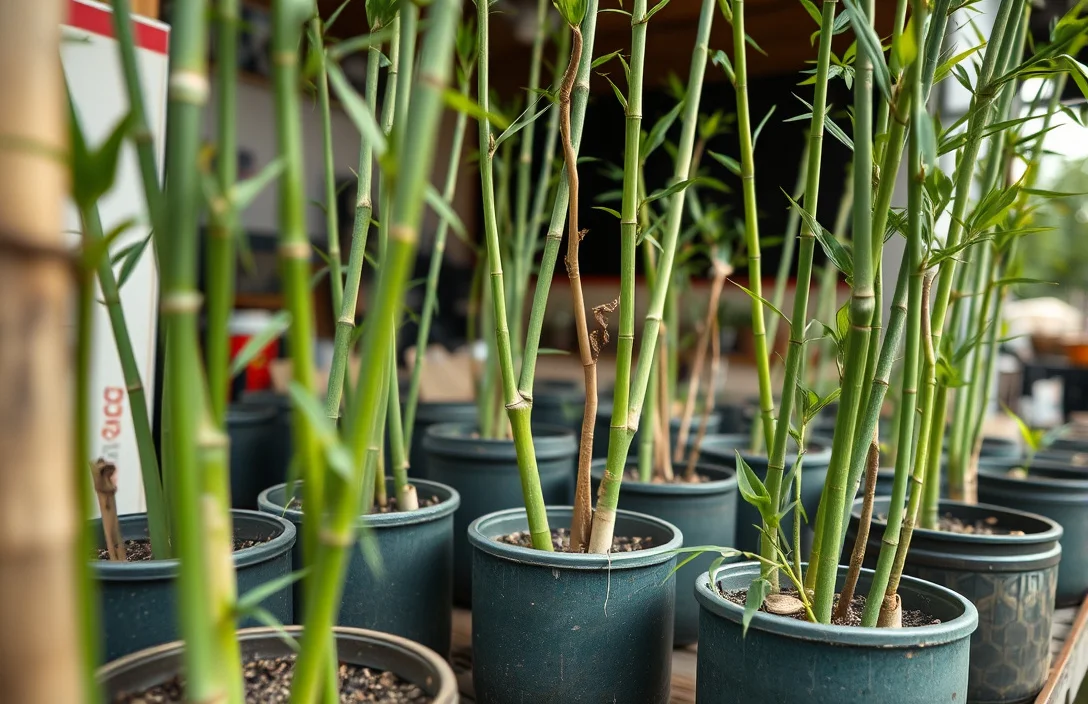
1) Pick clumping bamboo for containers. Choose labels that say clumping, not running. Running bamboo is the one that can spread beyond what a normal pot can contain.
2) Choose a large container with drainage. Start with a pot that is wider than the root ball and has multiple drainage holes. Use a heavier pot if you can (less tipping risk) and empty any saucer after watering.
3) Use a fast-draining potting mix. Pick a mix that stays crumbly, drains well, and still holds moisture. If it dries too quickly, mix in water-holding components like quality compost or coconut coir (small amounts) instead of switching to heavy garden clay.
4) Plant at the right depth. Keep the crown at about the same level it was growing in its nursery container. Planting too deep can trap moisture around the crown.
5) Water deeply right after planting. Water until excess drains out, then wait until the top layer starts drying before you water again. Deep watering helps roots establish across the whole pot.
6) Set up a simple light plan. Put the pot in bright light with steady airflow. If you start from shade, increase light gradually over 1-2 weeks to prevent shock.
7) Feed during active growth. Use a balanced fertilizer at a modest rate when new leaves form (spring through summer). Stop or reduce feeding when growth slows in fall and winter.
8) Prune and manage volume. Remove dead or yellow culms and thin crowded areas if the center gets dense. In pots, pruning also means keeping the root system under control.
9) Plan repotting or root-pruning. When growth slows while the plant looks crowded or the pot becomes a tight root mass, root-prune or repot into a slightly larger container. Many setups land at every couple of years.
Things that matter most
Root control matters most because container space limits growth. When bamboo becomes root-bound, it can look stuck even with good watering and fertilizing. Root-pruning (cutting back some outer roots) refreshes the root system and helps the plant restart strong growth.
Consistent moisture with excellent drainage keeps roots healthy. You want evenly damp conditions in the root zone, plus oxygen. Water thoroughly, then let the top portion of the mix dry slightly before watering again.
Use mulch carefully. A light layer helps stabilize moisture in summer. Keep it thin, because thick mulch that stays wet can keep the surface soil too cool and too wet.
Protect potted bamboo from winter freeze-thaw cycles. Ground bamboo handles cold differently because soil buffers temperature swings. In pots, freeze-thaw can damage roots. If you freeze, place the pot against a wall, insulate it, and prevent the pot from sitting in heavy water during hard freezes.
Turn the pot. Bamboo leans toward light, and wind can stress one side. Rotate the pot every couple of weeks for more even growth and sturdier structure.
Match technique to the bamboo type. Even clumping bamboo varies in sun and dryness tolerance. Crispy leaf tips or heavy yellowing usually point to water or light issues before you change everything.
What works in practice
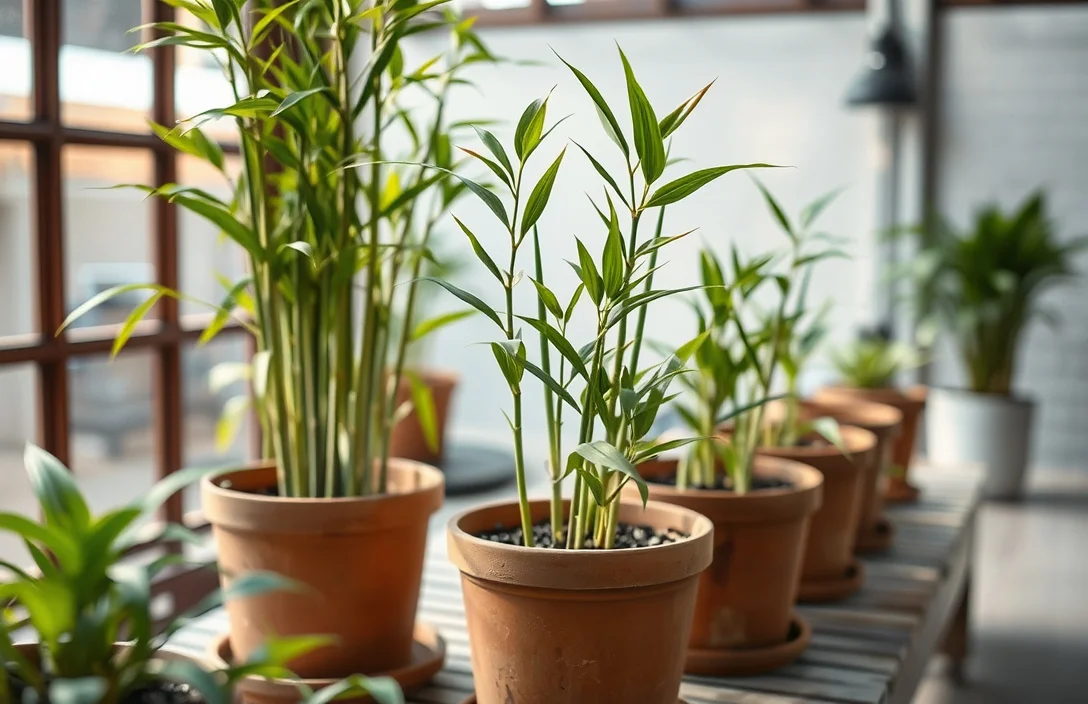
Start with a container sized for future growth, not just what you bought. A small starter pot delays repotting, but it also increases watering frequency and drought risk. A slightly larger pot early on makes maintenance easier.
Water by feel, not by a calendar. Heat changes drying speed from one day to the next. Check the top 1-2 inches of soil and water when it feels dry at that level, then water deeply.
Keep fertilizer conservative. Overfeeding can push weak, fast growth that struggles when conditions shift. Feed lightly and regularly during active growth, then reduce as temperatures cool.
Watch for the two classic pot-bamboo problems:
- Yellowing from too much water or poor drainage – the soil stays wet too long.
- Leaf browning from drought stress – the pot dries out repeatedly.
Use staged sun exposure when moving plants. Strong afternoon sun after shade or indoors can scorch leaves. Gradually increasing light over 1-2 weeks helps prevent damage.
If you want a quick checklist, use this:
- Pot has drainage holes and a stable base.
- Soil drains but holds moisture.
- Watering happens when top inches dry.
- Feeding is modest during spring and summer.
- Winter includes freeze protection for pots in cold regions.
Mistakes to Avoid with how to grow bamboo in pots?
Assuming all bamboo behaves the same in a pot usually fails. Running bamboo sends out aggressive rhizomes that can bypass barriers. Clumping bamboo spreads slowly in contained clusters, so it is far easier to manage. If underground spread escapes the pot, you can end up with bamboo everywhere.
Another common mistake is using garden soil or compacting potting mix. Garden soil often turns dense in containers, which reduces oxygen and increases root rot risk. If the soil stays soggy or smells sour after watering, fix the mix – not just the watering schedule.
Overwatering is frequent. Some people see wilting and water more, but with bamboo, wilting can also come from root stress when roots lack oxygen. If the soil never dries even a little, you are likely keeping it too wet.
Underwatering causes the mirror problem. Letting the pot dry out fully can trigger rapid leaf drop and weak regrowth. Bamboo can bounce back from short dry spells, but repeated dry-then-wet cycles sap energy.
People also over-fertilize when they see fast growth. Too much fertilizer can stress the plant, encourage weak growth, or burn roots, especially in smaller containers.
Finally, ignore winter conditions and you can lose roots. Potted bamboo is more vulnerable to freeze-thaw damage than in-ground bamboo. Leaving a pot exposed to repeated freezing and thawing can damage more roots than you expect.
Pro Tips for how to grow bamboo in pots?
Choose pot size based on how big the bamboo will get, not how big it looks on day one. A small starter pot delays repotting but increases watering frequency and drought risk. A slightly larger container up front helps you stay ahead.
If you buy a young plant and plan to keep it outdoors year-round, match container size to your watering habits. If you can water daily in summer, a smaller pot can work. If you want a buffer, go larger and add mulch lightly.
Root-trim early instead of waiting for “stuck” growth. When the plant becomes crowded, soil moisture turns uneven and water can run through without soaking the root zone. If you wait until the bamboo looks miserable, you often end up pushing recovery after it already lost momentum.
Check drainage after every repot. The first watering reveals mix issues like water-holding pockets or channels where soil compacts. Fixing soil structure early is easier than trying to recover roots that already suffered.
If your area gets strong sun and wind, add wind protection. Bamboo handles wind, but potted bamboo dries faster when wind accelerates evaporation. A sheltered corner reduces water use without cutting light enough to stall growth.
Use a simple monitoring routine:
- Check soil moisture 2-3 times per week in summer, less in winter.
- Inspect leaves for yellowing (often wet/poor drainage) or browning (often drought).
- Watch pot mass. If the pot feels much lighter, the root ball is drying quickly.
FAQ
How big of a pot do I need for bamboo in containers?
Choose a pot that is wider than the root ball and has multiple drainage holes. Larger pots dry out more slowly, which helps prevent drought stress. If your bamboo is getting crowded or soil dries unevenly, move up one pot size or do root-pruning. Exact pot size depends on the bamboo variety and its mature clump size.
How often should I water potted bamboo?
Water when the top 1-2 inches of the potting mix feel dry. In hot weather that can be every few days or even more often, while cooler seasons may be weekly. Always water deeply until excess drains out, then let the top layer dry slightly before watering again. Don’t rely on a fixed schedule.
Can bamboo in pots survive winter in the United States?
It can, but pots need extra protection because freeze-thaw swings damage roots more than stable ground temperatures. In freezing regions, move pots to a sheltered spot, insulate the container, and avoid leaving the pot in waterlogged conditions during hard freezes. Growth often slows in winter, so reduce fertilizer and water less often while keeping soil from fully drying out.
How do I prevent bamboo from spreading in a pot?
Use clumping bamboo rather than running bamboo. Keep the plant in a container designed for containment and regularly check around the base for any rhizome escape. If you see new shoots growing outside the pot edge, address rhizomes quickly and consider switching to a clumping type if containment is failing. Root-pruning also helps keep the plant contained.
What’s the most common mistake when growing bamboo in pots?
Using the wrong bamboo type (running bamboo) and/or a potting setup that stays too wet or dries out repeatedly. Running bamboo can escape containment, and poor drainage increases root rot while drought causes leaf browning and leaf drop. The fix is straightforward – choose clumping bamboo, use a well-draining mix, and water based on soil moisture rather than a calendar.
If you want the fastest path to success, buy clumping bamboo, pot it in a large container with real drainage, then start a “check top inches, water deeply” routine. Once you’ve got healthy green leaves, schedule root-pruning in 2-3 years so your bamboo keeps growing instead of stalling.

- 10 Best Slow Cooker For Large Kitchens 2026 (Tested And Reviewed) - October 19, 2026
- 10 Best Slow Cooker For Small Kitchens 2026 (Tested And Reviewed) - October 18, 2026
- 10 Best Slow Cooker For Kitchen Countertop 2026 (Tested And Reviewed) - October 18, 2026