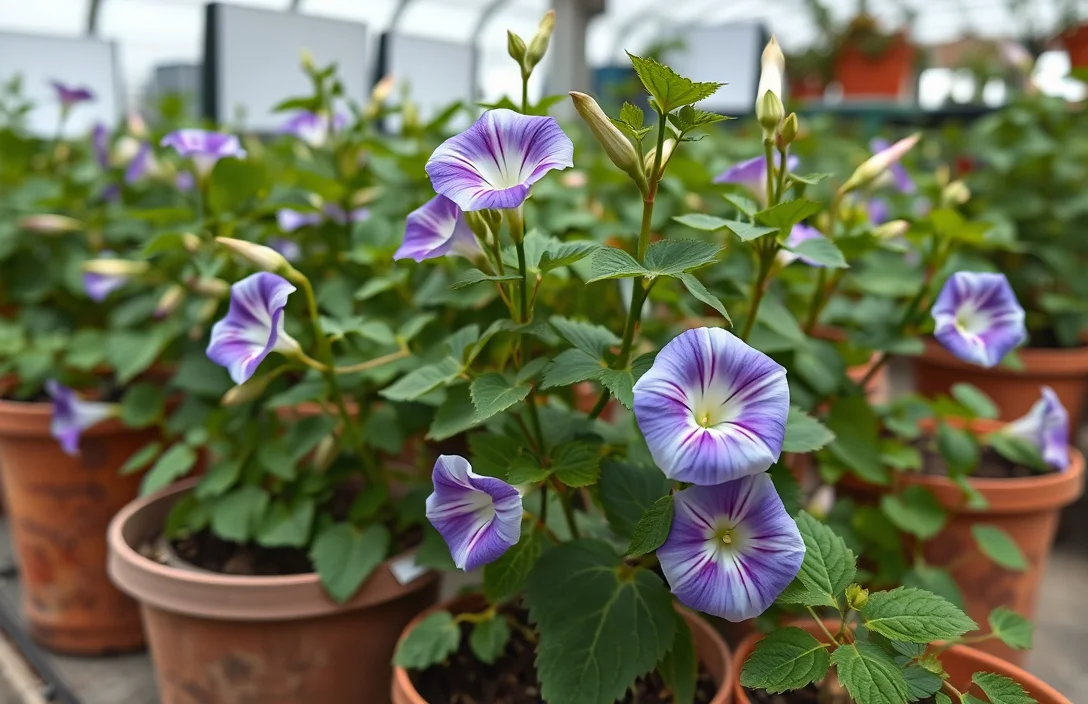
Can Morning Glories Grow In Pots?
Yes, morning glories can grow in pots, and many gardeners do it successfully across the United States. The trade-off is space, light, and drainage. These vines want room to climb, full sun to flower well, and soil that drains quickly. Get those basics right and you’ll be set from germination through flowering.
Morning glories can grow in pots when you use a deep, draining container (at least 12 inches wide), give it full sun, and water with a careful rhythm. Keep the soil evenly moist while seedlings establish, then water a bit less once the plant is actively growing. If the pot stays waterlogged, roots rot fast and the vine stalls.
Key Takeaways
- Yes, with the right pot. Use a pot at least 12 inches wide and deep for vigorous vine growth.
- Sun drives flowering. Give 6+ hours of direct sun so blooms start and keep coming.
- Drainage is non-negotiable. Use a pot with drainage holes and an airy potting mix.
- Support matters early. Add a trellis or stakes at planting so the vine can climb from day one.
- Water strategically. Keep soil evenly moist for seedlings, then water when the top inch dries.
- Expect self-seeding. Many varieties can reseed in the pot or nearby soil if you leave spent blooms.
What to Know About Growing Morning Glories in Pots
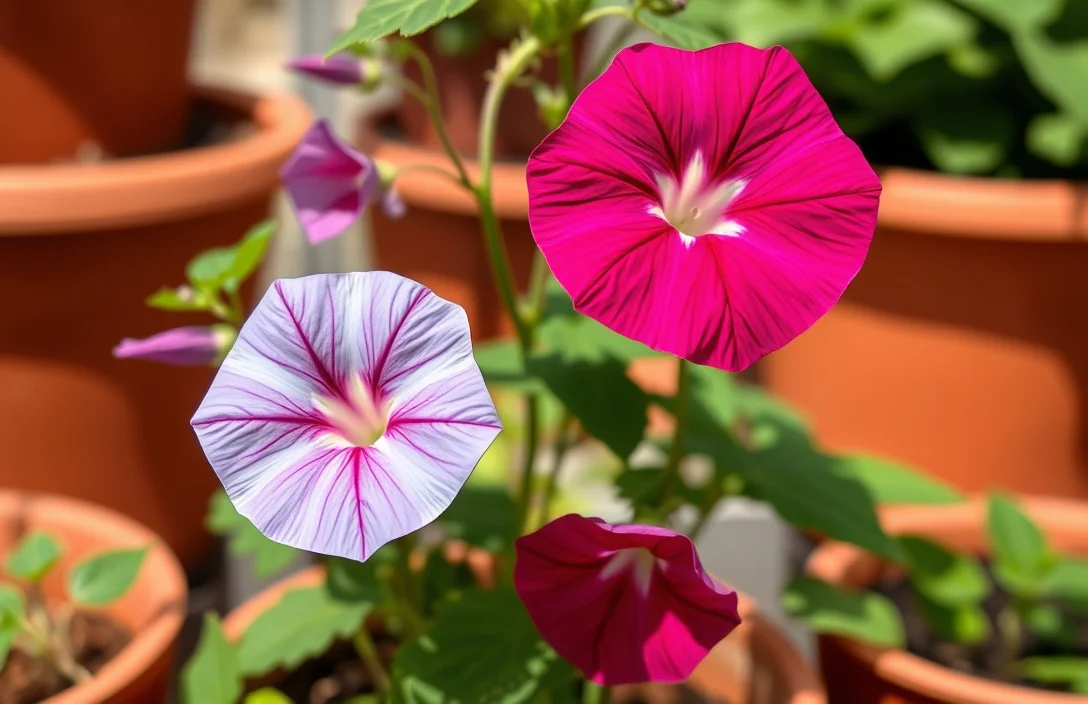
Morning glories are pot-friendly as long as you treat them like the fast climbers they are, not like small flowering plants. In a pot, they scramble up a trellis, drape across a railing, or climb a string-and-stake system – but they still need enough root space to grow strong.
Water management is the biggest challenge. Morning glories need consistent moisture while they establish, but they hate soggy roots. When a potting mix stays wet for days or drainage is poor, you can see yellowing leaves, slow growth, and weak or missing flowering.
These vines are also too vigorous for “temporary container” thinking. In a small pot, growth slows and flowering drops. In a reasonably sized container with a stable support, the plant can look great for the whole warm season.
Finally, plan for mess and spread. Morning glories can be untidy, and seeds can spread beyond the pot. If you have kids or pets, keep vines and dropped seeds out of reach, and wash your hands after pruning. If you want to avoid volunteers, be deliberate about reseeding.
Things that matter most
A reliable pot setup comes down to a few decisions you make up front, then light maintenance after. Get plant, water, support, and placement right and the rest is easier gardening.
Start with pot size. Many morning glory varieties form long, twisting stems, so a container that’s too small can crowd roots and suppress flowering. A pot at least 12 inches wide works as a solid baseline, and bigger is better if you want a fuller plant.
Choose the right light. Morning glories flower best with full sun, which means at least 6 hours of direct light. Partial shade can produce tall, leggy growth with fewer blooms.
Plan for drainage and soil texture. Use quality potting mix, not garden soil, and use a pot with drainage holes you can’t block. If you’ve had waterlogged planters before, improve airflow with perlite or similar amendments.
Install support early. Don’t wait until the vine is already scrambling – stems can tangle and break when you try to redirect them. A trellis, arched plant support, or sturdy stakes set at planting time makes training straightforward.
Here’s a quick checklist before you buy anything:
- Pot size. Aim for 12+ inches wide and deep.
- Drainage. Confirm multiple drainage holes.
- Sun. Target 6+ hours of direct sun.
- Soil. Use airy potting mix, not heavy garden dirt.
- Support. Add a trellis or stakes at planting time.
Tips for Growing Morning Glories in Pots
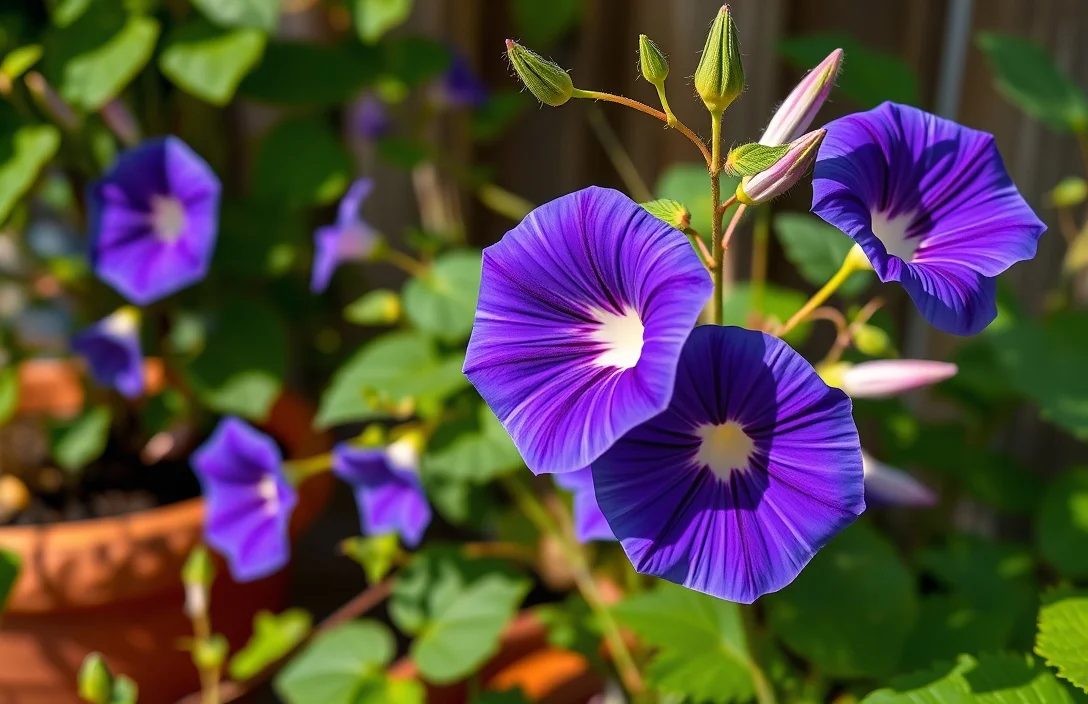
Begin with seed handling and setup, because morning glories do best when they get a good start in the pot. For many gardeners, soaking and planting seeds, then keeping the pot consistently moist until sprouting, is the fastest route.
Soak seeds for 12 to 24 hours before planting (unless your seeds are already pre-treated). Morning glory seeds have a hard coat, and soaking can improve germination. After soaking, plant just below the surface and keep the pot warm.
Use a “not too wet, not too dry” watering rhythm. During germination, keep the top layer slightly moist. After seedlings emerge, water when the top inch of soil feels dry, then water thoroughly until you see runoff from the drainage holes.
Feeding is optional, but it helps potted vines if you want more blooms. Use a balanced fertilizer or a flowering-focused option, but don’t overdo it. Too much nitrogen drives leafy growth with fewer flowers. If you add compost, keep it light because it can hold water too long in containers.
Train the vine as it grows. Morning glories wrap naturally, but you can guide new growth toward the trellis. Check every couple of days early on, especially once it starts reaching and sprawling in random directions.
If the pot dries completely between waterings, flowering can slow down. Containers heat up quickly in summer, so consider mulching the top of the soil or placing the pot where the root zone stays cooler – while keeping full sun on the foliage.
For a longer display, manage seed production. Removing spent blooms often encourages more flowers on many varieties. If you want volunteers later, leave a few blooms to mature.
Benefits of Growing Morning Glories in Pots
Growing morning glories in pots gives you control you don’t get in open ground. You can place the pot for maximum sun, move it as conditions change, and contain the spread if you don’t want vines roaming through the yard.
Pots also create a vertical garden look without committing to in-ground planting. With a trellis, a pot can become a compact “flower wall” for patios, balconies, fences, or small entryways. The climbing habit turns a small footprint into a big visual payoff.
You also get better soil and drainage control. In many parts of the United States, heavy or compacted soil can lead to root problems. A quality potting mix with good drainage lowers the risk of rot and makes watering more predictable.
Cleanup is easier, too. Morning glories can be vigorous and a little chaotic near walkways. With a container, you can prune, lift, or refresh the setup without digging out a tangled root system.
Pots make experimentation simpler. If you’re new to morning glories, a container helps you see how light, watering, and support affect flowering. Adjust one variable at a time and you’ll quickly learn what works in your exact conditions.
Options for Growing Morning Glories in Pots
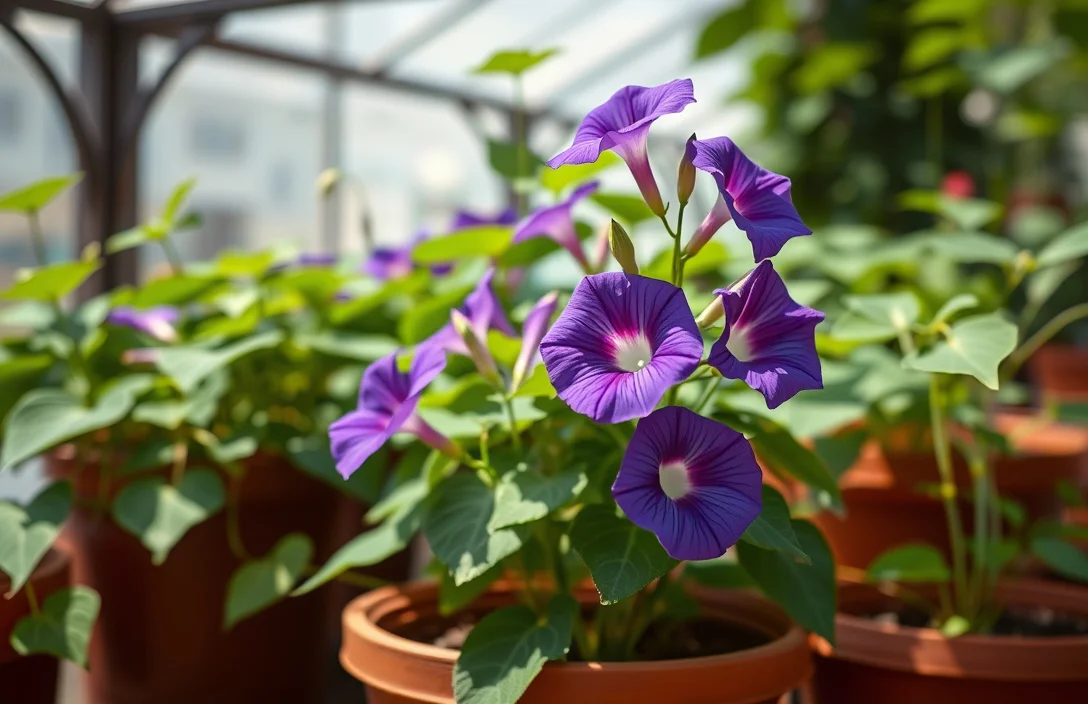
You have several solid pot styles and setups, and the best choice depends on whether you want a trellis effect, a trailing look, or maximum blooms. These options work well for most U.S. home gardens.
Container types that work
- Wide plastic or fiberglass pots. Lightweight and warm up quickly, which can help growth early in the season.
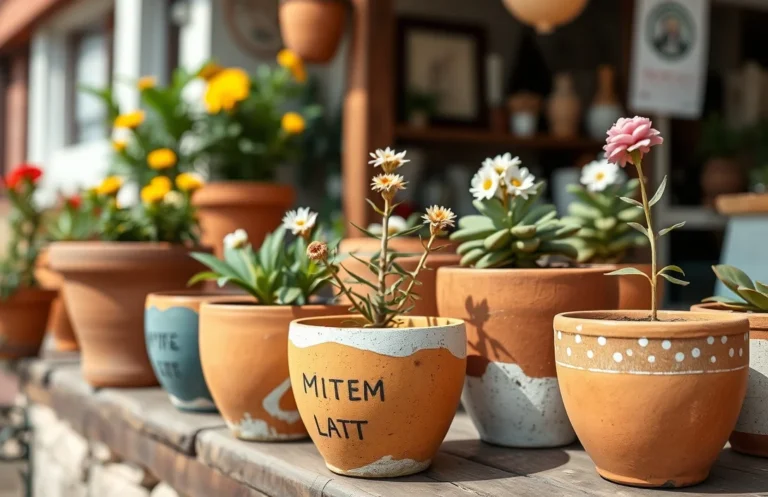
- Clay or terracotta pots. Breathable and attractive, but they dry faster, so you’ll water more often.
- Fabric grow bags. Excellent drainage and airflow, but they also dry quickly in hot weather.
- Self-watering planters (with caution). Only use them if the system prevents chronic wet roots.
Trellis and training setups
Morning glories thrive when they can climb, and that’s usually the difference between “thin vines” and a real flowering display.
- Triangular corner trellis. Maximizes vertical growth in tight spaces.
- Arched plant trellis. Builds a curved floral frame.
- Stakes with twine. Budget-friendly and easy to adjust.
- Wall-mounted or railing supports. Ideal for patios and balconies.
If you’re choosing pot material, match it to your watering habits. If you forget watering, a larger plastic pot or bigger container holds moisture longer. If you tend to overwater, pick a faster-draining option and stay focused on checking the top inch of soil before watering again.
Practical Advice for Growing Morning Glories in Pots
Prioritize drainage, sun, and vertical support. Most container problems come from waterlogged soil, too little light, or support that arrives too late.
For dependable flowering, place the pot where it gets full sun most days. Morning glories are strong performers in warm-season sun, and limited light often turns them into a tall vine with fewer blossoms. If you’re growing indoors or in shade, container results usually disappoint.
Don’t rush root disturbance if you start from seed. Morning glories can be sensitive when their roots get disturbed. Starting in the pot you’ll use long term is the simplest way to avoid stress.
Use pot size as your safety net. A larger pot reduces swings in moisture and temperature, which means fewer stressed days and steadier flowering. If container plants “suddenly fail” during hot weeks, moving up to a bigger container often fixes it.
Maintenance that actually helps:
- Check moisture daily in peak heat.
- Water deeply, then let the top inch dry slightly.
- Train early so stems don’t tangle.
- Light feeding after you see active growth.
One more real-life safety point: contain seeds and seed pods. Morning glories are prolific seeders, and in small outdoor spaces those dropped pods can create unwanted volunteers. Deadhead regularly and clean up fallen seeds if you want controlled growth.
Examples of Morning Glories in Pots
A common sunny U.S. patio setup uses one 12 to 14 inch pot with a small trellis inserted at planting time. The gardener plants soaked seeds (or starts with seedlings), places the pot in full sun, and waters when the top inch dries. Within a few weeks, the vine wraps the trellis and produces repeated morning blooms as long as heat and sun stay steady.
Balcony gardeners often do well with a railing-friendly support system and a wider pot to reduce fast drying. Wind can be a real issue on balconies, and flimsy support can lead to sway and damage. A heavier container and sturdier trellis help, and frequent soil checks prevent the “dried out overnight” problem.
For a backyard fence, you can space multiple pots a few feet apart and treat each pot like its own section of living border. Train each vine to its own trellis section so neighboring plants don’t tangle. This also makes it easier to remove one plant if it becomes too unruly without digging up an entire bed.
If you want a hanging look, choose a pot with a trellis or arch so vines have something to grab. Planting in a hanging basket with no climbing structure usually results in long, trailing stems that look thin. Morning glories perform best when they can climb and spread upward.
Want to learn which conditions work in your yard? Try two pots: one in full sun and one in partial shade. Even with similar watering, full sun typically produces faster growth and more flowers. That light difference is one of the clearest lessons you can get from container growing.
FAQ
Can morning glories grow in pots on a balcony?
Yes, as long as the pot gets enough sun and the vines have support to climb. Aim for 6+ hours of direct light. Use a container with drainage holes and water when the top inch of soil dries. Add a railing trellis or stakes at planting time so the vine doesn’t flop and tangle.
What size pot is best for morning glories?
A pot at least 12 inches wide is a practical minimum for healthy growth. Bigger containers hold moisture more steadily, which helps during hot U.S. summers. Make sure the pot is deep enough for roots and has multiple drainage holes so water doesn’t sit at the bottom.
How often should I water morning glories in pots?
Water based on soil dryness, not the calendar. When seedlings are establishing, keep the top layer slightly moist. After that, water thoroughly when the top inch of soil feels dry, then let runoff drain fully before returning the pot to its spot.
Do morning glories need fertilizer in pots?
They usually benefit from light feeding once they start active growth, especially in containers where nutrients wash out faster. Avoid heavy nitrogen, which can push leaves instead of flowers. A balanced fertilizer at a conservative rate typically supports consistent blooming.
Will morning glories reseed in a pot?
Many varieties produce seed pods that can drop into the pot or nearby soil. If you want to control spread, deadhead spent blooms and clean up dropped seeds. If you’re fine with volunteers, leaving a few blooms to mature can create next season’s plants with minimal extra work.

- 10 Best Slow Cooker For Slow Cooking Oxtail 2026 (Tested And Reviewed) - October 16, 2026
- 10 Best Slow Cooker For Slow Cooking Venison 2026 (Tested And Reviewed) - October 16, 2026
- 10 Best Slow Cooker For Slow Cooking Turkey 2026 (Tested And Reviewed) - October 16, 2026