Is Titanium Safe For Cookware?
Titanium cookware is usually safe because titanium is a stable, low-corrosion metal. The real question is whether the cooking surface is actually titanium (or titanium-lined) and how that surface handles heat, abrasion, and acids. This guide answers whether titanium cookware is safe, then helps you buy and use a pan without nasty surprises.
Titanium cookware is generally safe when real titanium (or a titanium-lined surface) touches food and you use it as directed. Titanium itself resists corrosion, but “titanium cookware” can also mean a titanium coating or a “titanium-colored” layer over another metal. If the surface gets scratched through, safety depends on what’s underneath.
Key Takeaways
- Titanium is corrosion-resistant. That’s why it holds up in harsh environments.
- Surface material matters. “Titanium cookware” can mean solid titanium, titanium coating, or a marketed finish over another metal.
- Scratches are the main risk. Once you grind through a layer, you change what contacts food.
- Heat is usually fine. Titanium tolerates high temperatures without the melt-fail behavior you can see in lower-grade cookware metals.
- Acids rarely dissolve titanium. Tomato, citrus, and vinegar are less concerning with titanium than with reactive metals.
- Use it like metal cookware. Skip aggressive abrasives and metal tools if the surface is nonstick-like or coated.
Is Titanium Safe for Cookware?
Titanium is safe in cookware because it is lightweight, strong, and low-corrosion. Low corrosion is the key property that reduces how much the metal reacts with typical foods, including water, salt, and most sauces.
The label can be misleading. Some pans use a titanium coating on top of another base metal. Others use titanium-based composites. Some are mostly stainless steel with a titanium color or finish. What matters is the layer that actually touches food and whether that layer survives cooking, cleaning, and normal wear.
In practice, titanium pans tend to be safer than reactive metals like uncoated aluminum or bare cast iron because titanium resists corrosion instead of encouraging metal pickup. The main thing to watch is abrasion. If you scratch deeply enough to expose the underlying material, your cookware no longer behaves like a titanium-surface pan.
Things that matter most
Titanium is generally considered safe because it is low-corrosion and often used as a stable metal layer. In a kitchen, that means less worry about metal reacting with normal acidic foods like tomato, vinegar, or citrus compared with more reactive cookware materials.
The biggest real-world factor is surface integrity. If the “titanium” pan has a thin layer, rough cleaning and hard utensil scraping can reduce the protection that keeps the cooking surface consistent. Treat it like it has a finish layer, not like it can handle sandpaper-level scrubbing.
Also don’t over-trust marketing terms. “Titanium nonstick” and “titanium infused” can refer to a coating or surface treatment, not a guarantee that the pan is solid titanium end-to-end. To decide whether titanium is safe for cookware in your kitchen, confirm what’s actually on the food-contact surface: solid titanium, titanium coating, or a titanium-style finish over another metal.
Use this checklist while shopping and after delivery:
- Check what touches food. Look for wording that specifies titanium on the cooking surface.
- Inspect the finish. A uniform surface is a good sign; patchy discoloration can be normal seasoning, but flaking is not.
- Read care instructions. If it warns against metal utensils or harsh scrubbing, treat that as a constraint on safety and performance.
- Watch for deep scratches. Surface scuffs are often cosmetic; gouges that reveal a different metal are a “stop and reassess” moment.
Tips for Using Titanium Cookware Safely
Start with moderate heat and normal technique. Titanium itself handles high temperatures well, but many “titanium” cookware products rely on a specific surface texture or coating behavior. Constant maximum heat can wear those layers faster.
Clean gently. If the cookware has a nonstick-like titanium surface, harsh abrasives can wear it down and expose whatever sits underneath. Use a soft sponge, warm water, and mild detergent, then dry thoroughly to reduce spotting and stress at edges and seams.
Match your cooking expectations to the pan’s actual surface. Some titanium-surface pans act more like nonstick (especially with textured or ceramic-like coatings). Others behave more like stainless or bonded metal. If food starts sticking, don’t immediately switch to a steel scrubber. Preheat properly, use a thin layer of oil, and then troubleshoot from there.
Use utensils that match the manufacturer’s stated care. If metal tools are discouraged, follow it. Protecting the surface keeps the food-contact layer stable, which is the real basis for “safe.”
Benefits of Titanium Cookware (When It’s Actually Titanium)
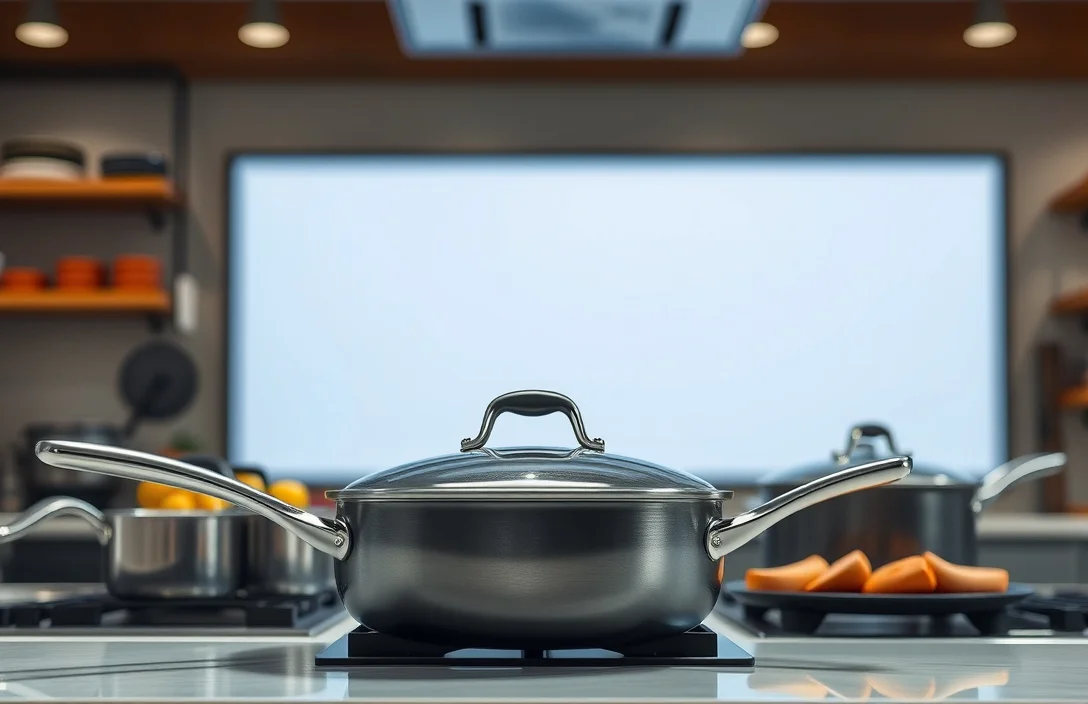
The main benefit is titanium’s low-corrosion nature, which reduces worry about metal reacting with food. That matters because most cooking involves moisture, salts, and occasional acidity.
Titanium-based cookware also offers durability and heat tolerance in typical stovetop use. Titanium is strong, and when it’s used as the cooking surface (or as a substantial layer), it can resist warping better than thin, reactive coatings.
Some titanium-surfaced pans are marketed for low-oil cooking. Whether that translates to meaningful “healthier” outcomes varies by brand and is hard to verify broadly, but the practical upside is easier release of food and fewer scorched bits. That can also reduce how aggressively you need to scrape during cleaning.
The trade-off is straightforward: titanium-coated cookware can still wear out. Over time, you should judge by what the surface looks like, not by what the label says.
Product Types and What “Titanium” Usually Means
Three product categories show up most often, and safety changes with each one.
| Option you buy | Key spec (what to look for) | Best for | Safety reality check |
|---|---|---|---|
| Solid titanium cookware | Real titanium construction, specified as titanium on the cooking surface | People who want “material-first” cookware | Highest consistency because food contacts the same metal |
| Titanium-coated cookware | Titanium layer bonded or applied to a base metal | People who want titanium marketing plus nonstick-like behavior | Safety depends on layer thickness and how well it resists scratches |
| Titanium-finish cookware | Titanium color/finish over another metal (often aluminum or stainless) | People who want an easy-care look | Treat it like the underlying metal once the finish is worn |
Most shoppers in the United States encounter titanium-coated or titanium-finish cookware more than solid titanium pots and pans. That’s not automatically unsafe, but it does mean you should factor surface wear into whether it’s still “titanium safe” in the way you expect.
For the simplest safety path, prioritize products that clearly state titanium on the cooking surface and include care guidance that protects against abrasion. If you buy cheaper sets with vague “titanium” descriptions, you’re more likely to end up with unknown food-contact material after early wear.
Expert Guidance on Titanium Safety
Follow the manufacturer’s care instructions, especially around utensils and abrasive cleaning. Titanium’s low-corrosion helps it resist the typical chemistry problems, but no metal layer stays safe once it’s physically worn down or scraped through.
Let surface integrity decide your choice. If the titanium portion is intact, you get the corrosion resistance and stability you’re paying for. If you see gouges, flaking, or exposed base metal, replace the pan or stop using it for high-acid or long-soak cooking.
Avoid habits that accelerate wear. Chasing maximum heat, constant dry high-temperature cooking, and abrasive cleaning shorten the life of coated surfaces. That shortens the window where the pan behaves like the label implies.
If you have allergies or are very sensitive to metal contact, prioritize material clarity. Choose products that specify the cooking-surface material rather than relying on branding terms. In cookware, clarity is safety because it tells you what is actually contacting food.
Examples from real users
A common “good news, read the label” example is a titanium-surfaced pan marketed as having a 100% pure titanium cooking surface. If that claim is accurate, the food is primarily contacting titanium instead of relying on a thin coating, which reduces uncertainty when the surface eventually wears.
Another example is a “titanium nonstick” skillet where titanium is mostly a descriptive finish while the base is another alloy. The pan may still perform safely during normal use, but heavy scratching and abrasive cleaning can change the food-contact layer sooner than you’d expect from solid titanium.
For everyday cooking, treat both types similarly at first: use gentle cleaning, preheat correctly, and avoid scraping residue with tools the manufacturer discourages. If you later notice deep scratches or peeling, reassess safety because you no longer have the same surface.
If you frequently cook tomato sauce and the pan shows wear, you may notice more sticking and discoloration around scratches. Performance drops first, but visible wear also means the surface is no longer uniform, which matters for the “safe” part of the question.
FAQ
Is titanium safe for cookware if the pan is scratched?
Scratches become a safety concern when they remove the “titanium” portion meant to contact food. Shallow scratches that leave the surface intact usually carry low risk. Flaking, peeling, or exposed different metal underneath means you should stop using it for cooking and consider replacing it.
Does titanium cookware leach metal into food?
Titanium’s low-corrosion behavior makes it less likely to react and release ions under typical cooking conditions. The bigger practical issue is coating integrity and abrasion, not titanium “melting” or dissolving. If a titanium-coated surface is worn down, you’re no longer contacting titanium, so leaching concerns shift to the exposed underlying material.
How long does titanium nonstick safety last?
There’s no universal lifespan. It depends on how thick the titanium-related layer is and how abrasive your cleaning is. When the pan loses smoothness, starts flaking, or exposes base metal, treat that as the end of “safe-as-titanium” performance. Follow the manufacturer’s utensil and cleaning guidance to slow wear.
Can I use titanium cookware with acidic foods like tomato sauce?
Titanium’s low-corrosion nature makes it generally suitable for acidic foods in normal use. The limit is surface condition. If the cooking surface is worn or scratched, reduce long simmers and high-acid cooking until you replace the pan.
What’s a safer alternative to titanium cookware?
Stainless steel is a common alternative because it’s widely used for food-contact cookware and is less reactive than reactive metals. If you want nonstick-like behavior without coating-wear anxiety, consider ceramic-coated options from reputable brands and replace them when the surface degrades. If you want “buy once” simplicity, choose cookware that clearly states the food-contact material and offers straightforward care instructions.
Titanium cookware is generally safe when it’s truly titanium on the cooking surface and you keep that surface intact. Check the product description for what actually touches food, then follow utensil and cleaning instructions so the titanium part stays the part your food contacts.

- 10 Best Slow Cooker For Mess Free Cooking 2026 (Tested And Reviewed) - October 24, 2026
- 10 Best Slow Cooker With Leak Resistant Lid 2026 (Tested And Reviewed) - October 24, 2026
- 10 Best Slow Cooker With Spill Proof Design 2026 (Tested And Reviewed) - October 24, 2026