Can Crock Pots Go In The Dishwasher?
Yes, but only the removable parts – usually the ceramic crock and the lid – and only if your model’s manual says they’re dishwasher-safe. The heating base, cord, and temperature controls never go in the dishwasher. Most manufacturers build the ceramic pot and (sometimes) the lid for dishwasher cleaning, while the powered base must stay dry and away from water jets.
Key Takeaways
- Heating base stays out. Do not put the powered base, temperature controls, or power cord in the dishwasher.
- Ceramic crock often is. Many removable ceramic crocks handle a standard dishwasher cycle.
- Lids vary. Glass lids are sometimes dishwasher-safe, but some require hand washing.
- Skip harsh cycles. Avoid sanitize or “extra heat” settings if your manual warns about thermal stress.
- Pre-rinse beats scraping. Remove thick food first, then let the dishwasher handle residue.
- Damage is usually preventable. Cracks, dull finishes, and warped lids typically come from washing the wrong parts or using harsh cycles.
What Actually Is (and Isn’t) Dishwasher-Safe?
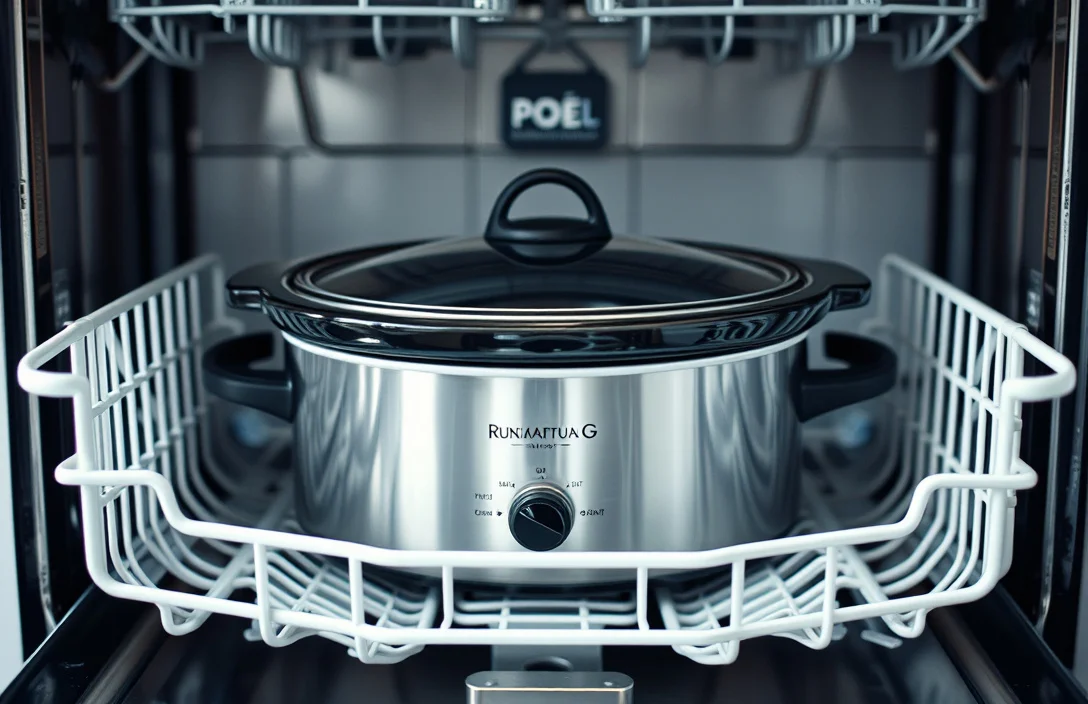
“Crock pot” is the name people use for the whole appliance, but dishwashing only applies to the pieces designed for it. The ceramic crock and, sometimes, the lid are what you clean. The heating base is what you protect.
Two rules keep you out of trouble. First, never put the electrical base – including the temperature controls, power cord, or plug – in the dishwasher. Second, treat any “hand wash” marking on the crock or lid as a hard stop, since ceramic glazes and some glass lids can be sensitive to high-heat cycles.
A quick decision helps when you’re in a rush: if the part disconnects and has no electrical components, it’s more likely dishwasher-safe. If it doesn’t disconnect – or if seams or openings sit near the controls – skip the dishwasher and wash by hand.
Things that matter most
A crock pot is a mix of materials. Ceramic and glass usually tolerate dishwashers better than plastics, metal inserts, and any area near wiring or electronics.
Check for these signals before you run a cycle:
- “Dishwasher safe” printed on the crock or lid usually means it’s okay, but it can also come with limits like top rack only or gentle cycle.
- No dishwasher-safe label in the manual means you should assume hand washing is safer.
Cycle choice matters. High-heat and sanitize settings can increase thermal stress and slowly cause tiny cracks or glaze “crazing.” Long, hot cycles can also loosen stubborn gunk around lids and handles – which means more residue where you don’t want it and extra cleaning later.
| Crock pot part | Usually dishwasher-safe? | Common caveat |
|---|---|---|
| Removable ceramic crock | Yes, often | Top rack only, avoid sanitize if warned |
| Removable glass lid | Sometimes | Some lids are hand-wash only to prevent edge damage |
| Plastic lid parts (if applicable) | Mixed | Can warp or discolor in hot cycles |
| Heating base | No | Keep dry, never expose to dishwasher water |
| Temperature probe (if removable) | Usually no | Electronics should be wiped only |
Best Tips for Cleaning Without Damage
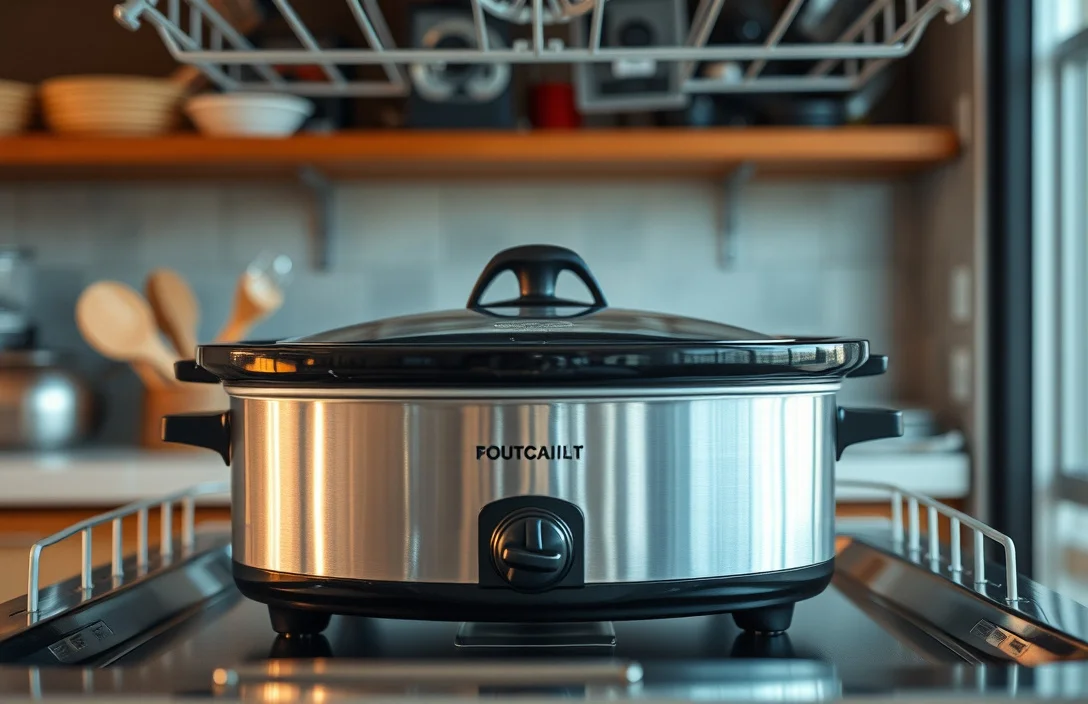
Work in a simple order: disassemble, check, then load. Pull the crock and lid, look for dishwasher instructions, rinse out thick food, and only then run the dishwasher. This one step prevents baked-on bits from turning into permanent stains and keeps you from needing extra-scrubby cycles.
Pre-rinsing protects the finish. Grease and starchy sauces can cling more than people expect, especially after they’re heated and spread around in the dishwasher. A quick rinse helps your dishwasher clean without cranking up heat or time.
Load like you’re trying to prevent chips and edge wear:
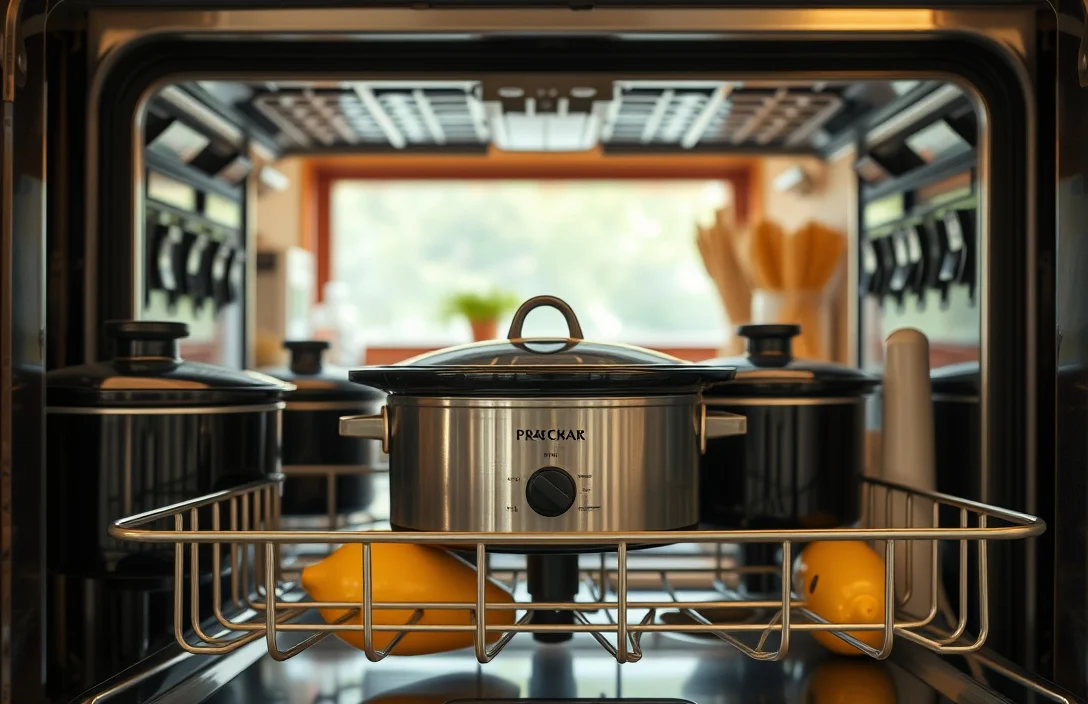
- Top rack for the crock is the safest default.
- Keep the crock away from direct blasts from the sprayer.
- Don’t nest hard items on top of it.
- Put lids where they can’t rattle or get struck by other dishes.
For stuck-on food, soften first. Soak the crock in warm water with a bit of dish soap for 10 to 20 minutes, then scrub lightly with a non-abrasive sponge. Avoid steel wool or aggressive scrapers on ceramic glaze – scratches catch stains later and make future cleaning harder.
What You Gain by Dishwasher Cleaning
Dishwasher-safe parts save time, especially after saucy meals. Instead of washing and drying everything by hand, you can clean the ceramic crock and lid and move on.
Dishwashers also handle crevices more consistently. Hot water and detergent circulation reach around lid rims and handles that are easy to miss during hand washing – assuming you use the correct parts and don’t damage them with harsh settings.
The trade-off is wear over time. Even if your crock is dishwasher-safe, repeated cycles can dull the finish or make stains harder to remove. Lighter cycles, top-rack placement, and occasional hand washing help it stay looking better longer.
Practical Options for Different Mess Levels
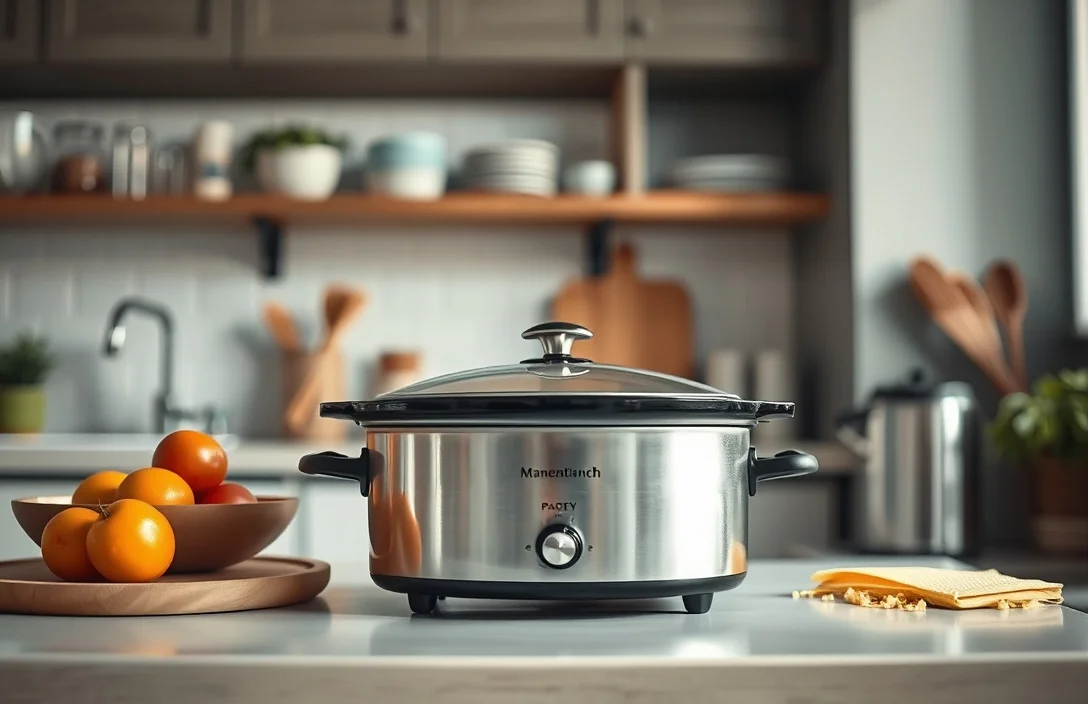
If your crock and lid are dishwasher-safe, you still have choices. For normal leftovers, run a standard clean. For thicker dishes – like tomato-based sauces or cheesy meals – a quick soak before the dishwasher helps loosen residue so it doesn’t bake on.
When the lid or crock says hand wash only, stick with it. Wash with warm soapy water and a non-abrasive sponge, then air dry. For stubborn residue, soak first – scrubbing dry ceramic risks surface damage.
You can also mix methods. For example, wash a glass lid by hand if it has a sensitive edge or marking, then run only the ceramic crock in the dishwasher. That approach reduces wear on the parts that need the most protection while still saving time.
Storage matters too. Let the crock cool fully, then rinse soon after cooking if you can. Dried-on food is what turns cleanup into a chore, regardless of whether you use the dishwasher.
How to Avoid Common Problems
Treat the heating base like electronics – it should stay dry. Water exposure can damage electrical components, and issues can appear later even if everything looks fine at first.
When in doubt, follow markings first and be conservative otherwise. Use the gentlest cycle available, place the crock and lid on the top rack, and skip sanitize or “extra hot” modes unless your manual explicitly allows them.
Thermal shock is another risk. Don’t drop an extremely hot crock into cold water, and don’t move from hot food directly into dishwasher heat extremes. Let it cool to safer room temperature before cleaning.
Avoid abrasive cleaners during pre-rinse. Harsh pads can leave micro-scratches on ceramic glaze or glass, and that’s where stains love to cling. Use a non-abrasive sponge, or do a soak plus a gentle wipe.
Real-World
If you cooked chili and the crock looks cloudy after a dishwasher cycle: check that the crock and lid are marked dishwasher-safe. Rinse out chunks, load on the top rack, and run a normal cycle. If film still remains, run a second cycle or switch to a hand wash with warm water and dish soap using a non-abrasive sponge.
If your lid is glass and has a “hand wash” mark near the rim: skip the dishwasher for the lid. You can still dishwasher-clean the ceramic crock if it’s marked safe. This keeps edge wear and lid damage less likely while keeping cleanup fast.
If you’re tempted to wash the whole unit: don’t. If the crock pot doesn’t have a fully removable crock and lid – or if the base stays attached – keep it out of the dishwasher. Wipe the base with a damp cloth, then dry it completely.
For hardened cheese sauce: soak the crock in warm soapy water for 10 to 20 minutes, then run the crock in the dishwasher if your model allows it. If residue remains, adjust loading so the crock isn’t blocking sprayers and avoid overstuffing.
FAQ
Can I put the whole crock pot in the dishwasher?
No. The heating base, cord, and temperature controls should never go in the dishwasher. Only removable parts – typically the ceramic crock and lid – should go in if they are marked dishwasher-safe.
Are all crock pot lids dishwasher-safe?
Not always. Glass lids are often dishwasher-safe, but some brands require hand washing, especially when the lid has plastic components or a sensitive rim. Check markings on the lid or the manual before using the dishwasher.
How do I clean a crock pot if it says “hand wash only”?
Soak the crock in warm water with dish soap for 10 to 20 minutes, then clean with a non-abrasive sponge. Avoid steel wool or aggressive scrapers that can scratch ceramic glaze, then air dry fully.
Will dishwasher cleaning ruin a ceramic crock?
Dishwasher-safe ceramic usually holds up well, but repeated cycles can reduce finish quality over time. To minimize wear, use the top rack, choose a standard cycle, and avoid sanitize or “extra heat” settings unless your manual explicitly allows them.
What’s the most common mistake people make?
Putting the heating base in the dishwasher. The second most common mistake is using harsh dishwasher heat or abrasive scrubbing on parts that are only “hand wash” or are sensitive to thermal stress.

- 10 Best Slow Cooker For Slow Cooking Legumes 2026 (Tested And Reviewed) - October 17, 2026
- 10 Best Slow Cooker For Slow Cooking Oxtail 2026 (Tested And Reviewed) - October 16, 2026
- 10 Best Slow Cooker For Slow Cooking Venison 2026 (Tested And Reviewed) - October 16, 2026