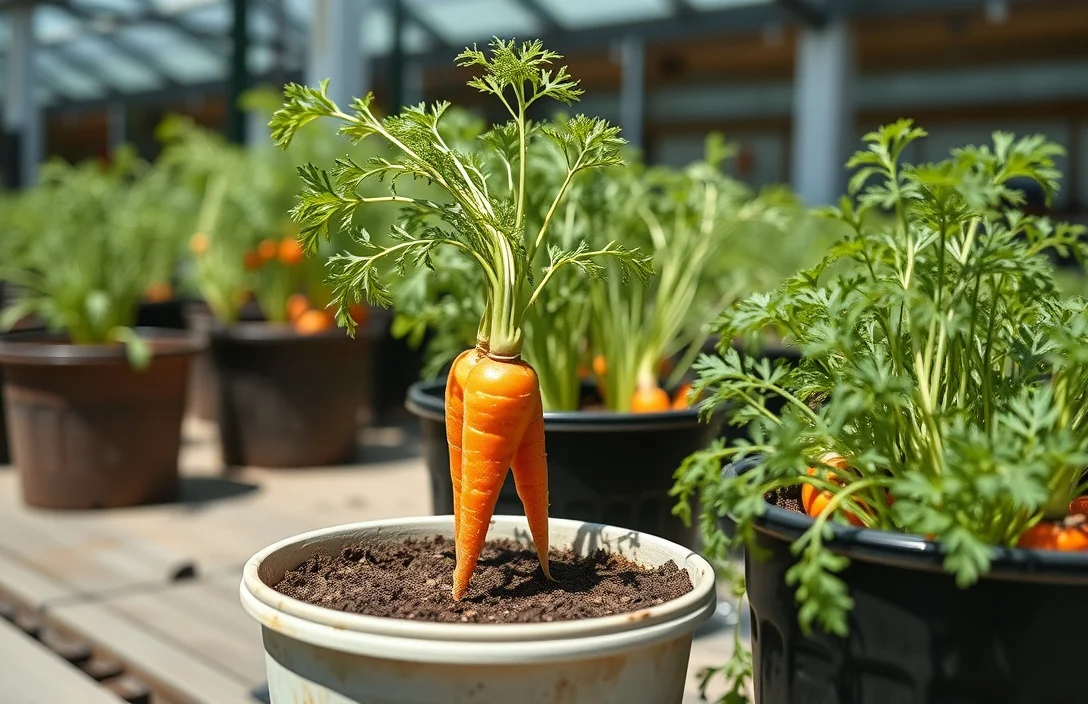
Can Carrots Grow In Pots?
Yes, carrots can grow in pots. The trick is matching the container size and depth to the carrot variety, then keeping the soil consistently loose and evenly moist. This guide walks you through what to know, what to avoid, and how to set up a pot that produces real carrots in the United States, even if you only have a patio or balcony.
Carrots grow in pots if the container is deep enough – at least 10 inches for small types, 12-15 inches for most – and filled with soil that stays loose and stone-free. Water so the top inch stays evenly moist, not soggy and not dried out. Use a lightweight potting mix, sow thinly, then thin seedlings to prevent misshapen roots.
Key Takeaways
- Yes, with the right pot. Use at least 10 inches of depth for small carrots and 12-15 inches for most varieties.
- Soil must be loose. Choose a fresh, fine-textured potting mix with no chunks or rocks.
- Thin early for straight roots. Space seedlings about 2-3 inches apart once they’re a few inches tall.
- Keep moisture steady. Letting soil dry out and then flooding can split roots or slow growth.
- Cool-season timing helps. Carrots usually do best in spring or fall when temperatures are milder.
- Pick compact varieties. “Nantes” and “Thumbelina” types are easier in smaller containers than long carrots.
What to Know About carrots in pots
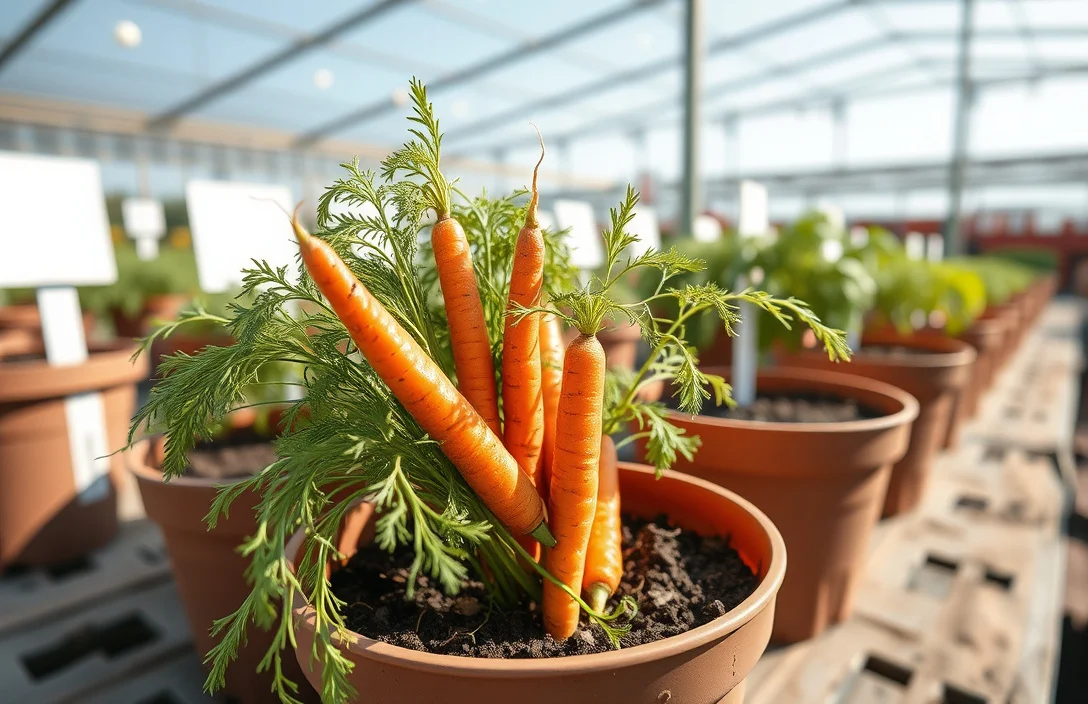
Carrots grow in pots, but they need underground room and a soil texture that doesn’t block root growth. In a container, poor results usually come down to cramped depth, compacted soil, and uneven watering.
Your carrot variety sets the expectation. Shorter “baby” or compact types handle containers more reliably, while long, thick-germinating varieties often need more depth than most people assume.
Things that matter most
Start with container depth and drainage. Carrots are root crops that dislike staying wet. Use a pot with drainage holes and fill it with a loose potting mix, not heavy garden soil.
Sowing and thinning are part of the plan, not optional extras. Carrot seeds are small, so they get planted too thick by default. Thick planting leads to tangled roots that turn out misshapen.
Keep the top layer consistently moist until germination, then maintain even moisture as the roots size up. Uneven moisture is a common reason for cracking, forking, or stunted growth in containers.
Tips for growing carrots in pots
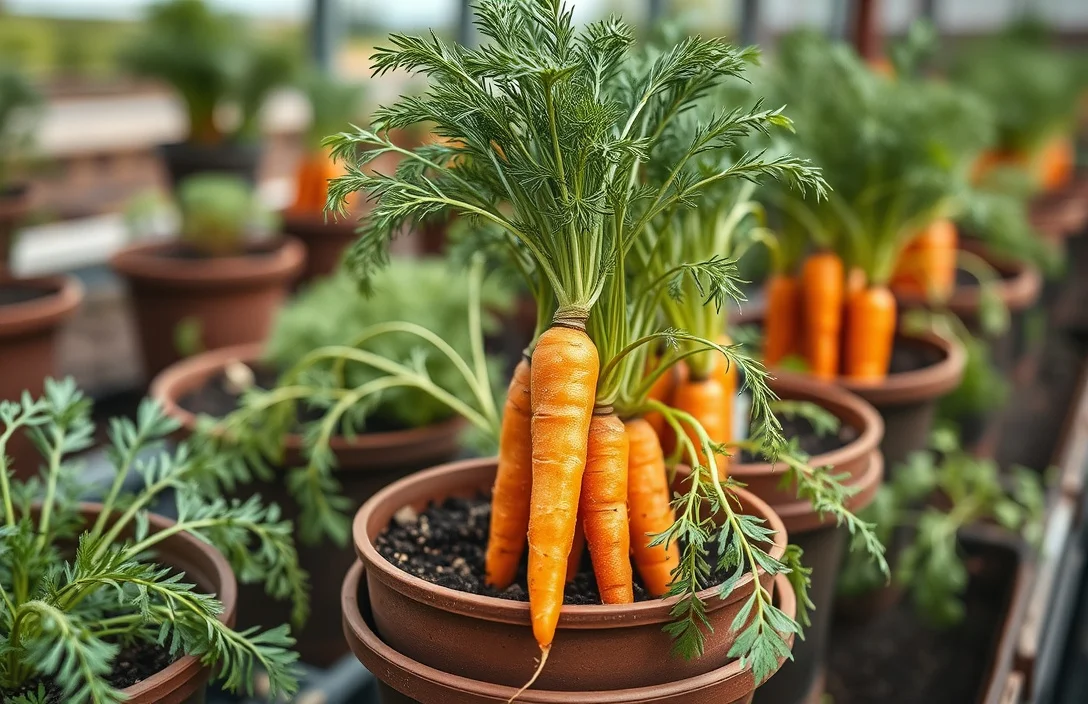
Match the pot to the variety. If you don’t know the expected size, choose compact types labeled for containers or small spaces. When in doubt, go deeper rather than shallower.
Prep the soil like it’s a seed-starting bed. Break up potting mix thoroughly, remove visible clumps, and skip compost that can create pockets or add chunks. Carrots need a smooth, airy environment as they push downward.
Sow shallow and manage spacing early. Cover carrot seeds lightly, then keep the soil moist. When seedlings are a few inches tall, thin them so roots expand without bumping each other.
Water with a “steady, not splashy” mindset. In pots, that usually means watering more frequently but gently, so the soil stays evenly moist instead of swinging between dry and soggy.
If weeds or crusting keep showing up, add a light mulch after germination, or use a thin layer of sifted, chunk-free compost. The goal is moisture protection without smothering seedlings.
Benefits of growing carrots in pots
Container gardening makes carrots possible when in-ground beds aren’t practical. You can move pots to chase the best sun, protect seedlings from heavy rain, and control soil texture tightly.
Pots also cut down some soil-related problems. If your yard soil is heavy, rocky, or compacted, a quality potting mix can be the difference between straight roots and forked, stunted ones.
Monitoring is easier, too. When carrots are in a pot, you can check moisture and thinings without stepping into a bed and disturbing roots.
Harvest can be convenient as well. Depending on variety, you may be able to pull smaller carrots earlier, then finish with fewer plants once you thin correctly.
Container options for carrots in pots
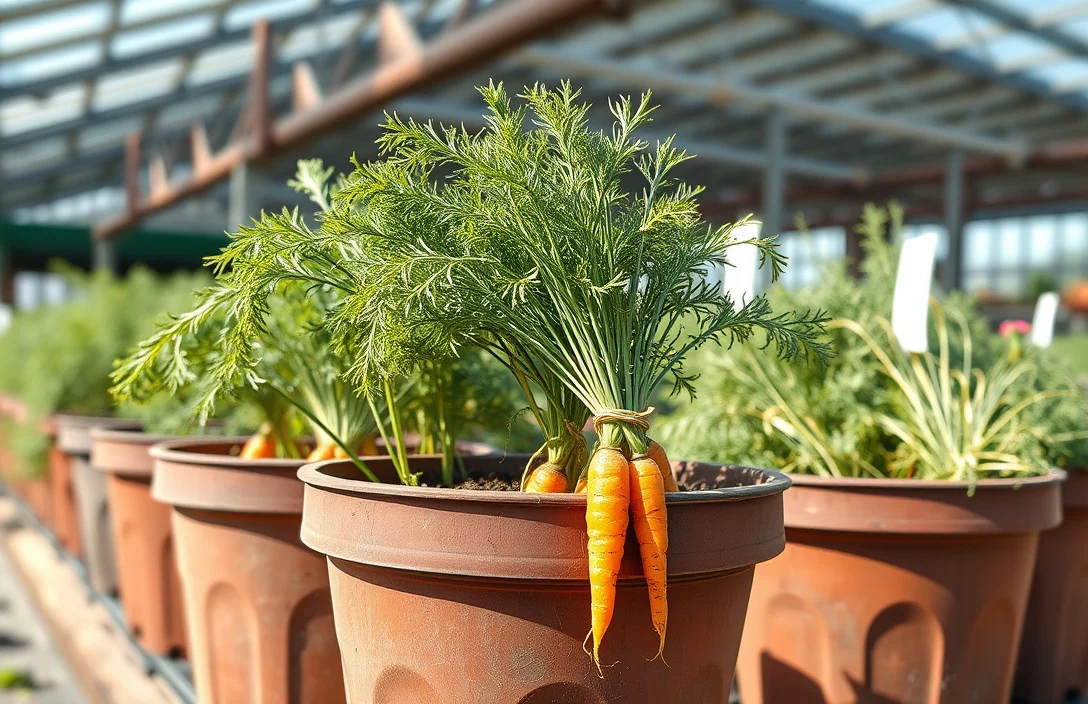
You can use several container types, but depth and drainage matter most, not the material. A nursery pot, fabric grow bag, or long planter works as long as it’s deep enough and drains well.
| Container option | Key spec to look for | Best for |
|---|---|---|
| Standard deep pot | Depth 12-15 inches and drainage holes | Most container-friendly varieties |
| Long planter box | Even depth along the length | Growing multiple short rows in one space |
| Fabric grow bag | Sufficient depth and stable placement | Patios with good watering access |
| Window box (only if deep) | Deeper-than-usual window-box depth | Compact types and smaller harvests |
| Bucket with holes (DIY) | Thorough drainage and smooth interior | Budget-friendly space growing |
Soil is the other key “option.” The most reliable approach is fresh potting mix that stays fluffy, plus extra attention to removing clumps.
For more control, use a raised pot and a light, fine potting mix blend. Avoid rough sand or gravel mixed into the root zone, since barriers and pockets can form as roots grow.
Expert advice for container-grown carrots
Treat carrot success like a chain of small, controllable steps. Keep the root zone loose, evenly moist, and properly spaced from the start.
Choose variety based on your container and your tolerance for babysitting. If you want simpler results, start with compact varieties labeled as “baby,” “short,” or “container-friendly” since they don’t demand as much depth.
Don’t rush thinning and don’t skip it. Carrots are forgiving above ground, but they struggle underground when crowded. Thinning prevents misshapen roots.
Pay attention to the weather around germination. Carrot seeds can take a while to sprout, and temperature swings slow early growth. Milder conditions generally make germination more consistent, which is why many gardeners plant in spring or fall.
If forking or cracking shows up, troubleshoot the basics before changing everything. Forking often points to rocks or clumpy soil. Cracking usually comes from uneven moisture. Stunting can come from compacted mix or root competition from poor thinning.
Examples of carrots in pots that work
A balcony setup often succeeds with a deep planter placed where it gets solid sun. For example, many people use a long, deep window planter or a nursery pot at least 12 inches deep, fill it with fresh potting mix, sow thinly, then thin seedlings to about 2-3 inches apart. That gives roots room and keeps the care routine manageable.
For a small patio, start with short varieties. A gardener growing “Thumbelina”-type carrots in a 10-12 inch-deep container can harvest smaller roots without needing a super-deep pot, as long as the soil is fine and clump-free. The bigger win is consistent results because the carrot’s growth needs match the container.
New to carrots and getting uneven sprouts? Don’t panic. Uneven emergence happens when moisture isn’t consistent during germination. Use a gentle, frequent watering schedule and keep moisture in place with a light covering (removed once seedlings appear) to improve uniformity.
For a fall crop, treat it like a repeatable cycle. Sowing in late summer into early fall helps you avoid peak heat stress, and containers let you reposition for sun as days shorten. Even in cooler weather, container soil dries faster than garden beds, so moisture still needs attention.
FAQ
Can carrots grow in pots with shallow containers?
Yes, but the variety has to fit the depth. Small or “baby” types work best because they don’t need as much vertical space. If your pot is under about 10 inches deep, expect poor root shape or slow growth for most standard carrot varieties.
What size pot do I need for carrots?
Use at least 10 inches deep for compact/small varieties and 12-15 inches deep for most typical carrots. Include drainage holes, because carrots don’t like sitting in water. Wider pots make thinning easier, but depth is the limiting factor.
How long do potted carrots take to harvest?
Many carrot varieties take roughly 2 to 3 months from sowing to harvest, but it varies by type and conditions like temperature and moisture. Containers can run a bit slower in cooler weather, especially early on. Check the seed packet days-to-maturity and pull a few test roots early if you want smaller carrots.
Do carrots in pots need fertilizer?
Carrots don’t need heavy feeding, but potted plants can run out of nutrients faster than in-ground beds. Use potting mix that already has nutrients, then add a light, balanced feed only if growth looks pale or very slow. Avoid high-nitrogen fertilizer, since it encourages leafy growth at the expense of root quality.
What’s the most common mistake when growing carrots in containers?
Overcrowding and uneven moisture are the two biggest mistakes. Sow too thickly and skip thinning, and roots collide and deform. Let soil dry out and then water heavily, and roots can crack. Thin early, keep soil evenly moist, and use fine, clump-free mix for the cleanest results.
The fastest path to success is choosing a compact carrot variety and a deep pot (12 inches if you can), then filling it with fresh, fine-textured potting mix. After that, pick your container depth, sow thinly, and plan to thin seedlings as soon as you can handle them.

- 10 Best Slow Cooker For Slow Cooking Legumes 2026 (Tested And Reviewed) - October 17, 2026
- 10 Best Slow Cooker For Slow Cooking Oxtail 2026 (Tested And Reviewed) - October 16, 2026
- 10 Best Slow Cooker For Slow Cooking Venison 2026 (Tested And Reviewed) - October 16, 2026