Do You Need Special Cookware For Glass Top Stoves Compared
Glass-top stoves punish pan bottoms. Scratches, chips, and stubborn burn marks usually come from abrasion, uneven contact, and dragging more than from “the wrong material.” Good news: you do not need a boutique “glass-top” cookware set for most kitchens. You need compatible pan behavior – flat contact, smooth surfaces, correct size, and careful handling. This buyer decision guide ranks what to buy, what to avoid, and how to get even heat without damaging the glass.
Key Takeaways
- You usually don’t need a special glass-top brand set, just compatible pan bottoms.
- Smooth matters most. A clean, flat, non-damaged base reduces scratches and burn marks.
- Bottom type matters. Copper and aluminum with rough cladding are riskier than smooth stainless.
- Size must match. Use pans close to the burner ring size for even heating and less scorching.
- Avoid dragging pans. Lift, set gently, and never slide to “reposition.”
- Use the right setup. Start on medium, avoid preheating on high, and keep spills off the glass.
Do You Need Special Cookware for Glass Top Stoves?
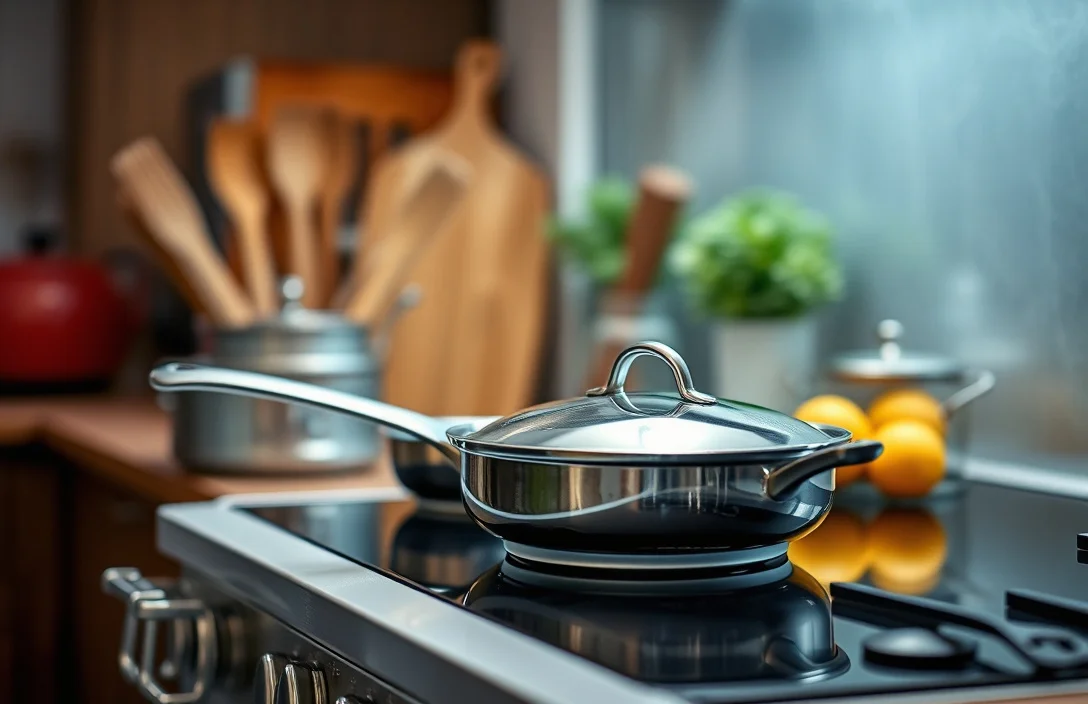
You usually do not need special cookware. Glass-top performance depends on pan bottoms that make flat, clean, consistent contact and on how you move the pan. If your pans have smooth, flat bottoms and you never drag them, stainless steel, enameled steel, and many nonstick options work fine.
Upgrade becomes “necessary” when pans rock on a flat surface, have heavily scratched bottoms, or have sticky, gritty residue that gets ground into the glass. Glass tops punish uneven contact, which shows up as brown heat marks that are harder to remove than routine stains.
What Makes Glass-Top Cookware Different?
The glass is a heat-transfer surface, not a special nonstick layer. Heat spreads when the pan base sits flat over the burner area, and the stove’s radiant heating behavior responds to that contact.
The real requirements are mechanical:
- Flatness and smoothness so the pan contacts evenly and does not grind dirt into the glass.
- No dragging because grit turns into sandpaper.
- Base construction that stays even under heat (warped bottoms and some designs can concentrate heat unevenly).
When you shop, feel for a base that’s smooth and “machined,” not pitted or visibly uneven. And stop relying on “just sliding it a little.” Glass-top ranges do not forgive that habit.
Which Pan Materials Work Best on Glass
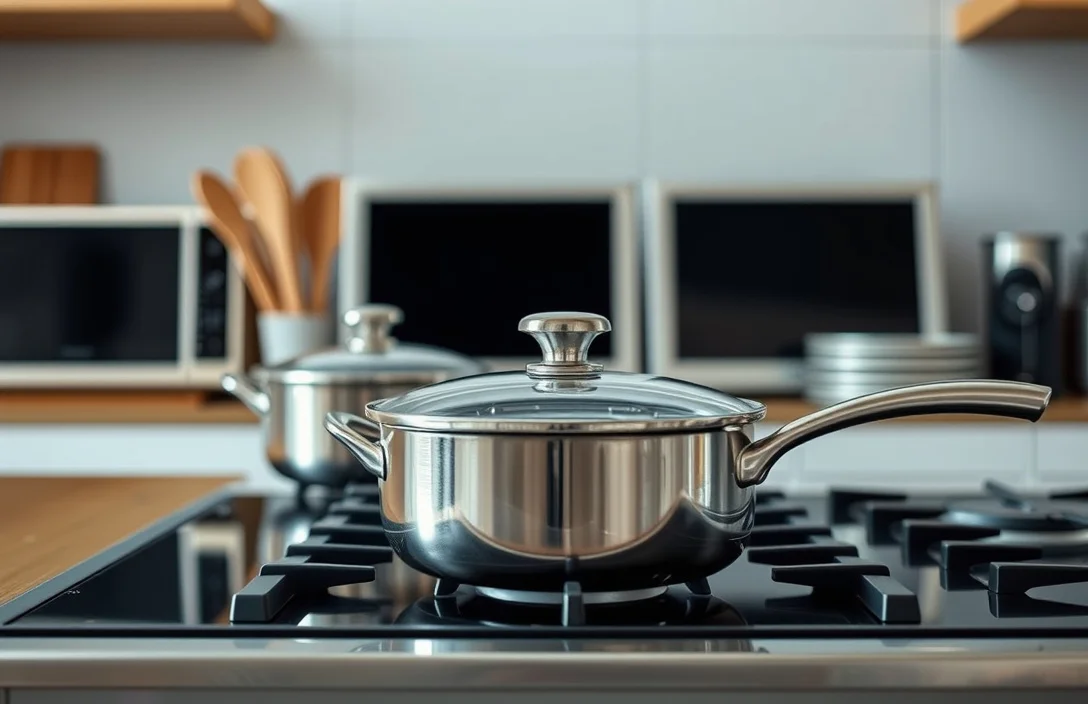
The best material is the one that gives you a smooth, flat base that stays that way. In real kitchens, that usually means stainless steel, enameled steel, and many quality nonstick pans, as long as the bottom is clean and not warped.
If you want a straightforward ranking for glass-top scratch resistance and even heating, I’d sort it like this:
- Enamel-coated steel (smooth, protective finish, usually great for glass-top contact)
- Stainless steel with a smooth, flat base (reliable, durable, easy to match with burner size)
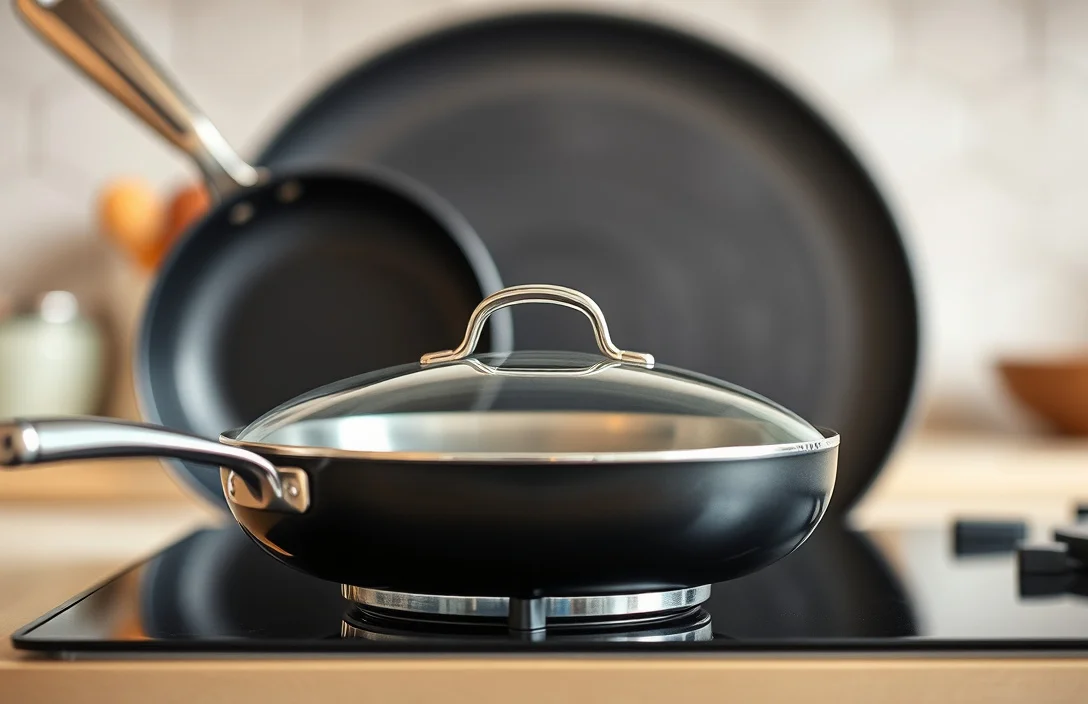
- Nonstick with a flat base (great convenience, but treat scratches carefully)
- Aluminum and copper cores (with a smooth clad exterior) (can heat well, but only if the exterior base is smooth)
- Uncoated cast iron (works for many people, but rough bottoms and high-heat habits can be a headache on glass)
The problem is rarely “stainless vs. copper.” It’s warped pans or bottoms that aren’t actually flat after years of heat cycling. “Looks flat” on a counter is not the same as “does not rock” when it touches the stove.
| Pan Material / Style | Key Spec to Check | Best For | Watch-Out on Glass Top |
|---|---|---|---|
| Enameled steel | Smooth bottom, even base | Everyday cooking, browning, gentle compatibility | Chips if you drop or impact the glass edge |
| Stainless steel | Flat base, smooth clad edge | All-purpose performance | Rough cleaning pads can damage the base over time |
| High-quality nonstick | Flat base, smooth exterior | Eggs, sauces, low-stick cooking | Avoid abrasive cleaning, and don’t drag when repositioning |
| Clad aluminum/copper | Smooth exterior layer, good flatness | Faster heating, responsive cooking | Some bases have reactive or textured exterior that scuffs glass |
| Flat-bottom cast iron | Seasoned, smooth-ish bottom | Searing (with care) | Heavy pans can scratch if grit is present or if you drag |
Can Stainless Steel Without Copper Base Scratch It?
Yes. Stainless steel can scratch glass-top stoves if the pan bottom is rough, pitted, or has debris on it – and dragging makes it worse. The metal choice is only half the story. The finish and what sits between the pan and the glass matter more.
Stainless is most likely to scuff your surface when it has:
- a rough or pitted exterior from abrasive scrubbing,
- burrs or dents on the base rim,
- stuck-on debris like burned food or gritty salt residue,
You can also scratch glass when you “slide” a pan after wiping the counter and leave a smear of grit under it.
The good news: stainless with a smooth, flat base is generally compatible. Do a quick feel test – wipe the bottom with a dry paper towel. If it comes away clean and smooth-feeling, you’re in good shape.

Helpful pick
CAROTE Nonstick Pots and Pans, Induction Titanium Cookware Set 16pcs Kitchen Cooking Sets, Pot and Pan Non Stick w/Frying pan (PFOS, PFOA Free)
Its smooth, flat nonstick bottoms minimize rough contact and debris that could scratch glass tops.
How to Prevent Scratches, Chips, and Burn Marks
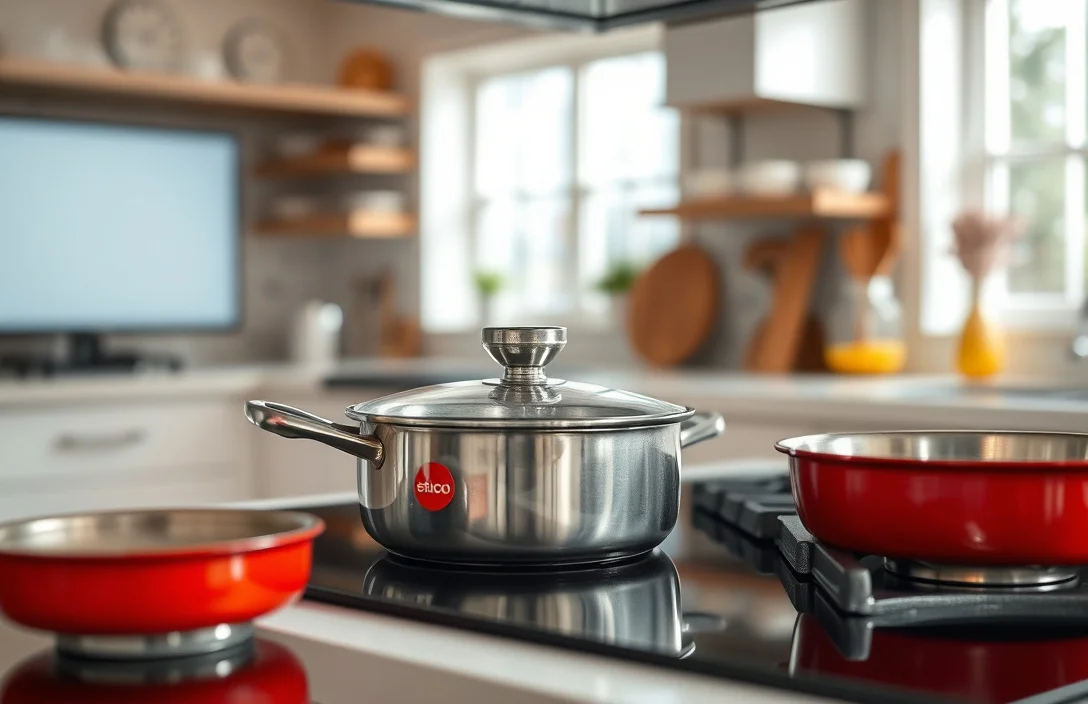
Prevention is mostly process. Glass tops last longest when you treat them like a precision cooking surface, not like a standard coil-range top.
Use these habits:
- Lift, don’t slide. Reposition by picking up the pan and setting it down.
- Never cook over grit. If you rinsed the pan but residue is still there, wash it again.
- Match burner and pan diameter. A too-small pan can concentrate heat and leave burn marks near the edges.
- Start with medium heat. Avoid blasting high on a cold pan for long periods.
- Keep the glass clean between meals. Sugar, starch, and grease bake on fast and can scorch.
Do a simple “scratch audit” in about 30 seconds: set the pan empty on the glass and gently press at the center. If it rocks or you see uneven contact, stop using it on the glass-top. Warped bottoms create hotspots and can shove debris into the glass as the pan expands and contracts.

Helpful pick
CAROTE 20Pcs Titanium Cookware Set, Pots and Pans Set Non Stick, Kitchen Cooking Set with Detachable Handle, Non Toxic Induction Cookware, Dishwasher/Oven Safe
Detachable-handle design helps you lift and place pots gently, reducing slide-induced scratches on glass tops.
Do Flat-Bottom and Correct Size Matter?
Flat-bottom and correct size matter because they determine contact area and heat distribution. A pan that looks fine on a countertop can warp enough over time that the glass-top shows the difference once heat cycles – then you get uneven cooking and stronger staining.
Correct size also reduces two common complaints:
- Uneven cooking from poor contact and heat distribution.
- Baked-on “halo” marks around burner rings.
When the pan base is undersized, the glass around the ring absorbs more radiant heat than it should, and splatter gets baked into the surface.
If you’re shopping, match the base diameter to the burner ring size. If your stove has expandable elements, use that feature, but don’t count on it to fix a warped bottom.

Helpful pick
CAROTE 31PCS Pots and Pans Set, Nonstick Cookware Set Kitchen Non Stick Induction Titanium Cookware Non-toxic Granite Cooking set, PFOA Free
Choosing pans with flat bottoms and proper size promotes even heat distribution on glass stoves.
Which Markings and Brands to Look For
You do not need a specific logo that says “glass-top safe.” You need evidence that the pan bottom supports flat, smooth contact and stable heat transfer.
In product listings, prioritize:
- “Flat bottom” or a clear description of base construction (not just “works on most cooktops”)
- Induction compatibility language (often a sign the base is engineered for direct contact, though induction is not identical to glass-top)
- Material type plus bottom finish description (smooth clad, polished exterior, enameled exterior, etc.)
- Dishwasher-safe claims only when the base finish is described clearly, since harsh cycles can rough up some bottoms over time
I’d ignore brand badges and focus on behavior. If the base exterior is visibly smooth, the pan does not rock, and the bottom stays clean, the brand matters much less than people assume.
Pick based on your actual cooking:
- If you want one set for everything, choose stainless or enameled steel with smooth flat bases.
- If you want easy clean for eggs and sauces, choose nonstick with solid flat bases – and use gentle tools.
- If you want maximum responsiveness, choose clad materials only after you confirm the base stays smooth and flat.
FAQ
Do I really need special cookware for glass top stoves?
No. You need pans with smooth, flat bottoms and you must avoid dragging them across the glass. If bottoms are warped, heavily scratched, or gritty, that’s when you upgrade. “Glass-top safe” is usually just cookware that better matches those requirements.
Can I use aluminum or copper pans on a glass top stove?
Often, yes – if the bottom exterior is smooth and flat. Problems start with rough, uneven bases or residues that grind into the glass. If the pan rocks, leaves hot spots, or shows uneven contact, switch to enameled steel or smooth stainless with a flat base.
Will stainless steel scratch a glass stove top?
Yes, stainless can scratch glass if the bottom is rough or if you drag the pan. Clean the pan, keep grit off the base, and lift to reposition. A smooth, undamaged stainless base is generally compatible with glass tops.
How do I stop burn marks on glass top stoves?
Match pan size to the burner, use medium heat, and keep spills from baking onto the surface. Preheating too high for too long can create browning halos even without spills. Clean frequently with the right glass-top cleaner so residue does not build up.
What’s a common mistake people make with glass top stoves?
Sliding pans to reposition is the biggest cause of scratches. Another common issue is using undersized or warped pans that create uneven heating and stronger staining. Set the pan down and check for rocking; if it rocks, it will punish the glass-top.

- 10 Best Slow Cooker With Spill Proof Design 2026 (Tested And Reviewed) - October 24, 2026
- 10 Best Slow Cooker With Locking System 2026 (Tested And Reviewed) - October 24, 2026
- 10 Best Slow Cooker With Insulated Lid 2026 (Tested And Reviewed) - October 23, 2026