Do Compression Socks Help Pots Explained Simply
Compression socks help a lot of people with POTS symptoms, mainly by reducing blood pooling in the legs when you stand. They usually use graduated pressure – stronger at the ankle and lighter as you move up – which encourages blood to return toward the heart. This guide covers whether compression helps POTS, how it can change swelling and pain, and what to do if the socks make you feel worse.
Compression socks can help POTS by reducing leg blood pooling when you stand. Many people use graduated compression to improve symptoms like dizziness, lightheadedness, and fatigue. A common starting point is about 15-20 mmHg for mild support, 20-30 mmHg for more noticeable effects, and higher levels only if you tolerate them.
Key Takeaways
- Yes, sometimes. Compression can reduce leg pooling, which often improves POTS symptoms when standing.
- Swelling may improve. Graduated pressure can help ankle edema, but it is not a fix for fluid retention in general.
- Safety depends on fit. Ill-fitting or overly tight socks can worsen discomfort and may be risky with certain circulation problems.
- Start moderate. Many people begin around 15-20 mmHg and step up only if tolerated.
- Wear consistently. Put them on in the morning before symptoms peak, and remove them when you are back lying down.
- They do not replace meds. Compression can support your POTS plan, but it does not substitute for prescribed treatment.
Do Compression Socks Help Pots?
Compression socks help POTS symptoms for many people, especially when standing triggers symptoms. POTS often involves blood pooling in the legs, and graduated compression helps move blood back toward the center of the body. With less pooling, you may feel less dizzy, weaker, or lightheaded.
Compression is not a universal fix, though. Some people notice only minor changes, and some feel worse when the socks fit wrong, the pressure is too high, or the sock does not cover the area where pooling happens. If you try compression and do not improve after a careful, short trial, it makes sense to adjust the sock type, pressure level, or length with your clinician.
How Compression Socks Affect Swelling and Pain
Compression socks can reduce ankle swelling by limiting how much fluid collects in the lower legs. For people with POTS, that can matter because standing-related pooling and gravity can make ankles feel heavier and look puffy. If your main symptom is visible edema, compression often helps more than it does for “pure” dizziness.
Pain is more mixed. Some people feel less ache because compression stabilizes tissue and reduces strain. Others find it irritating – especially over sensitive areas like the toes, instep, or behind the knee. If your pain feels like nerve pain, skin sensitivity, or burning, stop and reassess, because compression is meant to reduce pooling, not treat neuropathy.
Practical expectations:
- If leg heaviness improves, compression is likely doing the right job.
- If tightness, numbness, or pain increases after you put them on, the pressure or sizing is likely off.
- If swelling does not change, you may need different coverage (sometimes thigh-high or waist-high) or a different underlying approach.
Are Compression Socks Safe for POTS Symptoms?
Compression socks are generally safe for many people with POTS, but safety depends on circulation and fit. The biggest risk is cutting off circulation when the sock is too tight, rolls down, or is the wrong size. Skin damage is the other common issue – friction, seams, and dry skin can lead to irritation.
Be extra cautious and talk to a clinician before using compression if you have known peripheral artery disease, significant leg arterial problems, uncontrolled heart failure, or any condition where compressing the leg could reduce arterial blood flow. Also be careful if you have had recent blood clots (deep vein thrombosis) or unexplained one-sided leg swelling that is painful.
Helpful pick
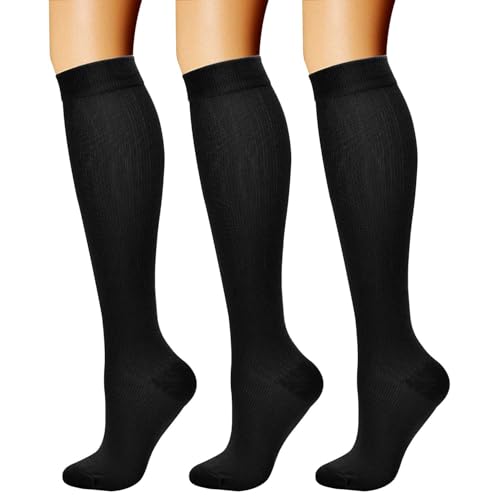
CHARMKING Compression Socks for Women & Men Circulation (3 Pairs) 15-20 mmHg is Best Athletic for Running, Flight Travel, Support, Cycling, Pregnant – Boost Performance, Durability (L/XL,Black)
Offers moderate 15-20 mmHg support, promoting circulation without excessive constriction when correctly sized.
Use these quick safety checks:

- Toes should stay warm and pink, not pale or blue.
- You should not get numbness or tingling that persists.
- The sock should not leave deep indentations or create painful pressure points.
- If symptoms spike soon after putting the socks on, remove them and reassess.
If your POTS symptoms are severe, start in a controlled way, like while you are at home and can sit or lie down quickly if you feel worse.

Helpful pick
Copper Compression Socks 15-20 mmHg for Men & Women 8 Pairs – Circulation Support for Nurses, Travel, Running, Hiking, Soccer,Gift,Pregnant, Nurses(L/XL)
Moderate compression socks like Copper Compression 15-20 mmHg help support circulation without excessive tightness.
What Compression Level Works Best for POTS
Compression levels are measured in mmHg, and the “best” level is the one you tolerate and can wear long enough to get symptom benefit. Many people start with 15-20 mmHg because it is noticeable but often easier to handle during daily wear. If symptoms persist and the fit feels comfortable, 20-30 mmHg is a common next step.
Higher levels can help some people, but they also raise the odds of discomfort, skin irritation, and intolerance. “More” is not automatically better. For POTS, the goal is steady, tolerable compression that reduces pooling without creating new problems. Your body usually tells you faster than the label does.
| Compression level (mmHg) | Key idea | Best for | Watch-outs |
|---|---|---|---|
| ~15-20 | Mild-to-moderate support | First trial, sensitive skin | Less noticeable pooling relief |
| ~20-30 | Stronger graduated pressure | Persistent standing symptoms | Can feel tight, may irritate |
| 30+ | Higher compression | Only if you tolerate it | More skin risk, possible intolerance |
Since brands can vary in exact products and pressure gradients, check the sock’s packaging for the stated mmHg and graduation. If the label does not show mmHg, treat that as a red flag for consistency.
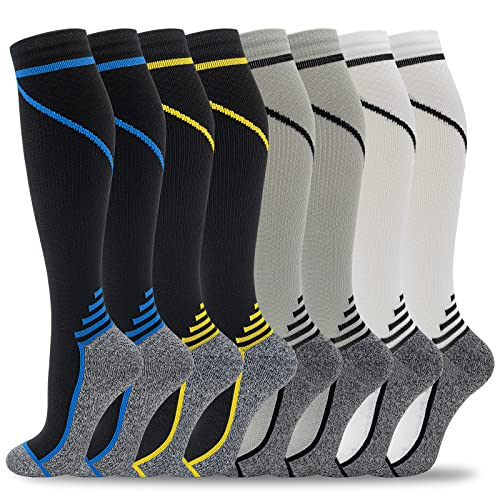
Helpful pick
fenglaoda 8 Pairs Compression Socks for Men & Women 20-30 mmHg Knee High Nurse Pregnant Running Medical and Travel Athletic(L/XL,Multi01 )
20-30 mmHg compression offers stronger leg support for those who can tolerate higher pressure after lighter levels.
How to Wear Compression Socks for POTS
How you put compression socks on often determines whether you get relief or feel worse. The biggest rule is timing: put them on before standing when pooling has not started yet. For many people, symptoms peak later in the day, so mornings are the best time to start.
Fit matters as much as the numbers. The sock should lie flat, not bunch at the ankle, and not roll down. Rolling creates uneven pressure and can feel like a tourniquet, which can worsen discomfort. If the toe area is too tight or the top band is too aggressive, you may trigger pain or nerve irritation.
Use this routine:
- Put them on before you stand. If possible, apply them right after waking or after a short lie-down.
- Pick the correct length. If calf-only does not help, you may need longer coverage (often thigh-high or waist-high, depending on where pooling is worst).
- Choose the right size. Measure legs using the manufacturer’s size chart, not your shoe size.
- Check for slippage. Walk for 5-10 minutes and confirm the socks are not rolling or creating pressure bumps.
- Wear them consistently. Use a daily schedule for a short trial so you can judge real impact.
- Remove when symptoms settle. If you are resting or lying down, take them off rather than leaving them on indefinitely.
If your symptoms improve when you remove the socks, that usually means the socks are too tight, too short, or not right for your comfort and circulation.
Do Compression Socks Replace Medication for POTS?
Compression socks can be part of a POTS plan, but they do not replace medication. Compression works like mechanical support that reduces pooling. Medication – when prescribed – targets wider POTS physiology like heart rate control, blood volume, and vascular tone.
Stopping a prescription because you feel better with compression can lead to rebound symptoms when the socks come off or over time as your underlying patterns persist. The safest approach for most people is using compression as an add-on to help you tolerate standing and daily life, not as a substitute for clinician-directed care.
A good decision rule:
- If compression improves symptoms, keep it and discuss it with your clinician.
- If compression helps only a little, it may still be worth using for the days you need it most.
- If compression causes symptoms to spike, do not push through, and do not treat that as “normal discomfort.”
When Compression Socks Make POTS Worse
Compression socks can worsen POTS symptoms in situations where the sock pressure or fit is off – and those problems are usually fixable. The most common cause is a sock that is too tight, too high-pressure for your tolerance, or an incorrect fit that creates uneven pressure. Bunching at the ankle or rolling at the top can also increase discomfort and trigger an autonomic response.
Some people also feel worse when compression irritates nerves or skin, especially with sensitive feet or fragile circulation. If you notice dizziness, nausea, or a rapid worsening of lightheadedness soon after putting the socks on, stop using them and reassess the product, sizing, and compression level.
Common “make it worse” patterns:
- Tingling or numbness in the toes that persists after walking.
- Skin pain or burning where seams or bands press.
- Bunching or rolling that changes pressure distribution.
- Worse symptoms immediately after donning, improving quickly after removing.
If you have one-sided leg swelling, severe pain, or skin changes that worry you, do not treat it as a simple fit issue. Get medical guidance promptly, because that can point to a problem other than POTS.
FAQ
Do compression socks help POTS when you’re dizzy?
Compression socks can help POTS-related dizziness by reducing leg blood pooling when you stand. The best odds usually come from wearing graduated, properly sized socks and putting them on in the morning before symptoms peak. If dizziness worsens right after you put them on, stop and check sizing, slippage, and compression level.
What compression level is best for POTS, like 15-20 mmHg?
A common starting point is 15-20 mmHg, then stepping up to 20-30 mmHg if you tolerate it and symptoms persist. The best level is the one you can wear consistently without numbness, severe discomfort, or toe color changes. If higher compression worsens symptoms, that is a sign the setup is wrong, not that compression is useless.
Are compression socks safe with POTS long-term?
Many people can use compression socks long-term safely when they fit well and are used correctly. Monitor skin (no breakdown), check toe warmth and color, and make sure the socks do not roll or leave painful indentations. If you have arterial disease, a history of clots, or one-sided swelling with pain, ask a clinician before using them.
How long should you wear compression socks each day for POTS?
Many people wear compression socks during their standing-heavy hours, often from morning until late afternoon or evening when symptoms typically worsen. Start with a shorter trial to see how you tolerate them, then increase gradually. If you lie down or sleep, it is usually better to remove them rather than keeping them on nonstop.
Can compression socks replace POTS medication?
Compression socks usually should not replace POTS medication. They can reduce pooling and help you tolerate standing, but they do not address all POTS mechanisms like heart rate regulation or blood volume changes. If you want to rely more on compression, use it as an add-on while you coordinate with your clinician rather than stopping prescribed treatment on your own.

- 10 Best Slow Cooker For Mess Free Cooking 2026 (Tested And Reviewed) - October 24, 2026
- 10 Best Slow Cooker With Leak Resistant Lid 2026 (Tested And Reviewed) - October 24, 2026
- 10 Best Slow Cooker With Spill Proof Design 2026 (Tested And Reviewed) - October 24, 2026