Cast Iron Cookware Dishwasher Safe Explained Simply
Cast iron cookware is durable, but its non-stick performance depends on a seasoning layer, and dishwashers are hard on that coating. If you’re wondering whether cast iron cookware is dishwasher safe, the practical answer is usually no – detergent, heat, and long wet cycles push it toward rust. Use the quick rules below, what to do if it already happened, and how to rebuild seasoning so the skillet cooks normally again.
Cast iron cookware is generally not dishwasher safe. Dish detergent and dishwasher cycles can strip seasoning and leave the surface wet, which increases the odds of rust. If you already made the dishwasher mistake, dry it quickly and re-season with oil.
Key Takeaways
- Dishwasher seasoning loss. Dishwasher detergent and scrubbing can strip the oil-based seasoning layer.
- Rust risk rises fast. Leaving cast iron wet after the cycle can cause surface rust quickly.
- Heat plus time hurts. Hot water and long cycles increase how much seasoning dulls or disappears.
- Best practice is hand-wash. Use hot water, a brush or cloth, and dry immediately.
- Re-season after damage. If food sticks or the surface looks dull, apply a thin oil coat and bake.
- Storage prevents repeats. Store cast iron dry, with a light oil film if needed.
Cast Iron Cookware Dishwasher Safe. Can You Use a Dishwasher?
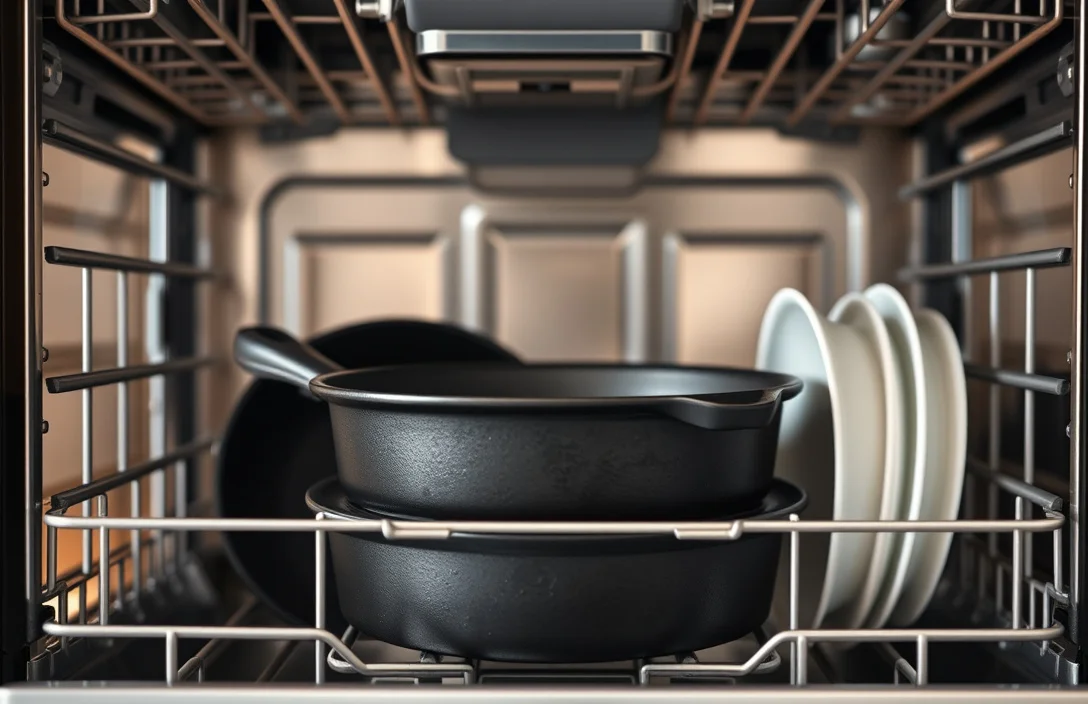
You can use a dishwasher for cast iron only as damage control, not as a normal cleaning method. Most of the time, a dishwasher removes some (sometimes most) of the seasoning – and that seasoning is what prevents sticking.
The bigger problem isn’t that the pan gets ruined in one cycle. It’s that the seasoning gets stripped and the pan stays moist long enough for oxidation to start. That turns a working, seasoned surface into raw iron that rusts more easily.
Is It Ok to Put Cast Iron in the Dishwasher? Debunking the Myth?
The myth is that cast iron should never be washed. You can wash cast iron, but you shouldn’t treat it like stainless steel or let it sit in detergent and water.
Dishwashers are built for bright cleaning on smooth, coated cookware. Cast iron’s protection is a baked-on oil film, and dishwasher detergent plus agitation can remove it, leaving the iron exposed.
People also underestimate how “soak time” happens in a dishwasher. Even if the pan looks dry at the end, hot moisture cycles can leave tiny wet spots, and iron oxidizes fast once it’s exposed.
Guidelines for Putting Cast Iron in the Dishwasher
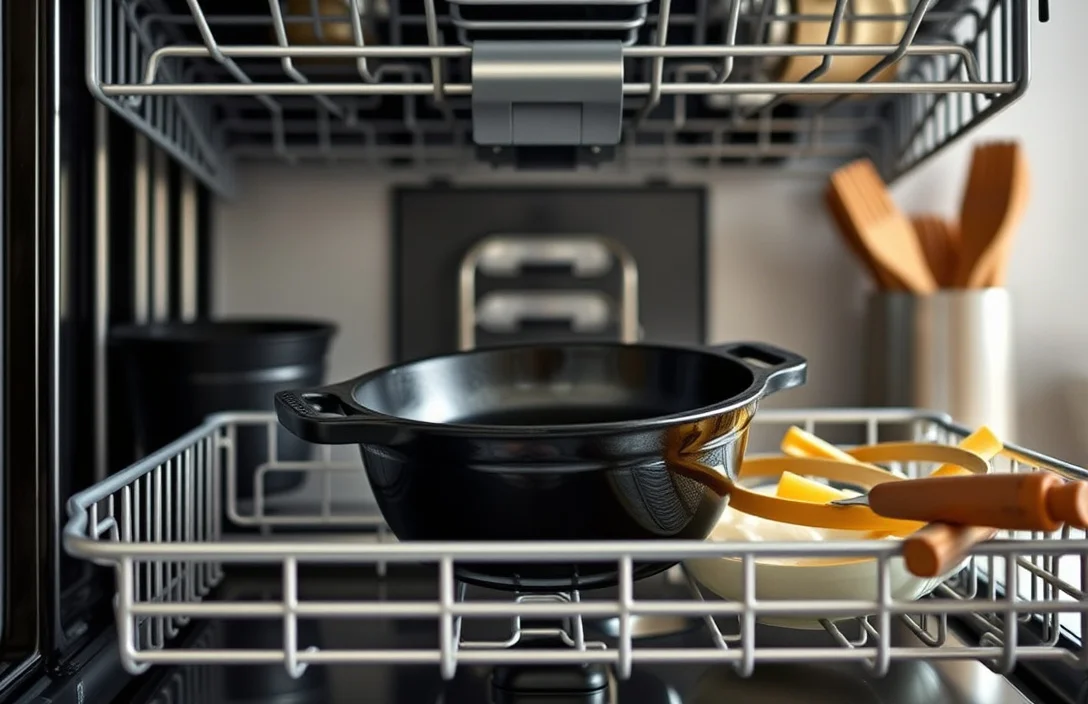
If you’re determined to use a dishwasher anyway, treat it like a risky exception and make it as low-damage as possible. The goal is reducing seasoning loss and preventing rust, not keeping the pan “perfect.”
Use rules like these:
- Do it only when necessary. If you have a choice, hand-wash instead.
- Skip harsh cycles when possible. Lower heat and shorter cycles reduce how badly seasoning gets stripped.
- Avoid letting it sit. Remove the pan immediately when the cycle ends.
- Dry it thoroughly right away. Wipe it completely, then heat-dry on the stove if needed.
In real life, expect at least some seasoning loss. If your pan already had patchy seasoning, a dishwasher cycle can make that patchiness show up as noticeable sticking until you re-season.

Helpful pick
Lodge Seasoned Cast Iron Skillet 10.25 Inches – PFAS-Free, Non-Toxic Cookware – Use with an Oven, Stove, Grill, or Campfire – Naturally Non-Stick & Oven Safe
Classic, durable skillet that benefits from hand-washing, aligning with careful care guidelines to preserve seasoning.
The Recommended Cleaning Method After Hand-Washing
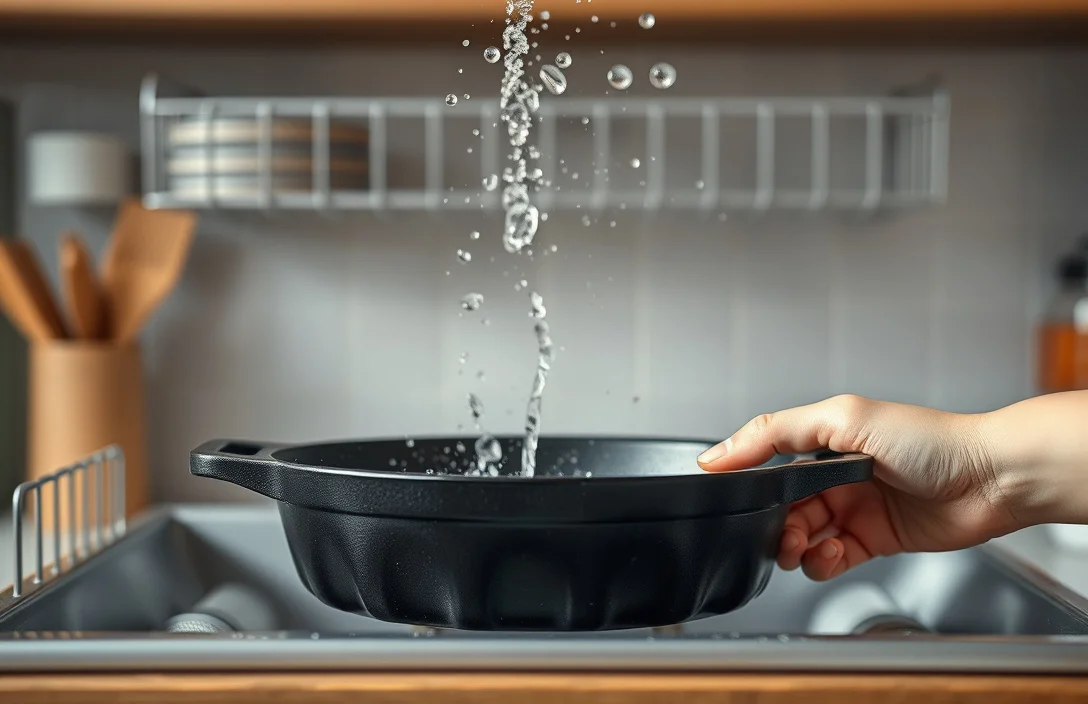
Hand-washing keeps seasoning intact and is faster than most people think. Let the pan cool enough to handle first, since quick temperature swings can be rough on cast iron.
Rinse with hot water to loosen stuck food, then scrub with a soft brush or sponge. For stubborn bits, a stiff brush works better than soaking. If residue really won’t budge, a kosher salt paste can lift it without relying on detergent.
Drying is the step that prevents rust. Wipe the pan completely, then heat it on low for a few minutes to drive off any remaining moisture.

Helpful pick
Lodge Seasoned Cast Iron Skillet Set 8, 10.25 & 12 Inches – PFAS-Free, Non-Toxic Cookware – Use with an Oven, Stove, Grill, or Campfire – Naturally Non-Stick & Oven Safe
This pre-seasoned Lodge skillet set makes hand-washing easier and helps preserve seasoning.
What To Do If You Put a Cast Iron Skillet in the Dishwasher?
Handle it immediately – rust risk increases when cast iron sits wet. Drying comes first, not tougher scrubbing. Aggressive cleaning right after a dishwasher can strip the little seasoning that’s left.
If it just finished its cycle, take it out right away, rinse quickly to remove detergent residue, and dry thoroughly with a cloth. Then inspect the surface: a stripped pan often looks duller or more “raw” than you remember.
A reliable recovery method is to bake the skillet upside down on your oven’s center rack, with a sheet of aluminum foil beneath it to catch oil drips. Bake for 1 hour before cooking with it again to help restore the protective oil layer that dishwashing removes.
Helpful pick
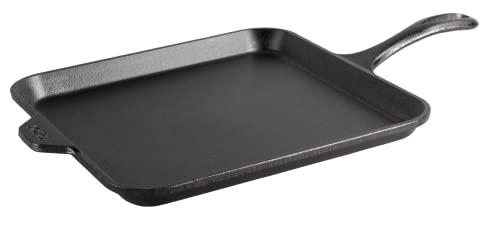
Lodge Seasoned Cast Iron Square Griddle – 11 Inches – Durable Pan – Cast Iron Cookware for Pancakes, Eggs, Bacon & Grilling Favorites
Its pre-seasoned surface supports quick rust prevention and easier maintenance after dishwasher mishaps.
The Importance of Seasoning and Re-Seasoning After Washing
Seasoning is what makes cast iron act like non-stick cookware. It’s an oil-based protective layer baked onto the iron, and when it thins, food sticks more and rust risk climbs.
Many skillets have uneven seasoning from normal use. “Re-seasoning” usually means improving what’s there – not starting from zero every time. If food starts clinging more than usual or the surface looks lighter and less smooth, re-season sooner rather than later.
After a dishwasher cycle, you’re usually dealing with detergent-stripped seasoning. Your goal is a fresh, thin oil film that you bake until it bonds to the iron.
How Do I Store Cast Iron to Prevent Rust?
Storage is where seasoning either holds up or slips. If you store cast iron while it’s even slightly damp, you’re basically setting up rust.
Cool the pan, dry it fully, and apply a light wipe of neutral oil if your skillet looks even slightly dry or if you live somewhere humid. Store it in a dry spot, and avoid tight stacking when it traps moisture against the cooking surface.
A simple rule works: keep it dry, lightly oiled, and protected from humidity. If the seasoning is intact, a thin oil film is often enough. If it’s vulnerable, do a more deliberate oiling step before putting it away.
FAQ
Can I put cast iron cookware in the dishwasher if it says “safe”?
“Dishwasher safe” is uncommon for cast iron because seasoning is essential to performance. If the exact brand says it is dishwasher safe, follow their instructions, but expect seasoning loss anyway. For most cast iron pans, hand-washing with hot water and immediate drying is the safer default.
Will I ruin the skillet if it goes in the dishwasher once?
One dishwasher cycle usually doesn’t permanently destroy cast iron, but it can strip seasoning and create oxidation risk on the surface. If you remove it immediately, dry it thoroughly, and re-season as needed, you can often recover the cooking surface. The bigger problem is leaving it wet or dirty after the cycle.
How do I clean cast iron after a dishwasher cycle?
Rinse off detergent residue, dry aggressively, then re-season to rebuild the protective oil layer. If you see rust spots, lightly scrub them and apply oil again. If the performance changes a lot (lots of sticking), don’t wait – re-season promptly.
How long should I re-season cast iron in the oven?
A common recovery approach is baking the oiled skillet upside down with foil beneath it, then baking for 1 hour. If the pan looks uneven or still dull after that, repeat thin coats and bake again until the surface darkens and looks more stable. Follow your oven and oil smoke tolerance.
Is there a safer alternative to the dishwasher?
Yes. Hot water plus a brush or sponge is the best alternative for day-to-day cleaning, and it protects seasoning. For stuck-on food, use a kosher salt paste or gentle scrub instead of detergent soaking. Dry immediately after cleaning and apply a thin oil film before storing.

- 10 Best Slow Cooker For Slow Cooking Oxtail 2026 (Tested And Reviewed) - October 16, 2026
- 10 Best Slow Cooker For Slow Cooking Venison 2026 (Tested And Reviewed) - October 16, 2026
- 10 Best Slow Cooker For Slow Cooking Turkey 2026 (Tested And Reviewed) - October 16, 2026