10 Best Cooking Pans in India (2026): Tawa, Kadai & Non-Stick Guide
The best cooking pans in India for most homes are a pre-seasoned cast iron dosa tawa, a tri-ply stainless steel kadai, and one good non-stick or ceramic pan for eggs and low-oil cooking. Add a sheet iron kadai for deep frying and a pressure pan if you cook dal daily.
Our top picks: The Indus Valley cast iron dosa tawa (₹1,449), Stahl Triply Artisan steel kadhai (from ₹1,939) and the Prestige Ceraglide ceramic kadai (₹2,065, PFAS-free).
- Match the pan to the dish: tawa for dosa and roti, kadai for curries and frying, flat pan for eggs and stir-fries.
- Cast iron and sheet iron handle very high heat and tadka. Non-stick does not.
- Tri-ply stainless steel is the safest all-rounder for acidic gravies like tomato, tamarind and kokum.
- For induction, check for a magnetic base. Plain aluminium will not work.
- “PFAS-free” ceramic pans avoid PTFE coatings, but the coating still wears out faster than iron or steel.
Shopping for the best cooking pans in India is confusing because most lists are written for Western kitchens. They rank frying pans and saucepans, then forget the tawa, the kadai and the tadka pan that Indian cooking actually depends on.
This guide is built the other way round. We started with the dishes Indian families cook every day, then chose pans that do those jobs well and are sold directly by Indian brands.
Every pick links to the brand’s own website, so you can check current price, size and warranty yourself. We earn nothing if you buy. That keeps the recommendations about the pan, not the commission.
Our top picks at a glance
Here is the short version. Each pan is reviewed in detail further down, with what it does well, where it falls short, and who should buy it.
| Pick | Best for | Material | Stove | Price from* |
|---|---|---|---|---|
| The Indus Valley CASTrong Dosa Tawa | Crisp dosa, uttapam | Cast iron | Gas, induction | ₹1,449 |
| Meyer Premium Non-Stick Flat Dosa Tawa | Low-oil dosa, beginners | Non-stick aluminium | Gas | ₹2,606 |
| The Indus Valley Sheet Iron Concave Tawa | Roti and phulka | Sheet iron | Gas, induction | ₹769 |
| Stahl Triply Artisan Steel Kadhai | Everyday curries, sabzi | Tri-ply steel | Gas, induction | ₹1,939 |
| Meyer Trivantage Pro Deep Kadhai 24 cm | Large families, biryani | Tri-ply steel | Gas, induction | ₹3,935 |
| The Indus Valley Pure Iron Kadai | Deep frying, pakoras | Sheet iron | Gas, induction | ₹539 |
| Meyer Cast Iron Deep Kadai with Glass Lid | Slow-cooked gravies | Cast iron | All cooktops | ₹2,642 |
| Prestige Ceraglide Ceramic Deep Kadai | PFAS-free non-stick | Ceramic-coated aluminium | Gas, induction | ₹2,065 |
| Meyer Midnight Hard Anodised Frypan 24 cm | Eggs, stir-fries | Hard anodised non-stick | Gas, induction | ₹2,220 |
| Meyer Presta 4L Tri-ply Pressure Pan | Dal, rice, pulao | Tri-ply steel | See listing | ₹4,613 |
*Prices as listed on each brand’s official website on 3 November 2026. Prices and offers change often, so check the brand page before you buy.
How we chose these pans
We did not pick pans by star ratings or sponsorship. We looked at what Indian kitchens need, then checked each pan against the brand’s own specifications.
- Indian cooking tasks first. Every pick does at least one job Indian homes do daily: dosa, roti, tadka, deep frying, gravies or pressure cooking.
- Sold directly in India. Each pan is listed on the brand’s own Indian website, with a price in rupees.
- Material suits the heat. High-heat jobs went to iron and steel. Low-oil jobs went to non-stick or ceramic.
- Stove compatibility checked. Where a brand does not state induction support, we say so.
- Claims kept honest. Coating claims such as “PFOA-free” or “PFAS-free” are the brand’s own words, which we report rather than test.
We also checked what Indian shoppers actually search for. Questions about dosa pans, PFAS-free coatings, steel versus aluminium and iron cookware brands all shaped the sections below.
The 10 best cooking pans in India, reviewed
1. The Indus Valley CASTrong Cast Iron Dosa Tawa
Best cast iron dosa tawa
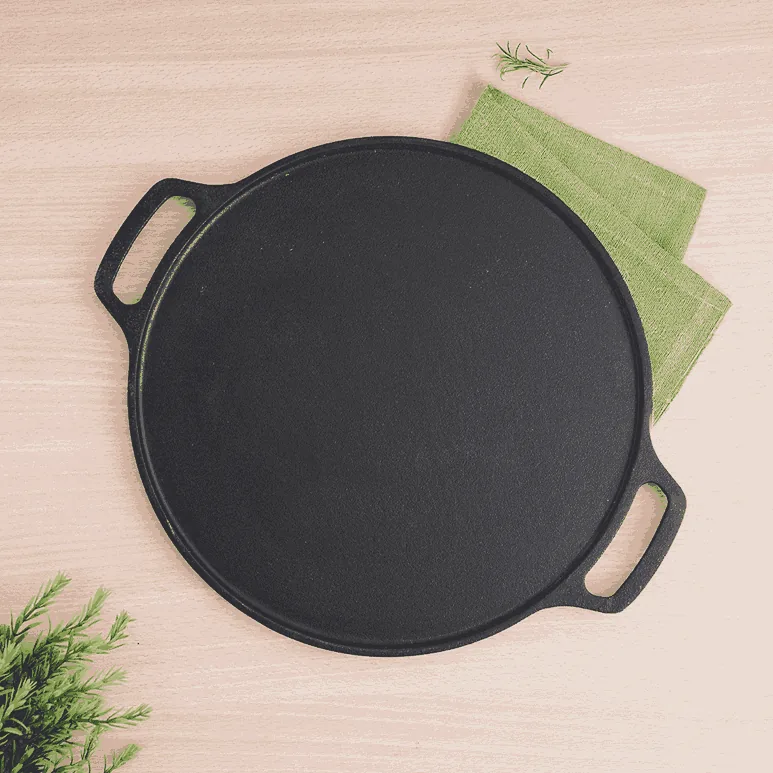
- MaterialPre-seasoned cast iron
- Size30.2 cm, double handle
- StoveGas and induction
- Price₹1,449
If you want restaurant-style crisp dosas at home, a heavy cast iron tawa is hard to beat. It holds heat, so the surface stays hot when you pour batter instead of cooling down.
The Indus Valley says this tawa is pre-seasoned with vegetable oil and works on gas and induction. At 30.2 cm it is wide enough for a full-size dosa, and the double handle makes the weight easier to manage.
Cast iron has no coating to wear off. With regular oiling, the seasoning improves over months, and the tawa can last for decades.
- Excellent heat retention for crisp dosa
- No chemical coating
- Works on induction
- Heavy to lift and clean
- Rusts if left wet
- Needs a few uses to become truly non-stick
Who it’s for: families who make dosa, uttapam or adai several times a week and want one tawa for life.
2. Meyer Premium Non-Stick Flat Dosa Tawa, 28 cm
Best non-stick dosa tawa
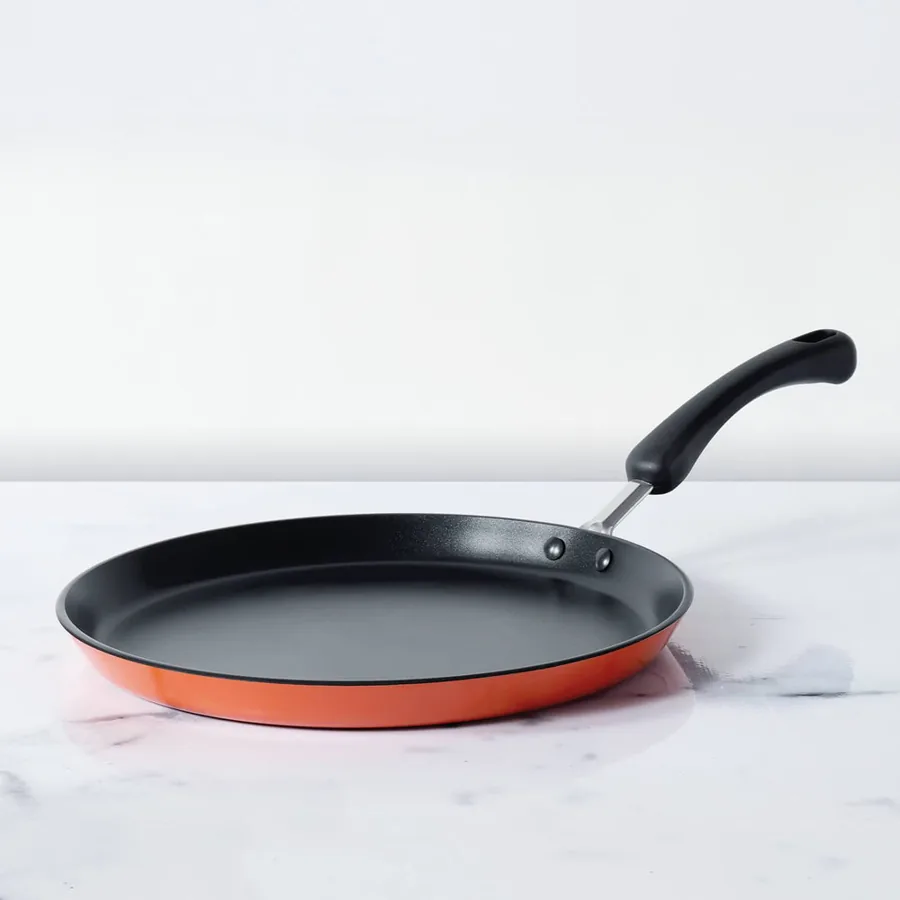
- MaterialNon-stick aluminium, 4 mm
- Size28 cm flat
- StoveGas (induction not listed)
- Price₹2,606
Not everyone wants the upkeep of cast iron. A good non-stick tawa makes thin dosas with very little oil, heats quickly and wipes clean in seconds.
Meyer builds this tawa from aluminium and lists it at 4 mm thick, which helps it resist warping. The brand says the coating is free from PFOA, cadmium, nickel, arsenic and lead, with a stay-cool riveted handle.
Keep it on low to medium flame. Non-stick coatings last longest when you never heat the empty pan and never use it for very high-heat tadka.
- Easy release with minimal oil
- Light and quick to heat
- Thick 4 mm base
- Induction support not stated
- Coating wears with time
- Avoid metal spatulas
Who it’s for: beginners, low-oil cooks and anyone who wants quick weekday dosas without seasoning a heavy pan.
3. The Indus Valley Pure Sheet Iron Concave Tawa
Best budget roti tawa
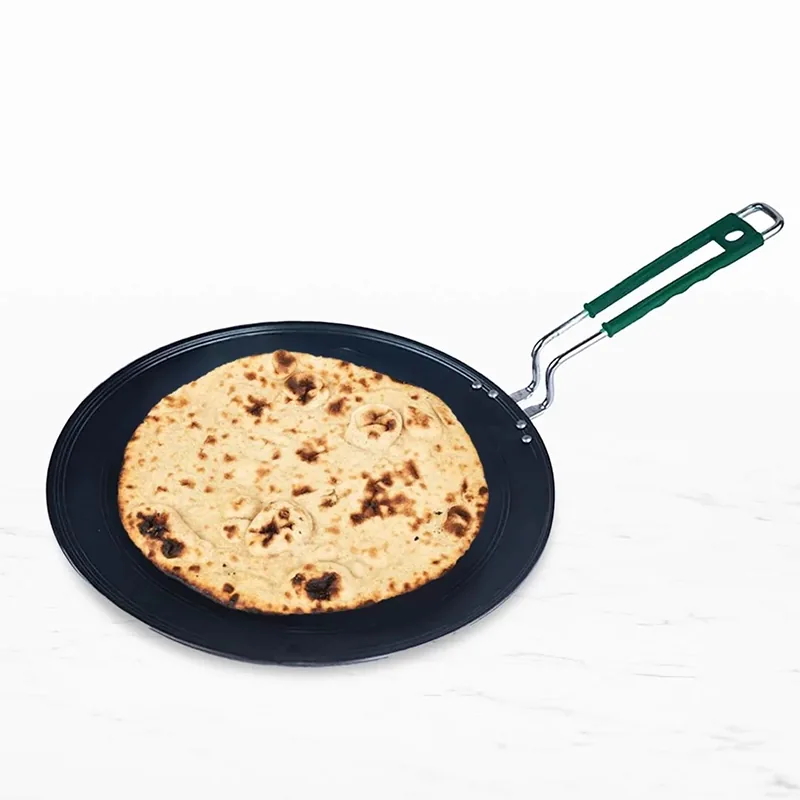
- MaterialSheet iron, seasoned
- Size25.5 cm or 30.5 cm
- StoveGas and induction
- Price₹769 (25.5 cm), ₹859 (30.5 cm)
The classic concave iron tawa is still the best tool for soft rotis and phulkas. It heats quickly, and the curve keeps the roti centred while you turn it.
This tawa is made from sheet iron rather than cast iron, so it is much lighter. The brand lists gas and induction use and a silicone handle that stays cooler than bare metal.
Sheet iron is thinner, so it heats and cools faster than cast iron. That suits rotis, which cook in under a minute, better than it suits thick dosas.
- Very affordable
- Light and quick to heat
- Traditional concave shape
- Can rust if stored damp
- Thinner base cools faster
- Not ideal for large dosas
Who it’s for: any home that makes roti or chapati daily and wants a long-lasting, chemical-free tawa on a budget.
4. Stahl Steel Kadhai, Triply Artisan Series
Best tri-ply kadai
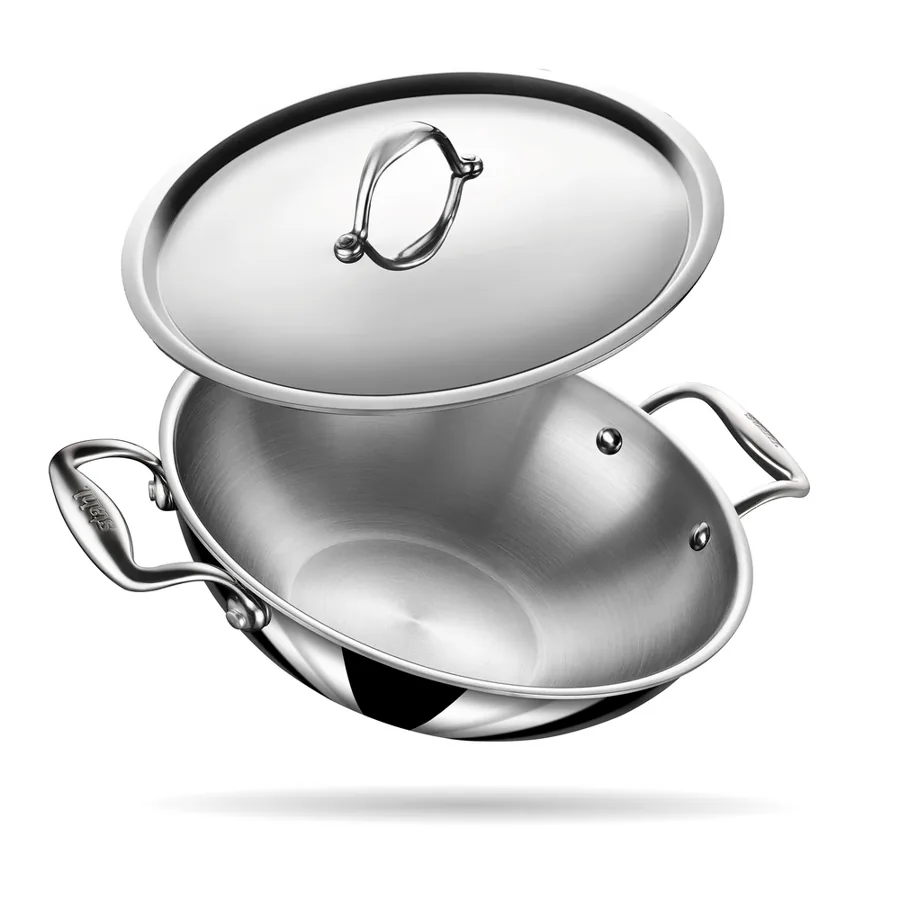
- MaterialTri-ply stainless steel, full body
- Sizes16 cm (0.8 L) to 30 cm (5.1 L)
- StoveGas and induction
- Price₹1,939 to ₹3,439
A tri-ply steel kadai is the most versatile pan in an Indian kitchen. It handles sabzi, curries, tadka and shallow frying, and it does not react with tomatoes or tamarind.
Stahl says the three layers run through the entire body, not just the base. That means heat spreads up the sides as well, so gravies are less likely to scorch at the bottom.
The range comes in eight sizes, from a 16 cm one-person kadhai to a 30 cm model for nine or ten people. It has cast stainless steel handles, a steel lid and a three-year warranty against manufacturing defects.
- Even heat through the whole body
- Safe with acidic gravies
- Eight sizes to choose from
- Food sticks if the pan is not preheated
- Steel handles get warm
- Costs more than single-layer steel
Who it’s for: anyone replacing an old aluminium or non-stick kadai with something that will last decades.
5. Meyer Trivantage Pro Triply Deep Kadhai with Lid, 24 cm
Best for large families
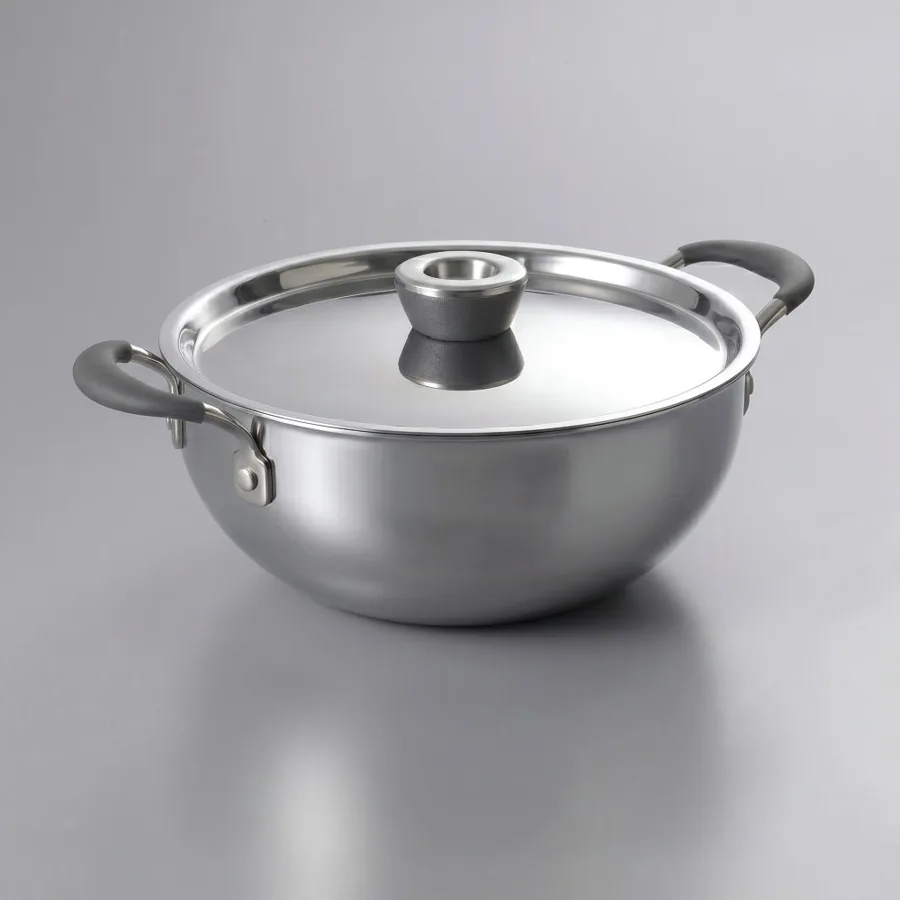
- MaterialTri-ply, 304 steel interior
- Capacity3.6 L, deep body
- StoveGas and induction
- Price₹3,935
A deep kadai is what you want for biryani, chole, large batches of sabzi and anything that bubbles and splatters. The extra depth keeps oil and gravy inside the pan.
Meyer describes a 304 food-grade steel interior, an aluminium core and an induction-ready base. It is listed as metal-utensil safe, with silicone-grip handles and a lid with a removable knob for cleaning.
At 3.6 litres, it comfortably feeds a family of five or six, with room left to stir without spilling.
- Deep 3.6 L body
- 304 steel cooking surface
- Cool-grip handles
- Pricier than most kadais
- Heavier when full
- Needs preheating to avoid sticking
Who it’s for: joint families and anyone who cooks large one-pot meals several times a week.
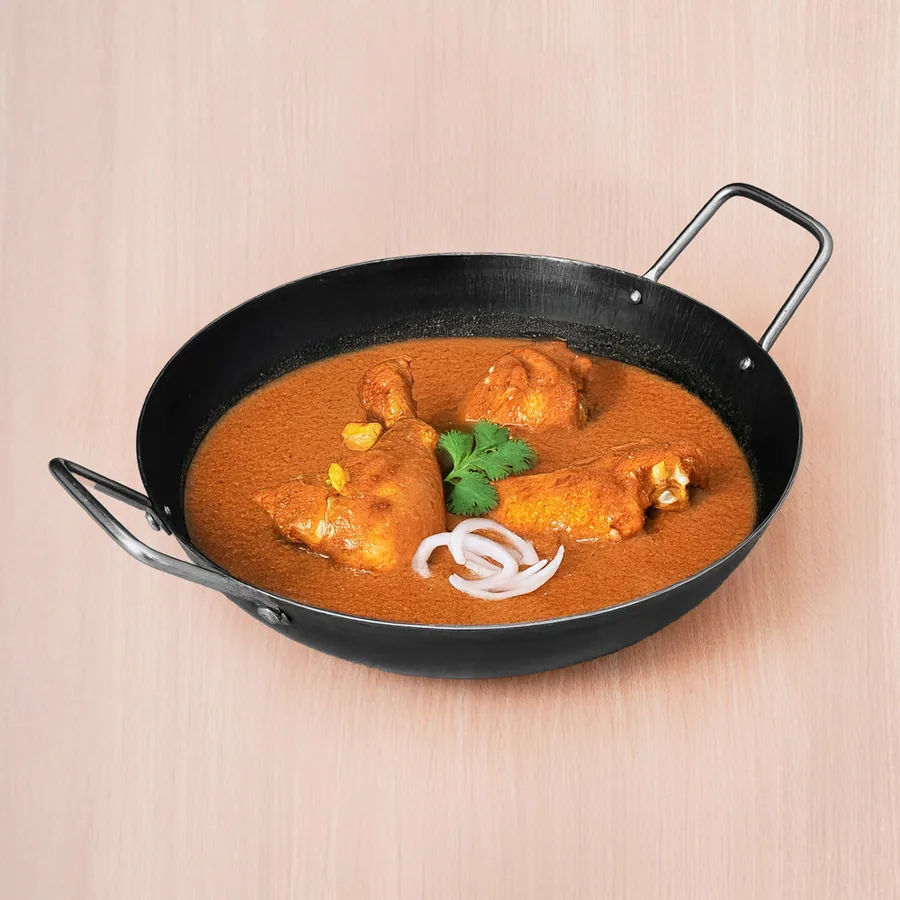
6. The Indus Valley Pure Sheet Iron Kadai
Best for deep frying
- MaterialSheet iron, seasoned
- Sizes1.4 L, 2 L, 4.4 L
- StoveGas and induction
- Price₹539 to ₹949
The iron kadai is India’s original deep-fryer. Pakoras, puris, vadas and bhajis all come out crisp because iron holds frying temperature well when food goes in.
This kadai is pure sheet iron with a stainless steel handle, and the brand lists gas, induction, OTG and campfire use. Three sizes cover everything from a small tadka batch to festival frying.
Iron is also the most forgiving pan for very high heat. You can heat oil to smoking point without worrying about damaging a coating.
- Ideal for deep frying
- Very low price
- Handles extreme heat
- Rusts if not dried and oiled
- Not for long-simmered sour gravies
- Handle gets hot
Who it’s for: anyone who deep fries regularly, or wants an inexpensive, chemical-free second kadai.
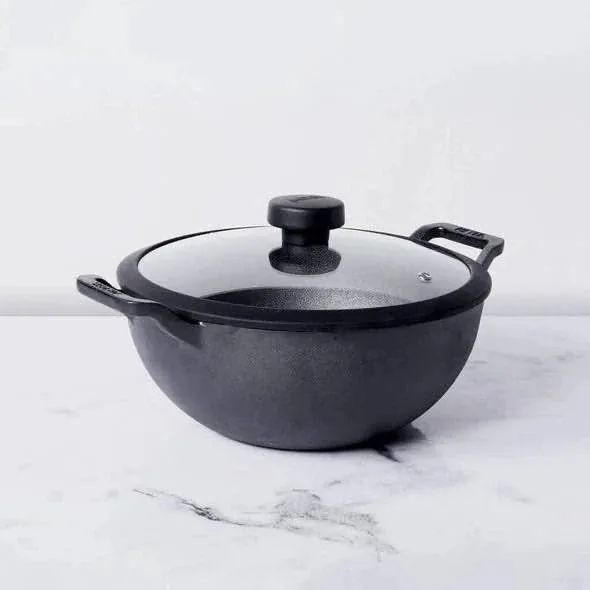
7. Meyer Pre-Seasoned Cast Iron Deep Kadai with Glass Lid, 24 cm
Best cast iron kadai
- MaterialPre-seasoned cast iron
- Size24 cm, deep, glass lid
- StoveAll cooktops
- Price₹2,642
Cast iron kadais shine for slow-cooked dishes like keema, dry sabzis and bhuna masala, where steady heat matters more than speed.
Meyer says this kadai has no enamel or chemical coating, is oven-safe to 180°C and metal-utensil safe, and carries a lifetime warranty. The glass lid lets you check food without losing steam.
Its thick walls take longer to heat than steel, but once hot they hold temperature even on a low flame, which saves gas on long recipes.
- Steady, even heat
- Lifetime warranty
- Glass lid included
- Heavy
- Slow to heat up
- Avoid long acidic simmering
Who it’s for: cooks who enjoy traditional slow cooking and want a kadai that improves with age.
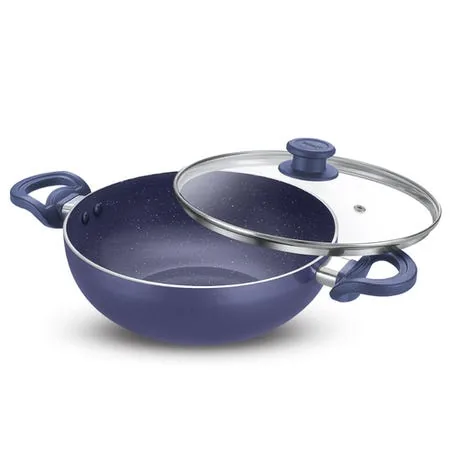
8. Prestige Ceraglide Ceramic Coating Deep Kadai, 24 cm
Best PFAS-free non-stick
- MaterialCeramic-coated aluminium
- Size24 cm, 3 L, glass lid
- StoveGas and induction
- Price₹2,065
Many Indian shoppers now look specifically for PFAS-free cookware. Ceramic coatings are the main non-stick option that avoids PTFE, the material behind most traditional non-stick pans.
Prestige lists this Ceraglide kadai as PFOA and PFAS free, with a ceramic coating, cool-touch handles and support for both gas and induction. The 3-litre deep body suits curries and gravies for a family of four.
Ceramic gives easy release with little oil when new. It does lose slickness faster than PTFE, so use low to medium heat and wooden or silicone tools.
- PFOA and PFAS free (brand claim)
- Works on induction
- Good price for a ceramic kadai
- Ceramic wears faster than steel or iron
- Not for high-heat tadka
- Use wooden or silicone tools
Who it’s for: health-conscious homes that want non-stick convenience without PTFE coatings.
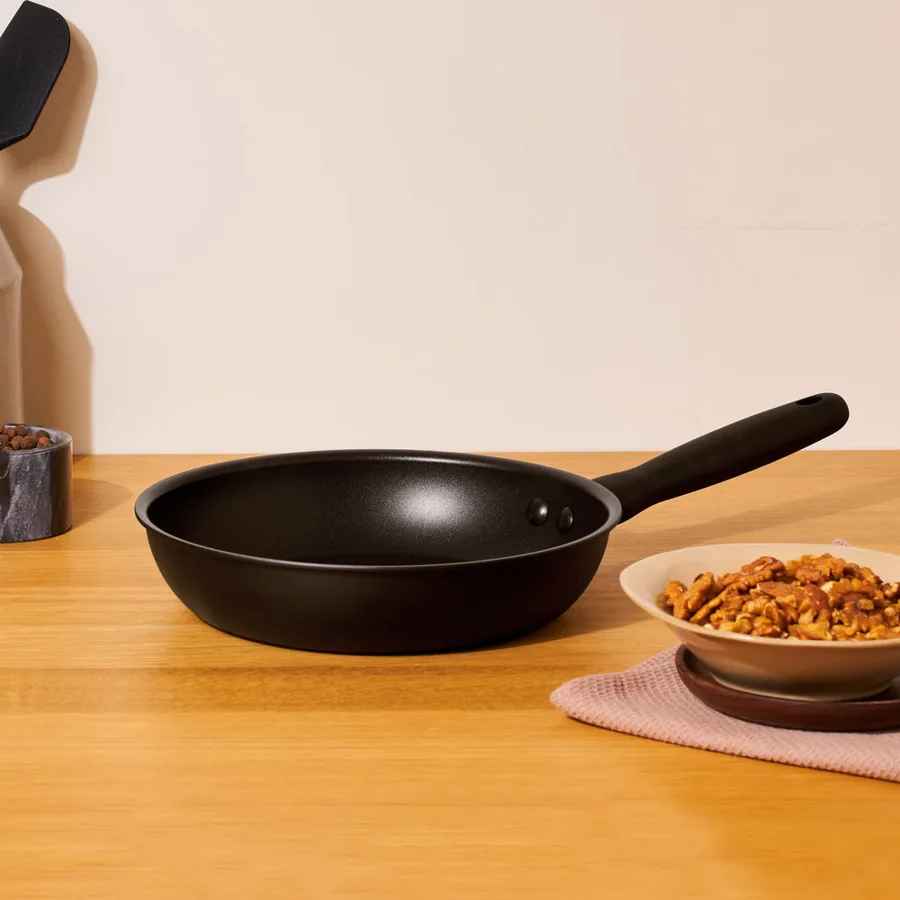
9. Meyer Midnight Hard Anodised Non-Stick Frypan, 24 cm
Best everyday frying pan
- MaterialHard anodised aluminium, non-stick
- Size24 cm
- StoveGas and induction
- Price₹2,220
Every kitchen needs one flat pan for omelettes, bread toast, paneer tikka and quick stir-fries. Among the best quality nonstick frying pans, hard anodised aluminium is tougher than plain aluminium and heats evenly.
Meyer lists this pan as made without PFOA, with an induction base, dishwasher-safe body, cool-touch handles and oven safety up to 180°C. The brand also says the surface has no exposed aluminium.
A 24 cm size suits two to four people. It is light enough to toss vegetables, yet heavy enough not to warp on a gas flame.
- Works on induction
- Tough hard anodised body
- Easy release and cleaning
- PTFE-type non-stick, not ceramic
- Keep heat low to medium
- Coating will eventually wear
Who it’s for: busy homes that want one reliable non-stick pan for breakfasts and quick meals.
10. Meyer Presta 4L Tri-ply Pressure Pan
Best pressure pan
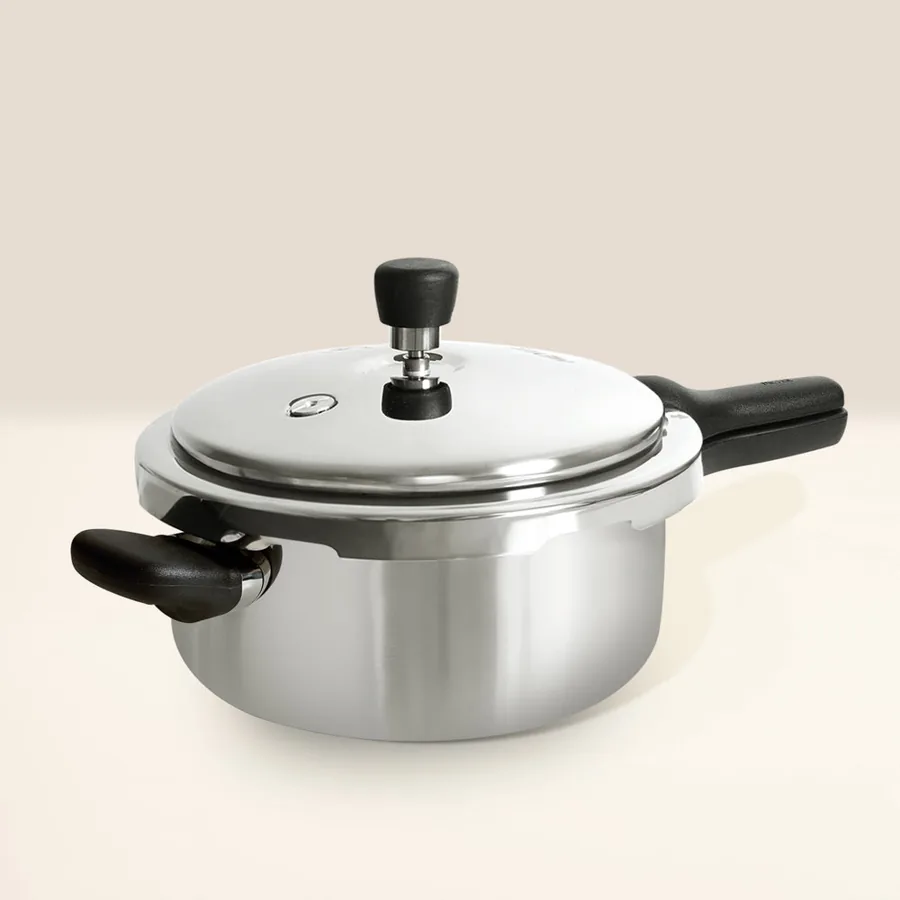
- MaterialTri-ply stainless steel
- Capacity4 L, wide pan shape
- SafetyISI-certified, gasket release system
- Price₹4,613
A pressure pan is the Indian kitchen’s shortcut: a wide, shallow pressure cooker you can also use as a kadai. It cooks dal, pulao, rajma and sabzi much faster than an open pan.
Meyer describes tri-ply stainless steel construction, ISI certification, a gasket release system for excess pressure and a step lid that reduces spills. Stay-cool phenolic handles make it easier to move.
The wide shape lets you sauté onions and masala first, then close the lid and pressure cook in the same pan.
- Doubles as a kadai
- ISI-certified
- Tri-ply for even browning
- Highest price on this list
- Check the listing for induction support
- Follow fill limits carefully
Who it’s for: anyone who cooks dal or rice every day and wants to save time and gas.
Also worth a look
These pans did not make the main ten but are excellent for specific dishes. All link to the brand’s own website.
- Tadka pan: The Indus Valley Pure Sheet Iron Tadka Pan, ₹399. A small iron pan for tempering spices at high heat.
- Paniyaram or appe: The Indus Valley Cast Iron Paniyaram Pan, 9 pits, ₹949.
- Appam: Meyer Pre-Seasoned Cast Iron Appam Pan, 20 cm, ₹2,220, induction compatible.
- Premium cast iron dosa tawa: Stahl Blacksmith Signature Dosa Tawa, 28 cm ₹2,769 or 30 cm ₹2,839, with an acacia wood handle.
- Tri-ply ceramic kadai: The Indus Valley Tri-ply Ceramic Kadai, 24 cm, ₹3,099. A steel body with a PFOA- and PFAS-free ceramic coating, per the brand.
Cookware comparison: which pan material is best for Indian cooking?
No single material is best for everything. Indian cooking moves between very high heat, long simmering and sour gravies, so most kitchens do best with two or three materials.
| Material | High heat and tadka | Sour gravies | Upkeep | Weight | Typical price |
|---|---|---|---|---|---|
| Cast iron | Excellent | Short cooking only | Dry and oil after use | Heavy | ₹900 to ₹3,000 |
| Sheet iron | Excellent | Short cooking only | Dry and oil after use | Light | ₹400 to ₹1,000 |
| Tri-ply stainless steel | Very good | Excellent | Low | Medium | ₹1,900 to ₹4,500 |
| Hard anodised aluminium | Good (bare), limited (non-stick) | Good | Low | Light | ₹1,500 to ₹3,000 |
| PTFE non-stick | Poor | Good | Gentle handling | Light | ₹500 to ₹2,500 |
| Ceramic non-stick | Poor | Good | Gentle handling | Light to medium | ₹1,500 to ₹3,500 |
Cast iron
Cast iron is thick and heavy, which is exactly why it holds heat so well. It is the best material for dosa, uttapam, and searing paneer or vegetables.
It has no coating to peel, and the seasoning grows stronger with use. The trade-offs are weight, slower heating and the need to dry and oil it after washing.
Cast iron can add small amounts of dietary iron to food, especially moist and acidic dishes cooked for longer. Long simmering of tamarind or tomato gravies can also strip seasoning and leave a metallic taste.
Sheet iron and carbon steel
Sheet iron is the traditional material of Indian kadais and roti tawas. It is thinner than cast iron, so it heats quickly and is far lighter to handle.
Carbon steel behaves in a similar way. Both need seasoning and both rust if left wet, but both can take any amount of heat. Read more in our guide to whether carbon steel cookware is safe.
Tri-ply stainless steel
Tri-ply cookware sandwiches an aluminium core between two layers of steel. The aluminium spreads heat evenly, and the steel gives a durable, non-reactive cooking surface.
That makes tri-ply the safest choice for sour dishes: sambar, rasam, tomato gravies and kokum curries. Look for “full body” tri-ply, where the layers run up the sides, not just a tri-ply base.
Steel does stick if you add food to a cold pan. Heat it first, add oil, then add food. Our article on why stainless steel pots stick explains the technique.
Hard anodised aluminium
Hard anodising turns the surface of aluminium into a much harder oxide layer. It resists scratches and does not react with food the way plain aluminium can.
Many Indian brands use hard anodised bodies for tawas, kadais and pressure cookers. Most are sold with a non-stick layer on top. See is hard anodized aluminum cookware safe for the details.
PTFE nonstick
Most traditional non-stick pans use a PTFE coating. It gives the easiest food release and is very forgiving for eggs, dosa and low-oil cooking.
The weakness is heat. PTFE coatings can start to break down at very high temperatures, commonly cited as above about 260°C. Never heat an empty non-stick pan, and do tadka in an iron or steel pan instead.
Ceramic nonstick
Ceramic coatings are made from a silica-based layer rather than PTFE. Brands often market them as PFAS-free and non-toxic, which is why they are popular with health-conscious buyers.
Ceramic releases food well when new but usually loses slickness sooner than PTFE. Learn more in is ceramic coated cookware safe and does ceramic cookware have Teflon.
What about titanium pans?
“Titanium” pans sold in India are usually aluminium or steel pans with a titanium-reinforced non-stick coating. Fully solid titanium cookware is rare and expensive.
Read the product description carefully to see whether titanium is the body or only part of the coating. Our guide on whether titanium is safe for cookware covers both types.
The best pan for each Indian dish
If you are building a kitchen from scratch, it helps to think dish by dish. This table shows which pan does each everyday job best, and a good second choice if you already own it.
| Dish | Best pan | Good alternative | Why |
|---|---|---|---|
| Dosa, uttapam, adai | Cast iron flat tawa | Thick non-stick tawa | Steady heat gives a crisp, even base |
| Roti, phulka, chapati | Sheet iron concave tawa | Hard anodised tawa | Heats fast and handles high flame |
| Paratha, thepla | Cast iron or sheet iron tawa | Non-stick tawa | Browns well with little ghee |
| Tadka and tempering | Iron tadka pan | Small tri-ply pan | Takes smoking-hot oil safely |
| Pakora, puri, vada | Sheet iron kadai | Tri-ply deep kadai | Holds oil temperature when food goes in |
| Sambar, rasam, tomato gravy | Tri-ply steel kadai or pot | Ceramic kadai | Non-reactive with sour ingredients |
| Biryani, pulao | Deep tri-ply kadai | Pressure pan | Even heat stops the bottom layer burning |
| Dal, rajma, chole | Pressure pan or cooker | Tri-ply deep kadai | Much faster cooking, less gas |
| Poha, upma, sabzi | Tri-ply kadai | Cast iron kadai | Easy stirring and good browning |
| Omelette, chilla, eggs | Non-stick frying pan | Well-seasoned cast iron | Easy release with little oil |
| Appam, paniyaram | Cast iron appam or paniyaram pan | Non-stick version | Even heat in every cavity |
| Fish fry, paneer tikka | Cast iron grill pan, skillet or tawa | Hard anodised frying pan | Strong sear without sticking |
Notice how often iron and tri-ply steel appear. Those two materials cover almost every high-heat and everyday job, which is why we recommend them as the core of an Indian kitchen.
Steel vs aluminium: which is better for Indian cooking?
This is one of the most common questions Indian cooks ask, often as “steel ya aluminium, kaun sa better hai?” The short answer: tri-ply steel for most daily cooking, and hard anodised aluminium if you want light, quick-heating pans.
Stainless steel (tri-ply)
Non-reactive with sour foods, very durable and safe with metal spoons. It heats evenly when the core runs through the body, but costs more and needs preheating.
Aluminium (hard anodised)
Light, affordable and quick to heat. The anodised surface resists reaction with food. Most versions carry a non-stick coating, so treat them more gently.
The same logic applies to pressure cookers. Steel cookers cost more but last longer and suit sour dishes. Aluminium cookers are lighter, cheaper and heat faster.
Either way, avoid thin, uncoated aluminium for sour dishes cooked for long periods. Plain aluminium can react with acidic food, which affects taste and discolours the pan. For cleaning tips, see how to clean aluminum pots.
Best pan for dosa: cast iron or non-stick?
Both make good dosas. The right choice depends on how often you cook and how much upkeep you are happy with.
- Choose cast iron for the crispest dosas, unlimited heat and a tawa that lasts decades. Accept the weight and the need to oil it after use.
- Choose non-stick for very thin, low-oil dosas with almost no learning curve. Accept that the coating will need replacing in a few years.
Before pouring batter, sprinkle a few drops of water on the tawa. If they sizzle and vanish in a couple of seconds, it is ready. If they sit still, wait. If they explode, lower the flame slightly.
For iron tawas, wipe a thin film of oil with a cut onion before each dosa. It cleans the surface and helps the batter release. Avoid washing a hot cast iron tawa with cold water, which can crack it.
Best kadai for deep frying and curries
Kadais do two very different jobs, so it often makes sense to own two.
- For deep frying: an iron kadai. It holds oil temperature, takes extreme heat and costs very little. Our pick is The Indus Valley Pure Sheet Iron Kadai.
- For curries and sabzi: a tri-ply steel kadai. It handles sour gravies and long simmering safely. Our picks are Stahl and Meyer Trivantage Pro.
- For low-oil cooking: a ceramic kadai such as the Prestige Ceraglide, used on low to medium heat.
For size, a 24 cm kadai suits a family of four. Go to 26 to 28 cm for five to eight people, and 20 cm or smaller for one or two.
Pans for small kitchens, students and couples
If you cook for one or two, or live in a rented flat with limited storage, you do not need ten pans. Three well-chosen pieces cover nearly everything.
- One 20 cm tri-ply kadai with lid for sabzi, dal tadka, Maggi and small curries.
- One 25 to 26 cm iron tawa for roti, paratha and the occasional dosa.
- One 24 cm non-stick or ceramic frying pan for eggs, toast and quick stir-fries.
On a single induction cooktop, make sure all three have flat, magnetic bases. Sheet iron and tri-ply are the lightest induction-friendly materials, which helps in small kitchens.
A pressure pan is worth adding if you cook dal or rice most days. It doubles as a kadai, so it saves space as well as time.
Is non-stick cookware safe? PFOA, PFAS and PTFE explained
These three terms appear on almost every non-stick box in India, and they are often confused. Here is what each one means for you.
- PTFE is the slippery coating used on most traditional non-stick pans.
- PFOA is a chemical once used to make PTFE. Most major brands now state their coatings are made without it.
- PFAS is the wider family of fluorinated chemicals. PTFE itself belongs to this family, which is why “PFAS-free” usually means a ceramic coating.
For everyday use, the practical rules matter most. Keep non-stick pans on low to medium heat, never heat them empty, and replace them once the coating is visibly scratched or peeling.
If you want to avoid coatings altogether, choose cast iron, sheet iron or tri-ply steel. Those materials make up six of our ten picks.
Gas stove vs induction: what to check before buying
Many Indian kitchens now use an induction cooktop alongside a gas stove. Not every pan works on both, so check before you buy.
- Look for “induction compatible” on the brand page. If it is not listed, assume the pan is for gas only.
- Do the magnet test. If a fridge magnet sticks firmly to the base, the pan will usually work on induction.
- Check the base is flat. Curved roti tawas and round-bottom kadais lose contact with the glass and heat poorly.
- Match the base size to the coil. A base much smaller than the coil may not be detected at all.
- Lift, don’t slide. Heavy cast iron can scratch the induction glass if dragged.
For more, read what is induction ready cookware and can induction cookware be used on a gas stove. If you need a cooktop, see our Prestige induction cooktop India picks.
Best cookware brands in India
Indian shoppers often search for the best rated cookware brands before choosing a product. These are the brands behind our picks, including some of the best nonstick cookware brands in India, plus one major name worth knowing.
The Indus Valley
An Indian brand focused on chemical-free cookware: cast iron, sheet iron, tri-ply and ceramic. It is one of the best iron cookware brands in India for tawas, kadais and paniyaram pans at low prices. Official store.
Meyer India
Meyer’s Indian store sells tri-ply, cast iron, hard anodised and ceramic ranges, plus pressure cookers and pressure pans. Many products list long warranties. Official store.
Stahl
Stahl specialises in tri-ply and hybrid cookware made for Indian kitchens, with kadhais in a wide range of sizes and three-year warranties on many products. Official store.
Prestige
One of India’s most familiar kitchen brands, selling non-stick, ceramic, hard anodised, cast iron and stainless steel cookware alongside pressure cookers and appliances. Official cookware store.
Hawkins
Best known for pressure cookers, Hawkins also makes the Futura range of hard anodised and non-stick cookware, plus tri-ply, cast iron and ceramic non-stick lines. Browse the hard anodised, tri-ply and ceramic non-stick ranges.
Budget brands such as Pigeon and Lifelong are widely sold on marketplaces. If you choose one, check the base thickness, coating type and induction support carefully, because specifications vary a lot between models.
For pressure cookers from these brands, see our Indian pressure cooker reviews.
Cookware set or single pans: which should you buy?
Cookware sets look like good value, and many Indian shoppers search for the best cookware set before anything else. In practice, sets often include pieces you rarely use while missing the ones you need most.
Buy a set if…
You are setting up a new home, want matching lids and handles, and the set includes a kadai, a frying pan and a saucepan you will genuinely use every week.
Buy single pans if…
You cook a lot of dosa and roti, want different materials for different jobs, or already own some pans. You will spend less and get better tools.
A mixed kit usually beats a single-material set for Indian food. For example, an iron tawa, a tri-ply kadai and one ceramic pan outperform a five-piece non-stick set for most families.
If you do want a set, tri-ply steel sets are the most durable. Several brands in this guide, including Meyer, Stahl and The Indus Valley, sell kadai and frying pan combinations on their official stores.
Looking for a safe, healthy cookware set in India? Choose cast iron, sheet iron or tri-ply steel sets, which have no coating to wear off, or a ceramic set if you need non-stick.
Price guide: what to spend in ₹
You do not need to spend a lot to cook well. Iron pans are the cheapest and often the longest lasting.
| Budget | What you get | Example from this guide |
|---|---|---|
| Under ₹1,000 | Sheet iron tawas, kadais and tadka pans; basic cast iron | Sheet iron kadai from ₹539, roti tawa from ₹769 |
| ₹1,000 to ₹2,500 | Cast iron tawas, ceramic and hard anodised pans, small tri-ply | Cast iron dosa tawa ₹1,449, Prestige ceramic kadai ₹2,065 |
| ₹2,500 to ₹5,000 | Large tri-ply kadais, cast iron with lids, pressure pans | Meyer Trivantage Pro ₹3,935, Presta pressure pan ₹4,613 |
The best value cookware basics for a family of four cost roughly ₹4,500 to ₹6,000: one cast iron dosa tawa, one sheet iron roti tawa, one tri-ply kadai and one nonstick or ceramic frying pan.
How to care for each type of pan
Seasoning a new cast iron tawa
Pre-seasoned pans are ready to use, but a few extra rounds of seasoning make them noticeably more non-stick. Many brands recommend it, especially for dosa tawas.
- Wash and dry the new tawa, then heat it on a low flame until fully dry.
- Rub a very thin layer of oil over the whole surface with a cloth or paper towel. Wipe off any excess.
- Heat until it just starts to smoke, then switch off and let it cool on the stove.
- Repeat three or four times. Each layer builds a smoother, darker surface.
- Start with oily foods such as parathas or shallow frying for the first week before making dosas.
If your first dosas stick, do not worry. Scrape the tawa clean, re-oil it and keep cooking. The surface improves with every use.
Cast iron and sheet iron daily care
- Wash with hot water and a soft scrubber. A little mild soap is fine for seasoned pans.
- Dry on the flame for a minute until every trace of water is gone.
- Wipe a thin layer of oil over the surface while it is still warm.
- Store in a dry place, ideally with a paper towel inside if you stack pans.
If rust appears, scrub it off, dry the pan and re-season it. Our guides on how to remove rust from pots and pans and how to store cast iron pots walk through it.
Tri-ply stainless steel
Soak stuck-on food in warm water before scrubbing. A paste of baking soda and water removes heat stains and rainbow marks without scratching the surface.
Steel tolerates steel scrubbers, but gentler pads keep it looking new for longer.
Non-stick and ceramic
Let the pan cool before washing, use a soft sponge and avoid harsh scrubbers. Use wooden, silicone or nylon tools only, unless the brand says the coating is metal-utensil safe.
Replace non-stick pans once the coating is deeply scratched, flaking or no longer releases food.
Common mistakes when buying pans in India
Most disappointing pans are not bad products. They are the wrong pan for the job, or the wrong pan for the stove. These are the mistakes we see most often.
- Buying non-stick for tadka. Smoking-hot oil damages most coatings. Use iron or steel for tempering.
- Ignoring the stove. A beautiful pan that does not work on your induction cooktop is wasted money.
- Choosing thin aluminium for gravies. It scorches easily and can react with sour food.
- Buying too small. A crowded kadai steams food instead of frying it. Size up if in doubt.
- Trusting “lifetime non-stick” claims. Every coating wears eventually. Iron and steel are the true lifetime options.
- Buying from unknown sellers. Copies of popular tawas and kadais are common. Buy from the brand’s site or an authorised seller.
Buying checklist
- List the dishes you cook most. Dosa, roti, deep frying, gravies or dal each point to a different pan.
- Check your stove. If you use induction, confirm compatibility on the brand page.
- Choose the material for the heat. Iron or steel for high heat, non-stick or ceramic for low-oil cooking.
- Pick the right size. 24 cm kadai for four people; 28 cm tawa for full-size dosa.
- Check the base thickness. Thicker bases resist warping and hot spots.
- Read the warranty. Cast iron and tri-ply often carry long warranties; coatings usually do not.
- Buy online from the brand or an authorised seller to avoid copies and get warranty support. Check whether a lid is included, since frying pans and kadais are often sold with and without one.
Frequently asked questions
Which cooking pan material is safest for health?
Cast iron, sheet iron and stainless steel are the most popular choices for coating-free cooking. They have no non-stick layer to wear off. Good non-stick and ceramic pans are also safe for everyday use when kept on low to medium heat.
Which is the best nonstick pan in India?
For a PTFE non-stick pan, the Meyer Midnight hard anodised frypan is our pick because it is induction-ready and made without PFOA. For a PFAS-free option, choose the Prestige Ceraglide ceramic kadai.
Is a cast iron tawa better than a non-stick tawa for dosa?
Cast iron makes crisper dosas and lasts far longer, but it is heavier and needs oiling after use. Non-stick is easier for beginners and uses less oil, but the coating wears out in a few years.
Steel or aluminium kadai: which is better?
Tri-ply stainless steel is better for most Indian cooking because it does not react with sour ingredients and lasts for decades. Hard anodised aluminium is lighter and heats faster, but usually carries a non-stick coating that needs gentler use.
Can I use metal spoons on non-stick pans?
Only if the brand states the coating is metal-utensil safe. Otherwise use wooden, silicone or nylon tools. Metal can scratch the coating and shorten the pan’s life.
Do cast iron pans work on induction?
Yes. Cast iron and sheet iron are magnetic, so they work on induction. Choose a flat base for good contact, and lift heavy pans rather than sliding them across the glass.
Are PFAS-free pans completely safe?
“PFAS-free” usually means a ceramic coating instead of PTFE. Ceramic pans are a good choice if you want to avoid fluorinated coatings. The claim comes from the brand, so buy from trusted makers and replace the pan when the coating wears.
What size kadai is best for a family of four?
A 24 cm kadai, holding about 2.4 to 3.6 litres, suits most families of four. Choose 26 to 28 cm for larger families or batch cooking.
How often should I replace my cooking pans?
Iron and steel pans can last decades with basic care. Non-stick and ceramic pans usually need replacing every two to five years, or sooner if the coating is scratched or peeling.
Which cookware is best for induction in India?
Tri-ply stainless steel, cast iron and sheet iron all work well on induction because their bases are magnetic. Hard anodised and non-stick pans only work if they have a special induction base, so check the listing.
Is aluminium cookware bad for health?
Hard anodised and coated aluminium pans keep food away from bare aluminium, so they are widely considered safe. Thin, uncoated aluminium can react with sour foods, so avoid long-simmered acidic dishes in it.
Which pan is best for tadka?
A small iron tadka pan is best because it handles very hot oil and costs very little. A small tri-ply steel pan also works. Avoid non-stick for tadka, since high heat damages the coating.
Can I use a non-stick pan on high flame?
It is best not to. Non-stick coatings last longer and perform better on low to medium heat. Never heat an empty non-stick pan, and use iron or steel when a recipe needs very high heat.
How do I know if my non-stick pan is damaged?
Look for deep scratches, flaking, bubbling or patches where food sticks every time. If the coating is visibly peeling or the base is badly warped, it is time to replace the pan.
Is an iron tawa better than non-stick for roti?
Yes, for most cooks. A sheet iron tawa heats quickly, handles the high heat that puffs a phulka, and costs very little. Non-stick is not needed because roti uses almost no oil.
Final verdict
The best cooking pans in India are the ones that match Indian food. Start with a cast iron dosa tawa, a sheet iron roti tawa and a tri-ply steel kadai. Those three handle most daily cooking for years.
Add one non-stick or ceramic pan for eggs and low-oil dishes, and a pressure pan if you cook dal daily. Buy from the brand’s own website or an authorised seller, and check induction support if you need it.

- Top 10 Best Ceramic Cooker Under 100 2026 - October 30, 2026
- Top 10 Best Portable Ceramic Cooker 2026 - October 30, 2026
- Top 10 Best Compact Ceramic Cooker 2026 - October 30, 2026