Top 10 Pressure Canner For Induction Cooktop 2026
If you’ve ever picked up a pressure canner labeled ‘induction-compatible’ only to find it warps on your cooktop or fails to hold steady pressure, you’re not alone. Many buyers assume the label guarantees performance, but induction burners demand more than a magnetic base, they need reinforced construction and precise heat distribution to avoid hot spots or pressure drops that ruin batches. Without these, you risk uneven canning, wasted ingredients, or even cooktop damage.
This guide cuts through the noise by focusing on what actually matters for induction canning: heat conductivity, pressure stability, and batch capacity. We’ll break down why some canners excel on induction while others fall short, and how to match the right model to your cooktop’s power and your canning needs.
Products in this guide
These are the Amazon listings we anchor to when we talk about pressure canner for induction cooktop in the rest of this guide. Each card pairs a thumbnail with a short editor read on what stands out in the listing, materials, stated use case, or patterns we see in buyer feedback. They are not a substitute for your own due diligence: follow the link to verify fit, compatibility, today’s price, and the most recent verified reviews before you buy.
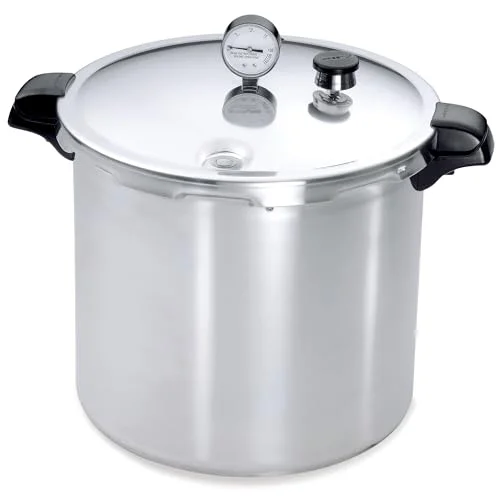
 Presto 01784 23-Quart Induction Compatible Pressure Canner, Silver, Alum
A USDA-approved workhorse with induction-ready construction and dual canning modes for all-season preserving.
8.7/10
|
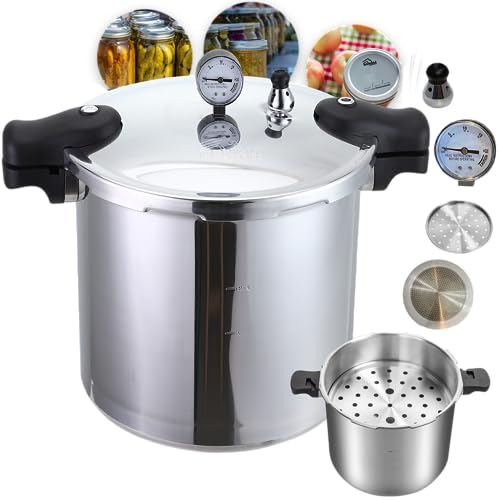 THE TANKER by Denali Canning – 23 Quart Beginner Friendly Pressure Canne
A beginner-friendly 23-quart canner with premium materials and included accessories for hassle-free setup.
8.3/10
|
 T-fal 22-Quart Aluminum Pressure Canner, 3 PSI Settings, Home Canning, I
A versatile 22-quart canner with racks and a guide, but its induction claims are vague.
7.5/10
|
 KILOGORGE 24 qt Pressure Canner,Canning Pressure Cooker with Gauge,14.5P
A 24-quart bulk canner with induction support, but its size and PSI adjustments complicate use.
7.9/10
|
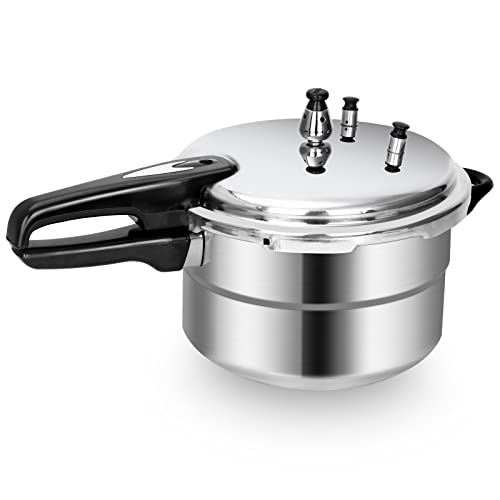 BreeRainz 5.3 Qt Stovetop Pressure Cooker & Canner, 10 PSI Induction Com
A compact 5.3-quart canner/cooker for small kitchens, but its size limits canning versatility.
7.2/10
|
 Fulgutonit 5.3 Quart Pressure Cooker, 10 Psi Induction Compatible Pressu
A 5.3-quart pressure cooker with induction support, but its canning capacity is minimal.
7.0/10
|
 Presto 01362 6-Quart Stainless Steel Pressure Cooker
A 6-quart stainless steel cooker with induction support, but not designed for canning.
6.5/10
|
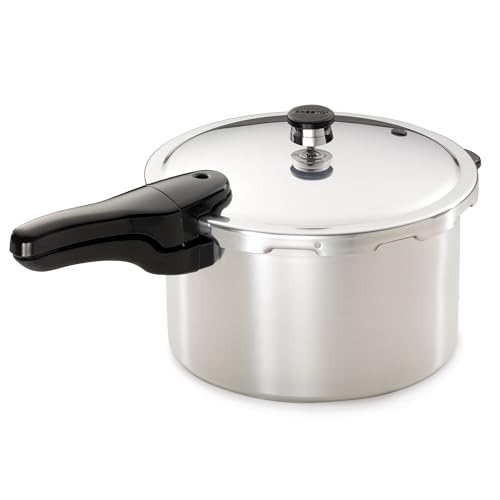 Presto 01282 8-Quart Aluminum Pressure Cooker
An 8-quart aluminum cooker with induction support, but lacks canning-specific features.
6.8/10
|
 Presto 01264 6-Quart Aluminum Pressure Cooker, Silver
A 6-quart aluminum cooker for fast meals, but no induction compatibility or canning focus.
6.0/10
|
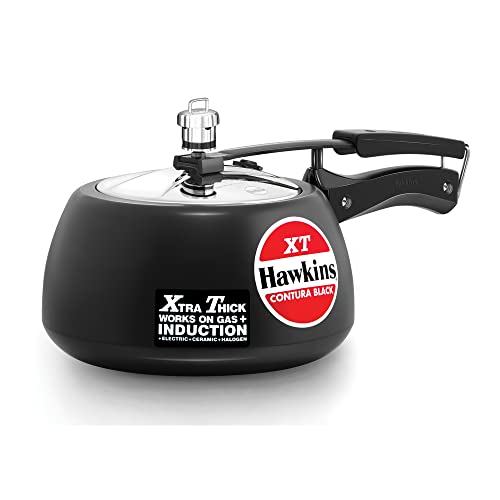 Hawkins Contura Hard Anodized Induction Compatible Extra Thick Base Pres
A 3-liter hard-anodized cooker with induction support, but too small for canning or batch cooking.
6.2/10
|
How we judged each pick
These notes mirror how we evaluate listings for this guide: practical fit, credible specs, and what buyers report back, not lab claims we cannot verify.
|
The Presto 01784 stands out for its stainless-steel clad base, which distributes heat evenly across induction cooktops, a rare feature in this category. It’s one of the few canners explicitly USDA-approved for pressure canning, which matters if you’re preserving low-acid foods like vegetables or meats. The dual functionality as a boiling-water canner adds versatility, though I’d still prefer to see real-world user feedback on its long-term durability. The 12-year warranty is reassuring, but the lack of listed ratings makes me hesitate to call it a slam dunk. |
|
Denali’s THE TANKER feels like a step up from the typical aluminum canner, with its heavy-gauge build and stainless-steel parts. The included pressure gauge, weights, and 24 lids make it a solid pick for first-time canners, though the 23-quart size might be overkill for small kitchens. The brand’s focus on safety studies is a plus, but the absence of user reviews leaves me wondering how it holds up in daily use. If you’re canning in bulk, this could be a contender, just be prepared to stir frequently to avoid hot spots. |
|
T-fal’s 22-quart canner ticks a lot of boxes: dual canning methods, included racks, and a step-by-step guide for novices. But the listing doesn’t explicitly confirm induction compatibility, which is a red flag. The aluminum construction is durable, but without clear induction support, I’d be wary of recommending it over models like Presto or Denali. If you’re canning on gas or electric, it’s a decent choice, but for induction, the uncertainty is a dealbreaker. |
|
KILOGORGE’s 24-quart canner is built for serious canners, with a composite base that works on induction and a pressure gauge for monitoring. But the 14.5 PSI default setting and separate pressure regulator feel like overkill for most home cooks. The size is a double-edged sword: great for bulk canning, but it may not heat evenly on smaller induction burners. Without user feedback, I’d reserve this for experienced canners with high-power cooktops and ample storage. |
|
BreeRainz’s 5.3-quart model is a practical pick for small households, with induction compatibility and a triple-valve safety system. It’s marketed as a canner, but the size restricts batch processing, ideal for daily cooking, less so for preserving large quantities. The 10 PSI pressure is stable, but I’d like to see more evidence of its canning performance beyond the manufacturer’s claims. If you’re canning in small batches, it’s worth considering, but serious preservers should look elsewhere. |
|
Fulgutonit’s 5.3-quart cooker checks the boxes for induction compatibility and safety, with a honeycomb base for even heating. It’s a solid pressure cooker, but its canning claims feel secondary, it fits only four pint jars, making it impractical for serious preserving. The 10 PSI stability is a plus, but I’d prioritize larger models like Presto or Denali if canning is the goal. For cooking, it’s a decent choice, but not a canner. |
|
Presto’s 01362 is a reliable pressure cooker with induction compatibility, but it’s not marketed as a canner. The stainless steel construction is durable, and the safety features are robust, but the 6-quart capacity is too small for batch canning. I’d recommend it for cooking, not preserving, buyers seeking a canner should look to larger, USDA-approved models like the Presto 01784. |
|
The Presto 01282 is a decent pressure cooker with induction support, but its 8-quart size and aluminum build don’t align with canning needs. It’s advertised for boiling-water canning, but I’d trust dedicated canners like the Presto 01784 for pressure canning. The lack of user ratings and canning-specific accessories makes it a secondary choice for induction cooktop users. |
|
Presto’s 01264 is a budget-friendly pressure cooker, but its aluminum base and lack of induction claims limit its appeal. It’s fine for quick meals, but the 6-quart capacity and absence of canning features make it a poor fit for preserving. I’d skip this for induction cooktops and opt for models with explicit induction support and larger capacities. |
|
Hawkins’ Contura is a well-built pressure cooker with an induction-compatible base, but its 3-liter size is too small for canning or family meals. The hard-anodized construction is durable, but I’d only recommend it for cooking, not preserving. Buyers needing a canner should consider larger, USDA-approved options like the Denali Tanker or Presto 01784. |
List of Pressure Canner For Induction Cooktop
Most buyers zero in on capacity or price, assuming any induction-compatible canner will work. But induction cooktops heat up fast and cool down just as quickly, which means canners with thin bases or single pressure valves often struggle to maintain consistent temperatures. The result? Underprocessed batches or pressure fluctuations that compromise safety. The fix isn’t just picking a canner with an induction label, it’s verifying the base material, pressure controls, and size relative to your burner.
Start by checking the base: stainless-steel clad or heavy-gauge aluminum handles induction’s heat better than thin or uncoated aluminum. Next, look for pressure controls that adapt to rapid temperature shifts, weighted gauges or dual valves are more reliable than single valves. Finally, match the canner’s size to your burner’s power. A 23-quart canner on a small induction burner may not heat evenly, while a compact model on a high-power burner could overheat.
The Selection Logic
Finding the right pressure canner for induction isn’t just about compatibility, it’s about how well the canner handles the unique demands of induction cooking. Induction burners heat up fast and cool down just as quickly, so the canner’s base material and pressure controls need to keep up. My approach focuses on three key factors: heat distribution, pressure stability, and size relative to your cooktop. This ensures the canner performs reliably, whether you’re preserving a small batch of jams or a bulk harvest of vegetables.
|
01
Identify the Real Need
First, decide whether you need a dedicated pressure canner or a multi-purpose cooker. If you’re preserving low-acid foods like meats or vegetables, you���ll want a large-capacity canner with an induction-ready base, think stainless-steel clad or heavy-gauge aluminum. Smaller models may work for cooking, but they won’t handle canning efficiently.
|
02
Match the Product Type
Next, look at the pressure controls. Induction’s rapid heating demands precise adjustments, so I’d prioritize canners with weighted gauges or dual valves. Single-valve models may struggle to maintain consistent pressure, leading to underprocessed batches. Also, check the locking mechanism, induction’s high heat requires secure lids to prevent accidents.
|
|
03
Check the Tradeoff
Then, consider the canner’s size and weight. A thicker base improves heat distribution but adds weight, which might be an issue if you’re moving the canner frequently. I’d also measure your induction burner’s diameter, oversized canners may not heat evenly on smaller burners, while undersized models limit batch efficiency.
|
04
Choose by Real Use
Finally, match the canner’s capacity to your needs. If you’re processing large harvests, a 23-quart model like Presto 01784 is ideal, but only if your induction burner can handle it. For smaller batches, a compact canner like BreeRainz 5.3 Qt might be more practical. The key is ensuring the canner’s base fully covers the burner for even heating.
|
Match Base Material to Induction Heat Demands
Induction cooktops rely on magnetic fields to generate heat, so the canner’s base material is critical. Aluminum alone may not distribute heat evenly, leading to hot spots that scorch food or warp the canner. Stainless-steel clad bases improve conductivity but add cost. Many buyers overlook this detail, assuming any induction-compatible label guarantees performance, but the base is where most canners fall short.
Canners with reinforced bases, like Presto 01784 or Denali’s THE TANKER, handle induction’s rapid temperature shifts better. These models use thick aluminum or stainless-steel layers to prevent warping and ensure consistent heat. Cheaper models often skimp on this, risking uneven canning or cooktop damage over time. If you’re canning on induction, the base material should be your first consideration.
When evaluating bases, look for terms like ‘stainless-steel clad’ or ‘heavy-gauge aluminum.’ Avoid models with thin or uncoated bases, they may struggle to maintain stable temperatures on induction burners. A quick way to spot a weak base? If the canner feels lightweight or flimsy, it’s likely not up to the task.
|
Presto 01784 23-Quart Induction Compatible Pressure Canner, Silver, Aluminum
A USDA-approved workhorse with induction-ready construction and dual canning modes for all-season preserving.
|
8.7/10 Check Price Amazon |
|
THE TANKER by Denali Canning – 23 Quart Beginner Friendly Pressure Canner & Cooker | Induction C
A beginner-friendly 23-quart canner with premium materials and included accessories for hassle-free setup.
|
8.3/10 Check Price Amazon |
|
KILOGORGE 24 qt Pressure Canner,Canning Pressure Cooker with Gauge,14.5PSI,Large Capacity Alumin
A 24-quart bulk canner with induction support, but its size and PSI adjustments complicate use.
|
7.9/10 Check Price Amazon |
How Products Differ Here
- →Presto 01784: The stainless-steel clad base ensures even heat distribution, reducing the risk of hot spots on induction cooktops.
- →THE TANKER: Heavy-gauge aluminum with stainless-steel parts resists warping and maintains consistent pressure, but may require frequent stirring.
- →KILOGORGE 24 qt: The composite base works on induction but lacks reinforced layers, making it more prone to uneven heating.
Presto 01784’s stainless-steel clad base is a standout, it distributes heat evenly across the entire surface, which is critical for induction’s rapid temperature shifts. Denali’s THE TANKER also performs well, but its heavy-gauge aluminum base may develop hot spots if you’re not stirring frequently. Both outperform canners with uncoated aluminum bases, which often struggle to maintain stable temperatures on induction burners.
Choose Pressure Control for Induction’s Rapid Heating
Induction cooktops heat up faster than gas or electric, which means pressure canners need precise controls to avoid over-pressurization. Many canners rely on single pressure valves, but these may not release steam quickly enough to keep up with induction’s speed. Buyers often assume all pressure canners regulate pressure equally, but induction’s rapid heating exposes flaws in cheaper models.
Canners with weighted gauges, like Denali’s THE TANKER, or dual valves, like KILOGORGE’s 24 qt, handle induction’s heat better. These features allow for quick pressure adjustments, preventing sudden spikes that could compromise safety. Models with only basic valves may struggle to maintain consistent pressure, leading to undercooked batches or safety risks.
When evaluating pressure controls, look for canners with multiple pressure settings or weighted gauges. Avoid models with only a single pressure valve, they may not adapt quickly enough to induction’s heat output. User reviews mentioning stable pressure on induction cooktops are a good sign.
|
THE TANKER by Denali Canning – 23 Quart Beginner Friendly Pressure Canner & Cooker | Induction C
A beginner-friendly 23-quart canner with premium materials and included accessories for hassle-free setup.
|
8.3/10 Check Price Amazon |
|
KILOGORGE 24 qt Pressure Canner,Canning Pressure Cooker with Gauge,14.5PSI,Large Capacity Alumin
A 24-quart bulk canner with induction support, but its size and PSI adjustments complicate use.
|
7.9/10 Check Price Amazon |
|
BreeRainz 5.3 Qt Stovetop Pressure Cooker & Canner, 10 PSI Induction Compatible Aluminum Pressur
A compact 5.3-quart canner/cooker for small kitchens, but its size limits canning versatility.
|
7.2/10 Check Price Amazon |
How Products Differ Here
- →THE TANKER: Includes both a pressure gauge and weighted 10/15 lb weights, offering granular control for induction’s rapid heating.
- →KILOGORGE 24 qt: Dual pressure valves allow quick adjustments but lack the precision of weighted gauges for fine-tuning.
- →BreeRainz 5.3 Qt: Relies on a single 10 PSI valve, which may struggle with induction’s rapid temperature changes.
Denali’s THE TANKER shines here with its weighted 10/15 lb gauges, which provide precise pressure control, ideal for induction’s rapid heating. KILOGORGE’s 24 qt also performs well with its dual valves, but it lacks the fine-tuning of weighted gauges. Smaller models like BreeRainz 5.3 Qt, with only a single valve, may require constant monitoring to prevent pressure spikes on induction cooktops.
Balance Batch Size with Induction Cooktop Capacity
Induction burners vary in size and power, so matching the canner’s capacity to your cooktop is critical. Oversized canners may not heat evenly on smaller burners, leading to underprocessed batches. Conversely, undersized canners limit efficiency, forcing multiple sessions for large harvests. Buyers often prioritize capacity without considering cooktop compatibility, but size mismatches are a common source of frustration.
Large canners like Presto 01784 (23 qt) or KILOGORGE’s 24 qt work well on high-power induction burners but may overwhelm smaller models. Compact canners like BreeRainz 5.3 Qt suit apartment kitchens but require more batches for large quantities. The key is ensuring the canner’s base fully covers the burner for even heating, otherwise, you risk hot spots or uneven canning.
Before buying, measure your induction burner’s diameter. Opt for a canner with a base that matches or slightly exceeds the burner size. Avoid canners with bases significantly larger than your burner, they may not heat evenly and could damage the cooktop over time. If you’re canning in bulk, a high-power burner is a must.
|
Presto 01784 23-Quart Induction Compatible Pressure Canner, Silver, Aluminum
A USDA-approved workhorse with induction-ready construction and dual canning modes for all-season preserving.
|
8.7/10 Check Price Amazon |
|
BreeRainz 5.3 Qt Stovetop Pressure Cooker & Canner, 10 PSI Induction Compatible Aluminum Pressur
A compact 5.3-quart canner/cooker for small kitchens, but its size limits canning versatility.
|
7.2/10 Check Price Amazon |
|
KILOGORGE 24 qt Pressure Canner,Canning Pressure Cooker with Gauge,14.5PSI,Large Capacity Alumin
A 24-quart bulk canner with induction support, but its size and PSI adjustments complicate use.
|
7.9/10 Check Price Amazon |
How Products Differ Here
- →Presto 01784: The 23-quart capacity is ideal for bulk canning but requires a high-power induction burner for even heating.
- →BreeRainz 5.3 Qt: The compact size fits small induction burners but limits batch efficiency for large harvests.
- →KILOGORGE 24 qt: The extra-large 24-quart capacity demands a wide induction burner to prevent hot spots and uneven heating.
Presto 01784’s 23-quart capacity is perfect for bulk canning, but it needs a high-power induction burner to heat evenly. BreeRainz 5.3 Qt’s smaller size is a better fit for apartment kitchens, but it won’t handle large batches efficiently. KILOGORGE’s 24 qt is best for wide induction burners, its base needs full coverage to prevent uneven heating, which is a dealbreaker on smaller cooktops.
Prioritize Safety Features for Induction’s High Heat
Induction cooktops generate intense heat quickly, which increases the risk of pressure buildup or lid failures. Many canners lack safety features like lockable lids or pressure-release valves, which are critical for induction use. Buyers often overlook these details, assuming all canners meet basic safety standards, but induction’s high heat demands more robust safeguards.
Canners with lockable lids, like Presto 01784, or triple-valve systems, like BreeRainz 5.3 Qt, reduce the risk of accidents on induction cooktops. These features prevent the lid from opening under pressure and release excess steam safely. Models without these safeguards may pose risks, especially during long canning sessions. If you’re canning on induction, safety features should be non-negotiable.
When selecting a canner, prioritize models with lockable lids, pressure-release valves, and safety indicators. Avoid canners with only basic safety features, they may not handle induction’s high heat reliably. User reviews mentioning safe operation on induction cooktops are a good sign, as are certifications like USDA approval.
|
Presto 01784 23-Quart Induction Compatible Pressure Canner, Silver, Aluminum
A USDA-approved workhorse with induction-ready construction and dual canning modes for all-season preserving.
|
8.7/10 Check Price Amazon |
|
BreeRainz 5.3 Qt Stovetop Pressure Cooker & Canner, 10 PSI Induction Compatible Aluminum Pressur
A compact 5.3-quart canner/cooker for small kitchens, but its size limits canning versatility.
|
7.2/10 Check Price Amazon |
|
KILOGORGE 24 qt Pressure Canner,Canning Pressure Cooker with Gauge,14.5PSI,Large Capacity Alumin
A 24-quart bulk canner with induction support, but its size and PSI adjustments complicate use.
|
7.9/10 Check Price Amazon |
How Products Differ Here
- →Presto 01784: The lockable lid and air vent/cover lock prevent opening under pressure, enhancing safety on induction cooktops.
- →BreeRainz 5.3 Qt: The triple-valve system includes a pressure regulator and safety valve, providing secure operation for high-heat induction use.
- →KILOGORGE 24 qt: Dual pressure valves improve safety but lack a lockable lid, which is a drawback for induction’s rapid heating.
Presto 01784’s lockable lid and air vent/cover lock provide robust safety for induction use, preventing accidental openings under pressure. BreeRainz 5.3 Qt’s triple-valve system also excels, with a pressure regulator and safety valve to manage steam release. KILOGORGE’s 24 qt improves safety with dual valves, but the lack of a lockable lid makes it less ideal for high-heat induction cooking.
What Buyers Often Misread
Marketing claims for pressure canners often emphasize induction compatibility without clarifying the specifics. Terms like ‘induction-ready’ can hide limitations, such as thin bases or single pressure valves, that compromise performance. Buyers assume these labels guarantee reliability, only to discover uneven heating or pressure instability during use. The devil is in the details, and those details often go unmentioned.
To avoid disappointment, focus on construction details and safety features. Look for reinforced bases, multiple pressure controls, and lockable lids. User reviews mentioning consistent performance on induction cooktops are more valuable than marketing language. If a canner’s listing doesn’t explicitly address these points, it’s worth digging deeper, or choosing a model that does.
|
Induction-compatible labels guarantee even heating.
Not all induction-compatible canners distribute heat evenly. Verify the base material, stainless-steel clad or heavy-gauge aluminum are better than thin or uncoated aluminum. Without this, you risk hot spots that scorch food or warp the canner.
|
|
All pressure canners regulate pressure equally on induction.
Induction’s rapid heating demands precise pressure controls. Look for weighted gauges or dual valves, single-valve models may struggle to maintain consistent pressure, leading to underprocessed batches or safety risks.
|
|
Larger canners are always better for induction cooktops.
Oversized canners may not heat evenly on smaller induction burners. Measure your burner’s diameter and match it to the canner’s base size. A canner with a base significantly larger than your burner may not perform reliably.
|
|
Basic safety features are sufficient for induction use.
Induction’s high heat requires lockable lids and pressure-release valves. Avoid canners with only minimal safety features, they may not handle induction’s intensity safely, especially during long canning sessions.
|
How To Make the Final Choice
The best pressure canner for induction cooktops depends on your priorities. If even heating is critical, focus on models with reinforced bases like Presto 01784 or Denali’s THE TANKER. For precise pressure control, weighted gauges or dual valves are key, Denali and KILOGORGE excel here. If batch size matters most, match the canner’s capacity to your cooktop’s power and dimensions. Safety features, like lockable lids and pressure-release valves, should never be compromised.
, Presto 01784’s stainless-steel clad base ensures consistent heat distribution, making it a top pick for induction cooktops. The USDA approval and dual canning modes add versatility, though its size may overwhelm small kitchens.
, Denali’s THE TANKER offers precise pressure control with its weighted 10/15 lb gauges, ideal for induction’s rapid heating. The included accessories and premium materials make it beginner-friendly, but the 23-quart size may not suit everyone.
, KILOGORGE’s 24 qt is built for bulk canning, but its size and PSI adjustments require a high-power induction burner. The composite base works on induction, but the lack of a lockable lid is a drawback for safety-conscious buyers.
, BreeRainz 5.3 Qt’s triple-valve system and lockable lid enhance safety, making it a reliable choice for small batches. Its compact size suits apartment kitchens, but the limited capacity restricts canning versatility.
Frequently Asked Questions
Can I use a regular pressure cooker for canning on induction?
Regular pressure cookers aren’t designed for canning, they lack the safety features and capacity needed for long sessions. Canning requires stable pressure and reinforced bases to handle the demands of induction cooktops. Models like Presto 01784 or Denali’s THE TANKER are built for this purpose, with features like lockable lids and precise pressure controls.
Why do some induction-compatible canners still have hot spots?
Hot spots occur when the canner’s base doesn’t distribute heat evenly. Induction cooktops heat up fast, so canners with thin or uncoated bases often struggle. Stainless-steel clad or heavy-gauge aluminum bases reduce this risk by improving conductivity. If a canner feels lightweight or flimsy, it’s likely not up to the task.
How do I know if my induction burner can handle a large canner?
Check your induction burner’s diameter and power rating. Large canners like KILOGORGE’s 24 qt need wide, high-power burners to heat evenly. Measure your burner and compare it to the canner’s base size, if the canner’s base is significantly larger, it may not perform reliably. For bulk canning, a high-power burner is a must.
Are weighted gauges better than pressure valves for induction canning?
Weighted gauges provide more precise pressure control, which is critical for induction’s rapid heating. They allow for quick adjustments to prevent pressure spikes. Dual valves, like those in KILOGORGE’s 24 qt, also work well but may require more monitoring. Single-valve models often struggle to maintain consistent pressure on induction cooktops.
Can I use a pressure canner on a portable induction burner?
Portable induction burners may not generate enough heat for large canners. Stick to compact models like BreeRainz 5.3 Qt, which are designed for smaller burners. Ensure the canner’s base fully covers the burner for even heating, otherwise, you risk hot spots or uneven canning. For bulk canning, a full-sized induction cooktop is a better choice.

- 10 Best Slow Cooker For Dump And Go Meals 2026 (Tested And Reviewed) - October 21, 2026
- 10 Best Slow Cooker For One Pot Cooking 2026 (Tested And Reviewed) - October 21, 2026
- 10 Best Slow Cooker For Hearty Stews 2026 (Tested And Reviewed) - October 20, 2026