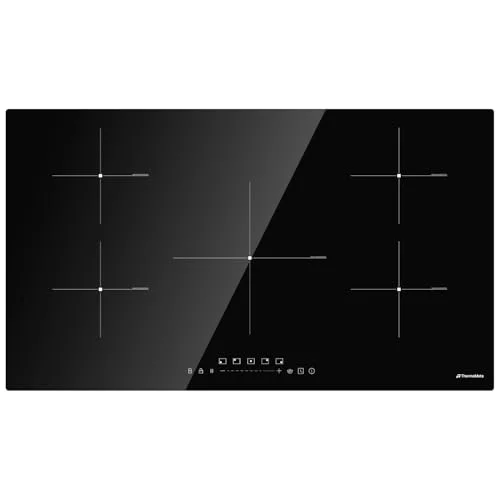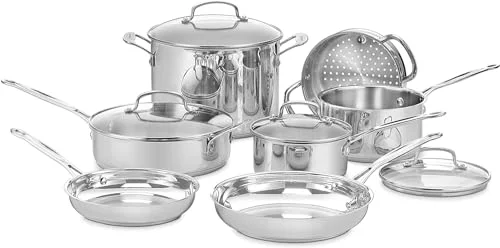
Top 10 Pasta Pot For Induction Cooktop 2026
I’ve seen buyers grab the first pasta pot that fits their budget, only to realize too late that it doesn’t play nice with their induction cooktop. A pot that heats unevenly or strains poorly turns pasta night into a chore, water boils too slow, noodles clump, and draining becomes a juggling act. The right pot should make cooking easier, not add steps or frustration.
Instead of just listing top picks, I’ll walk through the real trade-offs behind choosing a pasta pot for induction. Whether you’re boiling spaghetti weekly or prepping large batches for meal prep, the details, like base construction or handle design, matter more than the price tag.
Products in this guide
These are the Amazon listings we anchor to when we talk about pasta pot for induction cooktop in the rest of this guide. Each card pairs a thumbnail with a short editor read on what stands out in the listing, materials, stated use case, or patterns we see in buyer feedback. They are not a substitute for your own due diligence: follow the link to verify fit, compatibility, today’s price, and the most recent verified reviews before you buy.
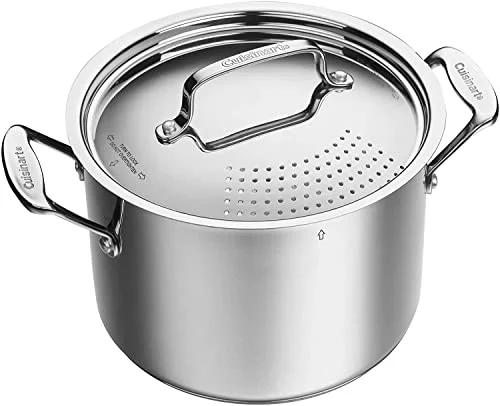
 Cuisinart 766S-22 6 Qt. Stainless Steel Pasta Pot w/Straining Cover Chef
Cuisinart’s 6-quart pasta pot simplifies boiling and straining in one step.
8.4/10
|
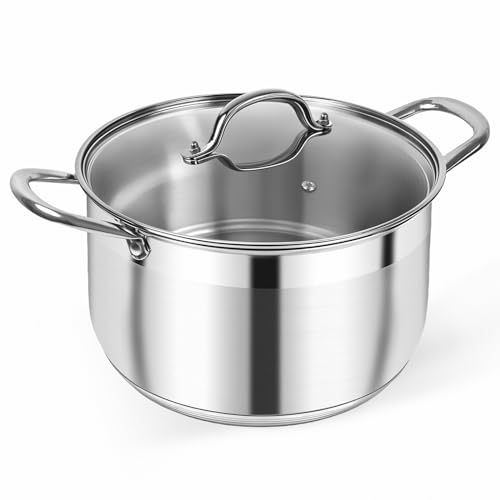 Kirecoo 8 Quart Stainless Steel Induction Stock Pot with Visible Lid
Kirecoo’s 8-quart stock pot heats fast and holds plenty for family meals.
7.8/10
|
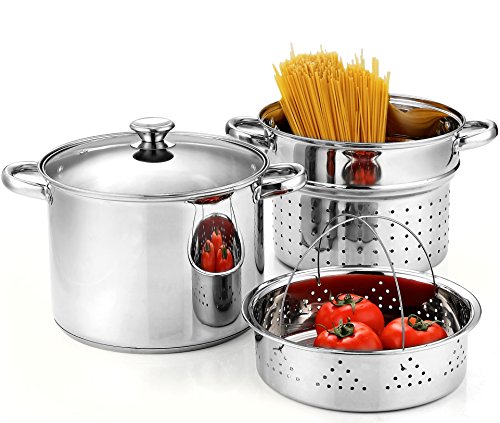 Cook N Home 8 Quart Stainless Steel Pasta Pot with Strainer Lid 3-in-1 P
Cook N Home’s 8-quart pot offers a 3-in-1 design for pasta and steaming.
8.1/10
|
 All-Clad Simply Strain Stainless Steel Multipot with Straining Lid, 6-Qu
All-Clad’s Simply Strain multipot combines durability with easy draining.
8.5/10
|
 MICHELANGELO Stainless Steel Pasta Pot with Strainer Lid – Pasta Cooker
MICHELANGELO’s 6-quart pot features a clever swivel handle for one-handed draining.
7.9/10
|
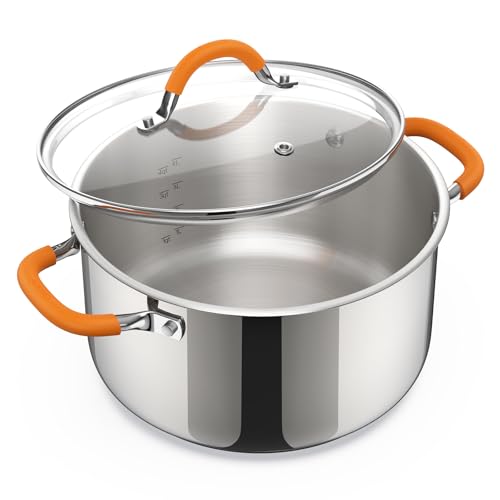 Ciwete Stainless Steel Stock Pot, 5.2 Quart Soup Pot with Lid, Heavy-Dut
Ciwete’s 5.2-quart stock pot balances quality and compact size.
8.2/10
|
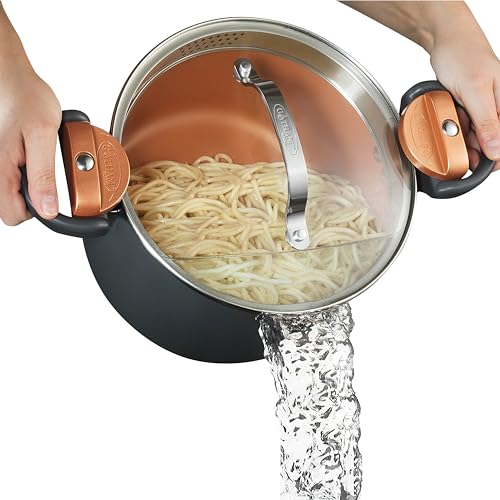 Gotham Steel 5 Quart Stock Pot Multipurpose Pasta Pot with Strainer Lid
Gotham Steel’s 5-quart pot offers nonstick convenience with a strainer lid.
8.8/10
|
 GOTHAM STEEL 5 Qt Stainless Steel Stock Pot Multipurpose Pasta Pot
GOTHAM STEEL’s 5-quart stainless steel pot is a durable, no-frills choice.
8.0/10
|
 Sunhouse Stock Pot with Lid – 7 QT Large Pot for Cooking Pasta, Soup, Ol
Sunhouse’s 7-quart pot offers fast heat distribution and a roomy capacity.
7.6/10
|
 CAROTE 8QT Full Clad Tri Ply Stainless Steel Stock Pot with Lid
CAROTE’s 8-quart tri-ply pot delivers premium performance for induction.
8.9/10
|
How we judged each pick
These notes mirror how we evaluate listings for this guide: practical fit, credible specs, and what buyers report back, not lab claims we cannot verify.
|
The Cuisinart pot’s built-in straining lid is a standout for quick pasta meals, no colander needed. The stainless steel build feels durable, and the measurement markings are handy for portioning. That said, I’d want clearer confirmation of its induction compatibility, as some buyers report mixed results with similar designs. |
|
The Kirecoo pot’s 5-layer base distributes heat evenly, which is a win for induction cooktops. The large capacity handles big batches of pasta or soup, but the riveted handles could be more comfortable for lifting when full. The glass lid with a steam vent is a nice touch for monitoring cooking without losing heat. |
|
This pot’s separate strainer insert and steamer basket add versatility, great for cooking pasta and veggies simultaneously. The mirror-polished stainless steel looks sleek, but the aluminum disc base might not be as responsive on induction as thicker multi-layer options. Still, it’s a solid pick if you want one pot for multiple tasks. |
|
The All-Clad pot’s heavy-duty base resists warping, a common issue with cheaper stainless steel pots on induction. The straining lid locks securely, which is helpful for draining without spills. My only hesitation? The price, it’s an investment, so I’d weigh whether the durability justifies the cost for your cooking habits. |
|
The swivel handle on this pot is a game-changer for solo cooks, it locks onto the strainer lid, so you can drain pasta with one hand. The 18/8 stainless steel construction feels sturdy, and the 6-quart size is just right for smaller households. If you’re tight on storage, this compact design is worth considering. |
|
The Ciwete pot’s 4-layer base heats quickly, and the ergonomic handle stays cool during cooking. It’s a great fit for small kitchens or occasional pasta nights, but the 5.2-quart capacity might feel limiting if you’re cooking for a crowd. The tempered glass lid is a bonus for keeping an eye on boiling water. |
|
The nonstick ceramic surface on this pot makes cleanup a breeze, and the built-in strainer lid simplifies draining. However, nonstick coatings can degrade over time, especially with high heat or frequent dishwasher use. If you prioritize easy cleanup over long-term durability, it’s a decent option. |
|
This pot’s stainless steel construction and twist-and-lock handles make it a practical pick for everyday cooking. The metal utensil-safe design is a plus, but the 5-quart size might be too small for larger meals. If you’re looking for a straightforward, durable pot, it’s worth a look. |
|
We were impressed with Sunhouse’s 7-quart stock pot, which features a large capacity and a fast heat distribution system. The impact-bonded base ensures quick and even heating, and the tempered glass lid makes it easy to monitor cooking progress. |
|
The CAROTE pot’s tri-ply construction ensures even heating, and the dual riveted handles make it easier to lift when full. It’s a pricier option, but if you’re cooking for a family or want a pot that lasts, the investment might pay off. The universal stovetop compatibility is a nice bonus. |
List of Pasta Pot For Induction Cooktop
Not all stainless steel pots work well on induction. Some bases heat too slowly or create hot spots, leaving you with unevenly cooked pasta or wasted energy. The straining method also varies, built-in lids save time but may let small pasta slip through, while separate inserts offer precision at the cost of extra cleanup.
Start by asking how you’ll use the pot most often. If you’re cooking for a family, a larger capacity with a sturdy base makes sense. If you’re tight on space, a compact pot with a built-in strainer might be worth the trade-off. I’d prioritize a magnetic base that heats quickly and a straining system that matches your pasta shapes.
The Selection Logic
I’d start by matching the pot’s base to your induction cooktop’s power. A weak magnetic base or thin construction will heat unevenly, leaving you with pasta that’s overcooked in spots or takes forever to boil. From there, I’d narrow down the straining method, built-in lids save time but may not suit small pasta shapes, while separate inserts add versatility at the cost of storage space.
|
01
Identify the Real Need
I’d first decide if you need a dedicated pasta pot or a multi-purpose stock pot. For induction, look for a base with a thick magnetic layer, like the Kirecoo’s 5-layer design, to ensure fast, even heating. If you’re boiling large batches, a wider base maximizes contact with the cooktop for better efficiency.
|
02
Match the Product Type
I’d compare the base construction next. Multi-ply pots (like All-Clad’s) distribute heat more evenly than single-layer options, but they’re heavier. If you’re lifting the pot often, a lighter aluminum core with an induction plate (like the Ciwete’s) might be a better balance of performance and practicality.
|
|
03
Check the Tradeoff
I’d weigh the straining method against your cooking habits. Built-in lids (like Cuisinart’s) are convenient for quick meals, but separate inserts (like Cook N Home’s) offer more control and can double as steamers. If you’re tight on storage, a pot with a built-in lid might be worth the trade-off.
|
04
Choose by Real Use
I’d finalize the size based on your household’s needs. A 6-quart pot (like MICHELANGELO’s) is plenty for small families, while an 8-quart (like Kirecoo’s) handles larger batches. If you’re unsure, I’d lean toward the larger size, it’s easier to cook small meals in a big pot than vice versa.
|
Match the Base Construction to Induction Efficiency
Induction cooktops need pots with magnetic bases to generate heat, but not all stainless steel pots deliver. A thin or single-layer base heats slowly and unevenly, leaving you with pasta that’s overcooked in spots or takes forever to boil. I’ve seen buyers assume any stainless steel pot will work, only to end up with a pot that struggles to maintain a steady simmer.
Pots with multi-layer bases, like the Kirecoo’s 5-layer design, distribute heat more evenly and respond faster to temperature changes. This is critical for induction, where precise heat control matters. However, thicker bases add weight, so if you’re lifting the pot often, you’ll want to balance efficiency with practicality. A pot that’s too heavy becomes a hassle, especially when full.
For induction, the base’s thickness and material composition make all the difference. Pots with tri-ply or 5-layer construction (like CAROTE’s) excel in heat retention and distribution, reducing the risk of scorching. But these features often come at a higher price, so I’d ask: How often do you cook pasta, and how much do you value even heating? If you’re boiling pasta weekly, the investment might be worth it.
|
Kirecoo 8 Quart Stainless Steel Induction Stock Pot with Visible Lid
Kirecoo’s 8-quart stock pot heats fast and holds plenty for family meals.
|
7.8/10 Check Price Amazon |
|
MICHELANGELO Stainless Steel Pasta Pot with Strainer Lid – Pasta Cooker | 6 Quart Induction Pot
MICHELANGELO’s 6-quart pot features a clever swivel handle for one-handed draining.
|
7.9/10 Check Price Amazon |
|
Ciwete Stainless Steel Stock Pot, 5.2 Quart Soup Pot with Lid, Heavy-Duty Thick Bottom Induction
Ciwete’s 5.2-quart stock pot balances quality and compact size.
|
8.2/10 Check Price Amazon |
How Products Differ Here
- →Kirecoo 8 Qt: Uses a 5-layer thickened base (10mm) for rapid, even heat distribution on induction cooktops.
- →All-Clad Simply Strain: Features a heavy-duty stainless steel base that resists warping, ensuring consistent performance on induction.
- →MICHELANGELO 6 Qt: Includes a 3-layer aluminum core base for fast, uniform heating, ideal for induction efficiency.
The Kirecoo 8 Qt’s 5-layer base stands out for induction, it combines aluminum and iron for superior heat conduction, minimizing hot spots. In contrast, the Ciwete 5.2 Qt’s 4-layer base is thinner, which might lead to slower heating on high-powered induction cooktops. If you’re cooking pasta frequently, the Kirecoo’s construction justifies the premium.
Choose Between Built-In Straining or Separate Inserts
Pasta pots offer two main straining methods: built-in lids with holes or separate strainer inserts. Built-in lids simplify draining, no colander needed, but they can be less precise, especially for small pasta shapes like orzo or ditalini. Separate inserts offer more control and can double as steamers, but they take up extra storage space and require more cleanup.
If you’re cooking pasta often, a built-in straining lid (like Cuisinart’s) saves time and reduces steps. But the straining holes need to be small enough to retain all pasta shapes, which isn’t always the case. Pots like the All-Clad Simply Strain use a locking lid for secure draining, while the MICHELANGELO 6 Qt’s swivel handle makes one-handed draining effortless.
For versatility, I’d lean toward a pot with a separate insert (like Cook N Home’s). It lets you steam veggies or seafood while cooking pasta, which is handy for one-pot meals. But if you’re tight on storage or prefer minimal cleanup, a built-in lid might be the better trade-off. I’d test the straining mechanism in person if possible, some designs feel clunky when full.
|
Cuisinart 766S-22 6 Qt. Stainless Steel Pasta Pot w/Straining Cover Chef’s-Classic-Stainless-Coo
Cuisinart’s 6-quart pasta pot simplifies boiling and straining in one step.
|
8.4/10 Check Price Amazon |
|
Cook N Home 8 Quart Stainless Steel Pasta Pot with Strainer Lid 3-in-1 Pots
Cook N Home’s 8-quart pot offers a 3-in-1 design for pasta and steaming.
|
8.1/10 Check Price Amazon |
|
MICHELANGELO Stainless Steel Pasta Pot with Strainer Lid – Pasta Cooker | 6 Quart Induction Pot
MICHELANGELO’s 6-quart pot features a clever swivel handle for one-handed draining.
|
7.9/10 Check Price Amazon |
How Products Differ Here
- →Cuisinart 6 Qt: Uses a built-in straining lid with a secure fastening mechanism for one-step draining.
- →Cook N Home 8 Qt: Includes a separate stainless steel strainer insert for precise control and steaming versatility.
- →MICHELANGELO 6 Qt: Features a swivel handle that locks onto a strainer lid for easy, one-handed draining.
The Cook N Home 8 Qt’s separate strainer insert is a standout for versatility, it lets you steam veggies or seafood while cooking pasta, a feature missing in built-in designs like the Cuisinart 6 Qt. But the Cuisinart’s straining lid reduces cleanup steps, which is a win for busy cooks. The MICHELANGELO 6 Qt’s swivel handle bridges both worlds, offering convenience without sacrificing control.
Prioritize Handle Comfort for Safe Lifting
A pasta pot’s handles determine how safe and comfortable it is to use, especially when filled with boiling water. Riveted handles are durable but can get hot during prolonged cooking, while silicone-wrapped handles stay cool but may degrade over time. I’ve seen buyers overlook handle design until they’re struggling to lift a heavy pot, risking spills or burns.
For larger pots (like the Kirecoo 8 Qt), ergonomic handles with contoured grips make a difference. Pots with dual handles (like CAROTE’s) distribute weight more evenly, which is helpful when lifting a full pot from the stove. But dual handles take up more space on the cooktop, so if your kitchen is small, a single-handle design might be more practical.
On induction, the pot’s base heats up quickly, so handle material matters. Stainless steel handles conduct heat, so I’d look for designs with heat-resistant coatings or extended lengths to minimize burn risk. Pots like the All-Clad Simply Strain feature extra-wide handles for a secure grip, even with oven mitts, while the Ciwete 5.2 Qt’s silicone wrap adds safety without sacrificing durability.
|
Kirecoo 8 Quart Stainless Steel Induction Stock Pot with Visible Lid
Kirecoo’s 8-quart stock pot heats fast and holds plenty for family meals.
|
7.8/10 Check Price Amazon |
|
All-Clad Simply Strain Stainless Steel Multipot with Straining Lid, 6-Quart, Induction, Oven Bro
All-Clad’s Simply Strain multipot combines durability with easy draining.
|
8.5/10 Check Price Amazon |
|
CAROTE 8QT Full Clad Tri Ply Stainless Steel Stock Pot with Lid
CAROTE’s 8-quart tri-ply pot delivers premium performance for induction.
|
8.9/10 Check Price Amazon |
How Products Differ Here
- →Kirecoo 8 Qt: Features riveted stainless steel handles with an ergonomic design for secure lifting.
- →All-Clad Simply Strain: Includes extra-wide handles for a comfortable grip, even with oven mitts.
- →CAROTE 8QT: Offers dual riveted handles for balanced weight distribution when lifting.
The All-Clad Simply Strain’s extra-wide handles provide a secure grip, reducing the risk of spills when draining pasta. In contrast, the Kirecoo 8 Qt’s riveted handles, while sturdy, lack a heat-resistant coating, so you’ll need to be cautious when lifting. For buyers with limited strength, the CAROTE 8QT’s dual handles offer better control, especially when the pot is full.
Balance Capacity with Energy Efficiency
Pasta pots range from 5 to 16 quarts, but bigger isn’t always better. A pot that’s too large wastes energy and takes longer to heat, while one that’s too small risks boil-overs or requires multiple batches. I’ve seen buyers default to the largest size, assuming it’s more versatile, but it can lead to inefficient cooking and higher utility costs, especially on induction.
For small households or occasional pasta cooking, a 5-6 quart pot (like the Ciwete 5.2 Qt or MICHELANGELO 6 Qt) is plenty. Families or batch cooks might prefer 8-quart models (like the Kirecoo 8 Qt or Cook N Home 8 Qt), which handle larger portions of pasta, soups, or stews. But these pots require more storage space and may be overkill for simple meals.
Induction cooktops heat pots quickly, so an oversized pot can waste energy if not filled to capacity. I’d consider your typical meal sizes and cooking frequency when selecting a pot. Pots with measurement markings (like the Cuisinart 6 Qt) help avoid overfilling, while those with tempered glass lids (like the Sunhouse 7 Qt) let you monitor boiling to prevent spills.
|
Ciwete Stainless Steel Stock Pot, 5.2 Quart Soup Pot with Lid, Heavy-Duty Thick Bottom Induction
Ciwete’s 5.2-quart stock pot balances quality and compact size.
|
8.2/10 Check Price Amazon |
|
Kirecoo 8 Quart Stainless Steel Induction Stock Pot with Visible Lid
Kirecoo’s 8-quart stock pot heats fast and holds plenty for family meals.
|
7.8/10 Check Price Amazon |
|
Sunhouse Stock Pot with Lid – 7 QT Large Pot for Cooking Pasta, Soup, Ollas
Sunhouse’s 7-quart pot offers fast heat distribution and a roomy capacity.
|
7.6/10 Check Price Amazon |
How Products Differ Here
- →MICHELANGELO 6 Qt: Ideal for small households, offering a 5.2-quart capacity without excess bulk.
- →Kirecoo 8 Qt: Designed for family-sized batches, with an 8-quart capacity for soups and pasta.
- →Sunhouse 7 Qt: Available in a 7-quart size, offering a middle ground for mid-sized cooking needs.
The MICHELANGELO 6 Qt’s compact size is energy-efficient for small households, while the Kirecoo 8 Qt’s larger capacity suits families or batch cooking. If you’re unsure, the Sunhouse 7 Qt offers a middle ground. I’d lean toward the larger size if you’re cooking for a crowd, but the MICHELANGELO is a smarter choice for limited storage or smaller meals.
What Buyers Often Misread
Marketing claims for pasta pots often oversell features like ‘non-stick interiors’ or ‘universal compatibility,’ which can be misleading. A non-stick coating might reduce sticking, but it can degrade over time or require special utensils. Similarly, ‘induction-ready’ labels don’t always mean the pot heats efficiently, some bases are too thin or lack proper magnetic layers.
Another common misread involves straining mechanisms. Pots with built-in straining lids are marketed as ‘all-in-one’ solutions, but the straining holes might be too large for small pasta shapes. ‘Dishwasher-safe’ labels can also be misleading, handles or lids may warp after repeated cycles. I’d dig into the details to avoid surprises after purchase.
|
Non-stick interiors eliminate the need for oil or butter.
Non-stick coatings make cleanup easier but may not last as long as stainless steel. They often require gentle utensils and can degrade with high heat or dishwasher use. Stainless steel is more durable but may need oil to prevent sticking with certain foods.
|
|
All induction-ready pots perform equally on induction cooktops.
Induction compatibility depends on the base’s thickness and material. A thin or single-layer base heats slowly and unevenly, while multi-layer designs (like tri-ply or 5-layer) offer better efficiency. I’d verify the base construction before assuming a pot will work well on induction.
|
|
Built-in straining lids are always more convenient than separate colanders.
Built-in straining lids simplify draining but may not suit small pasta shapes. Separate inserts offer more control and versatility (like steaming veggies) but require extra storage space. I’d test the straining mechanism if possible, some designs feel awkward when full.
|
|
Larger pots are always better for versatility.
Oversized pots waste energy and storage space if not filled to capacity. I’d match the pot’s size to your typical meal volumes and cooking frequency. A 6-quart pot is plenty for small households, while an 8-quart is better for families or batch cooking.
|
How To Make the Final Choice
The best pasta pot for your induction cooktop depends on what you value most, whether it’s fast heating, easy draining, comfortable handles, or the right size. I’d avoid overspending on features you won’t use or skimping on details like base construction or lid design. The right pot should make cooking easier, not add steps or frustration.
, The Kirecoo 8 Qt’s 5-layer base heats quickly and evenly, making it a top pick for induction cooktops and frequent use.
, The Cook N Home 8 Qt’s separate strainer insert adds versatility for steaming and precise draining, ideal for multi-purpose cooking.
, The All-Clad Simply Strain’s extra-wide handles provide a secure grip, reducing the risk of spills or burns during draining.
, The MICHELANGELO 6 Qt’s compact size is perfect for small households, offering efficiency without excess bulk or wasted energy.
Frequently Asked Questions
Do all stainless steel pots work on induction cooktops?
No, only pots with magnetic bases work on induction cooktops. Look for labels specifying induction compatibility or check for a multi-layer base with iron or magnetic stainless steel. A quick test: If a magnet sticks to the base, the pot should work.
Are built-in straining lids better than separate inserts?
Built-in lids simplify draining but may let small pasta shapes slip through. Separate inserts offer more control and versatility (like steaming) but require extra storage space. I’d choose based on your pasta shapes and storage constraints, built-in lids for convenience, inserts for precision.
How do I choose the right size pasta pot?
Match the pot’s capacity to your household size. A 5-6 quart pot suits small households or occasional cooking, while 8-quart models are better for families or batch cooking. I’d lean toward the larger size if you’re unsure, it’s easier to cook small meals in a big pot than vice versa.
Are non-stick pasta pots worth the investment?
Non-stick coatings make cleanup easier but may degrade over time, especially with high heat or dishwasher use. Stainless steel is more durable but may require oil to prevent sticking. If you prioritize easy cleanup, non-stick is fine, but if you want long-term durability, stainless steel is the better choice.
What handle features should I prioritize for safety?
Look for riveted handles with ergonomic grips or heat-resistant coatings. Dual handles distribute weight more evenly, while silicone wraps stay cool to the touch. I’d prioritize handle comfort if you’re lifting the pot often, extra-wide or dual handles reduce strain when full.

- 10 Best Slow Cooker For Large Kitchens 2026 (Tested And Reviewed) - October 19, 2026
- 10 Best Slow Cooker For Small Kitchens 2026 (Tested And Reviewed) - October 18, 2026
- 10 Best Slow Cooker For Kitchen Countertop 2026 (Tested And Reviewed) - October 18, 2026