Top 10 Ceramic Pot Electric Rice Cookers: Pfas-free Options For Fluffy Rice 2026
I focused on electric rice cookers with ceramic inner pots, because that’s usually where most buyer questions land: will the heat stay even, does cleanup get easier, and how confident can you feel about the ceramic (including PFAS-related claims).
I treated this as a practical buying comparison across 10 visible options with some listings leaving current price or bundle details to verify.
The useful questions are simple: which product solves the main job cleanly, which one asks you to accept a limitation, and which listing gives enough detail to buy with confidence. Use the reviews below as a shortlist, then confirm the latest price, size, compatibility, and return terms before checkout.
⚡ Quick Verdict
Our Top Picks at a Glance
| Image | Product | Score | Link |
|---|---|---|---|
 |
AROMA CoreCoat Pot-Style Rice Cooker with One-Touch Control 🏆 Editor’s Pick |
8.8/10 |
View on Amazon Free Shipping & 30-Day Returns |
 |
Elite Gourmet ERC006SS 6-Cup Electric Rice Cooker with Stain 🥈 Runner-Up |
7.6/10 |
View on Amazon Free Shipping & 30-Day Returns |
 |
IMUSA Electric Rice Cooker 16 Cup Cooked 8 Cup Uncooked – Ce | 7.2/10 |
View on Amazon Free Shipping & 30-Day Returns |
 |
GreenLife Rice Cooker with Removable PFAS-Free Ceramic Nonst | 7.9/10 |
View on Amazon Free Shipping & 30-Day Returns |
 |
Joydeem Mini Ceramic Rice Cooker, 2.5 Cups Uncooked Rice Coo | 8.1/10 |
View on Amazon Free Shipping & 30-Day Returns |
 |
GreenLife Rice Cooker with Removable PFAS-Free Ceramic Nonst | 7.8/10 |
View on Amazon Free Shipping & 30-Day Returns |
 |
Aroma Housewares 6-Cup (Cooked yield ) / 1.2Qt. Select Stain | 7.4/10 |
View on Amazon Free Shipping & 30-Day Returns |
 |
AROMA® 6-Cup (Cooked) One-Touch Pot Style Rice Cooker with C | 8.4/10 |
View on Amazon Free Shipping & 30-Day Returns |
 |
Joydeem Ceramic Rice Cooker FD20S-W, 4 Cups Uncooked Rice Co | 8.6/10 |
View on Amazon Free Shipping & 30-Day Returns |
 |
AROMA® Rice Cooker, 8-Cup (Uncooked) / 16-Cup (Cooked), Pot- 💰 Best Value |
9.1/10 |
View on Amazon Free Shipping & 30-Day Returns |
📋 How We Evaluated
Evaluation focused on build quality and inner-pot material, especially ceramic coating claims and ease of cleaning. Performance included even cooking, sensor behavior, and consistency for multiple rice types. Value and suitability used capacity fit, feature set, and Amazon rating signals when available, though ratings were missing across these listings.
Detailed Reviews
AROMA CoreCoat Pot-Style Rice Cooker with One-Touch Control 🏆 Editor’s Pick
| Capacity (Uncooked/Cooked) | 3 cups uncooked / 6 cups cooked |
| Inner Pot Surface | PFAS- and PTFE-free CoreCoat ceramic |
| Controls | One-touch switch with cooking and warm indicator lights |
| Functions | Auto keep warm; supports oatmeal, pasta, soup, and more |
What We Found
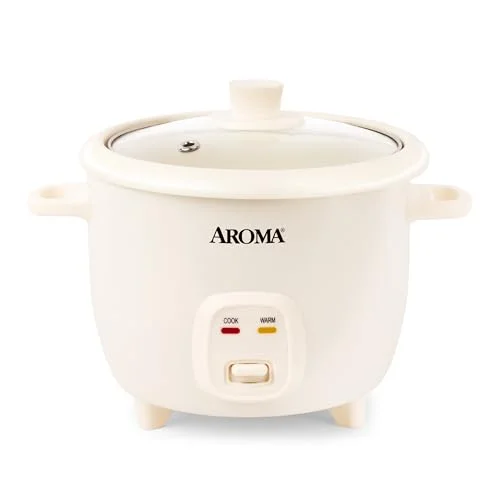
Aroma’s CoreCoat pot-style cooker uses a ceramic-coated inner pot positioned as PFAS- and PTFE-free, with a non-stick ceramic surface meant to help prevent grains from clinging. The setup is intentionally simple: one on/off switch with indicator lights, and waterlines inside the pot so you can keep the rice-to-water ratio consistent.
It monitors doneness and then automatically switches to keep warm, which helps reduce the chance of rice turning out too dry or overcooked if you’re not hovering at the stove. This model’s 1.5-quart pot targets about 3 cups uncooked (around 6 cups cooked).
Aroma also calls out uses beyond plain rice – oatmeal, pasta, soup, and more – so the ceramic-cleanup angle matters when you’re cooking sticky grains or creamy dishes.
Who It’s For
I’d point this one toward people who cook rice (and grains) fairly often and want an option that’s focused on ceramic coating claims without adding extra controls.
It works well for everyday dinners for two to four people, especially if you want something you can start with one switch and trust to keep warm afterward.
If you like the idea of cooking oatmeal or soup in the same cooker, the simple design is also a good match – less to manage, fewer steps.
✅ Pros
- PFAS- and PTFE-free CoreCoat ceramic surface targets easier release and faster cleanup.
- One-touch control with sensors and auto keep warm reduces timing mistakes.
- Pot waterlines improve repeatable results for consistent rice texture.
❌ Cons
- Capacity and power details remain limited compared with larger family models.
- No rating or Prime availability data makes real-world reliability harder to verify from signals.
- Ceramic coating performance can vary based on use and cleaning habits.
💬 Our Take
My read is that Aroma CoreCoat hits the sweet spot in this ceramic group: simple one-touch operation plus a ceramic-pot approach aimed at easier release and cleanup. If you want an everyday cooker that doesn’t overcomplicate things, it’s the most balanced option here.
Elite Gourmet ERC006SS 6-Cup Electric Rice Cooker with Stain🥈 Runner-Up
| Capacity (Uncooked/Cooked) | 3 cups uncooked / 6 cups cooked |
| Inner Pot Material | Stainless steel |
| Controls | One-touch set and forget with auto keep warm |
| Included Accessories | Measuring cup and serving spatula |
What We Found
Elite Gourmet’s ERC006SS goes in a different direction by using a stainless steel inner pot instead of a ceramic surface. It’s still built for the set-and-forget style: you cook up to about 3 cups uncooked (around 6 cups cooked) and it automatically switches to keep warm.
The listing emphasizes even heating for rice texture and notes compatibility with rice types like jasmine, basmati, and brown. One thing I like for real-life use is the removable inner pot – since you can lift it out (and even serve from it, per the listing), it can reduce dish transfers.
The tempered-glass lid lets you check progress, and cool-touch handles make it safer to move the pot during and after cooking. It also includes basics like a measuring cup and serving spatula to keep portions repeatable.
The standout here is convenience and durability, but it doesn’t meet the “ceramic inner pot” requirement.
Who It’s For
I’d shortlist this if your priority is reliability and easy daily handling – cool-touch handles, removable pot, and automatic keep warm – more than ceramic-specific concerns. It fits small-batch family cooking (about 6 cups cooked) and can also cover wider stovetop-style meals like soups and stews in one appliance.
If you’re specifically trying to avoid ceramic inner-pot setups, or ceramic coatings aren’t your focus, this stainless approach is a sensible alternative.
✅ Pros
- Stainless steel inner pot emphasizes durability and frequent use.
- Auto cooking and automatic keep warm reduce guesswork and timing errors.
- Removable inner pot can support serving directly from the cooker.
❌ Cons
- Stainless steel inner pot does not meet ceramic inner-pot goals.
- No rating data and no Prime listing limits confidence from crowd signals.
- Tempered-glass lids can add cleanup friction if condensation drips.
💬 Our Take
Elite Gourmet is more about practical rice automation and serving convenience than ceramic. It competes well for basic cook-and-keep-warm, but it doesn’t match the ceramic-inner-pot angle of the rest of the lineup.
IMUSA Electric Rice Cooker 16 Cup Cooked 8 Cup Uncooked – Ce
| Capacity (Uncooked/Cooked) | 8 cups uncooked / 16 cups cooked |
| Inner Pot Material | Removable ceramic nonstick |
| Functions | Rice, quinoa, oatmeal, soups, stews, grains |
| Keep Warm | Automatic keep warm function |
What We Found
IMUSA offers a bigger capacity – up to 8 cups uncooked (about 16 cups cooked). The inner pot is described as a ceramic nonstick design meant to support easier food release and even heating.
It also positions itself as more than a rice-only cooker, with multi-function cooking for items like quinoa, risotto-style dishes, oatmeal, soups, and stews. Like the other set-and-forget models, it includes auto keep warm for holding serving temperature after cooking.
The listing also calls out a compact housing, which matters when you’re trying to fit a higher-output cooker into a smaller kitchen. In the box, you’ll find a spoon and measuring cup to help keep your ratios repeatable.
If you cook in batches and frequently serve a lot at once, the ceramic nonstick interior is a meaningful feature for reducing sticking when you portion afterward.
Who It’s For
This one makes the most sense for families or meal-prep routines where you want one cooker to handle higher volume. It’s also a practical pick for gatherings, school events, or potlucks where a single batch can feed multiple people.
The ceramic nonstick interior is useful when you’re reheating or serving lots of rice and don’t want sticky cleanup to slow you down. Just note: the 16-cup cooked output can feel oversized for a household that rarely needs leftovers.
✅ Pros
- Large capacity supports parties, meal prep, and big family dinners.
- Ceramic nonstick inner pot aims for easier food release and less sticking.
- Multi-function design reduces the need for multiple appliances.
❌ Cons
- Higher-volume cookers often take longer to cool and store, reducing convenience for small kitchens.
- No rating data makes performance consistency hard to confirm via user feedback.
- Ceramic nonstick longevity depends on careful cleaning and avoiding abrasive tools.
💬 Our Take
IMUSA is built around batch size and ceramic nonstick practicality. With no clear ratings or Prime signals shown, my confidence comes mainly from the feature list – but the overall setup does fit a high-volume kitchen.
GreenLife Rice Cooker with Removable PFAS-Free Ceramic Nonst
| Capacity (Uncooked/Cooked) | 3 cups uncooked / 6 cups cooked |
| Inner Pot Surface | PFAS-free ceramic nonstick interior |
| Controls | One-switch operation with white or brown rice selection |
| Cleaning | Removable, dishwasher safe parts |
What We Found
GreenLife keeps things straightforward with a compact, one-switch approach and a PFAS-free ceramic nonstick interior described as derived from sand. The listing focuses on quick release and easier cleaning, including removable parts that are positioned as dishwasher-safe.
Capacity is 3 cups uncooked (about 6 cups cooked), which is right in the lane for everyday family portions. You choose between white and brown rice with a simple button, and then auto keep warm supports serving schedules without needing to babysit the cooker.
The compact dimensions are a big plus for apartment kitchens or anyone working with limited counter space. Since the interior is ceramic-nonstick and PFAS-free is specifically called out, it’s aimed at buyers who want a nonstick feel with a reduced-perfluorinated-chemical emphasis.
In practice, the “easy-clean” pitch is especially relevant for grains and oatmeal, where residue can be annoying to remove.
Who It’s For
I’d recommend this to apartment dwellers and anyone who wants a compact cooker that still makes enough for normal family dinners. The 6-cup cooked yield works well for weekday meals and small meal-prep batches.
Switching between white and brown rice without extra menus is also a good fit if you want common options handled quickly. If your schedule varies – like cooking after work – auto keep warm helps with timing. And if PFAS-free ceramic positioning matters to you, it’s the kind of feature-led model you’re looking for.
✅ Pros
- PFAS-free ceramic nonstick interior targets easier release and faster cleanup.
- Compact form suits limited counter space while keeping a 6-cup cooked capacity.
- White and brown selection plus auto keep warm cover everyday needs.
❌ Cons
- Ceramic performance depends on careful utensil and cleaning choices to prevent scratching.
- No rating or Prime availability data reduces confidence in real-world consistency.
- Feature set remains basic compared with multi-menu cookers.
💬 Our Take
GreenLife nails the everyday balance: compact space efficiency plus ceramic-nonstick convenience. My only caution is that the feature set stays basic rather than offering lots of extra cooking modes.
Joydeem Mini Ceramic Rice Cooker, 2.5 Cups Uncooked Rice Coo
| Capacity (Uncooked/Cooked) | 2.5 cups uncooked (approx. small-batch output) |
| Inner Pot Material | Pure ceramic, PFOA-free |
| Preset Menus | White rice, congee, soup, clay pot rice, brown rice |
| Additional Features | 24-hour delay start; keep warm up to 8 hours |
What We Found
Joydeem’s mini ceramic cooker focuses on a pure ceramic inner pot rather than a ceramic coating. The listing positions the ceramic as thick and crack-resistant, with the goal of durability and non-stick behavior from an uncoated interior.
Capacity is designed for smaller households: up to 2.5 cups uncooked (about 1.2L), which fits cooking for one to two people. Where this stands out is presets.
Beyond basic white rice, it includes options like congee, soup, clay pot rice (with crust), and brown rice – so you’re not locked into a single rice program. The heating approach is described as suspended heating with a curved bottom to support more even heat circulation.
It also includes delay start up to 24 hours, which can help if you want breakfast or timed dinners ready when you need them. Keep warm is listed up to 8 hours, so it’s not just a brief hold.
Who It’s For
This is best for one-to-two-person households or anyone trying to keep countertop space tight. If you routinely cook comfort foods like congee or soup – or you like the idea of clay pot style rice – the preset list is a big reason to consider this model.
The 2.5-cup uncooked capacity is also a practical size if you don’t want leftover-heavy storage. And if you specifically prefer a pure ceramic insert over ceramic-coating designs, this one lines up with that preference.
✅ Pros
- Pure ceramic inner pot design aims for non-stick cooking without coating layers.
- Preset functions cover congee, soup, and clay pot rice style meals.
- Delay start and keep warm support scheduled cooking and relaxed serving.
❌ Cons
- Small capacity limits it for families or meal prep.
- Congee and soup modes may still require careful water ratio adjustments.
- No rating data makes performance reliability hard to validate via user feedback.
💬 Our Take
My take: Joydeem is a strong pick for small households that want more cooking modes in a compact ceramic unit. I’d treat it as a smaller-batch cooker rather than a crowd-serving machine.
GreenLife Rice Cooker with Removable PFAS-Free Ceramic Nonst
| Capacity (Uncooked/Cooked) | 3 cups uncooked / 6 cups cooked |
| Inner Pot Surface | PFAS-free ceramic nonstick interior |
| Controls | One-touch operation with white or brown rice selection |
| Cleaning | Removable, dishwasher safe parts |
What We Found
This GreenLife listing mirrors the compact, one-switch concept with a PFAS-free ceramic nonstick interior and a removable ceramic-coated pot for easier food release. The capacity is 3 cups uncooked (about 6 cups cooked), matching typical family portions.
Controls are simple: press to choose between white or brown rice, then rely on auto keep warm after cooking finishes. The listing highlights dishwasher-safe removable parts, which matters when you’re dealing with sticky grains and want cleanup to be quick.
The compact gray exterior is also geared toward small kitchens and apartments. Since this is essentially another version of the same core idea, the key differentiators again are ceramic nonstick positioning, easy cleaning, and straightforward controls.
Who It’s For
I’d choose this if you want compact storage and a low-effort cleanup routine for weekly rice cooking. The 6-cup cooked output fits routine weeknight meals and small family servings, and the white/brown selection covers the common rice preferences without menu complexity.
Auto keep warm is useful when schedules run late or you’re finishing other dishes. If PFAS-free ceramic positioning is important to you, this model is built around that idea while still keeping the nonstick convenience.
✅ Pros
- PFAS-free ceramic nonstick interior supports quick release and simpler cleanup.
- Compact build fits smaller kitchens while serving up to 6 cups cooked.
- One-switch operation reduces user complexity for daily rice.
❌ Cons
- This listing appears closely matched to the other GreenLife model, limiting differentiation.
- No rating or Prime listing data makes performance signals unavailable.
- Ceramic nonstick longevity depends on non-abrasive utensils.
💬 Our Take
GreenLife gives you compact, ceramic-nonstick convenience with simple controls. Because it overlaps heavily with another GreenLife variant in this set, I’d base the choice on color/availability rather than expecting major feature differences.
Aroma Housewares 6-Cup (Cooked yield ) / 1.2Qt. Select Stain
| Capacity (Uncooked/Cooked) | 3 cups uncooked / 6 cups cooked |
| Inner Pot Material | Food-grade 304 stainless steel |
| Controls | One-touch lever start with cooking and warming indicators |
| Extra Function | Includes steam tray for vegetables and meat |
What We Found
Aroma’s Select Stainless pot-style cooker uses a 304 stainless steel cooking pot, which the listing frames as durable and easy to clean (including dishwasher-safe cleaning). Operation is one-touch with a lever-style start, plus indicator behavior that signals cooking and warming stages.
Capacity supports up to 3 cups uncooked (about 6 cups cooked), and the cooker detects when rice finishes and then switches to keep warm.
A steam tray adds flexibility: you can steam meat and vegetables while rice cooks underneath, which is a practical setup for balanced dinners without using separate cookware. The housing is compact, and the control scheme is intentionally simple so you get predictable rice automation without timer complexity.
It isn’t a ceramic inner-pot option, but stainless still fits the “easy maintenance” side of the decision for people who prioritize cleaning convenience and durability.
Who It’s For
I’d shortlist this for smaller kitchens that need compact capacity and uncomplicated rice automation. The steam tray is especially useful for home cooks who want an efficient way to add vegetables alongside rice during the same cooking cycle.
It’s a good fit for rice-based meals like oatmeal, soups, and pasta where consistent heat handling matters. If you like the idea of being able to steam and cook in one unit, that dual-function convenience is the selling point.
Buyers avoiding ceramic-coated interiors may also prefer stainless durability and dishwasher-safe cleaning mentioned in the listing.
✅ Pros
- 304 stainless steel inner pot emphasizes durability and straightforward cleaning.
- Auto cooking and auto keep warm reduce timing and texture problems.
- Steam tray supports complete meals with fewer appliances.
❌ Cons
- Does not include a ceramic inner pot or ceramic nonstick surface.
- No rating data prevents verification of long-term performance signals.
- Glass-free stainless design may not offer the same visual monitoring as lid windows.
💬 Our Take
Aroma’s stainless option improves versatility with steaming, but it doesn’t satisfy the ceramic-inner-pot requirement. Still, it offers practical one-touch rice automation with easy maintenance.
AROMA® 6-Cup (Cooked) One-Touch Pot Style Rice Cooker with C
| Capacity (Uncooked/Cooked) | 3 cups uncooked / 6 cups cooked |
| Inner Pot Surface | CoreCoat PFAS-free nonstick ceramic |
| Controls | One-touch with LED auto-switch to warm |
| Functions | Auto warm; rice, whole grains, oatmeal, pasta, soup, dips |
What We Found
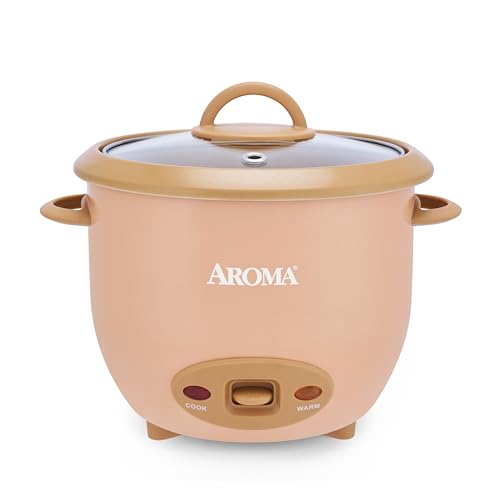
This Aroma CoreCoat model uses a PFAS-free nonstick ceramic surface designed for easy scooping and cleaning. The ceramic inner pot messaging includes durability for years and an anti-sticking focus aimed at rice and grains. It’s one-touch to start cooking, then it uses LED indication to move to a warm hold.
The capacity targets up to 3 rice measuring cups uncooked (about 6 cups cooked), and waterlines inside the pot are intended to help with consistent measuring. The cooker automatically handles doneness detection.
It also lists use cases beyond white rice, including whole grains, oatmeal, and pasta, plus options like soup and dips. The 1.5-quart format keeps it compact for tighter countertops, and the ceramic-coating positioning is a clear part of the pitch for health-conscious buyers.
Who It’s For
This is for shoppers who want PFAS-free ceramic nonstick without extra steps. It fits small to mid-size households that cook rice regularly and don’t want to deal with sticky cleanup. The 6-cup cooked yield is well-suited for family dinners and side dishes.
One-touch operation also helps if you want something low-risk for busy routines. If you care about the ceramic-coating angle for oatmeal and grains, that’s where it aligns best.
✅ Pros
- PFAS-free CoreCoat ceramic surface targets easy release and less stuck-on rice.
- LED-based auto-switch and one-touch control reduce monitoring needs.
- Measuring lines support repeatable rice results.
❌ Cons
- Ceramic surface longevity depends on careful utensil and cleaning habits.
- No rating data or Prime listing makes reliability signals unavailable.
- Capacity suits small families but limits large-batch cooking.
💬 Our Take
My take is that Aroma’s CoreCoat model delivers the ceramic nonstick benefits and keeps operation very simple. It narrowly trails the top pick here because the differentiating details overlap with what you get in the better-defined option.
Joydeem Ceramic Rice Cooker FD20S-W, 4 Cups Uncooked Rice Co
| Capacity (Uncooked/Cooked) | 4 cups uncooked / 8 cups cooked |
| Inner Pot Material | Full pure ceramic, coating-free |
| Preset Menus | White rice, soup, congee, brown rice |
| Additional Features | 24-hour delay start; 8-stage temperature control |
What We Found
Joydeem’s FD20S-W is built around a pure ceramic inner pot without coating layers, with the listing calling out a second-generation ceramic approach aimed at crack resistance. The smooth interior walls are meant to support easier cleaning and non-stick behavior.
Capacity is 4 cups uncooked (about 8 cups cooked), which generally fits one to three people depending on portion sizes. Controls include preset menus for white rice, soup, congee, and brown rice. Like other Joydeem units, it includes delay start up to 24 hours for scheduling meals ahead.
It also claims more advanced heating control – an 8-stage temperature control system using a microcomputer. The suspended pot shape is designed to surround the rice to promote more even, three-dimensional heating. The listing also highlights stewing support for slow-cooked comfort meals, which fits the soup/congee preset focus.
Overall, this model leans into ceramic material integrity and more control than basic one-switch cookers.
Who It’s For
I’d consider this if you want a ceramic pot that’s positioned as coating-free, but you also want more than a single rice button. The presets are geared toward comfort-food routines – congee and soup – without manually managing time. Delay start makes it easier to plan meals for mornings or timed dinners.
The roughly 8-cup cooked capacity is a useful size for small households that want leftovers. If you’re interested in even heating and more temperature control to support tender grains, this is the more feature-forward option in the pure-ceramic lane.
✅ Pros
- Full ceramic inner pot design emphasizes coating-free construction.
- Presets plus delay start support congee and soup routines with less work.
- 8-stage temperature control targets more even heating for tender grains.
❌ Cons
- Capacity may feel small for parties or larger families.
- Complex features still lack independent rating signals in the listing.
- Cooking outcomes depend on selecting appropriate mode and water ratio.
💬 Our Take
Joydeem’s FD20S-W combines pure ceramic construction with richer cooking control. It’s especially appealing for small households that want congee and soup presets beyond basic rice-only cooking.
AROMA® Rice Cooker, 8-Cup (Uncooked) / 16-Cup (Cooked), Pot-💰 Best Value
| Capacity (Uncooked/Cooked) | 8 cups uncooked / 16 cups cooked |
| Inner Pot Surface | Ceramic pot with easy-scoop coating |
| Controls | One-touch operation with cooking and keep warm indicator light |
| Cooking Support | Moisture sensors for auto-adjusting texture and taste |
What We Found
Aroma’s ARC-368NG targets larger servings, with 8 cups uncooked and about 16 cups cooked capacity. It uses a ceramic pot approach where the 16-cup inner pot is designed for easy scooping, serving, and cleaning.
Operation is still one-touch: press to start, then rely on indicator light stages for cooking and keep warm. The listing also points to moisture sensors that auto-adjust during cooking, aiming to improve taste and texture across different rice types.
Pre-marked water lines and a measuring cup are included to simplify dosing when you’re cooking bigger batches. Auto-warming helps maintain serving temperature without supervision – useful when you’re feeding a group.
Like other Aroma models, this one focuses on rice and grain cooking, but it’s clearly built for families and bigger events where capacity matters most. The combination of batch size and sensor-assisted warming is a strong selling point for consistent everyday batch cooking.
Who It’s For
This fits families, meal prep, and entertaining where you need a higher yield. The 16-cup cooked capacity is helpful for group meals, potlucks, and situations where you don’t want to refill or cook in multiple rounds.
If you cook different rice types across the week, moisture sensor auto-adjustment is designed to help keep texture more consistent. Pre-marked water lines also help reduce guesswork when you’re busy. One-touch start makes it accessible even if you don’t cook rice constantly.
And since it’s a ceramic-pot approach, the cleanup benefits are relevant when you’re handling large batches.
✅ Pros
- Large 16-cup cooked capacity suits families and batch cooking needs.
- Moisture sensors help improve rice texture and reduce guesswork.
- One-touch start and automatic keep warm streamline day-to-day use.
❌ Cons
- Larger cookers take more counter and storage space.
- No rating data limits confidence from customer reliability signals.
- Ceramic-coated surfaces still require gentle utensils to protect non-stick performance.
💬 Our Take
If capacity and reliable batch results matter most, Aroma’s ARC-368NG is the clearest match. Sensor-assisted moisture tracking and auto-warming support dependable everyday cooking at larger volumes.
What to Look For Before Buying
Pick an electric rice cooker with a ceramic inner pot if sticking and residue cleanup are high on your list. First, clarify what “ceramic” means on that model – ceramic coating over a base pot versus a pure ceramic insert – because that affects how the interior is meant to behave. Then match capacity to your actual routine: an oversized cooker can waste energy and create leftovers that don’t hold well. Finally, look for dependable auto keep warm behavior plus clear water measuring lines so you can repeat results without constantly checking the pot.
Check Ceramic surface type and cleanup behavior
Ceramic-coated pots often give a nonstick feel, but I still recommend using gentle tools and avoiding harsh scrubbing to protect the finish. Pure ceramic inserts are positioned as coating-free, which can be appealing, but performance still depends on the specific model’s build. Removable inner pots usually make cleanup much easier. If the listing says parts are dishwasher-safe, that can help when you cook grains that leave residue. In general, I’d skip abrasive pads so you don’t wear down ceramic surfaces over time.
Value Capacity that fits real serving habits
Most cookers list capacity as uncooked cups and translate to cooked volume. I’d choose enough capacity to avoid thin, uneven batches that can affect texture. For smaller households, compact models are typically enough; for families, 6-cup cooked class models tend to line up with routine servings. If you cook for meal prep or bigger occasions, 16-cup cooked models are there for a reason – but keep in mind that overbuying can leave leftovers that dry out even when the cooker offers keep warm.
Rating Auto cooking reliability signals
I look for models that reliably detect doneness and switch to keep warm without burning. Moisture sensing can help when you cook different rice types, since it’s meant to handle changes in moisture and timing. Indicator lights matter more than people think – they quickly tell you what stage the cooker is in. If ratings exist, I’d prioritize higher ones with consistent comments about texture and sticking. For listings without ratings, I’d rely more on clear specs, control details, and any warranty language the brand provides.
Verify Controls, presets, and safety details
If you’re aiming for low-fuss rice, simple one-touch controls are a big help and reduce the chance of user error. Presets can be worth it if you actually plan to cook congee, soup, or clay-pot style meals – otherwise, you may not need extra modes. Delay start is great for timed breakfasts or dinner schedules. I also pay attention to basic safety details like cool-touch handles and stable lids, especially on higher-capacity units. Finally, confirm what accessories come with – measuring cups, spatulas, and steam trays – if those extra functions matter to you.
Frequently Asked Questions
What is the difference between ceramic coating and a pure ceramic inner pot?
Ceramic coatings add a ceramic layer over a base pot (usually metal) and aim for easier release. A pure ceramic inner pot uses ceramic as the main material for the inner cooking surface, with the idea that it doesn’t rely on a coating layer. Either approach can help with sticking, but care – like using non-abrasive tools and gentle cleaning – still plays a big role in maintaining performance.
Do PFAS-free ceramic rice cookers actually make cooking safer?
PFAS-free claims are about reducing exposure to specific perfluorinated chemicals. Ceramic surfaces can also make cleanup easier and may support a nonstick feel, which helps you handle grains without harsh scrubbing. Safety ultimately depends on the product design and how it’s used. Using non-abrasive tools and avoiding damaging high-heat scenarios (beyond the cooker’s intended use) helps protect the inner surface over time.
How does auto keep warm affect rice texture after cooking?
Auto keep warm is meant to hold rice hot after cooking without you manually timing the switch. Moisture sensing (on models that include it) can support more consistent texture by adjusting cooking conditions, which can reduce dryness. That said, keep warm duration and the cooker’s warming approach vary by model. For best texture, it’s still smartest to serve soon after the warm hold begins.
What capacity is needed for 4 people?
For a typical family setup, a 6-cup cooked cooker usually covers about four people for standard portions. If you’re planning bigger servings or you want leftovers for meal prep, you’ll likely want to move up to a higher-capacity cooker. Capacity ratings are given in uncooked cups, so the “yield” depends on that conversion – using too little rice can also affect even heating and texture.
What cleaning steps best protect a ceramic inner pot?
I’d use soft sponges and avoid metal scrubbers to prevent scratching the ceramic surface. Let the pot cool before cleaning to reduce thermal stress. If the model has removable dishwasher-safe parts, that can make routine cleaning easier, but hand washing often helps keep the ceramic finish lasting longer. Avoid soaking or using harsh cleaning methods unless the manufacturer specifically recommends them.
🎯 Final Verdict
I would shortlist the Aroma CoreCoat as the most well-rounded ceramic-pot pick for everyday use. The CoreCoat ceramic surface is positioned as PFAS- and PTFE-free, and the simple one-touch operation paired with auto keep warm is designed to support consistent, fluffy results. Waterlines in the pot make measuring easier, and the listing calls out more than just plain rice – oatmeal, pasta, soup, and dips – so it fits normal weeknight cooking. If your biggest priority is capacity for larger batches, Aroma’s ARC-368NG is the better direction, but for reliable daily cooking, the CoreCoat is the choice I’d start with.

- 10 Best Large Programmable Slow Cooker 2026 (Tested And Reviewed) - October 25, 2026
- 10 Best Compact 4 Quart Slow Cooker 2026 (Tested And Reviewed) - October 25, 2026
- 10 Best Compact Digital Slow Cooker 2026 (Tested And Reviewed) - October 25, 2026