How to Cook Rice with Meat in a Slow Cooker: Tips and Techniques
Cooking rice in a slow cooker with meat can yield surprisingly flavorful results. In fact, many chefs recommend this method for creating tender meat and perfectly cooked rice, allowing the ingredients to infuse their flavors over several hours. This combination can simplify meal preparation significantly.
Yes, you can cook rice in a slow cooker with meat. It’s essential to choose the right rice type, adjust the liquid levels, and ensure the meat is cut appropriately. Following these guidelines will help you achieve a delicious, one-pot meal.
Choosing the Right Meat
Opt for cuts that are suitable for slow cooking, as they become tender and flavorful over time. Ideal choices include beef chuck roast, pork shoulder, and chicken thighs. These cuts contain enough fat and connective tissue to break down during the cooking process, enhancing the overall taste of the dish.
Beef chuck roast offers rich flavor and tenderness when cooked low and slow. Its marbling ensures that it doesn’t dry out, making it perfect for rice dishes. Pairing it with aromatic spices and vegetables can elevate the meal.
Pork shoulder is another excellent option, known for its succulence. This cut benefits from long cooking times, allowing the meat to absorb the flavors of the rice and any added sauces, resulting in a harmonious dish.
Chicken thighs are versatile and maintain moisture better than chicken breasts. They work well in various cuisines, adapting to different spices and ingredients, making them an ideal protein choice for slow cooker rice recipes.
Venison or lamb can also be considered but require different cooking techniques due to their unique flavors. Experimenting with these meats can diversify your meals while still enjoying the ease of slow cooking.
Rice Varieties for Slow Cooking
Long-grain rice types excel in slow cooking with meat. Varieties like basmati or jasmine maintain their structure and texture, absorbing flavors while preventing mushiness. Cooking these grains alongside meat allows them to soak up juices, enhancing overall taste without becoming overly sticky.
Medium-grain rice, such as arborio or sushi rice, also works well but yields a creamier consistency. This texture can complement hearty meat dishes, especially those with rich sauces. Adjusting the liquid ratio is key to achieving the desired outcome when using these types.
Short-grain rice can be less ideal for slow cooking due to its sticky nature. While it can be used, expect a more porridge-like dish, which might not suit every recipe. If you prefer this variety, consider using less liquid to balance its natural starchiness.
Brown rice offers nutritional benefits and a nuttier flavor but requires longer cooking times. Combining it with meat in a slow cooker is feasible, but be mindful to adjust cooking durations to ensure both components are tender and fully cooked.
Cooking Times and Temperature Settings
Optimal cooking times vary based on the type of meat and rice. Generally, cooking rice in a slow cooker with meat requires about 4 to 6 hours on the low setting or 2 to 3 hours on high. This timeframe ensures that both the rice and meat achieve the perfect tenderness without compromising flavor.
Meat types influence cooking duration. For instance, chicken typically cooks faster than beef or pork. If using tougher cuts, allow extra time to ensure they become tender. Adjusting the cooking time based on the meat’s texture will enhance overall results.
Rice varieties also affect timing. White rice cooks more quickly than brown rice, requiring about 30 to 45 minutes less cooking time. Always check the rice’s doneness before serving, as undercooked rice can ruin the meal.
Temperature settings play a crucial role. Slow cookers generally maintain a consistent temperature, but starting on high can help jumpstart the cooking process, then switch to low for even results. Monitoring the cooking process ensures that both components are cooked thoroughly.
Layering Ingredients Correctly
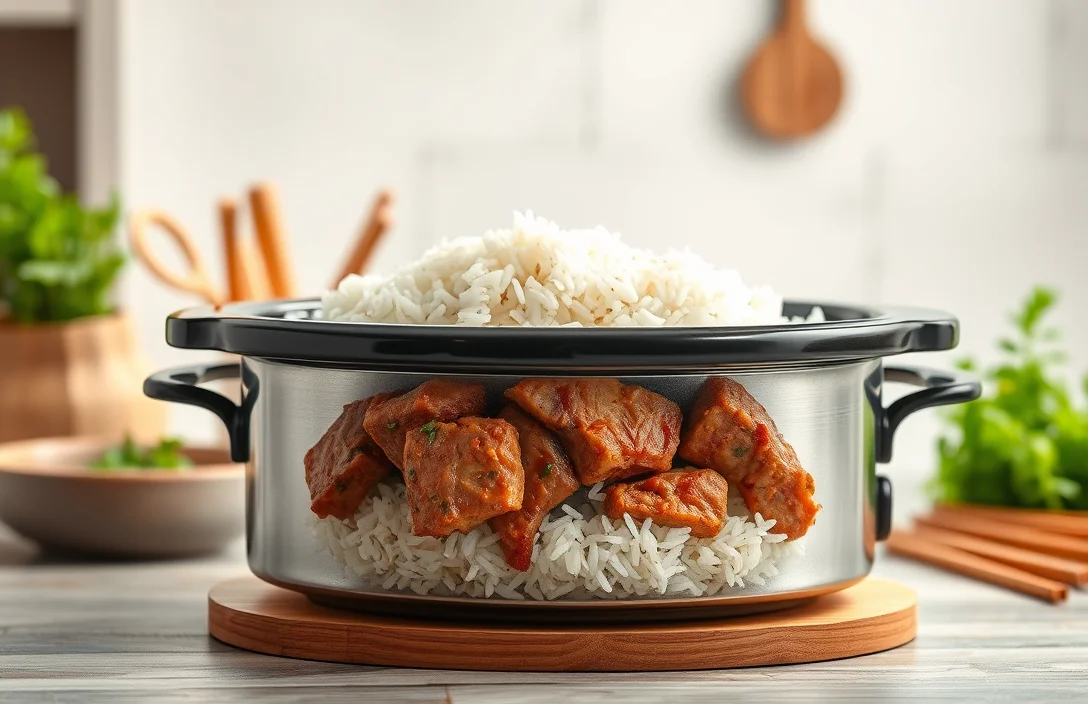
Layering ingredients properly ensures even cooking, resulting in perfectly tender rice and meat. Start by placing the meat at the bottom of the slow cooker. This positioning allows the meat juices to infuse the rice as it cooks. Follow these steps for optimal layering:
- Place meat first in cooker. Choose cuts that benefit from slow cooking, such as beef chuck or chicken thighs.
- Add vegetables next for flavor. Onions, garlic, or bell peppers can enhance the dish while providing moisture.
- Pour rice over the vegetables. Use long-grain or basmati rice for the best texture, ensuring even distribution.
- Top with seasonings and liquids. Broths or water should cover the rice, allowing it to absorb flavors during the cooking process.
Following this layering method creates a harmonious blend of flavors and textures, ensuring that the rice cooks thoroughly alongside the meat. Remember, the order of ingredients affects the final dish significantly.
Adding Flavor with Broths and Spices
Enhancing flavor requires using flavorful liquids. Opt for chicken, beef, or vegetable broth instead of water. This substitution not only adds depth to the rice but also infuses the meat with savory goodness. Aim for a ratio of two cups of broth for every cup of rice, adjusting based on the consistency you prefer.
Incorporating spices elevates the overall taste profile. Consider using garlic powder, onion powder, or paprika for a warm, robust flavor. Fresh herbs, like thyme or rosemary, can also add a fragrant touch. Experiment with seasoning blends such as Italian or Cajun to create unique dishes.
Balancing flavors enhances the dish’s overall appeal. Add a splash of soy sauce or Worcestershire sauce for a savory kick. For a hint of sweetness, a teaspoon of brown sugar can complement certain meat types beautifully. Always taste as you go to ensure the seasoning is just right.
Mindful of cooking times is crucial. If using fresh ingredients, add them toward the end of the cooking process to maintain their vibrant flavor. Dried herbs and spices can be added at the beginning, allowing their flavors to meld into the dish.
Checking for Doneness
Evaluating doneness is essential for both meat and rice. Overcooking either can ruin the dish, while undercooking may result in food safety issues. Follow these steps to ensure that both components are perfectly cooked.
- Insert a meat thermometer into the thickest part of the meat. Poultry should reach 165°F, while beef, pork, and lamb need to hit at least 145°F for safety.
- Take a spoonful of rice and taste it. Properly cooked rice should be tender but still have a slight bite, avoiding mushiness or hardness.
- Check the liquid level in the slow cooker. If there’s excess liquid, allow it to cook uncovered for an additional 10-15 minutes to evaporate some of the moisture.
- Observe the overall texture of the dish. Both the meat and rice should be cohesive and flavorful, with the rice absorbing the meat juices.
- Let the dish rest for about 10 minutes after cooking. This resting period allows flavors to meld and ensures even moisture distribution throughout the rice and meat.
Storing and Reheating Leftovers
Proper storage ensures food safety and retains flavor. Allow the rice and meat dish to cool down to room temperature before storing. Use airtight containers to prevent moisture loss and protect from odors in the refrigerator. Label each container with the date to keep track of freshness. Consume leftovers within 3 to 4 days for the best taste and safety.
- Divide the dish into portions. Smaller servings allow for quicker reheating and help reduce waste.
- Store in the refrigerator at a temperature below 40°F. This prevents bacterial growth and keeps your meal safe to eat.
- Reheat in the microwave for quick results. Add a splash of water if the rice appears dry, and cover to steam while heating.
- Consider using a stovetop for larger portions. Heat gently, stirring occasionally until warmed through to maintain texture and flavor.
- Check the internal temperature. Ensure it reaches at least 165°F to kill any potential bacteria before serving.
Quick Summary
- Yes, you can cook rice in a slow cooker with meat for a flavorful one-pot meal.
- Use long-grain rice for best results, as it holds up well during slow cooking.
- Ensure the meat is cut into small pieces to cook evenly with the rice.
- Add sufficient liquid (water or broth) to prevent the rice from becoming dry.
- Cooking time typically ranges from 4 to 6 hours on low heat.
- Season the dish well, as slow cooking can mellow flavors.
- Stir occasionally to ensure even cooking and prevent sticking.
Frequently Asked Questions
Can you cook rice in a slow cooker with meat?
Yes, you can cook rice in a slow cooker with meat. The slow cooker allows for the rice to absorb the flavors of the meat while cooking, resulting in a delicious, one-pot meal.
What type of rice is best for slow cooking with meat?
Long-grain rice, such as basmati or jasmine, tends to work well in a slow cooker. However, you can also use medium or short-grain rice depending on your preference for texture.
How much liquid do I need for rice and meat in a slow cooker?
A general rule is to use a 2:1 ratio of liquid to rice. For example, if you’re using 1 cup of rice, add 2 cups of broth or water, but remember to adjust based on the amount of meat and any additional ingredients.
How long does it take to cook rice and meat in a slow cooker?
Cooking rice and meat in a slow cooker typically takes about 4 to 6 hours on low heat or 2 to 3 hours on high heat. The exact time may vary based on the type and cut of meat used.
Can I add vegetables when cooking rice and meat in a slow cooker?
Absolutely! Adding vegetables can enhance the flavor and nutrition of your dish. Just be sure to chop them into similar sizes to ensure even cooking, and add them at the beginning of the cooking process.

- 8 Easy Slow Cooker Beef and Rice Recipes for Delicious Meals - March 29, 2026
- Slow Cooker Beef and Sausage Chili: 7 Steps to Flavorful Success - March 29, 2026
- Savory Beef Back Ribs in a Pressure Cooker: 7 Steps to Perfection - March 29, 2026