How to Boil Eggs in a Slow Cooker: A Simple Step-by-Step Guide
Seventy percent of households own a slow cooker, yet many don’t realize it can perfectly boil eggs. This method not only simplifies the cooking process but also results in consistently cooked eggs, making it an interesting alternative to traditional boiling methods.
Boiling eggs in a slow cooker is possible and easy. Just place eggs in the cooker, add water, and set it on low or high. Cooking times vary between 6-12 hours depending on your desired doneness, perfect for any meal prep.
What to Know About can you boil eggs in a slow co
Slow cookers operate by maintaining a consistent, low temperature over an extended period, which is ideal for cooking eggs. Unlike traditional boiling methods, this tool uses moist heat to gently cook the eggs, resulting in evenly cooked whites and yolks. Understanding this process is essential for achieving the perfect boiled egg.
- Fill the slow cooker halfway with water. The water creates steam, which is crucial for cooking the eggs properly.
- Place eggs in a single layer in the slow cooker. Avoid overcrowding to ensure even cooking and prevent cracking.
- Set the slow cooker on low heat. This setting allows the eggs to cook slowly, mimicking the traditional boiling method.
- Cook for approximately 6 to 8 hours. Cooking time may vary based on the size of the eggs and desired doneness.
- Check for doneness using a timer. If you prefer soft-boiled eggs, aim for the shorter end of the cooking time.
Monitoring the cooking process ensures you achieve the perfect texture, whether you prefer soft or hard-boiled eggs. Adjusting the time slightly can help achieve the desired results.
Choosing the Right Slow Cooker
Capacity matters significantly for boiling eggs efficiently. A slow cooker with at least a 4-quart capacity can accommodate a dozen eggs comfortably. Opting for larger sizes allows for extra space to prevent cracking during cooking, which is essential for achieving perfect results.
Temperature settings play a crucial role in your cooking success. Look for models that offer low and high heat settings. The low setting is ideal for a gentle boil, ensuring eggs cook evenly without overcooking or becoming rubbery. Reliable temperature consistency is key for achieving the desired doneness.
Material impacts the overall cooking experience. Slow cookers made from ceramic or stoneware tend to distribute heat more evenly than those made from metal. This even heat distribution is beneficial when boiling eggs, as it prevents hot spots that could lead to uneven cooking.
Ease of cleaning simplifies post-cooking tasks. Select a slow cooker with a removable inner pot. This feature allows for easy washing and maintenance, making it convenient after boiling eggs. Non-stick surfaces can also help reduce the mess, ensuring that eggs slide out smoothly.
Preparing Eggs for Cooking
Start by gathering fresh eggs. Freshness is key to achieving the best results when boiling. Check the expiration date or do the float test; fresh eggs sink, while older ones float. This simple method ensures you’re using eggs that will cook properly and taste delicious.
- Rinse each egg under cold water. Cleaning the eggs before cooking removes any potential contaminants. Use a gentle touch to avoid cracking the shells.
- Inspect eggs for cracks or defects. Damaged shells can lead to leakage during cooking. Discard any eggs that show signs of cracks.
- Consider piercing the shell to prevent cracking. Use a pin or needle to make a small hole in the wider end of the egg. This technique helps release steam during cooking, leading to perfect boiled eggs.
- Place eggs in a single layer in the slow cooker. Ensuring that eggs are not stacked prevents uneven cooking. Arrange them neatly to maximize space and efficiency.
- Add water to the slow cooker. Fill it with enough water to cover the eggs by about an inch. Proper water levels are essential for even heat distribution, ensuring thorough cooking.
Setting the Right Temperature
Optimal temperature for boiling eggs in a slow cooker is around 190°F to 200°F (88°C to 93°C). This range allows for gentle cooking, ensuring that the eggs are perfectly boiled without overcooking. Using a thermometer can help you achieve this precise temperature while cooking.
Maintaining the right heat is crucial. Slow cookers often have different heat settings such as low, medium, and high. For boiling eggs, using the low setting is usually sufficient to reach and maintain the desired temperature. This method promotes even cooking and prevents the eggs from cracking.
Monitoring the cooking process is essential. Since slow cookers can vary in performance, check the eggs periodically to ensure they are cooking evenly. If you notice any signs of overcooking, adjust the temperature or cooking time accordingly to achieve your preferred doneness.
Utilizing a water bath can enhance results. Fill the slow cooker with enough water to fully submerge the eggs. This technique allows for more consistent heat distribution around each egg, improving the boiling process and enhancing the texture of the finished product.
Timing for Perfectly Boiled Eggs
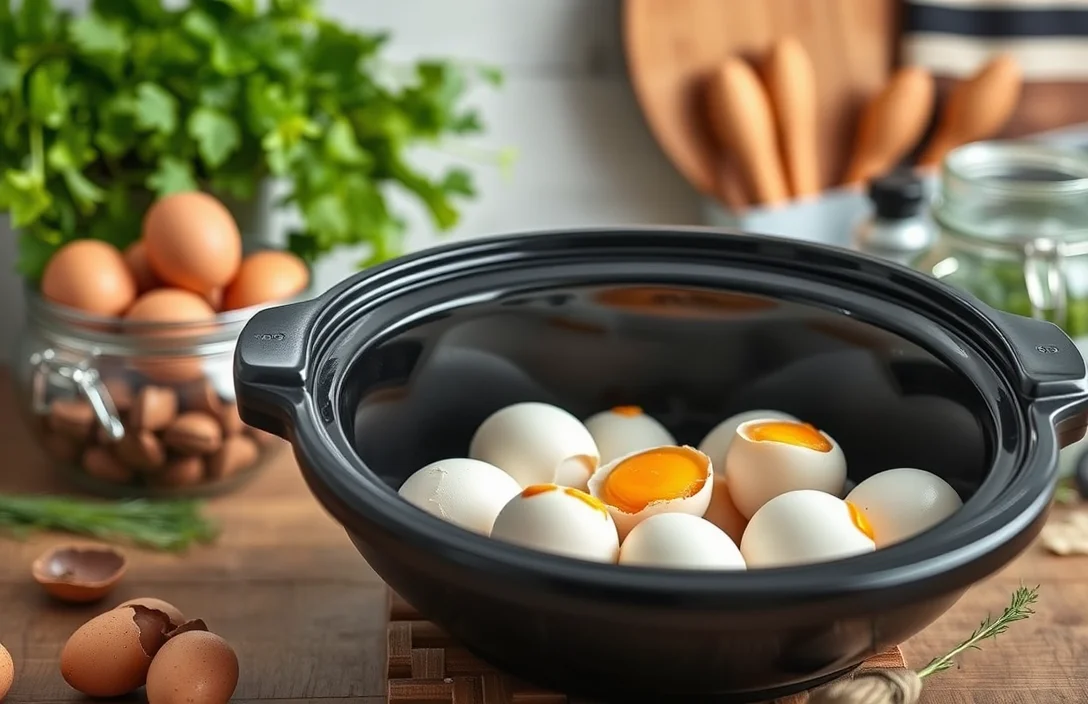
Cooking eggs in a slow cooker requires precise timing for desired doneness. For soft-boiled eggs with a runny yolk, cook for approximately 6-8 hours on low heat. Adjusting the time slightly can yield varying results based on your preference.
Medium-boiled eggs, with a slightly firmer yolk, are best at around 8-10 hours. This timeframe allows for a creamy texture while still maintaining some softness. Monitor your cooking to achieve the perfect consistency.
Hard-boiled eggs, which are fully cooked through, should be left in the slow cooker for 10-12 hours. This longer cooking time ensures that the yolk and white are completely set, providing a traditional hard-boiled experience.
Experimenting with these suggested times will help you find the ideal balance for your taste. Remember, the slow cooker retains heat well, so slight variations in timing can lead to different textures.
Using these guidelines, you can confidently cook eggs to your desired level of doneness. With practice, you’ll master the technique of boiling eggs in a slow cooker, making breakfast preparation easier and more efficient.
Cooling and Peeling Tips
Cooling boiled eggs quickly prevents overcooking and helps in peeling. After removing eggs from the slow cooker, transfer them immediately into an ice water bath. Fill a bowl with cold water and ice cubes, then submerge the eggs for at least 5-10 minutes. This shock cooling method will firm up the whites and make peeling easier.
Cracking the shell gently aids peeling. Once the eggs cool, tap each egg on a hard surface to create small cracks. Rolling the egg between your palms lightly can further loosen the shell. This method minimizes the chances of tearing the egg white during peeling.
Using the right technique helps with stubborn shells. If your eggs are difficult to peel, start peeling from the wider end, where there’s usually an air pocket. This pocket allows for easier separation of the shell from the egg white. Peeling under running water can also help remove any remaining bits of shell.
Storing eggs properly ensures freshness. If you have extra boiled eggs, keep them in the refrigerator in a covered container. They can last for up to a week. For best results, store them unpeeled, as this maintains moisture and flavor until you’re ready to use them.
Common Slow Cooker Egg Issues
Cracked shells often occur during cooking. To prevent this, ensure that the eggs are at room temperature before placing them in the slow cooker. A rapid temperature change can cause stress on the shell, leading to cracks. Additionally, avoid overcrowding the cooker, as this can increase the risk of collisions and breakage.
Overcooked eggs result in a rubbery texture. To achieve perfect boiled eggs, monitor cooking time carefully. Set the slow cooker to low for 6-8 hours or high for 3-4 hours, depending on your desired doneness. Testing a few eggs first can help determine the best timing for your preferences.
Uneven cooking can happen if eggs are not placed properly. Arrange the eggs in a single layer for more consistent results. If cooking a large batch, consider using a rack to elevate the eggs slightly off the bottom of the slow cooker. This promotes better heat circulation around each egg.
Difficulty peeling can frustrate many cooks. Fresh eggs are often harder to peel. For easier peeling, use eggs that are a week or older. Also, cooling the eggs in ice water immediately after cooking helps separate the membrane from the shell, making peeling simpler.
Quick Summary
- Boiling eggs in a slow cooker is a convenient method that requires minimal supervision.
- Eggs can be cooked to various levels of doneness, from soft-boiled to hard-boiled.
- The recommended cooking time is generally between 6 to 8 hours on low heat.
- Using water in the slow cooker helps create steam, which cooks the eggs evenly.
- It’s important to monitor the number of eggs to avoid overcrowding the slow cooker.
- Cooling eggs in ice water post-cooking improves peeling ease.
- This method is ideal for cooking large batches of eggs at once.
Frequently Asked Questions
Can you boil eggs in a slow cooker?
Yes, you can boil eggs in a slow cooker. It’s a convenient method that allows you to cook multiple eggs at once without needing to monitor them closely.
What is the best way to boil eggs in a slow cooker?
To boil eggs in a slow cooker, place them in a single layer at the bottom of the cooker and add enough water to cover them. Cook on low for about 6 to 8 hours for hard-boiled eggs, adjusting the time based on your desired doneness.
Do I need to adjust cooking times for different egg sizes?
Yes, cooking times may vary depending on the size of the eggs. Larger eggs may require a little more time, while smaller eggs may cook faster, so it’s best to check them if you’re unsure.
Can I add salt or vinegar to the water for boiling eggs?
Adding salt or vinegar to the water is not necessary when boiling eggs in a slow cooker. However, some people do add vinegar to help with peeling the shells more easily.
How do I know when the eggs are done cooking?
Since slow cookers vary in temperature, it’s best to check the eggs after the minimum cooking time. You can test one egg for doneness by peeling it; if it’s not cooked to your liking, continue cooking the others and check periodically.

- 8 Easy Slow Cooker Beef and Rice Recipes for Delicious Meals - March 29, 2026
- Slow Cooker Beef and Sausage Chili: 7 Steps to Flavorful Success - March 29, 2026
- Savory Beef Back Ribs in a Pressure Cooker: 7 Steps to Perfection - March 29, 2026