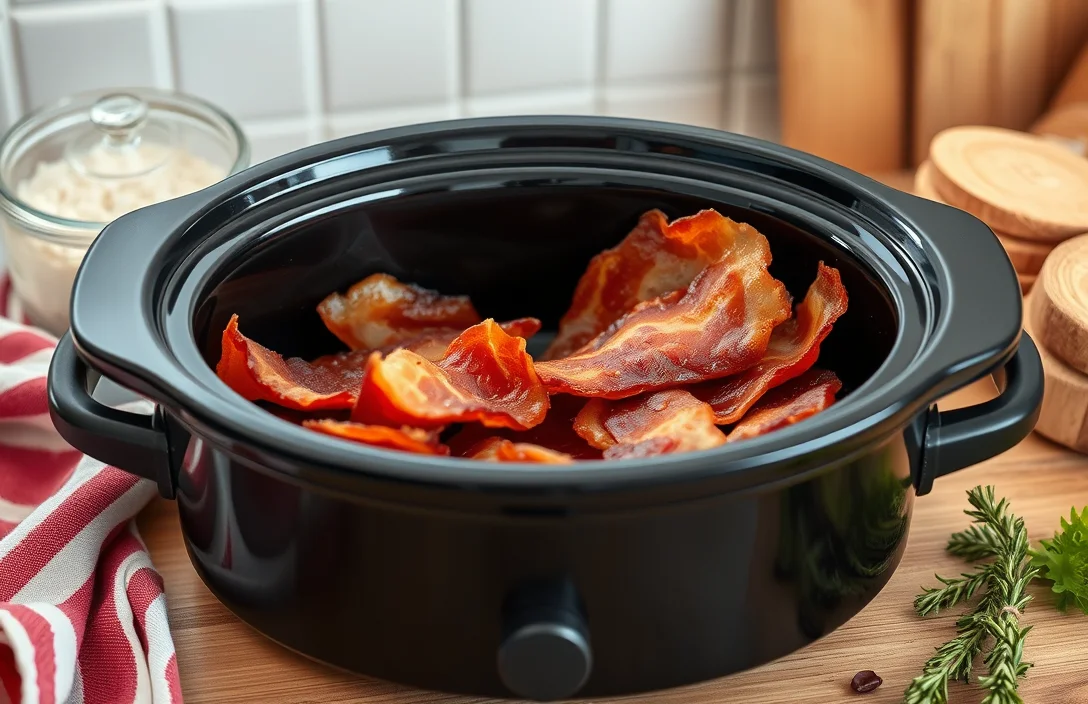
Savory Slow Cooker Bacon: 8 Recipes and Cooking Tips You Need
If you’re looking for a way to make bacon even more irresistible, cooking it in the slow cooker is a game changer. The low and slow method transforms ordinary bacon into a tender, flavorful treat that melts in your mouth. Imagine the enticing aroma wafting through your home as you prepare this crowd-pleaser for breakfast or a weekend brunch!
With this guide, you’ll find 5 tested recipes for slow cooker bacon dishes, ranging from classic to creative. Expect prep times of 10-15 minutes and cooking times of 6-8 hours. Each recipe serves 4-6 people and comes with tips to ensure perfect results every time.
| Prep Time | Cook Time | Total Time | Servings | Difficulty |
|---|---|---|---|---|
| 10-15 minutes | 6-8 hours | 6-8 hours 15 minutes | 4-6 | Easy |
History of Slow Cooker Bacon
This section highlights the origins of slow cooking and the popularity of bacon, particularly when prepared in a slow cooker. Understanding these elements enhances your appreciation for this cooking method and its appeal during various occasions.
Origins of Slow Cooking
Slow cooking has roots tracing back to traditional methods of preparing meals, where food was cooked over a low flame for extended periods. This technique not only tenderizes meats but also allows flavors to meld beautifully. The advent of electric slow cookers in the 1970s transformed home cooking, making it accessible and convenient for busy families. The slow cooker quickly became a kitchen staple, praised for its ability to create hearty meals with minimal effort.
Bacon’s Popularity in Dishes
Bacon, often referred to as “the candy of meats,” has surged in popularity due to its savory flavor and versatility. It complements a wide range of dishes, from breakfast to dinner, and its rich taste elevates everything from salads to soups. Cooking bacon in a slow cooker allows for:
- Even Cooking: The low heat renders fat steadily, resulting in tender, flavorful bacon.
- Less Mess: No splattering grease—just place the bacon in the slow cooker and let it do the work.
- Versatile Use: Cooked bacon can be easily added to a variety of recipes, enhancing flavors without extra effort.
| Occasion | Ideal Dish |
|---|---|
| Breakfast | Slow Cooker Bacon and Eggs |
| Brunch | Bacon-Wrapped Veggies |
| Game Day | Bacon Cheddar Dip |
Chef’s tip: For an extra layer of flavor, consider adding spices or maple syrup to your bacon before slow cooking!
Bacon Ingredients and Measurements
This section provides a complete list of ingredients with precise measurements for preparing delicious bacon in the slow cooker. Understanding the types of bacon and additional ingredients can enhance the flavor and help you create a dish that suits your taste preferences.
| Item | Amount/Specification | Notes |
|---|---|---|
| Bacon | 1 pound (450g) | Choose thick-cut for best results. |
| Brown sugar | ½ cup (100g) | Adds sweetness and caramelization. |
| Maple syrup | ¼ cup (60ml) | For a rich, sweet flavor. |
| Black pepper | 1 teaspoon | Freshly cracked for better flavor. |
| Red pepper flakes | ½ teaspoon | Optional, for a bit of heat. |
| Garlic powder | ½ teaspoon | Adds depth to the flavor profile. |
- For a lower-fat option, consider using turkey bacon, but note that it will cook faster.
- If you prefer a smoky flavor, look for smoked bacon varieties.
- Experiment with different spices, such as paprika or cayenne, to customize the taste.
Essential Kitchen Tools
Preparing bacon in the slow cooker requires a few essential kitchen tools to ensure that everything runs smoothly and you achieve the best results. Having the right equipment not only makes the cooking process easier but also enhances the flavor and texture of the bacon.
- Slow Cooker: Choose a slow cooker that holds at least 4 quarts (3.8 liters) to accommodate a good amount of bacon, as it can shrink significantly during cooking. Models with a programmable timer are helpful, allowing you to set cooking times without worry.
- Meat Thermometer: A reliable meat thermometer is crucial for checking the internal temperature of the bacon. For perfectly cooked bacon, aim for a temperature of around 160°F (71°C). This ensures it’s safe to eat while remaining deliciously crispy.
- Non-Stick Spray or Olive Oil: Lightly coat the slow cooker with non-stick spray or drizzle 2 tablespoons of olive oil on the bottom to prevent the bacon from sticking. This step is essential for easy cleanup and to keep the bacon from clumping together.
- Paper Towels: Keep several paper towels handy for draining excess grease after cooking. This will help you achieve a crispy texture and prevent the bacon from being overly greasy.
- Spatula or Tongs: Use a spatula or tongs to flip or rearrange the bacon as it cooks. This ensures even cooking and helps achieve that perfect crispy finish.
Chef’s tip: Line the slow cooker with parchment paper for even easier cleanup!
Step-by-Step Cooking Instructions
This section will guide you through the precise steps for cooking bacon in a slow cooker, including the initial heating and cooking times for different styles of bacon. Mastering these steps will ensure perfectly cooked bacon every time, with that deliciously crispy texture we all crave.
- Initial Heating: Begin by preheating your slow cooker on the low setting. This should take about 10 minutes. You want to create a warm environment that will allow the bacon to render its fat slowly, resulting in tender, flavorful strips.
- Layering the Bacon: Once the slow cooker is heated, take 1 pound (450g) of your favorite bacon and slice it into thirds. Layer the bacon pieces in the slow cooker, ensuring they are not overcrowded; this allows the heat to circulate properly. You can use a combination of regular and thick-cut bacon for varied textures.
- Cooking Times: Cover the slow cooker and let the bacon cook on low for 6-8 hours. If you prefer your bacon crispy, check it around the 5-hour mark. The bacon should be a golden brown color and will have released a significant amount of fat.
- Finishing Touch: If you want extra crispiness, transfer the cooked bacon to a baking sheet lined with paper towels and place it under a broiler set to high for 2-3 minutes. Keep an eye on it, as it can burn quickly. The bacon should be sizzling and crisp when ready.
- Serving: Once done, carefully remove the bacon from the slow cooker and drain any excess grease. Serve warm or store in an airtight container in the refrigerator for up to a week. Enjoy your perfectly cooked slow cooker bacon!
Pro Tips and Common Mistakes
Cooking bacon in a slow cooker can yield delicious results, but achieving that perfect balance of crispy and tender requires some know-how. Here, I’ll share essential tips to help you master the art of slow-cooked bacon while avoiding common pitfalls.
Achieving the Right Crispiness
- Choose the right cut: Opt for thick-cut bacon for better texture and flavor. Regular cuts can become too greasy and chewy when cooked for long periods.
- Don’t overcrowd the slow cooker: Space the bacon strips out in a single layer as much as possible. Overcrowding leads to steaming rather than crisping, which can result in a less desirable texture.
- Finish with high heat: If you want extra crispiness, transfer the cooked bacon to a baking sheet and broil in the oven at 500°F (260°C) for 2-3 minutes. Keep a close eye to prevent burning!
Avoiding Grease Issues
- Use a liner: Consider using a slow cooker liner for easier cleanup and to manage grease. This can help prevent grease from sticking to the sides and makes disposal simpler.
- Monitor cooking times: Cook on low for about 6-8 hours or until the bacon reaches your desired doneness. Check periodically to ensure it’s not swimming in grease.
- Drain excess grease: After cooking, carefully drain the excess grease from the slow cooker to prevent the bacon from becoming overly greasy. You can save the grease for other cooking needs, like sautéing vegetables!
Recipe Variations and Substitutions
Exploring variations and substitutions for bacon in the slow cooker can enhance your dish to suit different dietary needs and flavor preferences. Here are some options to consider that maintain the essence of a great recipe while accommodating various lifestyles.
Gluten-Free Options
- Bacon: Ensure your bacon is labeled gluten-free, as some brands may contain additives or flavorings with gluten.
- Seasonings: Use gluten-free soy sauce or tamari instead of regular soy sauce to add umami flavor without gluten.
- Cooking Liquid: Substitute chicken broth with gluten-free broth for added moisture and flavor.
Vegan Substitutes
If you’re looking for a plant-based alternative to bacon in the slow cooker, consider the following substitutions:
- Smoked Tempeh: Use 8 ounces of smoked tempeh, diced into bite-sized pieces. Cook it in the slow cooker for about 3 hours on low to mimic the texture and flavor of bacon.
- Liquid Smoke: Add 1 teaspoon of liquid smoke to your cooking liquid for that smoky flavor without using meat.
- Maple Syrup: Drizzle 2 tablespoons of maple syrup over the dish for sweetness that complements the smoky flavor.
Chef’s tip: If using tempeh, sauté it in a skillet with a bit of oil for 5 minutes before adding it to the slow cooker. This enhances its flavor and texture.
| Ingredient | Measurement |
|---|---|
| Smoked Tempeh | 8 ounces |
| Liquid Smoke | 1 teaspoon |
| Maple Syrup | 2 tablespoons |
Serving and Plating Ideas
Serving your slow-cooked bacon can elevate your meals and impress your guests. Here are some creative ways to present it, along with delicious breakfast pairings that enhance the flavors of your perfectly cooked bacon.
Pairing with Breakfast Dishes
- Scrambled Eggs: Fluffy scrambled eggs with herbs complement the savory richness of slow-cooked bacon.
- Pancakes or Waffles: Serve with a drizzle of maple syrup for a sweet and salty combination.
- Avocado Toast: Top whole grain bread with smashed avocado, a sprinkle of salt, and crispy bacon for a hearty breakfast.
- Breakfast Burritos: Fill tortillas with scrambled eggs, cheese, and bacon, then roll them up for a satisfying meal.
Creative Plating Techniques
Presentation matters, especially when showcasing your slow-cooked bacon. Here are some tips for plating:
- Stacked Presentation: Layer the bacon strips in a small tower on the plate, adding a sprig of fresh parsley on top.
- Side by Side: Arrange the bacon with sides like sautéed spinach or roasted tomatoes for a colorful plate.
- Use of Bowls: Serve diced bacon in a small bowl alongside dips like guacamole or salsa for a fun twist.
Chef’s tip: Always warm your plates before serving to keep the bacon crispy and fresh.
| Dish | Complementary Flavor |
|---|---|
| Scrambled Eggs | Herbal notes |
| Pancakes | Sweet and salty |
| Avocado Toast | Creamy richness |
| Breakfast Burritos | Hearty and filling |
Quick Recipe Summary
This section provides a quick overview of the essential components for preparing bacon in the slow cooker. With clear ingredient lists and streamlined cooking steps, you can easily reference this summary to ensure a successful dish every time.
Key Ingredients
- 2 pounds of thick-cut bacon
- 1 tablespoon brown sugar (optional, for a sweet glaze)
- ½ teaspoon black pepper (optional, for seasoning)
- 1 tablespoon maple syrup (optional, for flavor)
Basic Cooking Steps
- Prepare the slow cooker by greasing it lightly with cooking spray to prevent sticking.
- Layer the bacon strips in the slow cooker, ensuring they are not overcrowded; this will help them cook evenly. You can cut them in half if necessary.
- If desired, sprinkle the brown sugar and black pepper over the bacon for added flavor.
- Cover and cook on low for 6-8 hours or on high for 3-4 hours until the bacon is crispy and fully rendered. Check occasionally to avoid burning.
- Once cooked, carefully remove the bacon with tongs and place it on paper towels to drain excess grease.
Chef’s tip: For a smoky flavor, consider adding a few drops of liquid smoke to the slow cooker before cooking.
| Ingredient | Amount |
|---|---|
| Bacon | 2 pounds |
| Brown Sugar | 1 tablespoon |
| Black Pepper | ½ teaspoon |
| Maple Syrup | 1 tablespoon |
Common Mistake: Don’t overcrowd the slow cooker with bacon; this can prevent it from cooking evenly and achieving that perfect crispiness.
Quick Summary
| Prep Time | 10 minutes |
|---|---|
| Cook Time | 6 hours |
| Total Time | 6 hours 10 minutes |
| Servings | 4 |
- Layer bacon evenly: Arrange strips in a single layer in the slow cooker for even cooking.
- Set temperature: Cook on low for 6 hours for perfectly crispy results.
- Check halfway: Stir bacon halfway through cooking to ensure even crispiness.
- Drain grease: Carefully drain excess grease halfway for less greasy bacon.
- Let it rest: Allow bacon to cool for 5 minutes before serving to enhance crispiness.
- Tip: Use thick-cut bacon for a heartier texture.
- Tip: Add a splash of maple syrup for a sweet twist.
Frequently Asked Questions
Can I make this ahead of time? How to store and reheat?
Yes, you can cook bacon in the slow cooker ahead of time. Store it in an airtight container in the refrigerator for up to 4 days, and reheat in the microwave for 20-30 seconds or until warm.
What can I substitute for a key ingredient?
If you don’t have brown sugar, you can substitute with maple syrup or honey for a similar sweetness, using the same amount. Just keep in mind that it may alter the flavor slightly.
How do I know when it’s done?
Your bacon is done when it reaches a crispy texture and a deep golden brown color, usually after 6-8 hours on low heat. You can also taste a piece to check for your desired crispiness.
Can I freeze this? How long does it last?
Absolutely, you can freeze cooked bacon for up to 3 months. Make sure to wrap it tightly in aluminum foil or freezer bags to prevent freezer burn.
What if I don’t have a slow cooker?
If you don’t have a slow cooker, you can cook bacon in the oven at 400°F (200°C) on a baking sheet lined with foil for about 15-20 minutes, flipping halfway through. This method will give you a similar crispy texture without the slow cooker.

- 8 Easy Slow Cooker Beef and Rice Recipes for Delicious Meals - March 29, 2026
- Slow Cooker Beef and Sausage Chili: 7 Steps to Flavorful Success - March 29, 2026
- Savory Beef Back Ribs in a Pressure Cooker: 7 Steps to Perfection - March 29, 2026